Using ERGs to Drive Community and Momentum — Lauren Flanagan
Lauren Flanigan, co-lead of MIAAC at Mondelēz, on ERG leadership, Black History Month programming, and why companies need to compensate ERG leaders.

Why ERG leaders are the hidden infrastructure of company culture
ERGs are one of the most undervalued organizational investments most companies are making. They shape recruiting, retention, culture, and belonging, and in most organizations, the people doing that work are doing it without additional pay, on top of full-time jobs, without formal recognition in their career frameworks.
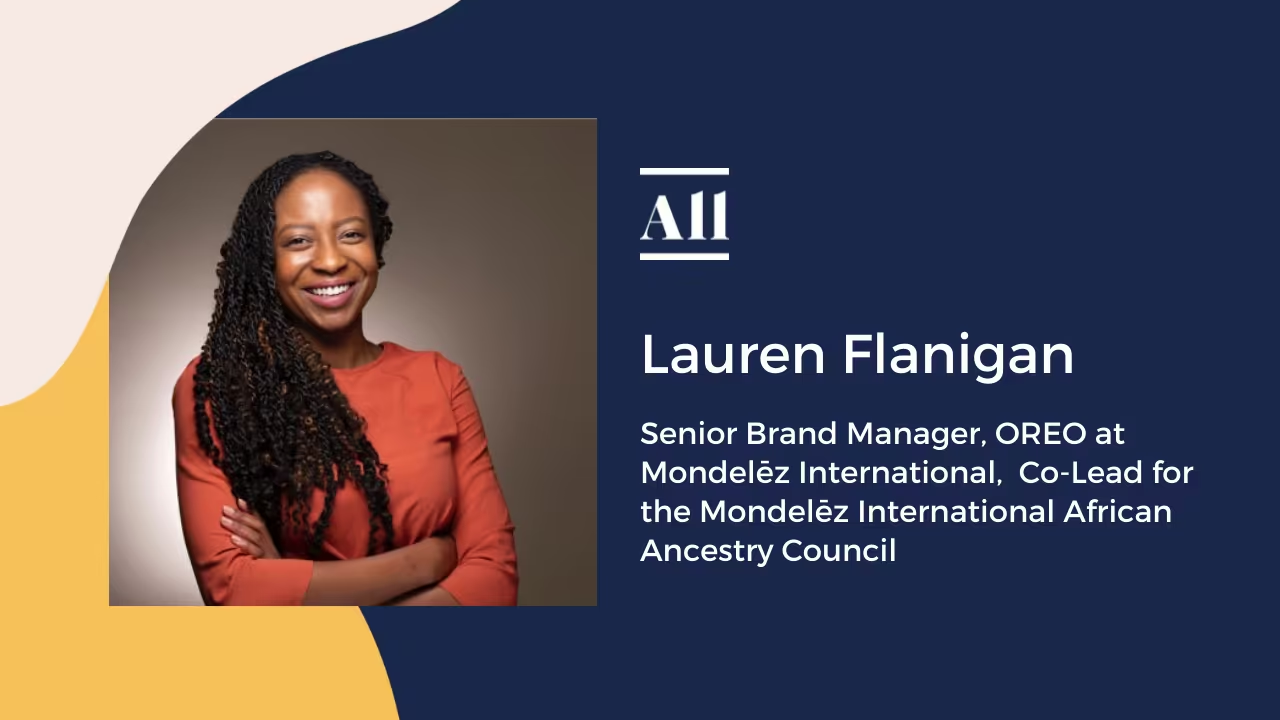
Lauren Flanigan is the Senior Brand Manager of OREO at Mondelēz International and co-lead of the Mondelēz International African Ancestry Council (MIAAC), the company's Black and African American employee resource group. She started at Mondelēz as an intern, was mentored by MIAAC leaders during that summer, and eventually joined the ERG's leadership herself. AllVoices spoke with Flanigan in 2021 about what MIAAC accomplished during a pivotal period in corporate DEI, and what company leaders need to do to treat ERG work as the real work it is.
Lauren Flanigan on leading MIAAC at Mondelēz International
Flanigan spoke with AllVoices about her path into ERG leadership, MIAAC's impact during 2020 and 2021, and what she believes companies need to change about how they recognize and compensate the people running these programs.
What prepared you to manage people and lead the OREO brand?
Flanigan does not point to one defining experience. She points to a pattern of stretching, watching, and being supported by people who believed in her.
I am so grateful to be in a position to be a leader of such an incredible brand. I don't take it for granted. I can't say that any one thing has most prepared me to lead this brand, and more importantly to lead people, but a collection of experiences, learning by watching others, and benefitting active mentorship and sponsorship have been the most impactful for me. I have consistently and intentionally sought out career opportunities that would stretch me and grow me, I have taken cues from leadership styles of leaders I admired, and have been fortunate enough to learn from leaders who took enough interest, and had enough belief in me to teach me and help me grow. I stand on the shoulders of many amazing supporters.
What was your path to becoming an ERG leader?
Flanigan's path into MIAAC leadership is one of the most common patterns in effective ERG programs: early investment in the next generation creates the leaders who come back to do the same work for others.
I like to joke that the journey found me. I started at Mondelēz as an intern and it was during that time that I first experienced our ERG network. As an intern, the leaders of the Mondelez International African Ancestry Council (MIAAC) sought out meetings with me and other Black interns and made a point of mentoring the interns throughout the summer. I really benefitted from their mentorship and really gained a lot of strong relationships across the organization as a result. The experience stuck with me and played a big part in my decision to join Mondelēz full time after graduating. After returning full time the following summer, I joined MIAAC officially and became an active member. A few months later, one of the leaders announced that she would be stepping down as she pursued a new role in the company and asked me to step up in her place. I gladly accepted and have been leading the organization since.
The investment in Flanigan as an intern, the mentorship and relationship-building that MIAAC provided, directly shaped a long-term retention and leadership outcome. That is ERG work doing exactly what it is supposed to do: creating community that makes people want to stay and contribute to the organization's future. See how the power of employee resource groups translates from community-building into measurable organizational impact for a deeper look at the evidence behind this pattern.
What did MIAAC accomplish during 2020 and 2021, and how do you measure impact?
The murder of George Floyd in 2020 catalyzed corporate DEI investment across industries. For ERGs that had already been building community, it also created an opportunity to accelerate structural change.
2020-2021 have easily been the most active years in terms of the role of MIAAC. In light of the murder of George Floyd, Mondelēz, like many other companies began to take a fresh look at the impact of DEI in corporate spaces. As a part of this growth, ERGs gained renewed support and heightened focus. We have really been able to play an active role in helping shape the company's DEI initiatives. One of my most proud accomplishments relates to this. Following the protests surrounding the murder of George Floyd, MIAAC led a company-wide Townhall panel to bring attention to what Black employees were feeling as we were forced to process this trauma and go about our daily personal and professional lives. The panel brought real, raw, and honest conversation to the forefront and really served as the catalyst for a lot of the great DEI work the organization developed as a result. We have since taken advantage of this great momentum by keeping the conversation going via Black History Month programming that featured everything from conversations on the need for supplier diversity to the impact of Black consumers on culture; championing increased recruiting from HBCUs; developing executive-level support for mentorship programs for Black employees; and creating education and volunteer opportunities around Juneteenth.
Flanigan's measurement framework is simple and honest: sustaining momentum, not just launching an event. An organization that responds to a moment with a single panel and then returns to business as usual has not built anything. One that uses that moment to drive sustained change in recruiting, mentorship, and leadership development has used the ERG the way it was designed to be used. Building an organizational culture of listening means creating mechanisms that make ERG-driven insights reach decision-makers, not just produce programming.
How are ERG leaders recognized and compensated at Mondelēz?
Flanigan is direct about the compensation gap. Her answer names the problem that most HR leaders prefer not to discuss publicly: the people doing significant organizational work are not being paid for it.
I believe this is an opportunity area for a lot of corporations. The work of ERG leaders is significant and unfortunately often goes somewhat unseen or underappreciated. It requires a lot of time and effort, on top of one's day job, to lead a membership of 100 or more people, a leadership team of 7 or more people, coordinate major company-wide events, support recruitment, onboarding and retention efforts, and provide a sounding board for corporate DEI initiatives. These contributions have real and impactful benefits to company culture and ultimately the bottom line of the business. In spite of this, there is no additional compensation for this workload. While I, and many other ERG leaders, have benefitted from additional exposure to leadership and a platform for a positive presence in the organization as a result of my ERG leadership, it has not always felt like enough compensation for the effort. I believe exposure is a great benefit, as is having an outlet for one's passion for one's community, but there is room to provide greater compensation, or at minimum, more weight given to total job performance, for those who take on the additional effort of leading an ERG.
Exposure and passion are real benefits. They are also unpaid benefits extracted from people who are already navigating a workplace that may not fully value their contributions. Flanigan's ask is measured but specific: count ERG leadership in performance reviews at minimum, and compensate financially where possible. The gap between what HR thinks employees are sharing and what employees actually share is directly related to whether the organizational structures around employee voice, including ERG infrastructure, are treated as real investments or as voluntary add-ons.
What advice would you offer to professionals starting or leading an ERG?
Do it. Leading a community is certainly rewarding and can be truly impactful for the business. Before you begin, be clear about your audience. Who are you serving? Why? What do they need? How can you best serve them? Next, find strong sponsors in the organization. You will need the support of leadership to help further the goals of the ERG.
What is your call to action for company executives?
Acknowledge the value that ERGs are bringing to your organization. Consider ERGs as a vehicle for supporting communities of your employees. Give ERGs the space to truly serve their membership. Acknowledge the effort and leadership of those leading ERGs. Consider those leadership positions as you would other leadership positions in the company. These roles can truly serve as a vehicle for leadership development. Lastly, ask yourself if you are doing enough to show your ERG leaders that you value them. If you can, compensate them financially. If you cannot, consider their ERG leadership in their total performance review.
Flanigan closes with something worth sitting with: ERGs are a vehicle for driving community, and community is a compelling reason for employees to join and stay with a company. That is not a soft outcome. It has a direct impact on recruiting, retention, and the quality of talent an organization can attract and hold. The questions that build genuinely inclusive cultures are the same questions that make ERG programming durable rather than event-driven.
Where ERG leadership stands in 2025 and 2026
Flanigan's interview was published in late 2021. The ERG landscape has shifted since then, and not uniformly toward progress. The core tensions she named, recognition, compensation, and treating ERG leadership as real leadership, remain central to whether these programs actually change anything.
ERG compensation has moved from exception to active practice
By 2025, a growing number of companies have introduced monthly stipends, formal time allocations in career frameworks, or performance review credit for ERG leadership. The shift reflects what Flanigan predicted: recognition that building equity programs on uncompensated volunteer time, drawn disproportionately from employees in marginalized groups, is itself a structural inequity. Research from the USC Center for Effective Organizations' 2024 strategic ERG awards program documented that ERG leaders who receive organizational support and formal recognition generate measurable innovation and retention outcomes. The connection between ERG investment and business performance that Flanigan described in 2021 has since been studied and verified.
Community remains the ERG's most durable organizational value
Post-pandemic workforce data has reinforced Flanigan's final point: community is a compelling reason for employees to stay with a company, and ERGs are one of the few structural mechanisms that build it at scale. Companies that built genuine belonging infrastructure during 2020 and 2021 saw stronger retention outcomes than those that responded to DEI pressure with one-time programming. AllVoices helps HR teams build the reporting and feedback infrastructure that makes employee voice real, not just theoretically possible. See how it works for organizations building more accountable, employee-centered workplaces.

.svg)
.svg)