The Ecosystem of DEI Work with Renu Hooda

Episode 30
About This Episode
In this episode of Reimagining Company Culture, we’re chatting with Renu Hooda, Chief Talent Officer at Kinesso. Renu’s has nearly fifteen years in the IPG network and has focused her skills and passions focus on creating high-performing teams
About The Guest
Renu Hooda is the Chief Talent Officer at Kinesso, an IPG company. With nearly fifteen years in the IPG network, her skills and passions focus on creating high-performing teams. After starting her career as an actuary at Watson Wyatt, she found her way to IPG corporate, then IPG Mediabrands, and now Kinesso—leading its worldwide human resources function. From managing the talent lifecycle and employee experience to succession planning and diversity and inclusion initiatives, she is creating all the right leadership impacts by leveraging organization strength to drive performance. She has been instrumental in transforming the business, overseeing all its major HR activities, and instilling in its people a solutions-focused mindset.
Episode Breakdown

In this episode of Reimagining Company Culture, we spoke with Renu Hooda, Chief Talent Officer at Kinesso. Renu has spent nearly fifteen years inside the IPG network and brings a systems lens to DEI work that is too often missing from the conversation. Her argument is straightforward: if you treat diversity, equity, and inclusion as a standalone program, it will always live at the edge of your operating model. Treat it as an ecosystem, and it becomes a load-bearing part of the business.

What makes Renu's view useful is that she does not separate DEI from talent strategy. In her world, recruiting, onboarding, manager development, succession planning, and case management are all places where inclusion either happens or does not. A DEI team that cannot influence those systems is doing awareness work, which is useful, but insufficient for moving outcomes.

What a DEI Ecosystem Actually Looks Like

A DEI ecosystem is the set of decisions, policies, and practices across the employee lifecycle that together determine whether different groups have a comparable experience at work. It covers hiring, promotion, pay, performance, manager coaching, benefits, and the ER workflow. The program work sits on top of this, but the ecosystem is the foundation.

McKinsey's Diversity Matters Even More research shows that the performance gap between top-quartile and bottom-quartile companies on executive diversity has widened over the last decade. The gap reflects ecosystem maturity more than program investment. Companies with deep ecosystems see compounding returns. Companies with thin programs see diminishing ones.

The practical implication for HR leaders is that the highest-value DEI moves usually involve changing something about the ecosystem, not launching a new offering. That is a harder sell internally, because it takes longer to see impact, and the wins are distributed across the operating model rather than concentrated in a visible program.

Renu described the ecosystem view as the difference between renting and owning. Programs rent attention for a quarter or a year. Ecosystem change owns the decision process long after the original team has moved on. That framing helps HR leaders decide where to spend the marginal dollar. Rent a program when you need signal fast. Invest in the ecosystem when you want the outcome to stick.

It is also a clearer way to talk to the ELT about the DEI budget. Executives are comfortable with ecosystem investments because the logic matches how they think about brand, engineering platforms, and customer experience. Recast DEI in those terms and the conversation stops being about programs and starts being about operating discipline.

How the Pieces of the Ecosystem Connect

Where do most DEI programs lose momentum?

In the handoff between programs and the operating model. An unconscious bias training that is not followed up in hiring rubrics, calibration meetings, or performance conversations is a one-off event. A training that changes the manager's behavior in next week's hiring panel is an ecosystem investment.

How do you tell if DEI is actually embedded?

Look at whether DEI metrics show up in operating reviews, not just in DEI council meetings. Look at whether promotion calibration discussions surface equity data. Look at whether employee relations cases are analyzed for demographic patterns. Embedded DEI is boring in meetings where it used to be a special topic.

What Actually Works When Building the Ecosystem

Principle 1: Make DEI data part of standard operating reviews

Most organizations run monthly or quarterly business reviews. Add two DEI indicators to the standard template. Attrition by identity group and promotion rates by identity group are good starting points. Once the data is in the review, it gets discussed. Once it is discussed, it gets acted on.

Principle 2: Tie the ER data to the DEI story

ER cases are one of the truest signals of lived experience in a workplace. Structured HR case management lets DEI leaders see whether particular teams, locations, or management chains are producing disproportionate case volume. That is the honest diagnostic.

Principle 3: Build manager accountability into the ecosystem

Most DEI programs ask managers to do more. Ecosystem-focused DEI makes that expectation part of the performance review. Without accountability, even well-designed programs drift.

Where Employee Relations Fits

Employee Relations sits in the middle of the DEI ecosystem whether the ER team wants to or not. Patterns of complaints, retaliation claims, and harassment reports are often the earliest and clearest signals that an ecosystem is failing a specific group. Teams pairing strong case operations with a dedicated ER operating model are much better positioned to translate that data into DEI action.

ER drill-down: reading patterns across demographic segments

Every ER leader should be able to answer three questions each quarter: which groups are opening cases at disproportionate rates, which managers show up across multiple reports, and which policies produce recurring confusion. Answering these honestly is more useful to the DEI team than another offsite.

ER teams that run this diagnostic regularly often find that the cases cluster around a small number of structural issues rather than a wide pattern. That is useful, because it means the fix can be targeted at a policy, a manager's training, or a team redesign, rather than at the entire organization at once.

Frequently Asked Questions About DEI Ecosystems

How long does it take to build a real DEI ecosystem?

Three to five years for most organizations. The early work of policy, data, and governance takes eighteen months. Behavior change takes longer. Teams expecting a one-year transformation almost always underinvest in the back half.

Does DEI ecosystem work require a big team?

No. It requires a small team with cross-functional influence. A four-person DEI function that has the ear of HR operations, ER, and the executive team will outperform a twelve-person function that reports into comms.

How does DEI ecosystem work survive budget cuts?

Ecosystem investments are harder to cut than programs, because they are embedded in core operating processes. Programs that live outside the operating model are usually the first to go when the budget tightens.

Is DEI ecosystem work compatible with a compliance-heavy industry?

Yes. In compliance-forward functions, ecosystem DEI often uses the compliance operating rhythm as the starting point, which makes adoption faster, not slower.

How do you know when the ecosystem is mature?

When DEI conversations stop being exceptional and start being routine in business reviews, calibration meetings, and ER case analysis. The goal is not to get more attention for DEI. It is to get DEI into the places where decisions actually happen.

Work from McKinsey on diversity and inclusion reinforces the point that organizations which treat DEI as an embedded operating layer outperform organizations that treat it as a standalone program, and the gap widens over multi-year horizons.

The Bottom Line for HR Leaders

Renu's view is that DEI work loses its force when it is built as a set of programs sitting next to the business. The teams doing durable work are the ones that embedded the ecosystem across recruiting, performance, promotion, and case management until it became part of how decisions were made.

That is harder, slower, and less visible than launching a new initiative. It is also what produces the compounding returns the research continues to confirm. HR leaders who invest in the ecosystem rather than the program usually have less to rebuild when the next budget cycle comes.

The real question for most teams is not whether to do DEI, but whether to do it at the program layer or the ecosystem layer. The answer, almost always, is the ecosystem.
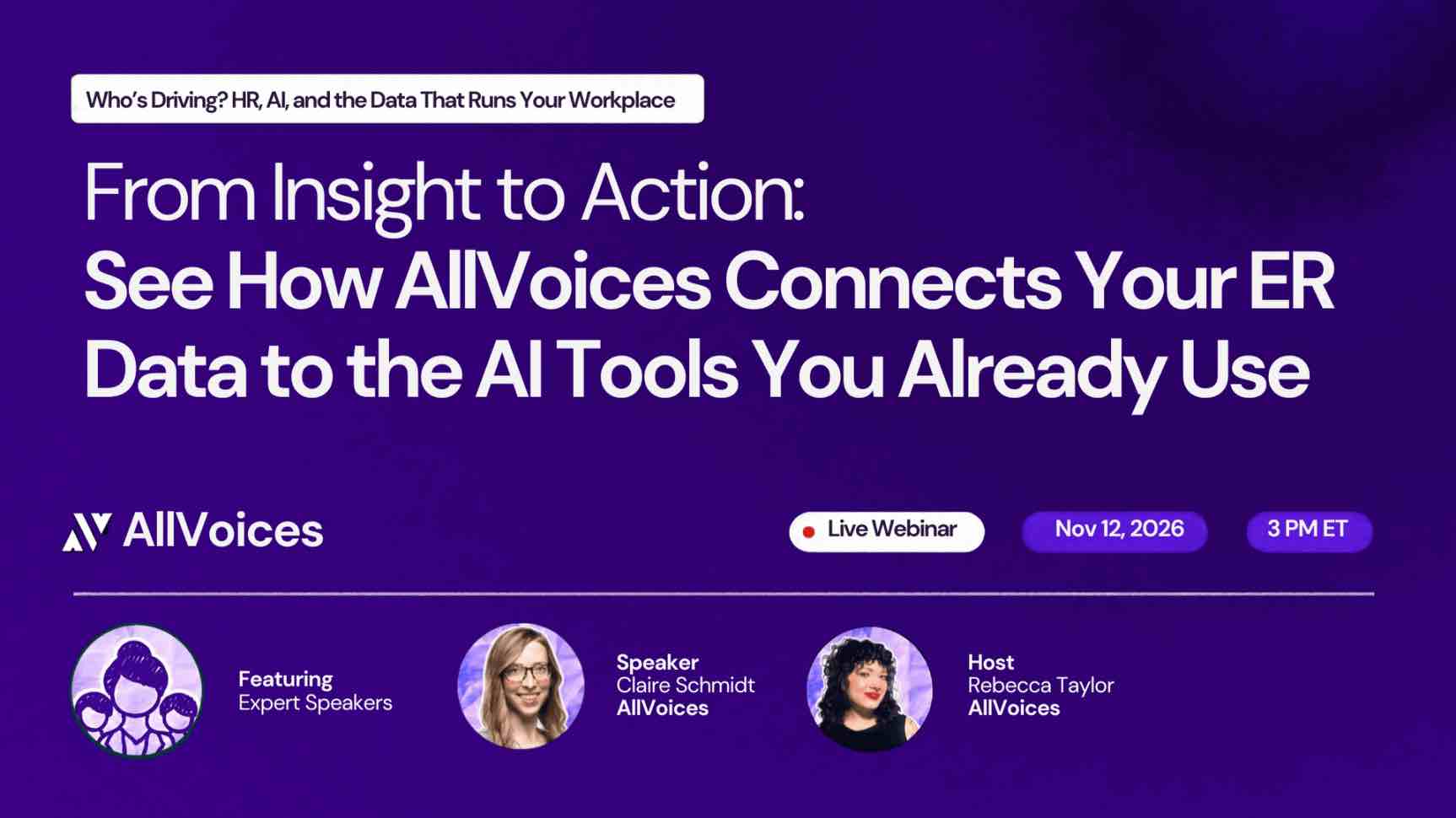
See how AllVoices helps DEI and ER teams connect case data to the systems that actually shape the employee experience.

Want to learn more?
See the power of AllVoices today
Thank you! We look forward to meeting you soon
Oops! Something went wrong while submitting the form.
Frequently asked questions

Got more questions? Email us at support@allvoices.co and we'll respond ASAP.

No items found.
Frequently asked questions

Got more questions? Email us at support@allvoices.co and we'll respond ASAP.

No items found.
The Ecosystem of DEI Work with Renu Hooda
Episode 30
About This Episode
In this episode of Reimagining Company Culture, we’re chatting with Renu Hooda, Chief Talent Officer at Kinesso. Renu’s has nearly fifteen years in the IPG network and has focused her skills and passions focus on creating high-performing teams
About The Guest
Renu Hooda is the Chief Talent Officer at Kinesso, an IPG company. With nearly fifteen years in the IPG network, her skills and passions focus on creating high-performing teams. After starting her career as an actuary at Watson Wyatt, she found her way to IPG corporate, then IPG Mediabrands, and now Kinesso—leading its worldwide human resources function. From managing the talent lifecycle and employee experience to succession planning and diversity and inclusion initiatives, she is creating all the right leadership impacts by leveraging organization strength to drive performance. She has been instrumental in transforming the business, overseeing all its major HR activities, and instilling in its people a solutions-focused mindset.
Episode Transcription

In this episode of Reimagining Company Culture, we spoke with Renu Hooda, Chief Talent Officer at Kinesso. Renu has spent nearly fifteen years inside the IPG network and brings a systems lens to DEI work that is too often missing from the conversation. Her argument is straightforward: if you treat diversity, equity, and inclusion as a standalone program, it will always live at the edge of your operating model. Treat it as an ecosystem, and it becomes a load-bearing part of the business.

What makes Renu's view useful is that she does not separate DEI from talent strategy. In her world, recruiting, onboarding, manager development, succession planning, and case management are all places where inclusion either happens or does not. A DEI team that cannot influence those systems is doing awareness work, which is useful, but insufficient for moving outcomes.

What a DEI Ecosystem Actually Looks Like

A DEI ecosystem is the set of decisions, policies, and practices across the employee lifecycle that together determine whether different groups have a comparable experience at work. It covers hiring, promotion, pay, performance, manager coaching, benefits, and the ER workflow. The program work sits on top of this, but the ecosystem is the foundation.

McKinsey's Diversity Matters Even More research shows that the performance gap between top-quartile and bottom-quartile companies on executive diversity has widened over the last decade. The gap reflects ecosystem maturity more than program investment. Companies with deep ecosystems see compounding returns. Companies with thin programs see diminishing ones.

The practical implication for HR leaders is that the highest-value DEI moves usually involve changing something about the ecosystem, not launching a new offering. That is a harder sell internally, because it takes longer to see impact, and the wins are distributed across the operating model rather than concentrated in a visible program.

Renu described the ecosystem view as the difference between renting and owning. Programs rent attention for a quarter or a year. Ecosystem change owns the decision process long after the original team has moved on. That framing helps HR leaders decide where to spend the marginal dollar. Rent a program when you need signal fast. Invest in the ecosystem when you want the outcome to stick.

It is also a clearer way to talk to the ELT about the DEI budget. Executives are comfortable with ecosystem investments because the logic matches how they think about brand, engineering platforms, and customer experience. Recast DEI in those terms and the conversation stops being about programs and starts being about operating discipline.

How the Pieces of the Ecosystem Connect

Where do most DEI programs lose momentum?

In the handoff between programs and the operating model. An unconscious bias training that is not followed up in hiring rubrics, calibration meetings, or performance conversations is a one-off event. A training that changes the manager's behavior in next week's hiring panel is an ecosystem investment.

How do you tell if DEI is actually embedded?

Look at whether DEI metrics show up in operating reviews, not just in DEI council meetings. Look at whether promotion calibration discussions surface equity data. Look at whether employee relations cases are analyzed for demographic patterns. Embedded DEI is boring in meetings where it used to be a special topic.

What Actually Works When Building the Ecosystem

Principle 1: Make DEI data part of standard operating reviews

Most organizations run monthly or quarterly business reviews. Add two DEI indicators to the standard template. Attrition by identity group and promotion rates by identity group are good starting points. Once the data is in the review, it gets discussed. Once it is discussed, it gets acted on.

Principle 2: Tie the ER data to the DEI story

ER cases are one of the truest signals of lived experience in a workplace. Structured HR case management lets DEI leaders see whether particular teams, locations, or management chains are producing disproportionate case volume. That is the honest diagnostic.

Principle 3: Build manager accountability into the ecosystem

Most DEI programs ask managers to do more. Ecosystem-focused DEI makes that expectation part of the performance review. Without accountability, even well-designed programs drift.

Where Employee Relations Fits

Employee Relations sits in the middle of the DEI ecosystem whether the ER team wants to or not. Patterns of complaints, retaliation claims, and harassment reports are often the earliest and clearest signals that an ecosystem is failing a specific group. Teams pairing strong case operations with a dedicated ER operating model are much better positioned to translate that data into DEI action.

ER drill-down: reading patterns across demographic segments

Every ER leader should be able to answer three questions each quarter: which groups are opening cases at disproportionate rates, which managers show up across multiple reports, and which policies produce recurring confusion. Answering these honestly is more useful to the DEI team than another offsite.

ER teams that run this diagnostic regularly often find that the cases cluster around a small number of structural issues rather than a wide pattern. That is useful, because it means the fix can be targeted at a policy, a manager's training, or a team redesign, rather than at the entire organization at once.

Frequently Asked Questions About DEI Ecosystems

How long does it take to build a real DEI ecosystem?

Three to five years for most organizations. The early work of policy, data, and governance takes eighteen months. Behavior change takes longer. Teams expecting a one-year transformation almost always underinvest in the back half.

Does DEI ecosystem work require a big team?

No. It requires a small team with cross-functional influence. A four-person DEI function that has the ear of HR operations, ER, and the executive team will outperform a twelve-person function that reports into comms.

How does DEI ecosystem work survive budget cuts?

Ecosystem investments are harder to cut than programs, because they are embedded in core operating processes. Programs that live outside the operating model are usually the first to go when the budget tightens.

Is DEI ecosystem work compatible with a compliance-heavy industry?

Yes. In compliance-forward functions, ecosystem DEI often uses the compliance operating rhythm as the starting point, which makes adoption faster, not slower.

How do you know when the ecosystem is mature?

When DEI conversations stop being exceptional and start being routine in business reviews, calibration meetings, and ER case analysis. The goal is not to get more attention for DEI. It is to get DEI into the places where decisions actually happen.

Work from McKinsey on diversity and inclusion reinforces the point that organizations which treat DEI as an embedded operating layer outperform organizations that treat it as a standalone program, and the gap widens over multi-year horizons.

The Bottom Line for HR Leaders

Renu's view is that DEI work loses its force when it is built as a set of programs sitting next to the business. The teams doing durable work are the ones that embedded the ecosystem across recruiting, performance, promotion, and case management until it became part of how decisions were made.

That is harder, slower, and less visible than launching a new initiative. It is also what produces the compounding returns the research continues to confirm. HR leaders who invest in the ecosystem rather than the program usually have less to rebuild when the next budget cycle comes.

The real question for most teams is not whether to do DEI, but whether to do it at the program layer or the ecosystem layer. The answer, almost always, is the ecosystem.

See how AllVoices helps DEI and ER teams connect case data to the systems that actually shape the employee experience.

Want to learn more?
See the power of AllVoices today
Thank you! We look forward to meeting you soon
Oops! Something went wrong while submitting the form.
Frequently asked questions

Got more questions? Email us at support@allvoices.co and we'll respond ASAP.

No items found.
Frequently asked questions

Got more questions? Email us at support@allvoices.co and we'll respond ASAP.

No items found.