Redefining Career Transitions and Networking with Leang Chung

Episode 8
About This Episode
In this episode of Reimagining Company Culture, we’re chatting with Leang Chung, Founder and CEO of Pelora Stack. Born into a refugee family from Cambodia, Leang found herself in a lot of “firsts” in her family - first to attend a four-year college, first to earn a degree, first to get a job with an annual salary. Her experience inspired a passion for first’ and she founded Pelora Stack to help early stage founders, people teams and mid-career womxn prepare for their next stage of growth. Tune in to learn about Leang’s thoughts on pivoting into a career in HR, common trends for mid-career women, networking as an introvert and more!
About The Guest
Being born into a refugee family from Cambodia and growing up with limited resources, I found myself in a lot of ‘firsts’. The first in the family to attend a four-year college. The first to go away for school. The first to earn a Bachelor’s degree. The first to have a white collar job with an annual salary versus an hourly wage. The first to experience upward mobility in a professional career. The first to become a corporate executive. My experience being ‘first’ inspired a passion for helping people and companies be successful in their ‘first’. The first time they’re scaling their team. The first time they build out their people operations infrastructure. The first time they design their culture. The first time they become a people manager. The first time they get appointed to a senior leadership role. The first time they negotiate their pay. The first time they make a career change. My vision for Pelora Stack is to become a destination for companies and people who are getting ready for their ‘first’. To help early stage founders, people teams and mid-career womxn prepare for their next stage of growth.
Episode Breakdown

On this episode of Reimagining Company Culture, we sat down with Leang Chung, Founder and CEO of Pelora Stack. Leang grew up the first in her family to attend a four-year college, the first to earn a degree, the first to take a salaried white-collar job. That experience of being first inspired Pelora Stack, a practice that helps early-stage founders, people teams, and mid-career women prepare for their next stage of growth.

Leang argued that the standard career conversation in HR underserves the people who need it most. Early-career employees get rotational programs and mentorship. Senior leaders get executive coaches. The mid-career stretch, where most people make the jumps that determine their long-term trajectory, gets left to whatever the manager decides to do. She pushed back on the idea that networking is an introvert problem. Networking is a system problem, in her view. Companies that build the system make networking accessible to everyone. Companies that do not leave it to whoever is naturally outgoing.

That conversation lands in the middle of a market where mid-career retention is the single biggest staffing challenge for most large employers, and where internal mobility is the cheapest, fastest source of growth that most HR teams underuse.

Why Mid-Career Employees Get Stuck

The pattern is consistent across companies. Strong performers in the first few years get promoted to manager. The managers get praise and a title bump. Then nothing happens. The next promotion requires skills the company never trained them on, networks they never built, and exposure they never got. Two years later, the strongest of those managers leaves, often for a role that is identical at a different company.

The data on what mentoring is worth is one of the most consistent in HR research. Research aggregated by the Chronicle of Evidence-Based Mentoring shows that mentoring is associated with higher job satisfaction, faster promotion, salary increases, and stronger retention. Other meta-analyses find that structured mentoring boosts minority representation at management levels by 9 to 24 percent. The case for the program type is settled.

What companies still get wrong is the design. Most mentoring programs run on goodwill, get scheduled around the day job, and have no measurement attached. The strongest programs treat mentoring as a workforce development investment with the same operational discipline as a hiring or training program.

Networking as a System, Not a Personality

Why does networking advice fail introverts?

Because the advice usually targets behavior, not structure. Telling an introvert to be more visible at the company offsite asks them to perform extroversion. Telling the company to schedule structured small-group conversations with senior leaders gives every employee, regardless of personality, the same access. Networking should be a calendar problem, not a charisma problem.

What does Gen Z want from career conversations?

Deloitte's Gen Z and Millennial survey finds that roughly half of Gen Z employees want managers to actively teach and mentor them, but only 36 percent say it is happening. That gap is the single largest driver of mid-career attrition risk in the next five years. Companies that close it will hold the talent advantage they need to grow.

What Actually Works: A Framework for Mid-Career Growth

Design principle one: build internal mobility into the operating model

Most companies post external roles before internal candidates have a chance. Reverse the default. Run a 30-day internal-only window for every backfill. Publish role expectations in plain language. Train managers to coach reports through internal applications without taking it personally.

Design principle two: structure mentoring like a program, not a favor

Match mentors and mentees on specific career-stage needs, not personality. Set six-month commitments. Provide light structure for the first three sessions. Track outcomes: promotions, retention, internal moves. The companies running their mentoring program with the same rigor as their training program produce dramatically different outcomes.

Design principle three: invest in the technology that scales the work

People teams running on spreadsheets cannot deliver mid-career programs at scale. Tools like GPT for HR and HR case management let small teams maintain personalized career touchpoints across thousands of employees, so the program does not depend on whoever has free time that quarter.

Where Employee Relations Fits

Career growth and employee relations share more than companies often realize. The complaint about a manager who blocks promotions. The concern about a stalled performance conversation. The pattern of underrepresented mid-career employees leaving in clusters. All of those surface through ER channels first. Strong human resources programs treat ER as the early-warning system for career stagnation patterns that the engagement survey will not catch in time.

How does ER tooling change what career programs can do?

It surfaces the patterns that block growth. When concerns about manager behavior, project allocation, or feedback quality flow into the same case system as harassment or compliance cases, leaders see the structural blockers to career path progression that individual conversations miss. That visibility informs talent management decisions and mentoring program design with data that surveys cannot produce.

Frequently Asked Questions About Career Transitions

What is the most underrated career move in your 30s?

An internal lateral move into a function adjacent to your strength. The pattern of going from contributor to manager in your own function is the most crowded path. The contributor who moves to a related function, learns it, and combines the two becomes much harder to replace at any salary.

How should HR support employees who want to pivot careers?

Make internal pivots cheaper than external ones. Publish internal role openings, fund light retraining, and protect employees during transitions from being penalized in performance reviews. Companies that make pivots safe retain the people who would otherwise leave.

What is the best networking move for an introvert?

One scheduled coffee or video call per week with someone two levels above you in any function. The structure removes the ambient pressure of unstructured networking. The cumulative effect over a year is enormous, and it works for personality types that hate networking events. For more on building this discipline, see our piece on corporate mentoring.

How do mid-career women navigate the second-decade plateau?

By treating sponsorship, not mentorship, as the lever. Mentorship is advice. Sponsorship is when someone with power names you for a role you would not otherwise have been considered for. Companies that build sponsorship programs explicitly produce different mid-career outcomes than companies that rely on informal patronage.

How do you measure whether a career program is working?

Internal mobility rate, retention by tenure cohort, and promotion velocity by demographic cohort. If those three numbers are trending in the wrong direction, the career program is not working, regardless of what the survey says.

The Bottom Line for HR Leaders

Leang's framing helps any HR team that has watched mid-career talent walk out the door despite strong programs. The fix is not another mentorship rebrand. The fix is treating career growth as a system: published mobility, structured mentoring, sponsorship that gets named, and ER infrastructure that catches the structural blockers individual managers will not surface.

The companies that build that system retain the people who would otherwise become someone else's senior hire. The companies that skip it pay external recruiters to find replacements who require six months of ramp time and never quite match the institutional knowledge that walked out the door.

Internal growth is the cheapest, fastest, most durable source of talent. The HR teams that operationalize it win.
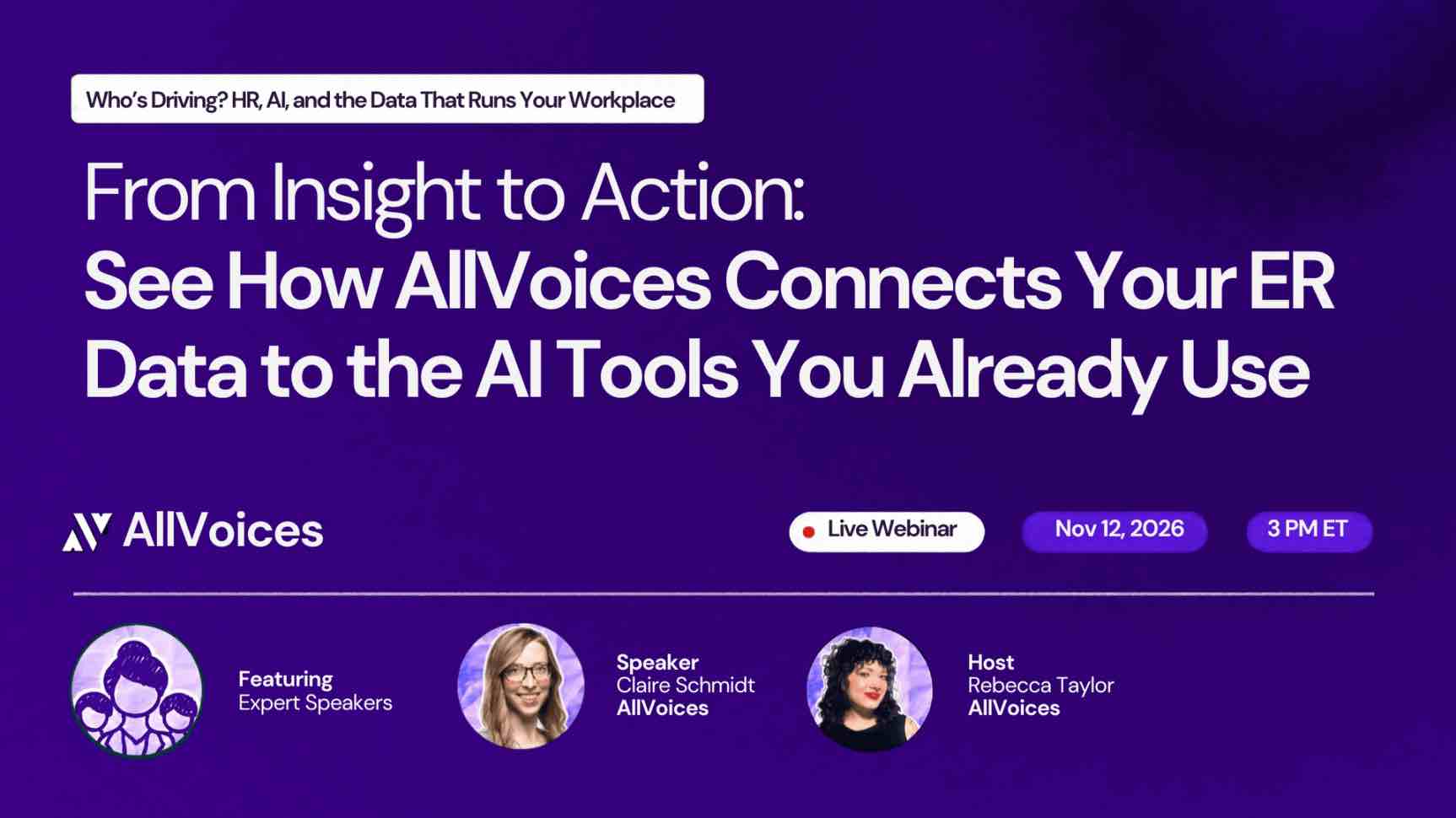
See how AllVoices helps people teams build the listening and case management infrastructure that career growth depends on.

Want to learn more?
See the power of AllVoices today
Thank you! We look forward to meeting you soon
Oops! Something went wrong while submitting the form.
Frequently asked questions

Got more questions? Email us at support@allvoices.co and we'll respond ASAP.

No items found.
Frequently asked questions

Got more questions? Email us at support@allvoices.co and we'll respond ASAP.

No items found.
Redefining Career Transitions and Networking with Leang Chung
Episode 8
About This Episode
In this episode of Reimagining Company Culture, we’re chatting with Leang Chung, Founder and CEO of Pelora Stack. Born into a refugee family from Cambodia, Leang found herself in a lot of “firsts” in her family - first to attend a four-year college, first to earn a degree, first to get a job with an annual salary. Her experience inspired a passion for first’ and she founded Pelora Stack to help early stage founders, people teams and mid-career womxn prepare for their next stage of growth. Tune in to learn about Leang’s thoughts on pivoting into a career in HR, common trends for mid-career women, networking as an introvert and more!
About The Guest
Being born into a refugee family from Cambodia and growing up with limited resources, I found myself in a lot of ‘firsts’. The first in the family to attend a four-year college. The first to go away for school. The first to earn a Bachelor’s degree. The first to have a white collar job with an annual salary versus an hourly wage. The first to experience upward mobility in a professional career. The first to become a corporate executive. My experience being ‘first’ inspired a passion for helping people and companies be successful in their ‘first’. The first time they’re scaling their team. The first time they build out their people operations infrastructure. The first time they design their culture. The first time they become a people manager. The first time they get appointed to a senior leadership role. The first time they negotiate their pay. The first time they make a career change. My vision for Pelora Stack is to become a destination for companies and people who are getting ready for their ‘first’. To help early stage founders, people teams and mid-career womxn prepare for their next stage of growth.
Episode Transcription

On this episode of Reimagining Company Culture, we sat down with Leang Chung, Founder and CEO of Pelora Stack. Leang grew up the first in her family to attend a four-year college, the first to earn a degree, the first to take a salaried white-collar job. That experience of being first inspired Pelora Stack, a practice that helps early-stage founders, people teams, and mid-career women prepare for their next stage of growth.

Leang argued that the standard career conversation in HR underserves the people who need it most. Early-career employees get rotational programs and mentorship. Senior leaders get executive coaches. The mid-career stretch, where most people make the jumps that determine their long-term trajectory, gets left to whatever the manager decides to do. She pushed back on the idea that networking is an introvert problem. Networking is a system problem, in her view. Companies that build the system make networking accessible to everyone. Companies that do not leave it to whoever is naturally outgoing.

That conversation lands in the middle of a market where mid-career retention is the single biggest staffing challenge for most large employers, and where internal mobility is the cheapest, fastest source of growth that most HR teams underuse.

Why Mid-Career Employees Get Stuck

The pattern is consistent across companies. Strong performers in the first few years get promoted to manager. The managers get praise and a title bump. Then nothing happens. The next promotion requires skills the company never trained them on, networks they never built, and exposure they never got. Two years later, the strongest of those managers leaves, often for a role that is identical at a different company.

The data on what mentoring is worth is one of the most consistent in HR research. Research aggregated by the Chronicle of Evidence-Based Mentoring shows that mentoring is associated with higher job satisfaction, faster promotion, salary increases, and stronger retention. Other meta-analyses find that structured mentoring boosts minority representation at management levels by 9 to 24 percent. The case for the program type is settled.

What companies still get wrong is the design. Most mentoring programs run on goodwill, get scheduled around the day job, and have no measurement attached. The strongest programs treat mentoring as a workforce development investment with the same operational discipline as a hiring or training program.

Networking as a System, Not a Personality

Why does networking advice fail introverts?

Because the advice usually targets behavior, not structure. Telling an introvert to be more visible at the company offsite asks them to perform extroversion. Telling the company to schedule structured small-group conversations with senior leaders gives every employee, regardless of personality, the same access. Networking should be a calendar problem, not a charisma problem.

What does Gen Z want from career conversations?

Deloitte's Gen Z and Millennial survey finds that roughly half of Gen Z employees want managers to actively teach and mentor them, but only 36 percent say it is happening. That gap is the single largest driver of mid-career attrition risk in the next five years. Companies that close it will hold the talent advantage they need to grow.

What Actually Works: A Framework for Mid-Career Growth

Design principle one: build internal mobility into the operating model

Most companies post external roles before internal candidates have a chance. Reverse the default. Run a 30-day internal-only window for every backfill. Publish role expectations in plain language. Train managers to coach reports through internal applications without taking it personally.

Design principle two: structure mentoring like a program, not a favor

Match mentors and mentees on specific career-stage needs, not personality. Set six-month commitments. Provide light structure for the first three sessions. Track outcomes: promotions, retention, internal moves. The companies running their mentoring program with the same rigor as their training program produce dramatically different outcomes.

Design principle three: invest in the technology that scales the work

People teams running on spreadsheets cannot deliver mid-career programs at scale. Tools like GPT for HR and HR case management let small teams maintain personalized career touchpoints across thousands of employees, so the program does not depend on whoever has free time that quarter.

Where Employee Relations Fits

Career growth and employee relations share more than companies often realize. The complaint about a manager who blocks promotions. The concern about a stalled performance conversation. The pattern of underrepresented mid-career employees leaving in clusters. All of those surface through ER channels first. Strong human resources programs treat ER as the early-warning system for career stagnation patterns that the engagement survey will not catch in time.

How does ER tooling change what career programs can do?

It surfaces the patterns that block growth. When concerns about manager behavior, project allocation, or feedback quality flow into the same case system as harassment or compliance cases, leaders see the structural blockers to career path progression that individual conversations miss. That visibility informs talent management decisions and mentoring program design with data that surveys cannot produce.

Frequently Asked Questions About Career Transitions

What is the most underrated career move in your 30s?

An internal lateral move into a function adjacent to your strength. The pattern of going from contributor to manager in your own function is the most crowded path. The contributor who moves to a related function, learns it, and combines the two becomes much harder to replace at any salary.

How should HR support employees who want to pivot careers?

Make internal pivots cheaper than external ones. Publish internal role openings, fund light retraining, and protect employees during transitions from being penalized in performance reviews. Companies that make pivots safe retain the people who would otherwise leave.

What is the best networking move for an introvert?

One scheduled coffee or video call per week with someone two levels above you in any function. The structure removes the ambient pressure of unstructured networking. The cumulative effect over a year is enormous, and it works for personality types that hate networking events. For more on building this discipline, see our piece on corporate mentoring.

How do mid-career women navigate the second-decade plateau?

By treating sponsorship, not mentorship, as the lever. Mentorship is advice. Sponsorship is when someone with power names you for a role you would not otherwise have been considered for. Companies that build sponsorship programs explicitly produce different mid-career outcomes than companies that rely on informal patronage.

How do you measure whether a career program is working?

Internal mobility rate, retention by tenure cohort, and promotion velocity by demographic cohort. If those three numbers are trending in the wrong direction, the career program is not working, regardless of what the survey says.

The Bottom Line for HR Leaders

Leang's framing helps any HR team that has watched mid-career talent walk out the door despite strong programs. The fix is not another mentorship rebrand. The fix is treating career growth as a system: published mobility, structured mentoring, sponsorship that gets named, and ER infrastructure that catches the structural blockers individual managers will not surface.

The companies that build that system retain the people who would otherwise become someone else's senior hire. The companies that skip it pay external recruiters to find replacements who require six months of ramp time and never quite match the institutional knowledge that walked out the door.

Internal growth is the cheapest, fastest, most durable source of talent. The HR teams that operationalize it win.

See how AllVoices helps people teams build the listening and case management infrastructure that career growth depends on.

Want to learn more?
See the power of AllVoices today
Thank you! We look forward to meeting you soon
Oops! Something went wrong while submitting the form.
Frequently asked questions

Got more questions? Email us at support@allvoices.co and we'll respond ASAP.

No items found.
Frequently asked questions

Got more questions? Email us at support@allvoices.co and we'll respond ASAP.

No items found.