AllVoices Experts: Q&A with Jaime-Alexis Fowler
Jaime-Alexis Fowler on why she built Empower Work, what vulnerable employees need most, and how companies can close the support gap for workers in crisis.

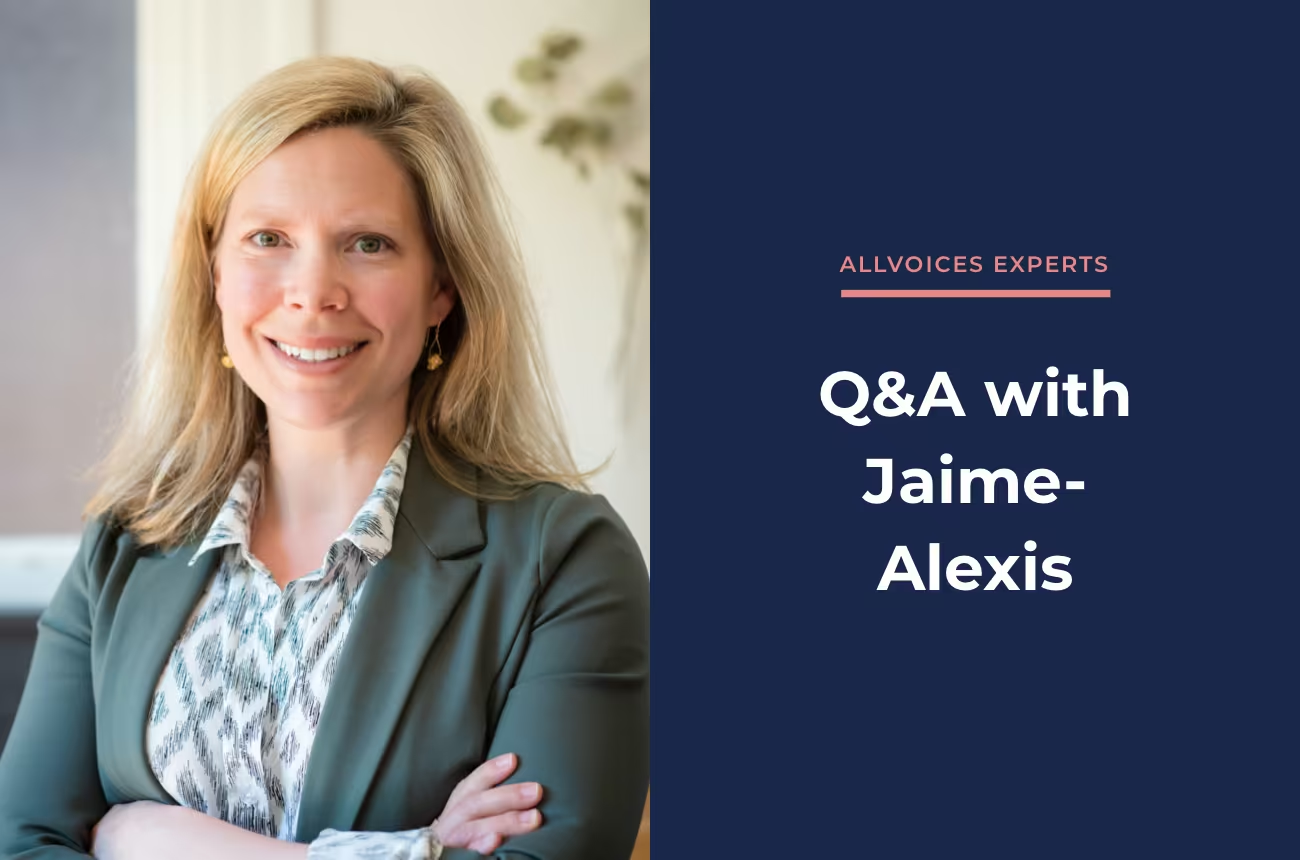
Jaime-Alexis Fowler is the Founder and CEO of Empower Work, the first confidential text line for workers facing critical job situations. She has a track record of building high-performing teams across early-stage startups and established nonprofits, and she brings the same people-first lens to running Empower Work that she brings to everything else. Since 2018, the organization has supported more than 432,000 workers across the United States, according to their 2024 impact report.
This conversation, part of the AllVoices Experts series, was originally published in 2020. The specific pressures Fowler describes have evolved, but her core argument about what workers need and what employers consistently fail to provide has only grown more urgent.
Why Jaime-Alexis Fowler built Empower Work
Empower Work exists because of a pattern Fowler kept seeing: workers in crisis, no structured support available to them, and the closest thing to help being someone's personal network. She turned that gap into an organization.
What is Empower Work and where did the idea come from?
"Empower Work started with a question: how can we better support vulnerable workers at critical moments? In 2017, I'd increasingly been taking calls or coffees whisper-network style when Susan Fowler's memo came out. One night, after one conversation, I turned to my husband and said, 'there must be some kind of crisis text line for work.'"
The catalyst was a conversation with a first-generation college graduate who had come to Fowler in crisis. She had taken a tech job expecting advancement, instead found a toxic startup environment, and had spent weeks without any support as the situation deteriorated. By the time she reached Fowler, her confidence was gone and she was considering leaving the industry entirely.
"I started Empower Work because no one should face that kind of challenging, livelihood altering situation alone."
The model Fowler built pairs workers with trained peer volunteers who provide immediate, confidential support: blending emotional and tactical guidance. Over 90% of people who reach Empower Work say they feel better after the conversation and take an action toward the outcome they want.
How companies can support employees facing workplace crises
Fowler draws a straight line between employer communication practices and employee wellbeing. The breakdown she describes is structural, not just cultural: and the fix requires more than an EAP benefit.
What did employees need most during crisis periods?
"One of the most important actions we've seen for employers is communications. Employees have expressed frustration at both the slowness and lack of information shared about health, safety, the conditions of the business. The simple act of acknowledging all that's going on in the world can be meaningful to employees. As one shared, 'I feel unheard and unseen.'"
Workers described trouble sleeping, mental stability concerns, and fear that stress would compound physical health risks. Fowler's recommendation: combine timely communications with concrete mental health resources, whether free crisis services or internal paid leave policies for mental health days.
What to do when leaving feels like the only option
A large share of workers who reach Empower Work are already at the point where they see leaving as their only real option. Fowler's advice is deliberately non-prescriptive: because context changes everything.
Common questions worth working through with a trusted sounding board:
- What matters most to you right now: financial security, career advancement, or your own wellbeing?
- What would change if you reported the issue internally? Who would likely hear about it?
- If you left tomorrow, what would you wish you had done differently?
- What support do you actually have access to: a mentor, a union rep, HR, an outside counselor?
How do you help someone decide whether to stay or go?
"Leaving a job because you feel unsafe or unsupported is a normal: and reasonable: action. It's self protection. My favorite answer is: it depends. Two people experiencing similar situations may respond totally differently because they have different important things at stake. So my best advice: find a partner, friend, former colleague, mentor, Empower Work counselor: anyone you trust who can be a sounding board: and walk through some questions with them."
The questions she suggests: what's most important to you, what do you value, what would happen if you did nothing versus took action? Playing those scenarios out with someone who can listen without an agenda is what helps people find the answer that fits their actual situation.
Why workplace safety cannot be separated from structural equity
Fowler connects workplace challenges to national policy in a way that most employers are not prepared to engage with directly. The health of a workplace cannot be decoupled from the broader environment its employees are living in.
What are the real challenges companies need to face?
"Racism, sexism, and deep structural inequities. They're interwoven threads pervasive throughout U.S. culture. And that culture is part of our workplaces."
Fowler extends the same logic to policy: the absence of universal paid leave and childcare undervalues women and creates ripple effects in workplaces. "Even the healthiest, most open, diverse, and inclusive workplace is still part of the fabric of American policy and culture," she says. "And that directly impacts emotional, economic, and physical safety for workers."
What keeps her doing the work?
"What drives me every day is the gap that led to our start: 80% of working Americans lack access to support at critical work moments, exacerbating already record high inequity."
She closes with a message from a worker who had contacted Empower Work: "honestly you have offered me tremendous hope where I didn't think I had any." That gap between people who can reach out to a personal network and those who cannot is what Empower Work was built to close.
Where confidential worker support stands in 2025 and 2026
The structural issues Fowler described in 2020 have not resolved. Recent data shows the trust gap between employees and HR has widened rather than closed in many organizations.
The feedback gap is still significant
AllVoices research found that 84% of employees had at least one concern to share with HR in the past year but did not share it. Only 47% said they are fully honest when giving feedback to HR. Fear of retaliation and doubt that the organization genuinely wants honest feedback were the top reasons. These numbers reflect exactly the dynamic Fowler described: workers who need support but cannot access it safely.
Employee engagement and trust in leadership
Gallup data from 2025 shows 32% of employees are engaged at work. Only 29% of employees say they receive clear, honest, and consistent communication from leaders. The relationship between anonymity and willingness to report remains one of the most consistent findings in employee feedback research.
What employers can do now
The tools available to HR teams have improved significantly since 2020. Confidential reporting platforms, anonymous feedback channels, and structured follow-up processes give organizations real mechanisms to close the gap Fowler identified. But technology alone does not build a culture where hard conversations actually happen. That requires leadership that communicates proactively, responds to reports with diligence, and creates systems where employees genuinely believe speaking up makes a difference. See how AllVoices supports confidential employee reporting.

.svg)
.svg)