Understanding Class Privilege in the Workplace with Dr. Shindale Seale

Episode 9
About This Episode
In this episode of Reimagining Company Culture, we’re chatting with Dr. Shindale Seale, CEO, and Founder of SEADE Consulting. Dr.Seale is a cultural equity and diversity strategist with a track record of success in developing and teaching courses on Diversity, Equity, & Inclusion in the workplace and academia.
About The Guest
Dr. Shindale Seale is the CEO and Founder of SEADE Consulting. Dr. Seale is a cultural equity and diversity strategist who employs leadership and performance optimization concepts to help entrepreneurs, corporate and academic stakeholders, and Diversity & Inclusion professionals identify and reach their organizational culture goals. In addition to her consulting services, Dr. Seale is the Diversity, Equity, & Inclusion Program Chair at the University of California Santa Cruz - Silicon Valley Extension, where she also develops and teaches courses on Diversity, Equity, & Inclusion in the workplace and academia. Dr. Seale is also an Adjunct Professor at the University of Redlands where she teaches Leadership, Organizational Change, and Business Communication.
Episode Breakdown

On this episode of Reimagining Company Culture, we sat down with Dr. Shindale Seale, CEO and Founder of SEADE Consulting. Dr. Seale is a cultural equity and diversity strategist who teaches DEI in the workplace and academia at the University of California Santa Cruz Silicon Valley Extension and the University of Redlands, alongside her consulting work with corporate, academic, and nonprofit clients.

Dr. Seale argued that class privilege is the most undertheorized lens in corporate DEI work. Race, gender, and disability get policy and program attention. Class operates almost invisibly, shaping who gets sponsored, who gets promoted, and who gets the benefit of the doubt. She pushed back on the assumption that addressing class is somehow incompatible with addressing race or gender. The strongest programs treat class as one more dimension that interacts with the others, not as a competing frame.

That conversation matters because most companies are now sophisticated enough to see the gaps that visible identity dimensions produce, and the next maturity step is seeing the gaps that the less visible dimensions produce.

Why Class Privilege Operates Invisibly at Work

The signals of class are quiet. The colleague who knows how to dress for the executive offsite. The new hire who navigates email norms instinctively. The manager who can describe their college experience without naming the loans they did not take out. None of these are flagged in HR systems. All of them shape who advances.

The research on socioeconomic background and workplace outcomes is consistent. CEPR research on socioeconomic diversity finds that career progression and pay in prestigious jobs is substantially worse for those from less privileged backgrounds, due to invisible obstacles like unconscious bias among interviewers, unfair work allocation, and exclusion from informal networks. The economic case for addressing it is also significant: increasing social mobility to peer-country averages is associated with a roughly 9 percent increase in GDP per capita.

Companies that move past class blindness do three things. They include socioeconomic background in their listening work. They train hiring committees to recognize signals of class privilege that are easily mistaken for fit. And they create sponsorship and access programs that compensate for the informal networks first-generation professionals do not start with.

What Class Privilege Looks Like Inside a Company

How does class show up in hiring?

In the screen for cultural fit, in the weight given to certain alma maters, in the assumptions about what constitutes a strong reference. Hiring committees that have never been trained on class often equate familiarity with quality, then attribute the preference to merit. The companies starting to address this train interviewers explicitly on what to discount and what to discount for.

How does class show up in promotion?

In which employees know to ask for sponsorship versus which employees wait to be noticed. In which employees have the social capital to navigate political moments. In whose work gets framed as strategic versus tactical. The hidden curriculum of corporate advancement is taught at home for employees from professional backgrounds and learned by trial and error for everyone else.

What Actually Works: A Framework for Addressing Class

Design principle one: include socioeconomic background in your listening

Add optional questions to your engagement surveys about first-generation status, parental education, or financial background. Track outcomes by those cohorts. The data is rarely flattering at first, which is why most companies skip it. The data is also the only thing that turns class into a measurable program area.

Design principle two: build sponsorship pathways that compensate for missing networks

Mentorship gives advice. Sponsorship gives access. First-generation professionals disproportionately need sponsorship because they did not inherit the network. Make sponsorship explicit, name the sponsors, and measure outcomes. The companies that do this produce promotion patterns that look different than the ones that rely on informal patronage.

Design principle three: open intake channels for the concerns that do not fit existing categories

Class concerns rarely show up as a clean policy violation. They show up as a feeling that the rules are different for some people, or as a pattern of being passed over. Tools like a DEI hotline and an anonymous reporting tool let employees flag those concerns without forcing them into a legal frame that may not apply.

Where Employee Relations Fits

Strong diversity, equity, and inclusion programs use ER infrastructure to surface the patterns that explicit categories miss. The team where first-generation professionals are leaving faster. The manager whose feedback patterns track demographic and class proxies together. The promotion cycle where the same kind of resume keeps winning. ER tooling turns those patterns into evidence.

How does ER tooling reinforce class equity work?

By making patterns visible that surveys and policies do not catch. The case data shows where the company's stated commitments and lived experiences diverge. That visibility lets HR teams update diversity programs to include class explicitly, refine inclusion measures across cohorts, and protect every protected class with the kind of operational rigor that intent alone cannot produce.

Frequently Asked Questions About Class Privilege at Work

Why is class harder to talk about than race or gender at work?

Because class is not a protected category in most legal frameworks, and because Americans are taught that class is fluid and individual rather than systemic. Both assumptions make the conversation harder. The first removes legal cover for the discussion. The second makes the discussion feel like personal failure rather than structural pattern.

How do you start the conversation with leadership?

With data. Run a first-generation professional cohort analysis on retention and promotion. Show the gaps. The conversation shifts from values rhetoric to performance management when the data is in front of executives.

What is the relationship between class privilege and microaggressions?

Class privilege often operates through the same mechanisms as microaggressions, just along a different axis. Comments about a colleague's vocabulary, accent, or upbringing carry weight even when they are not intended that way. For a deeper look at how these patterns compound, see our piece on why microaggressions hurt.

How do you train managers on class without making them defensive?

Frame it as a hiring and development capability, not a moral failing. Most managers respond well to the framing that they are missing talent because they cannot recognize it. The conversation is harder when it starts with accusation and easier when it starts with capability.

What is the single biggest move companies can make on class equity?

Build sponsorship programs that explicitly include first-generation professionals. The promotion gap closes faster with sponsorship than with any other intervention because sponsorship compensates for the network gap that produces most of the disparity in the first place.

The Bottom Line for HR Leaders

Dr. Seale's framing pushes companies toward a conversation most HR teams have been quietly avoiding. Class operates inside every organization, shaping who gets sponsored and who gets promoted. The companies willing to name it and design for it produce different outcomes than the ones that treat class as someone else's problem.

That work does not require new categories of policy. It requires extending the same operational discipline already used for other dimensions of equity to a dimension that has been quietly invisible. The companies that do this become harder to leave for talented employees from any background.

That is what addressing class actually looks like in an operating model.
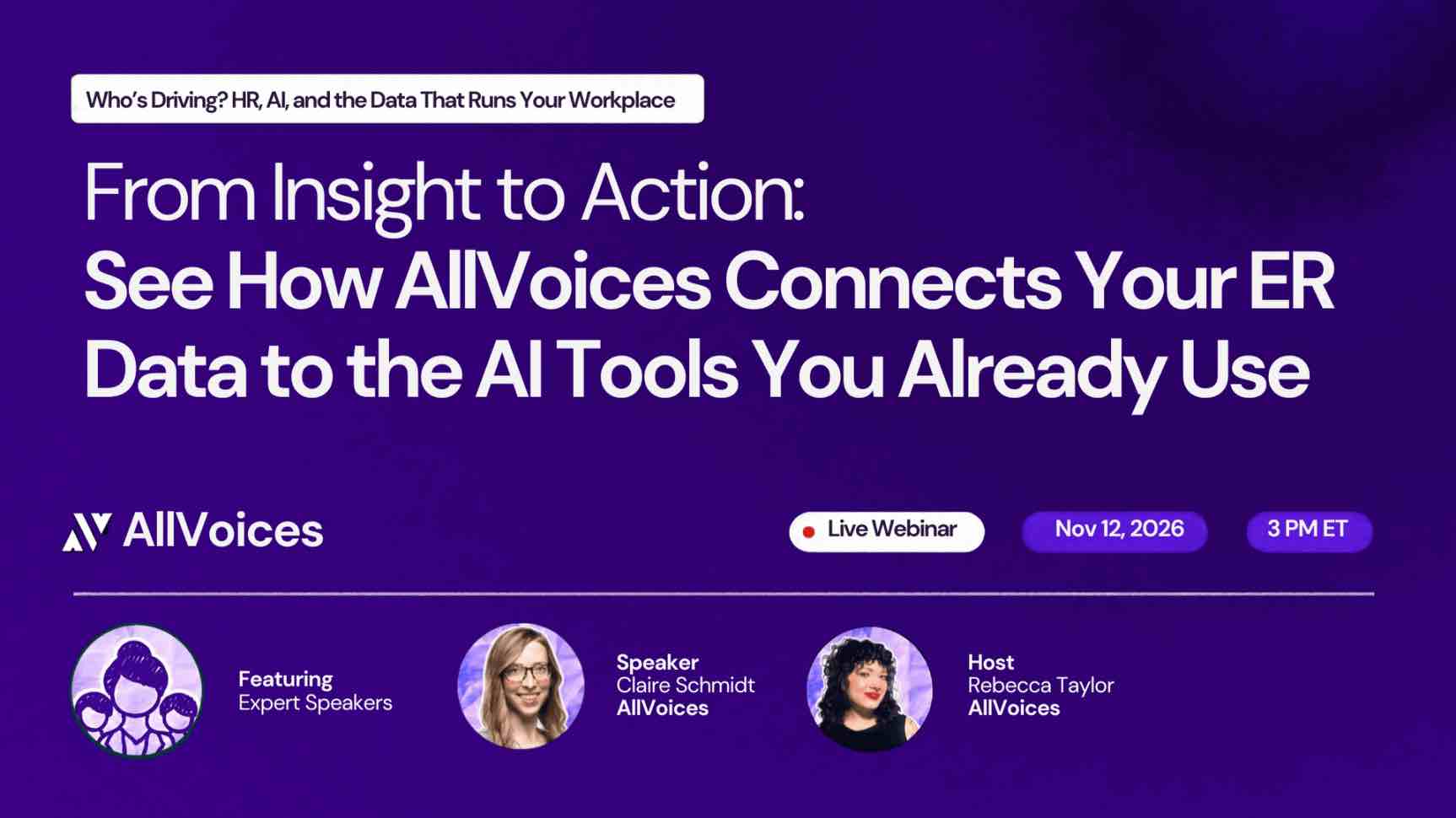
See how AllVoices helps HR teams surface the patterns that drive class equity work in the operating model.

Want to learn more?
See the power of AllVoices today
Thank you! We look forward to meeting you soon
Oops! Something went wrong while submitting the form.
Frequently asked questions

Got more questions? Email us at support@allvoices.co and we'll respond ASAP.

No items found.
Frequently asked questions

Got more questions? Email us at support@allvoices.co and we'll respond ASAP.

No items found.
Understanding Class Privilege in the Workplace with Dr. Shindale Seale
Episode 9
About This Episode
In this episode of Reimagining Company Culture, we’re chatting with Dr. Shindale Seale, CEO, and Founder of SEADE Consulting. Dr.Seale is a cultural equity and diversity strategist with a track record of success in developing and teaching courses on Diversity, Equity, & Inclusion in the workplace and academia.
About The Guest
Dr. Shindale Seale is the CEO and Founder of SEADE Consulting. Dr. Seale is a cultural equity and diversity strategist who employs leadership and performance optimization concepts to help entrepreneurs, corporate and academic stakeholders, and Diversity & Inclusion professionals identify and reach their organizational culture goals. In addition to her consulting services, Dr. Seale is the Diversity, Equity, & Inclusion Program Chair at the University of California Santa Cruz - Silicon Valley Extension, where she also develops and teaches courses on Diversity, Equity, & Inclusion in the workplace and academia. Dr. Seale is also an Adjunct Professor at the University of Redlands where she teaches Leadership, Organizational Change, and Business Communication.
Episode Transcription

On this episode of Reimagining Company Culture, we sat down with Dr. Shindale Seale, CEO and Founder of SEADE Consulting. Dr. Seale is a cultural equity and diversity strategist who teaches DEI in the workplace and academia at the University of California Santa Cruz Silicon Valley Extension and the University of Redlands, alongside her consulting work with corporate, academic, and nonprofit clients.

Dr. Seale argued that class privilege is the most undertheorized lens in corporate DEI work. Race, gender, and disability get policy and program attention. Class operates almost invisibly, shaping who gets sponsored, who gets promoted, and who gets the benefit of the doubt. She pushed back on the assumption that addressing class is somehow incompatible with addressing race or gender. The strongest programs treat class as one more dimension that interacts with the others, not as a competing frame.

That conversation matters because most companies are now sophisticated enough to see the gaps that visible identity dimensions produce, and the next maturity step is seeing the gaps that the less visible dimensions produce.

Why Class Privilege Operates Invisibly at Work

The signals of class are quiet. The colleague who knows how to dress for the executive offsite. The new hire who navigates email norms instinctively. The manager who can describe their college experience without naming the loans they did not take out. None of these are flagged in HR systems. All of them shape who advances.

The research on socioeconomic background and workplace outcomes is consistent. CEPR research on socioeconomic diversity finds that career progression and pay in prestigious jobs is substantially worse for those from less privileged backgrounds, due to invisible obstacles like unconscious bias among interviewers, unfair work allocation, and exclusion from informal networks. The economic case for addressing it is also significant: increasing social mobility to peer-country averages is associated with a roughly 9 percent increase in GDP per capita.

Companies that move past class blindness do three things. They include socioeconomic background in their listening work. They train hiring committees to recognize signals of class privilege that are easily mistaken for fit. And they create sponsorship and access programs that compensate for the informal networks first-generation professionals do not start with.

What Class Privilege Looks Like Inside a Company

How does class show up in hiring?

In the screen for cultural fit, in the weight given to certain alma maters, in the assumptions about what constitutes a strong reference. Hiring committees that have never been trained on class often equate familiarity with quality, then attribute the preference to merit. The companies starting to address this train interviewers explicitly on what to discount and what to discount for.

How does class show up in promotion?

In which employees know to ask for sponsorship versus which employees wait to be noticed. In which employees have the social capital to navigate political moments. In whose work gets framed as strategic versus tactical. The hidden curriculum of corporate advancement is taught at home for employees from professional backgrounds and learned by trial and error for everyone else.

What Actually Works: A Framework for Addressing Class

Design principle one: include socioeconomic background in your listening

Add optional questions to your engagement surveys about first-generation status, parental education, or financial background. Track outcomes by those cohorts. The data is rarely flattering at first, which is why most companies skip it. The data is also the only thing that turns class into a measurable program area.

Design principle two: build sponsorship pathways that compensate for missing networks

Mentorship gives advice. Sponsorship gives access. First-generation professionals disproportionately need sponsorship because they did not inherit the network. Make sponsorship explicit, name the sponsors, and measure outcomes. The companies that do this produce promotion patterns that look different than the ones that rely on informal patronage.

Design principle three: open intake channels for the concerns that do not fit existing categories

Class concerns rarely show up as a clean policy violation. They show up as a feeling that the rules are different for some people, or as a pattern of being passed over. Tools like a DEI hotline and an anonymous reporting tool let employees flag those concerns without forcing them into a legal frame that may not apply.

Where Employee Relations Fits

Strong diversity, equity, and inclusion programs use ER infrastructure to surface the patterns that explicit categories miss. The team where first-generation professionals are leaving faster. The manager whose feedback patterns track demographic and class proxies together. The promotion cycle where the same kind of resume keeps winning. ER tooling turns those patterns into evidence.

How does ER tooling reinforce class equity work?

By making patterns visible that surveys and policies do not catch. The case data shows where the company's stated commitments and lived experiences diverge. That visibility lets HR teams update diversity programs to include class explicitly, refine inclusion measures across cohorts, and protect every protected class with the kind of operational rigor that intent alone cannot produce.

Frequently Asked Questions About Class Privilege at Work

Why is class harder to talk about than race or gender at work?

Because class is not a protected category in most legal frameworks, and because Americans are taught that class is fluid and individual rather than systemic. Both assumptions make the conversation harder. The first removes legal cover for the discussion. The second makes the discussion feel like personal failure rather than structural pattern.

How do you start the conversation with leadership?

With data. Run a first-generation professional cohort analysis on retention and promotion. Show the gaps. The conversation shifts from values rhetoric to performance management when the data is in front of executives.

What is the relationship between class privilege and microaggressions?

Class privilege often operates through the same mechanisms as microaggressions, just along a different axis. Comments about a colleague's vocabulary, accent, or upbringing carry weight even when they are not intended that way. For a deeper look at how these patterns compound, see our piece on why microaggressions hurt.

How do you train managers on class without making them defensive?

Frame it as a hiring and development capability, not a moral failing. Most managers respond well to the framing that they are missing talent because they cannot recognize it. The conversation is harder when it starts with accusation and easier when it starts with capability.

What is the single biggest move companies can make on class equity?

Build sponsorship programs that explicitly include first-generation professionals. The promotion gap closes faster with sponsorship than with any other intervention because sponsorship compensates for the network gap that produces most of the disparity in the first place.

The Bottom Line for HR Leaders

Dr. Seale's framing pushes companies toward a conversation most HR teams have been quietly avoiding. Class operates inside every organization, shaping who gets sponsored and who gets promoted. The companies willing to name it and design for it produce different outcomes than the ones that treat class as someone else's problem.

That work does not require new categories of policy. It requires extending the same operational discipline already used for other dimensions of equity to a dimension that has been quietly invisible. The companies that do this become harder to leave for talented employees from any background.

That is what addressing class actually looks like in an operating model.

See how AllVoices helps HR teams surface the patterns that drive class equity work in the operating model.

Want to learn more?
See the power of AllVoices today
Thank you! We look forward to meeting you soon
Oops! Something went wrong while submitting the form.
Frequently asked questions

Got more questions? Email us at support@allvoices.co and we'll respond ASAP.

No items found.
Frequently asked questions

Got more questions? Email us at support@allvoices.co and we'll respond ASAP.

No items found.