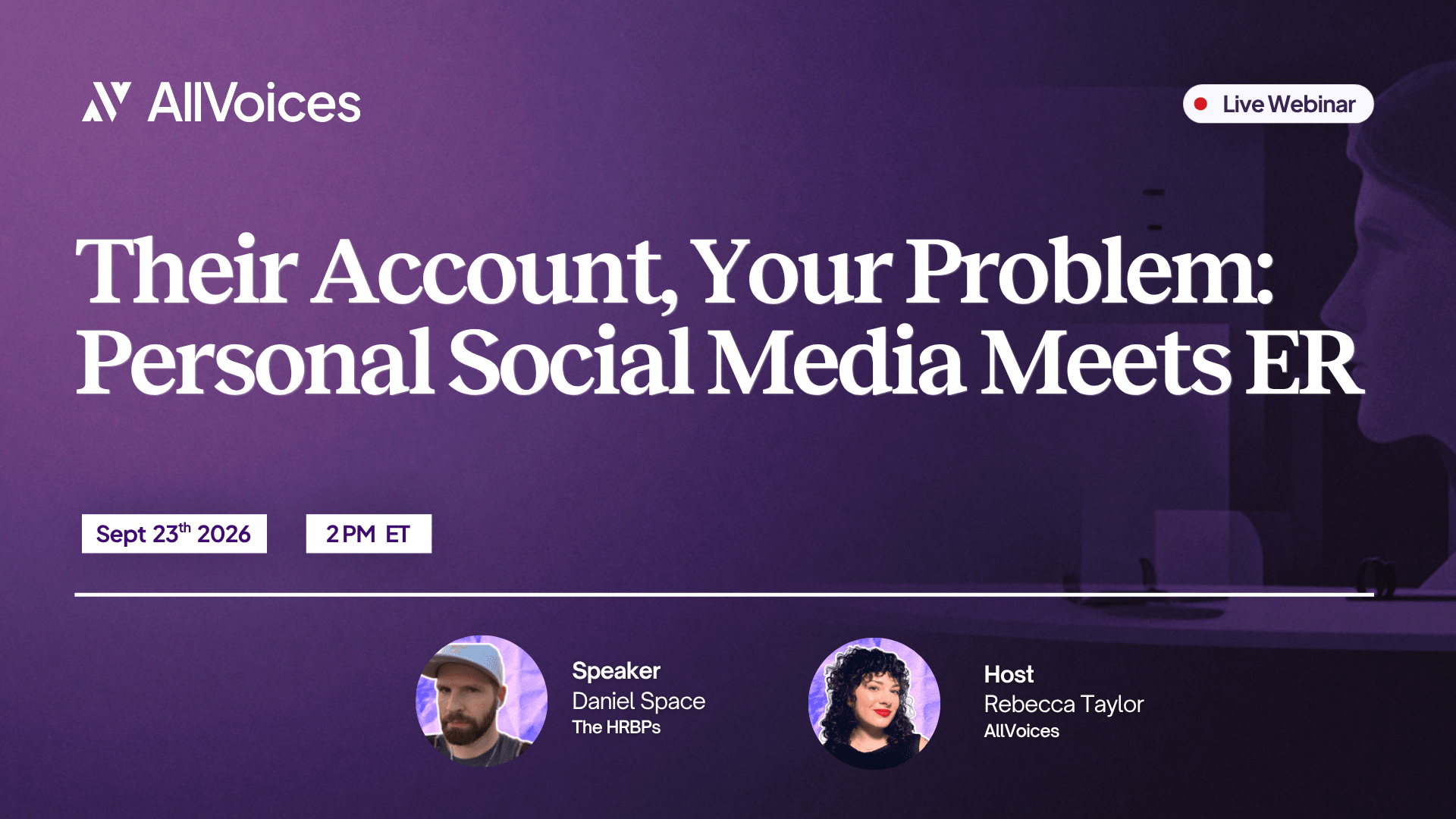
How to Support the Full Lives of Employees Including a Grief Inclusive Work Culture
Employees don't leave their grief at the door. The death of a parent, partner, child, pet, or friend shows up at work whether the company is ready for it or not. Most companies aren't.
This recap covers what it looks like to build a grief-inclusive work culture, and the practical moves HR leaders can make to support the full lives of employees, not just the parts that fit neatly into a performance review.
Bereavement Leave Policies Are Usually Too Short
The standard three-to-five day bereavement policy is a holdover from a different era. Grief doesn't run on a business timeline. An employee who lost a parent isn't fully functional a week later. An employee who lost a child isn't fully functional for a year or more, sometimes ever.
The companies building grief-inclusive cultures are expanding leave policies beyond the legal minimums. Longer leave for immediate family. Flexibility for extended family and chosen family. Separate allowances for pregnancy loss, miscarriage, and stillbirth, which are often excluded from standard policies. Clear guidance on what counts, because the last thing a grieving employee should have to do is negotiate for their own loss.
None of this is extravagant. It's a baseline that reflects what grief actually looks like for the humans doing the work.
The Return-to-Work Experience Matters
How a company handles the return from bereavement leave shapes whether the employee stays, checks out, or quietly starts looking for another job.
Strong practices: a manager check-in on day one that acknowledges the loss directly and doesn't pretend nothing happened. A reduced load for the first few weeks while the employee ramps back up. Permission to work from home, take unexpected hours off, or adjust schedules without bureaucracy. Clear communication with the team about what to expect and how to be supportive without being intrusive.
The companies that get this right retain employees through the hardest moments of their lives. The ones that don't lose people right when the cost of replacement is highest.
Train Managers on the Conversation
Most managers have no idea what to say to a grieving employee. They default to silence, platitudes, or premature encouragement to "focus on work." All three make things worse.
This is where investing in manager enablement makes a measurable difference. Training on how to open the conversation. Guidance on what to say and what to avoid. Practice on how to offer specific support instead of the vague "let me know if you need anything." Scripts for the awkward moments, because they will come up.
A trained manager can be the difference between an employee feeling supported and feeling invisible. That single relationship often determines how the return-to-work experience plays out.
Expand the Definition of Grief
Grief isn't only about death. It's about loss. Divorce. Miscarriage. Infertility struggles. The death of a pet. A friend's diagnosis. A parent moving into care. A child leaving for college. The end of a decades-long friendship. All of these are real losses that show up at work.
Grief-inclusive cultures recognize this. They build flexibility for the full range of human loss, not just the kinds covered by standard HR policy. They train managers to recognize grief that doesn't look like what they expect. They don't force employees to justify their sadness.
This isn't about handing out bereavement leave for every disappointment. It's about not pretending that grief only happens in a narrow set of textbook circumstances.
Make Mental Health Support Actually Accessible
Most companies offer mental health benefits that exist on paper and are nearly impossible to use in practice. Grieving employees don't have the bandwidth to navigate five different vendors, wait lists, and insurance hoops.
Real support looks like a short, clear path to care. An EAP that actually has therapists available, not a directory of full practices. Coverage for specialist grief therapists in addition to general counselors. Permission to use sick time for therapy appointments without explanation. Clear communication about what's available, repeated often so employees know it exists before they need it.
Companies that take this seriously see real uptake and real outcomes. The ones that don't have benefits that look good in a pitch deck and don't help a single person.
Normalize Talking About Loss at Work
Part of building a grief-inclusive culture is making it okay for leaders to acknowledge their own losses. When a senior leader shares that they're going through something hard, it gives everyone else permission to do the same.
This doesn't mean oversharing or making every meeting a therapy session. It means not pretending that grief is a private problem that should be invisible in the workplace. A brief acknowledgment at the start of a meeting. A moment of honesty in an all-hands. A message to the team about why someone is out.
When loss is talked about openly, employees don't have to perform wellness they don't feel. That performance is exhausting, and it's often what pushes grieving employees out the door.
Build Infrastructure That Catches the Signals
Grieving employees often don't raise their own hands. They push through. They underperform and blame themselves. They quietly disengage and eventually leave.
Companies that build always-on feedback channels and train managers to watch for signs of distress catch these situations earlier. A manager who knows to ask about wellbeing in 1:1s will surface struggles that would otherwise stay hidden. A pulse survey that includes wellbeing questions will reveal patterns that exit interviews come too late to catch.
The goal isn't surveillance. It's making sure the employees who most need support don't have to advocate for themselves to get it.
Grief Rituals Can Be Part of the Culture
Some of the strongest grief-inclusive cultures build small rituals that acknowledge loss. A moment at the start of a team meeting when someone is out for a death in the family. A shared message from the manager acknowledging what a team is going through. A gesture of care, like a meal delivery or a handwritten note, that shows up without being asked for.
None of this costs much. All of it signals that the culture takes employees' full lives seriously. That signal compounds over time into the kind of loyalty that can't be built any other way.
This Work Builds Loyalty That Lasts
Employees remember forever how their company treated them during the worst moments of their lives. Companies that showed up with care build loyalty that lasts decades. Companies that pushed people to get over it lose those employees the minute a better option appears.
A grief-inclusive culture isn't about being soft. It's about being human at the moments when it matters most. The companies that invest in this build cultures that are genuinely better to work in, and they're the ones that retain talent through the hardest seasons of life.
Want to see how modern HR teams are building infrastructure that supports the full lives of their employees? Book a demo with AllVoices and see how the right system surfaces the signals that let you support your people through everything they're carrying.
Stay up to date on Employee Relations news
Sign up to our newsletter
.svg)
.svg)