About This Episode
In this episode of Reimagining Company Culture, we’re chatting with Veronica Setzke, Senior Director of People Operations at Pax8. Veronica believes that employees deserve a culture that values the work they do, and in turn will respond to such a culture by creating amazing results. Benefits, compensation, and all of the other extrinsic needs must be coupled with a culture that values the employee’s intrinsic drives. Tune in to learn Veronica’s thoughts on leadership empowerment, measuring the effectiveness of managers, redesigning spaces to be equitable, and more!
About The Guest
As Senior Director of People Ops, Veronica is responsible for ensuring that Pax8 obtains and retains the very best employees and are keep engaged, motivated and even have a little fun throughout the day. Her responsibilities include the strategic vision for Talent Acquisition, Payroll and People Operations. Her work ensures that Pax8 employees have access to the best resources to achieve their goals, that Pax8 provides the best new co-workers for current Pax8 employees, and that Pax8 is continually strengthening our ability to provide an incredible Global employment experience. Veronica believes that people want to be excellent, and it is her role to help move the obstacles to their achieving success. She believes that employees deserve a culture that values the work they do, and in turn will respond to such a culture by creating amazing results. Benefits, compensation, and all of the other extrinsic needs must be coupled with a culture that values the employee’s intrinsic drives. Employees deserve People Ops professionals that are equally as dedicated to excellence to help them throughout their employment. Ms. Setzke has her undergraduate degree from Columbus State University in Social Science and her master’s degree from the University of Denver in Strategic Human Resources Management. She also has certifications from SHRM and HRCI. She’s been a People professional for over 16 years. She is happily married to a wonderful surfer named Dan. They have two adult children, two boxer dogs and a phenomenal garden. She spends her downtime travelling, gardening, reading and having fantastic adventures with her family
Episode Breakdown

On the AllVoices Reimagining Company Culture podcast, we sat down with Veronica Setzke, Senior Director of People Operations at Pax8, to dig into designing workplace flexibility that supports teams. As Senior Director of People Ops, Veronica is responsible for ensuring that Pax8 obtains and retains the very best employees and are keep engaged, motivated and even have a little fun throughout the day. Her responsibilities include the strategic vision for Talent Acquisition, Payroll and People Operations.

The conversation moves past the usual talking points. Instead of treating workplace flexibility as an HR theme, Veronica Setzke treats it as an operational discipline that sits in the daily decisions managers make about people, priorities, and trust. Below, the takeaways HR leaders, employee relations specialists, and executive teams will find most useful.

The discussion below pulls on several threads from the episode and connects them to current research and what AllVoices sees across hundreds of People teams.

What Workplace Flexibility Looks Like in Practice

Workplace Flexibility is one of those words HR teams use freely, but the on-the-ground version is much messier. In the conversation with Veronica Setzke, several patterns showed up that mirror what a Harvard Business Review study on hybrid work also highlights about effective people work. The gap between the slide-deck version and the daily practice is where most programs fall apart.

The data backs the case. SHRM coverage of flexible work tradeoffs shows that organizations treating workplace flexibility as a real discipline outperform peers on engagement, retention, and the cultural metrics that matter most over a multi-year horizon. Companies that treat it as messaging see short-term lift and long-term decline.

For HR leaders building Employee Engagement programs, that means starting with the everyday touchpoints where workplace flexibility either lands or fails: hiring loops, onboarding, manager 1:1s, and performance conversations. These are the places where intention turns into experience, and where employees decide whether they trust the company enough to stay, speak up, and do their best work.

The pattern across high-functioning HR teams is consistent. They write fewer policies, run more pilots, and spend more time in conversation with managers who are actually doing the work. That discipline is harder than rolling out a campaign, but it is the difference between workplace flexibility as a phrase and workplace flexibility as a result.

How HR Teams Make Workplace Flexibility Operational

The shift from concept to operation is where most teams stall. Two questions usually surface in workshops with People leaders.

Where should workplace flexibility live in the org?

Ownership matters. Programs that sit only with HR rarely get traction. The strongest organizations pair central ownership in HR with distributed accountability across people managers, with a feedback loop into leadership. People Team Efficiency can help build the capacity to run that distributed model without losing visibility, and gives the People team a single place to track what is actually happening.

What does success look like in 12 months?

Most teams need a one-year mark with concrete outcomes: a measurable change in work-life balance scores, a defined set of policy and process changes, and named owners for the work. Without that, the program drifts and budget questions become harder to defend. The honest version of a 12-month plan also includes two or three things you tried and decided not to repeat.

What Actually Works When You Lead Workplace Flexibility

Three patterns repeat across People teams that get this work right. The principles cut across industry and company size.

Define flexibility by outcome

When people understand what success looks like, they don't need to be watched. Set the outcome, then leave room for the path.

Build manager capability before policy

Flexible work fails when managers haven't been taught to lead asynchronously. Capability-building has to precede the policy rollout.

Audit who is benefiting

Flexibility programs often advantage people who are already advantaged. Run an equity check on who uses what, and why.

These three principles also depend on the underlying culture. Without a baseline of workplace flexibility, most operational changes get rejected by the organization's immune system. Build the foundation first.

Where Employee Relations Fits Into Workplace Flexibility

Whatever the topic, employee relations sits underneath. Workplace Flexibility programs that ignore the ER reality get blindsided by a case that should have been resolved early. AllVoices builds investigations management and HR case management so HR teams can connect the surface-level work on workplace flexibility to the deeper work of resolving issues, tracking patterns, and acting on what employees raise. The two are tightly linked: when employees see issues handled fairly, they trust the rest of the work too.

How ER data informs Workplace Flexibility strategy

Issue patterns, response times, and resolution outcomes give HR a clearer picture than survey data alone. When the ER data is integrated into Company Culture workflows, leaders can see how workplace flexibility translates into the lived experience of employees who raise concerns, and what to do about it. The teams that move fastest tend to review case themes monthly and feed those insights into the broader people strategy, instead of treating ER as a separate, reactive function.

Frequently Asked Questions About Workplace Flexibility

What does workplace flexibility actually mean?

Workplace flexibility covers when, where, and how work gets done. It can include hybrid schedules, asynchronous work, compressed weeks, results-only environments, and accommodation-based arrangements.

Does flexibility hurt productivity?

Research from HBR and Gallup is mixed but generally positive. Properly designed flexible work shows similar or better productivity, lower attrition, and higher satisfaction. Poorly designed flexibility can isolate employees and raise burnout.

How do you write a flexibility policy?

Start with the work, not the calendar. Define which roles need synchronous time, which don't, and what outcomes matter. Codify the agreements team by team rather than mandating a single rule.

Is flexibility a benefit or a culture choice?

Both. It functions as a benefit for recruiting, but it requires a cultural commitment to outcomes, async communication, and trust to actually work.

How do you handle employees who abuse flexibility?

Treat it as a performance conversation, not a flexibility problem. If outcomes are slipping, address outcomes. The flex policy doesn't need to change for one underperformer.

The Bottom Line for HR Leaders

Workplace Flexibility is not a posture. It's a set of decisions, repeated over time, by people who control budgets, promotions, calendars, and the daily experience of work. The HR leaders who get traction stop treating this as a campaign and start treating it as ongoing operational practice. That reframing matters because it changes how you measure success and where you put your energy week to week.

That shift requires data, follow-through, and a clear point of view. a Harvard Business Review study on hybrid work and the broader research community make the business case clearer every year. The companies that act on it consistently win on retention, culture, and outcomes that show up on the financial statement. The ones that keep treating the work as branding tend to lose ground quietly, then noisily.

The conversation with Veronica Setzke is a useful reminder that the work is doable. None of it requires a huge HR team or a massive budget. It requires clear thinking, consistent execution, and the willingness to adjust when the data tells you to. Pair that mindset with the right tooling and the right partners, and workplace flexibility stops being aspirational and becomes a measurable part of how the business runs.

Want to see how AllVoices supports HR teams running this work? Book a demo.
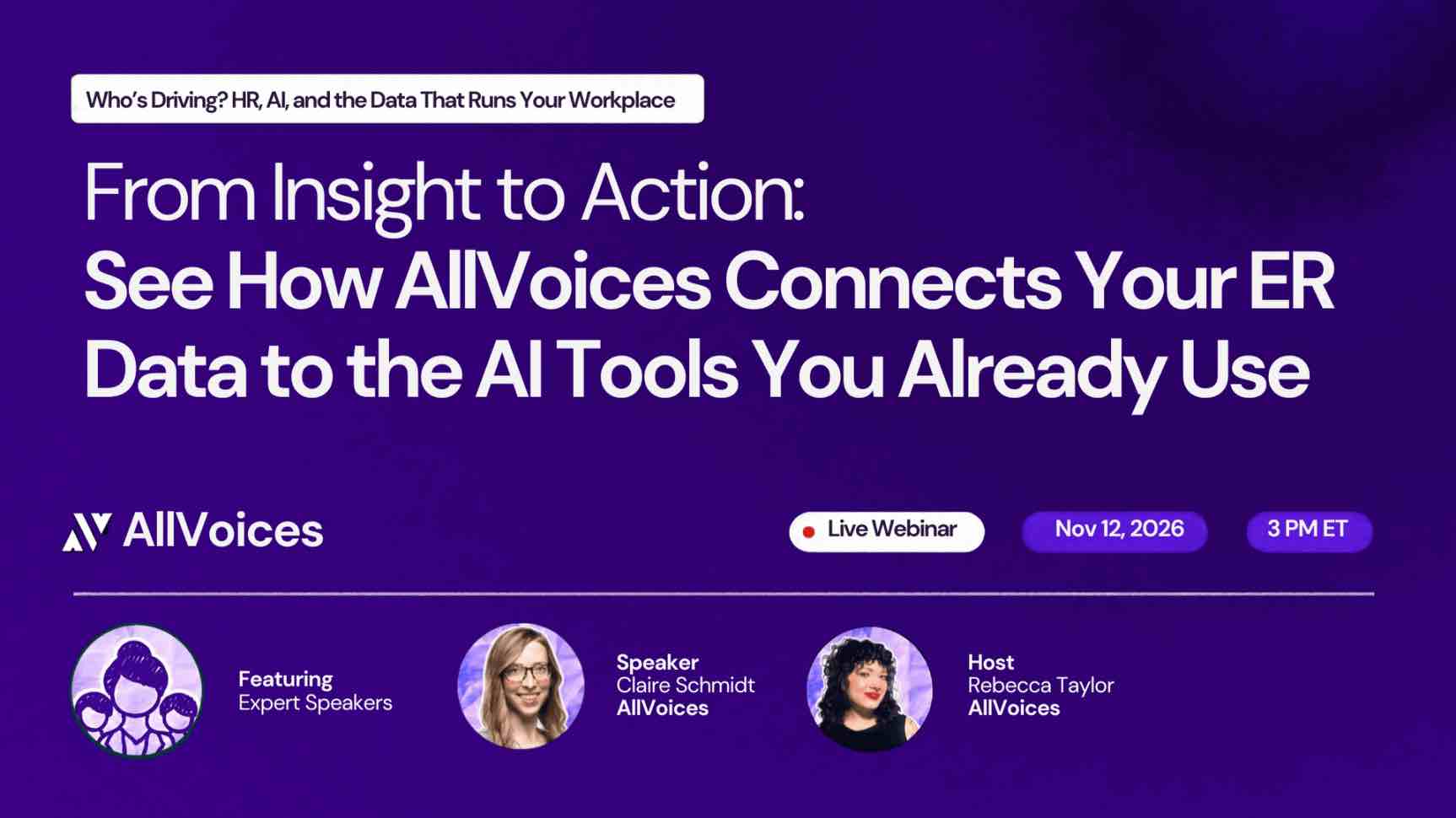
Our next webinar
Frequently asked questions

Got more questions? Email us at support@allvoices.co and we'll respond ASAP.

No items found.
Frequently asked questions

Got more questions? Email us at support@allvoices.co and we'll respond ASAP.

No items found.
Veronica Setzke, Senior Director of People Operations at Pax8 - Flexibility to Support Your Team
Episode 291
About This Episode
In this episode of Reimagining Company Culture, we’re chatting with Veronica Setzke, Senior Director of People Operations at Pax8. Veronica believes that employees deserve a culture that values the work they do, and in turn will respond to such a culture by creating amazing results. Benefits, compensation, and all of the other extrinsic needs must be coupled with a culture that values the employee’s intrinsic drives. Tune in to learn Veronica’s thoughts on leadership empowerment, measuring the effectiveness of managers, redesigning spaces to be equitable, and more!
About The Guest
As Senior Director of People Ops, Veronica is responsible for ensuring that Pax8 obtains and retains the very best employees and are keep engaged, motivated and even have a little fun throughout the day. Her responsibilities include the strategic vision for Talent Acquisition, Payroll and People Operations. Her work ensures that Pax8 employees have access to the best resources to achieve their goals, that Pax8 provides the best new co-workers for current Pax8 employees, and that Pax8 is continually strengthening our ability to provide an incredible Global employment experience. Veronica believes that people want to be excellent, and it is her role to help move the obstacles to their achieving success. She believes that employees deserve a culture that values the work they do, and in turn will respond to such a culture by creating amazing results. Benefits, compensation, and all of the other extrinsic needs must be coupled with a culture that values the employee’s intrinsic drives. Employees deserve People Ops professionals that are equally as dedicated to excellence to help them throughout their employment. Ms. Setzke has her undergraduate degree from Columbus State University in Social Science and her master’s degree from the University of Denver in Strategic Human Resources Management. She also has certifications from SHRM and HRCI. She’s been a People professional for over 16 years. She is happily married to a wonderful surfer named Dan. They have two adult children, two boxer dogs and a phenomenal garden. She spends her downtime travelling, gardening, reading and having fantastic adventures with her family
Episode Transcription

On the AllVoices Reimagining Company Culture podcast, we sat down with Veronica Setzke, Senior Director of People Operations at Pax8, to dig into designing workplace flexibility that supports teams. As Senior Director of People Ops, Veronica is responsible for ensuring that Pax8 obtains and retains the very best employees and are keep engaged, motivated and even have a little fun throughout the day. Her responsibilities include the strategic vision for Talent Acquisition, Payroll and People Operations.

The conversation moves past the usual talking points. Instead of treating workplace flexibility as an HR theme, Veronica Setzke treats it as an operational discipline that sits in the daily decisions managers make about people, priorities, and trust. Below, the takeaways HR leaders, employee relations specialists, and executive teams will find most useful.

The discussion below pulls on several threads from the episode and connects them to current research and what AllVoices sees across hundreds of People teams.

What Workplace Flexibility Looks Like in Practice

Workplace Flexibility is one of those words HR teams use freely, but the on-the-ground version is much messier. In the conversation with Veronica Setzke, several patterns showed up that mirror what a Harvard Business Review study on hybrid work also highlights about effective people work. The gap between the slide-deck version and the daily practice is where most programs fall apart.

The data backs the case. SHRM coverage of flexible work tradeoffs shows that organizations treating workplace flexibility as a real discipline outperform peers on engagement, retention, and the cultural metrics that matter most over a multi-year horizon. Companies that treat it as messaging see short-term lift and long-term decline.

For HR leaders building Employee Engagement programs, that means starting with the everyday touchpoints where workplace flexibility either lands or fails: hiring loops, onboarding, manager 1:1s, and performance conversations. These are the places where intention turns into experience, and where employees decide whether they trust the company enough to stay, speak up, and do their best work.

The pattern across high-functioning HR teams is consistent. They write fewer policies, run more pilots, and spend more time in conversation with managers who are actually doing the work. That discipline is harder than rolling out a campaign, but it is the difference between workplace flexibility as a phrase and workplace flexibility as a result.

How HR Teams Make Workplace Flexibility Operational

The shift from concept to operation is where most teams stall. Two questions usually surface in workshops with People leaders.

Where should workplace flexibility live in the org?

Ownership matters. Programs that sit only with HR rarely get traction. The strongest organizations pair central ownership in HR with distributed accountability across people managers, with a feedback loop into leadership. People Team Efficiency can help build the capacity to run that distributed model without losing visibility, and gives the People team a single place to track what is actually happening.

What does success look like in 12 months?

Most teams need a one-year mark with concrete outcomes: a measurable change in work-life balance scores, a defined set of policy and process changes, and named owners for the work. Without that, the program drifts and budget questions become harder to defend. The honest version of a 12-month plan also includes two or three things you tried and decided not to repeat.

What Actually Works When You Lead Workplace Flexibility

Three patterns repeat across People teams that get this work right. The principles cut across industry and company size.

Define flexibility by outcome

When people understand what success looks like, they don't need to be watched. Set the outcome, then leave room for the path.

Build manager capability before policy

Flexible work fails when managers haven't been taught to lead asynchronously. Capability-building has to precede the policy rollout.

Audit who is benefiting

Flexibility programs often advantage people who are already advantaged. Run an equity check on who uses what, and why.

These three principles also depend on the underlying culture. Without a baseline of workplace flexibility, most operational changes get rejected by the organization's immune system. Build the foundation first.

Where Employee Relations Fits Into Workplace Flexibility

Whatever the topic, employee relations sits underneath. Workplace Flexibility programs that ignore the ER reality get blindsided by a case that should have been resolved early. AllVoices builds investigations management and HR case management so HR teams can connect the surface-level work on workplace flexibility to the deeper work of resolving issues, tracking patterns, and acting on what employees raise. The two are tightly linked: when employees see issues handled fairly, they trust the rest of the work too.

How ER data informs Workplace Flexibility strategy

Issue patterns, response times, and resolution outcomes give HR a clearer picture than survey data alone. When the ER data is integrated into Company Culture workflows, leaders can see how workplace flexibility translates into the lived experience of employees who raise concerns, and what to do about it. The teams that move fastest tend to review case themes monthly and feed those insights into the broader people strategy, instead of treating ER as a separate, reactive function.

Frequently Asked Questions About Workplace Flexibility

What does workplace flexibility actually mean?

Workplace flexibility covers when, where, and how work gets done. It can include hybrid schedules, asynchronous work, compressed weeks, results-only environments, and accommodation-based arrangements.

Does flexibility hurt productivity?

Research from HBR and Gallup is mixed but generally positive. Properly designed flexible work shows similar or better productivity, lower attrition, and higher satisfaction. Poorly designed flexibility can isolate employees and raise burnout.

How do you write a flexibility policy?

Start with the work, not the calendar. Define which roles need synchronous time, which don't, and what outcomes matter. Codify the agreements team by team rather than mandating a single rule.

Is flexibility a benefit or a culture choice?

Both. It functions as a benefit for recruiting, but it requires a cultural commitment to outcomes, async communication, and trust to actually work.

How do you handle employees who abuse flexibility?

Treat it as a performance conversation, not a flexibility problem. If outcomes are slipping, address outcomes. The flex policy doesn't need to change for one underperformer.

The Bottom Line for HR Leaders

Workplace Flexibility is not a posture. It's a set of decisions, repeated over time, by people who control budgets, promotions, calendars, and the daily experience of work. The HR leaders who get traction stop treating this as a campaign and start treating it as ongoing operational practice. That reframing matters because it changes how you measure success and where you put your energy week to week.

That shift requires data, follow-through, and a clear point of view. a Harvard Business Review study on hybrid work and the broader research community make the business case clearer every year. The companies that act on it consistently win on retention, culture, and outcomes that show up on the financial statement. The ones that keep treating the work as branding tend to lose ground quietly, then noisily.

The conversation with Veronica Setzke is a useful reminder that the work is doable. None of it requires a huge HR team or a massive budget. It requires clear thinking, consistent execution, and the willingness to adjust when the data tells you to. Pair that mindset with the right tooling and the right partners, and workplace flexibility stops being aspirational and becomes a measurable part of how the business runs.

Want to see how AllVoices supports HR teams running this work? Book a demo.

Want to learn more?
See the power of AllVoices today
Thank you! We look forward to meeting you soon
Oops! Something went wrong while submitting the form.
Frequently asked questions

Got more questions? Email us at support@allvoices.co and we'll respond ASAP.

No items found.
Frequently asked questions

Got more questions? Email us at support@allvoices.co and we'll respond ASAP.

No items found.