About This Episode
In this episode of Reimagining Company Culture, we’re chatting with Lucas Wehle, Diversity, Equity, and Inclusion Specialist at Unite Us and LGBTQ+ and DEI Consultant. After coming out during his college career at the University of South Florida, he began sharing his story to increase education around trans identities and became passionate about helping others access the resources that he desperately needed years prior. Tune in to learn Lucas’ thoughts on supportive personal resources for trans individuals, pitfalls organizations and ERG leaders should be aware of, small changes that make big impacts, and more!
About The Guest
Lucas Wehle (he/him) is a trans man who has dedicated his life to social justice advocacy. Born and raised in Tampa, FL, Lucas has become an expert over the years on the resources that exist in the Tampa Bay Area. After coming out during his college career at the University of South Florida, he began sharing his story to increase education around trans identities and became passionate about helping others access the resources that he desperately needed years prior. In his free time Lucas took every opportunity to share his story, leading workshops, speaking in classes and mentoring other trans students. In 2015, Lucas started his career working at Metro Inclusive Health, a local LGBTQ+ non-profit, where he developed and facilitated support and outreach programs specifically aimed to support gender diverse individuals. In 2016, Lucas led the creation of the Trans Services Division where he managed a team focused solely on the needs of the local trans community. In 2021, he switched careers to a broader field with a company called Unite Us where he now works in Diversity, Equity, and Inclusion and he also has a private LGBTQ+ DEI consulting business on the side. Lucas resides in St. Pete, FL with his beautiful fiancee and their four fur babies.
Episode Breakdown

When we sat down with Lucas Wehle, Diversity, Equity, and Inclusion Specialist at Unite Us and LGBTQ and DEI Consultant, for this episode of Reimagining Company Culture, the conversation moved with the kind of grounded specificity that only comes from a leader who has lived the work personally. After coming out during his college career at the University of South Florida, Lucas began sharing his story to increase education around trans identities and became passionate about helping others access the resources he had needed years prior. His perspective on the operating choices that actually support trans employees was practical and clear-eyed.

His core argument was that the small changes often produce the largest outcomes. The pronoun field. The benefits language. The training that helps managers handle a coming-out conversation well. Each is small. Together they signal whether the company has actually thought about its trans employees or whether it is performing inclusion without doing the work.

Why Personal Resources Matter for Trans Employees

Trans employees work through workplace experiences that most colleagues do not. SHRM research has documented that trans and non-binary employees report higher rates of workplace discrimination and lower psychological safety than peers. The gap is not theoretical. It shows up in retention, in engagement, and in the willingness of trans employees to bring their full selves to work.

Personal resources matter because they reduce the friction trans employees face daily. Healthcare benefits that cover gender-affirming care. Time off that supports transition. Documentation systems that respect chosen names and pronouns. documented that LGBTQ-inclusive companies see better innovation outcomes than less inclusive peers. The investment in inclusion is also an investment in business performance.

What Small Changes That Make Big Impacts Look Like

What kinds of changes have outsized effects?

Useful small changes include pronoun fields in employee systems, gender identity options that go beyond binary, all-gender restroom signage, training for managers on inclusive language, healthcare benefits that cover gender-affirming care, and policies that protect employees through transition. Each change is operationally small. The cumulative effect on the experience of trans employees is significant.

How do you prioritize the changes?

Strong programs start by listening to trans employees about what they actually experience. Focus groups, listening sessions, and confidential anonymous reporting channels surface the friction the leadership team would not otherwise see. The changes that matter most are the ones the affected community names rather than the ones leadership assumes.

What Actually Works When You Build Inclusive Operating Systems

Principle 1: Build inclusion into the operating model rather than as a workshop

Workshops alone produce a one-day boost. Operating model changes produce durable improvement. Strong programs audit the systems where employees encounter the company. Application forms. Benefits portals. Performance reviews. Recognition rituals. Each system either signals inclusion or quietly excludes. The audit produces the small changes that compound.

Principle 2: Train managers on the conversations that actually matter

Most managers want to handle conversations about identity well and lack the training to do it. Management training on coming-out conversations, pronoun shifts, and supporting an employee through transition produces concrete skills managers can use. Without the training, managers default to good intentions and inconsistent execution.

Principle 3: Pair training with structural change

Training without structural change tends to fade quickly. Strong programs pair manager training with updates to the systems and policies the trained behaviors depend on. DEI programs that integrate training and structural updates produce sustained progress. Programs that run them separately tend to produce engagement spikes that fade by the next quarter.

Where Employee Relations Fits Into Trans Inclusion

Inclusion only persists when the company can hear and act on the moments where it breaks. Employee relations is the function that catches the issues that surveys and 1:1s miss and resolves them consistently. The trans employee who experiences a colleague refusing to use their pronouns. The manager who needs support handling a coming-out conversation well. The team where inclusion is uneven by location.

How ER protects the experience of LGBTQ employees

The right ER function provides confidential intake for issues that exceed the manager relationship, pattern data that surfaces where inclusion is breaking by team or location, and a consistent investigation process that applies the same standards across the organization. HR case management tooling captures cases consistently enough to produce reliable pattern data.

Common Pitfalls Organizations and ERG Leaders Should Watch

Treating ERG leaders as unpaid labor

ERGs run by volunteers on top of regular jobs eventually burn out the leaders who care most. Sustainable programs scope the work, pay for the time, and resource ERGs the way any other strategic team would be resourced. The investment produces lasting community rather than turnover at the leader level.

Designing programs without input from the communities they serve

Programs designed for a community without input from that community usually miss the mark. Strong programs build co-design into the operating model. The community helps shape the program, evaluates how it is landing, and informs the changes. Without that input, programs produce good intentions and uneven outcomes.

Treating identity celebrations as marketing

Pride that is a marketing campaign without the underlying support reads as performative. Trans Day of Visibility that does not come with healthcare benefits or supportive policies feels hollow. Strong programs invest in the year-round support before they invest in the public-facing celebration.

Frequently Asked Questions About Trans Inclusion at Work

What benefits matter most for trans employees?

Useful benefits include healthcare coverage for gender-affirming care, time off that supports transition, mental health support, and documentation systems that respect chosen names. The combination produces the felt experience of being supported by the company rather than tolerated by it.

How do you support a colleague who comes out at work?

Useful support includes following the employee's lead on disclosure, using their stated name and pronouns consistently, and connecting them to the resources the company offers without making them ask. Managers trained on these practices produce better outcomes than managers who improvise.

What is the role of psychological safety for LGBTQ employees?

Psychological safety is what allows LGBTQ employees to bring full selves to work without paying a social tax. The safety is built through manager behavior, listening systems, and consistent organizational response to issues. Without it, even strong policies produce thin outcomes.

How does inclusion connect to retention?

Employees who experience inclusion stay longer. Employees who experience persistent friction look for employers who do better. The retention investment for LGBTQ employees is largely an inclusion investment.

How should ERGs be structured?

Strong ERG programs include paid time for leaders, executive sponsorship, a clear mandate tied to organizational outcomes, and a budget controlled by the ERG. They are treated as strategic assets rather than volunteer activities.

The Bottom Line for HR Leaders

Lucas Wehle's framing of small changes that make big impacts is the right operating discipline for HR leaders trying to build genuine inclusion for trans employees. The work is unglamorous and specific. The cumulative effect is what changes the experience.

HR leaders who want stronger inclusion outcomes for LGBTQ employees should invest in three things. Audit the operating systems where employees encounter the company and make the small changes that signal inclusion. Train managers on the specific conversations that matter. Wire in listening and employee relations infrastructure that catches the moments where inclusion breaks. With those in place, the workplace becomes a place where every employee can do their best work.

See how AllVoices supports the listening and ER systems behind genuine LGBTQ inclusion.
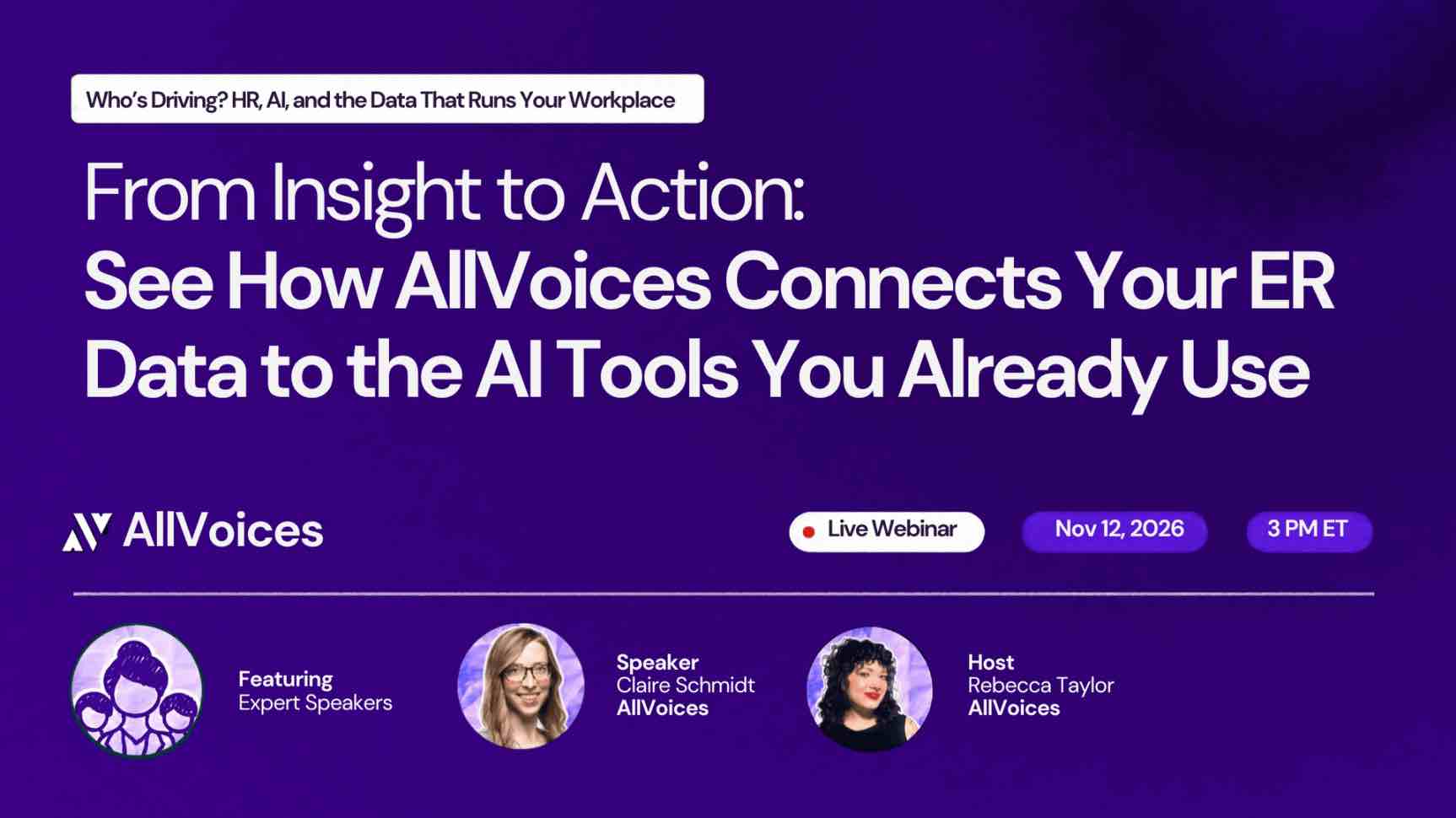
Our next webinar
Frequently asked questions

Got more questions? Email us at support@allvoices.co and we'll respond ASAP.

No items found.
Frequently asked questions

Got more questions? Email us at support@allvoices.co and we'll respond ASAP.

No items found.
Lucas Wehle, Diversity, Equity, and Inclusion Specialist at Unite Us and LGBTQ+ and DEI Consultant - We’re All Human
Episode 276
About This Episode
In this episode of Reimagining Company Culture, we’re chatting with Lucas Wehle, Diversity, Equity, and Inclusion Specialist at Unite Us and LGBTQ+ and DEI Consultant. After coming out during his college career at the University of South Florida, he began sharing his story to increase education around trans identities and became passionate about helping others access the resources that he desperately needed years prior. Tune in to learn Lucas’ thoughts on supportive personal resources for trans individuals, pitfalls organizations and ERG leaders should be aware of, small changes that make big impacts, and more!
About The Guest
Lucas Wehle (he/him) is a trans man who has dedicated his life to social justice advocacy. Born and raised in Tampa, FL, Lucas has become an expert over the years on the resources that exist in the Tampa Bay Area. After coming out during his college career at the University of South Florida, he began sharing his story to increase education around trans identities and became passionate about helping others access the resources that he desperately needed years prior. In his free time Lucas took every opportunity to share his story, leading workshops, speaking in classes and mentoring other trans students. In 2015, Lucas started his career working at Metro Inclusive Health, a local LGBTQ+ non-profit, where he developed and facilitated support and outreach programs specifically aimed to support gender diverse individuals. In 2016, Lucas led the creation of the Trans Services Division where he managed a team focused solely on the needs of the local trans community. In 2021, he switched careers to a broader field with a company called Unite Us where he now works in Diversity, Equity, and Inclusion and he also has a private LGBTQ+ DEI consulting business on the side. Lucas resides in St. Pete, FL with his beautiful fiancee and their four fur babies.
Episode Transcription

When we sat down with Lucas Wehle, Diversity, Equity, and Inclusion Specialist at Unite Us and LGBTQ and DEI Consultant, for this episode of Reimagining Company Culture, the conversation moved with the kind of grounded specificity that only comes from a leader who has lived the work personally. After coming out during his college career at the University of South Florida, Lucas began sharing his story to increase education around trans identities and became passionate about helping others access the resources he had needed years prior. His perspective on the operating choices that actually support trans employees was practical and clear-eyed.

His core argument was that the small changes often produce the largest outcomes. The pronoun field. The benefits language. The training that helps managers handle a coming-out conversation well. Each is small. Together they signal whether the company has actually thought about its trans employees or whether it is performing inclusion without doing the work.

Why Personal Resources Matter for Trans Employees

Trans employees work through workplace experiences that most colleagues do not. SHRM research has documented that trans and non-binary employees report higher rates of workplace discrimination and lower psychological safety than peers. The gap is not theoretical. It shows up in retention, in engagement, and in the willingness of trans employees to bring their full selves to work.

Personal resources matter because they reduce the friction trans employees face daily. Healthcare benefits that cover gender-affirming care. Time off that supports transition. Documentation systems that respect chosen names and pronouns. documented that LGBTQ-inclusive companies see better innovation outcomes than less inclusive peers. The investment in inclusion is also an investment in business performance.

What Small Changes That Make Big Impacts Look Like

What kinds of changes have outsized effects?

Useful small changes include pronoun fields in employee systems, gender identity options that go beyond binary, all-gender restroom signage, training for managers on inclusive language, healthcare benefits that cover gender-affirming care, and policies that protect employees through transition. Each change is operationally small. The cumulative effect on the experience of trans employees is significant.

How do you prioritize the changes?

Strong programs start by listening to trans employees about what they actually experience. Focus groups, listening sessions, and confidential anonymous reporting channels surface the friction the leadership team would not otherwise see. The changes that matter most are the ones the affected community names rather than the ones leadership assumes.

What Actually Works When You Build Inclusive Operating Systems

Principle 1: Build inclusion into the operating model rather than as a workshop

Workshops alone produce a one-day boost. Operating model changes produce durable improvement. Strong programs audit the systems where employees encounter the company. Application forms. Benefits portals. Performance reviews. Recognition rituals. Each system either signals inclusion or quietly excludes. The audit produces the small changes that compound.

Principle 2: Train managers on the conversations that actually matter

Most managers want to handle conversations about identity well and lack the training to do it. Management training on coming-out conversations, pronoun shifts, and supporting an employee through transition produces concrete skills managers can use. Without the training, managers default to good intentions and inconsistent execution.

Principle 3: Pair training with structural change

Training without structural change tends to fade quickly. Strong programs pair manager training with updates to the systems and policies the trained behaviors depend on. DEI programs that integrate training and structural updates produce sustained progress. Programs that run them separately tend to produce engagement spikes that fade by the next quarter.

Where Employee Relations Fits Into Trans Inclusion

Inclusion only persists when the company can hear and act on the moments where it breaks. Employee relations is the function that catches the issues that surveys and 1:1s miss and resolves them consistently. The trans employee who experiences a colleague refusing to use their pronouns. The manager who needs support handling a coming-out conversation well. The team where inclusion is uneven by location.

How ER protects the experience of LGBTQ employees

The right ER function provides confidential intake for issues that exceed the manager relationship, pattern data that surfaces where inclusion is breaking by team or location, and a consistent investigation process that applies the same standards across the organization. HR case management tooling captures cases consistently enough to produce reliable pattern data.

Common Pitfalls Organizations and ERG Leaders Should Watch

Treating ERG leaders as unpaid labor

ERGs run by volunteers on top of regular jobs eventually burn out the leaders who care most. Sustainable programs scope the work, pay for the time, and resource ERGs the way any other strategic team would be resourced. The investment produces lasting community rather than turnover at the leader level.

Designing programs without input from the communities they serve

Programs designed for a community without input from that community usually miss the mark. Strong programs build co-design into the operating model. The community helps shape the program, evaluates how it is landing, and informs the changes. Without that input, programs produce good intentions and uneven outcomes.

Treating identity celebrations as marketing

Pride that is a marketing campaign without the underlying support reads as performative. Trans Day of Visibility that does not come with healthcare benefits or supportive policies feels hollow. Strong programs invest in the year-round support before they invest in the public-facing celebration.

Frequently Asked Questions About Trans Inclusion at Work

What benefits matter most for trans employees?

Useful benefits include healthcare coverage for gender-affirming care, time off that supports transition, mental health support, and documentation systems that respect chosen names. The combination produces the felt experience of being supported by the company rather than tolerated by it.

How do you support a colleague who comes out at work?

Useful support includes following the employee's lead on disclosure, using their stated name and pronouns consistently, and connecting them to the resources the company offers without making them ask. Managers trained on these practices produce better outcomes than managers who improvise.

What is the role of psychological safety for LGBTQ employees?

Psychological safety is what allows LGBTQ employees to bring full selves to work without paying a social tax. The safety is built through manager behavior, listening systems, and consistent organizational response to issues. Without it, even strong policies produce thin outcomes.

How does inclusion connect to retention?

Employees who experience inclusion stay longer. Employees who experience persistent friction look for employers who do better. The retention investment for LGBTQ employees is largely an inclusion investment.

How should ERGs be structured?

Strong ERG programs include paid time for leaders, executive sponsorship, a clear mandate tied to organizational outcomes, and a budget controlled by the ERG. They are treated as strategic assets rather than volunteer activities.

The Bottom Line for HR Leaders

Lucas Wehle's framing of small changes that make big impacts is the right operating discipline for HR leaders trying to build genuine inclusion for trans employees. The work is unglamorous and specific. The cumulative effect is what changes the experience.

HR leaders who want stronger inclusion outcomes for LGBTQ employees should invest in three things. Audit the operating systems where employees encounter the company and make the small changes that signal inclusion. Train managers on the specific conversations that matter. Wire in listening and employee relations infrastructure that catches the moments where inclusion breaks. With those in place, the workplace becomes a place where every employee can do their best work.

See how AllVoices supports the listening and ER systems behind genuine LGBTQ inclusion.

Want to learn more?
See the power of AllVoices today
Thank you! We look forward to meeting you soon
Oops! Something went wrong while submitting the form.
Frequently asked questions

Got more questions? Email us at support@allvoices.co and we'll respond ASAP.

No items found.
Frequently asked questions

Got more questions? Email us at support@allvoices.co and we'll respond ASAP.

No items found.