About This Episode
In this episode of Reimagining Company Culture, we’re chatting with Andreea Baciu, Chief Culture Officer at UiPath. Andreea is a human resources and change management executive who translates organizational and individual needs into rapid action plans to drive high performance. Tune in to learn Andreea’s thoughts on radical flexibility on company culture, practicing transparent communication, innovations in the people space, and more!
About The Guest
Andreea is a human resources and change management executive with international experience having held various local, regional and global roles. She is a leader who translates organizational and individual needs into rapid action plans to drive high performance. Andreea spearheads programs that engage talents to drive shareholder value, develop the next generations of leaders, generate excitement while learning and drive organizational change. She is a trusted business partner to senior leadership, curious, energetic and passionate about living a legacy.
Episode Breakdown

On a recent episode of Reimagining Company Culture, the conversation turned to manager development as the highest-ROI HR investment. The guest, Andreea Baciu, brought direct experience to the topic from their day-to-day work, and the conversation moved past the talking points most People teams have heard a hundred times. This recap pulls the practical thread of the discussion together and translates it into the workflows HR leaders are running today.

Andreea's background sets the context for how Andreea thinks about this work. Andreea is a human resources and change management executive with international experience having held various local, regional and global roles. She is a leader who translates organizational and individual needs into rapid action plans to drive high performance. Andreea spearheads programs that engage talents to drive shareholder value, develop the next generations of leaders, . That experience shapes the perspective the episode brings to manager development as the highest-ROI HR investment, and the recap below stays grounded in the workflows leaders are running, not abstractions.

The conversation touches on the basics any People team is already managing, including training and development guidance and transformational leadership practices. The recap below assumes that grounding and focuses on the operating moves leaders make on top of it.

Most of the framework below holds up across industries and company stages. The specifics vary; the underlying mechanics rarely do.

Why manager development is the highest-ROI HR investment most companies skip

Companies spend on leadership offsites for executives and onboarding for ICs and almost nothing on the people in the middle. The middle is where the work actually happens. Gallup research on manager impact on engagement research found that managers account for 70 percent of the variance in employee engagement. No other intervention comes close.

Andreea's experience leading culture at UiPath maps to the same finding. The companies that out-execute their peers tend to have a manager development program, not a leadership development program. The two get conflated and the manager layer gets shortchanged.

How leaders work through manager development as the highest-ROI HR investment

What should manager training actually cover?

Three things. How to give feedback. How to handle a complaint. How to run a one-on-one. Everything else is downstream of those three. Most management failures trace back to weakness in one of them, not to a missing strategic skill.

Coaching-style management training drives 18 percent higher engagement on the trained manager's team, according to Gallup data. Most managers have never had it.

How do you measure whether manager training is working?

Engagement scores by manager, retention by manager, and the rate at which managers escalate complaints to ER. Each is a partial signal. Together they triangulate. Strong managers have higher engagement, lower regrettable attrition, and earlier (not later) complaint escalation, because they catch issues before they harden.

If the metric for manager quality is 'no complaints,' the training is teaching managers to suppress, not to lead.

What actually works in practice

The pattern across companies that handle manager development as the highest-ROI HR investment well comes down to three operational habits.

  • Train new managers within their first 90 days. Managers who learn the job by doing it badly carry that pattern for years. The first 90 days are when habits form.
  • Give managers a documented escalation path. When the path is unclear, managers either do not escalate or escalate too late. A one-page playbook covers most cases.
  • Measure manager development like any other program. Engagement, retention, and complaint cycle time. If those numbers are not moving, the program is theater.

None of these are aspirational. They are checklists the strongest People teams run on a cadence, and the consistency is what makes the difference.

What looks like a culture decision from the outside is usually the cumulative effect of those three habits, applied without theatrics.

This pattern shows up alongside familiar tools like employee engagement fundamentals. The combination is what makes the operating model durable.

Where Employee Relations fits

AllVoices employee relations solution teams need managers as partners. AllVoices HR case management platform workflows that managers can actually use, short forms, clear escalation paths, fast response times, turn middle managers into the first line of issue resolution. AllVoices AI solutions for HR accelerates the response time so managers do not feel like reporting an issue creates more work.

The companies pulling this off rarely run it on memory. They run it on infrastructure. AllVoices HR case management platform centralizes the case data; AllVoices data and insights dashboard surfaces the patterns nobody catches manually; AllVoices Vera AI co-pilot for ER teams accelerates the response time so the work is finishable. Together they cover the operating layer that this episode keeps pointing at.

How does Employee Relations support manager development?

By building the workflow that managers actually need. AllVoices Vera AI co-pilot helps managers draft a response, document the conversation, and route the case to the right ER partner. The training is reinforced by the tooling, not undermined by it.

The supporting research is consistent. Independent analysis from McKinsey research on people-led hypergrowth points the same direction the episode does. The combination of operating discipline and outside data is what gets People leaders past the slogan stage.

For a concrete example of how this plays out at scale, look at Bungie's culture and retention story, which shows the same operational pattern in a real customer environment.

The takeaway holds across companies of different sizes and industries. The teams that turn this episode's lesson into operating practice are the ones that name a target metric, run it on a cadence, and refuse to let activity stand in for outcomes. The metric does not have to be elaborate. It has to be visible to the people who can move it, and reviewed often enough that nothing falls off the radar for a quarter.

The other consistent pattern is that the work compounds. Year one of any of these practices feels like overhead. Year three is when the retention, engagement, and case-data signals start telling a clearly different story. People leaders who hold the line through the early part of the curve tend to be the ones who have the receipts when leadership asks for evidence later.

Frequently Asked Questions About Manager Development As The Highest-Roi Hr Investment

What's the right ratio of managers to ICs?

Most knowledge work organizations land between 1 to 6 and 1 to 10. Above 10, managers cannot run quality one-on-ones. Below 6, the manager layer gets too thick and decisions slow.

How long should new manager training be?

A focused 16 to 24 hours over the first quarter, plus monthly cohort coaching for the first year. Front-loading the training is the single best predictor of long-term manager quality.

What's the ROI of manager training?

Gallup and McKinsey data put it at 18 to 28 percent improvement in team engagement and meaningful drops in regrettable attrition. The cost of training is recovered within the first year for most companies.

Should HR or managers own performance documentation?

Managers write it, HR owns the standard. When HR writes the documentation, it gets generic. When managers write it without a standard, it gets inconsistent.

How do you handle managers who do not develop?

Move them out of management roles. Most companies treat the manager track as a one-way door, which costs them their best ICs and their team's engagement at once. The exit ramp has to exist.

The Bottom Line for HR Leaders

Andreea's playbook at UiPath is consistent with what works in most fast-growth companies. The manager layer is the lever. Underinvesting in it is the most common HR mistake and the easiest one to fix.

The math is uncomplicated. Better managers, better outcomes, better retention.

See how AllVoices supports the kind of culture work this episode is about.
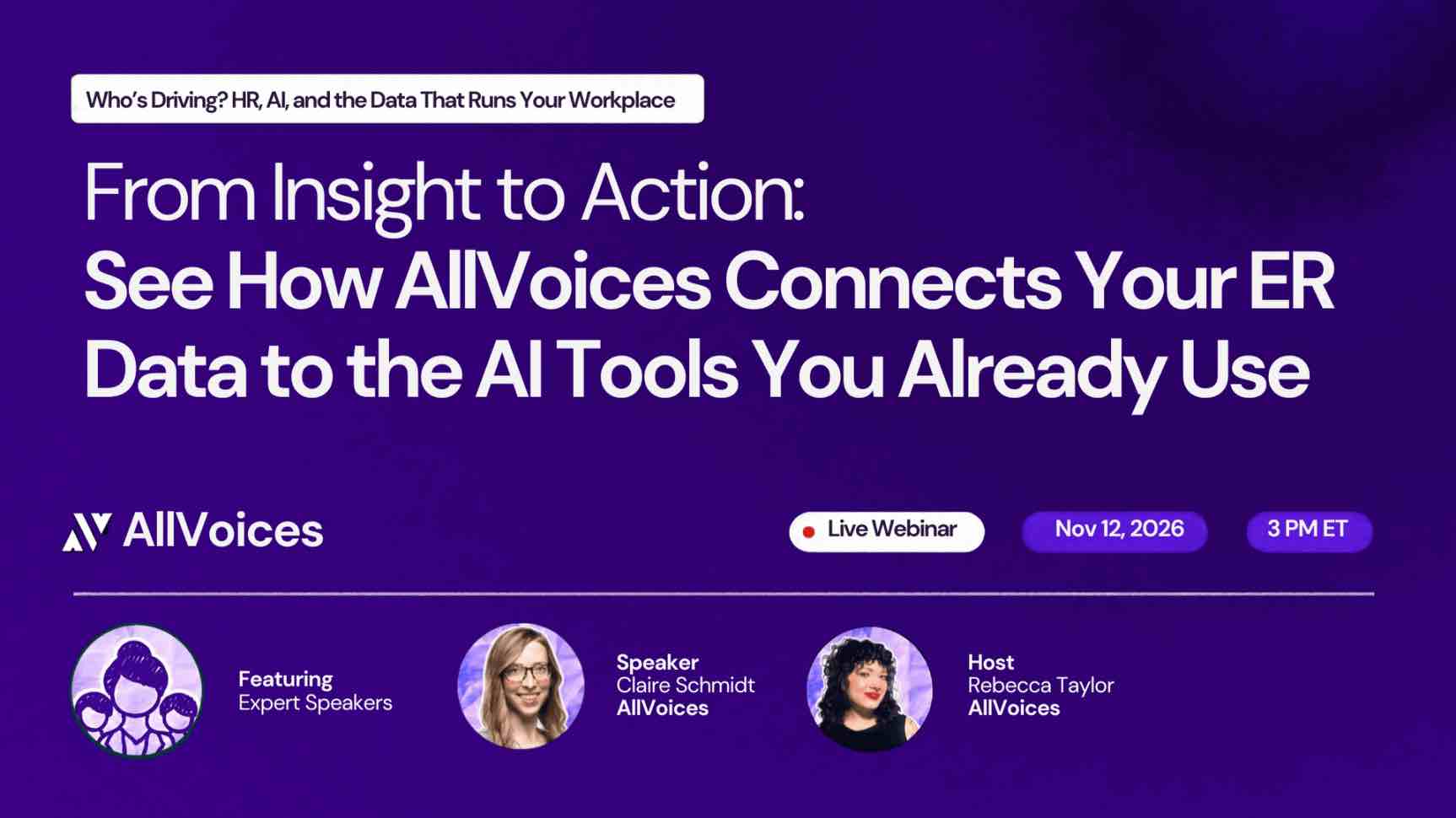
Our next webinar
Frequently asked questions

Got more questions? Email us at support@allvoices.co and we'll respond ASAP.

No items found.
Frequently asked questions

Got more questions? Email us at support@allvoices.co and we'll respond ASAP.

No items found.
Andreea Baciu, Chief Culture Officer at UiPath - Investing in Manager Development
Episode 279
About This Episode
In this episode of Reimagining Company Culture, we’re chatting with Andreea Baciu, Chief Culture Officer at UiPath. Andreea is a human resources and change management executive who translates organizational and individual needs into rapid action plans to drive high performance. Tune in to learn Andreea’s thoughts on radical flexibility on company culture, practicing transparent communication, innovations in the people space, and more!
About The Guest
Andreea is a human resources and change management executive with international experience having held various local, regional and global roles. She is a leader who translates organizational and individual needs into rapid action plans to drive high performance. Andreea spearheads programs that engage talents to drive shareholder value, develop the next generations of leaders, generate excitement while learning and drive organizational change. She is a trusted business partner to senior leadership, curious, energetic and passionate about living a legacy.
Episode Transcription

On a recent episode of Reimagining Company Culture, the conversation turned to manager development as the highest-ROI HR investment. The guest, Andreea Baciu, brought direct experience to the topic from their day-to-day work, and the conversation moved past the talking points most People teams have heard a hundred times. This recap pulls the practical thread of the discussion together and translates it into the workflows HR leaders are running today.

Andreea's background sets the context for how Andreea thinks about this work. Andreea is a human resources and change management executive with international experience having held various local, regional and global roles. She is a leader who translates organizational and individual needs into rapid action plans to drive high performance. Andreea spearheads programs that engage talents to drive shareholder value, develop the next generations of leaders, . That experience shapes the perspective the episode brings to manager development as the highest-ROI HR investment, and the recap below stays grounded in the workflows leaders are running, not abstractions.

The conversation touches on the basics any People team is already managing, including training and development guidance and transformational leadership practices. The recap below assumes that grounding and focuses on the operating moves leaders make on top of it.

Most of the framework below holds up across industries and company stages. The specifics vary; the underlying mechanics rarely do.

Why manager development is the highest-ROI HR investment most companies skip

Companies spend on leadership offsites for executives and onboarding for ICs and almost nothing on the people in the middle. The middle is where the work actually happens. Gallup research on manager impact on engagement research found that managers account for 70 percent of the variance in employee engagement. No other intervention comes close.

Andreea's experience leading culture at UiPath maps to the same finding. The companies that out-execute their peers tend to have a manager development program, not a leadership development program. The two get conflated and the manager layer gets shortchanged.

How leaders work through manager development as the highest-ROI HR investment

What should manager training actually cover?

Three things. How to give feedback. How to handle a complaint. How to run a one-on-one. Everything else is downstream of those three. Most management failures trace back to weakness in one of them, not to a missing strategic skill.

Coaching-style management training drives 18 percent higher engagement on the trained manager's team, according to Gallup data. Most managers have never had it.

How do you measure whether manager training is working?

Engagement scores by manager, retention by manager, and the rate at which managers escalate complaints to ER. Each is a partial signal. Together they triangulate. Strong managers have higher engagement, lower regrettable attrition, and earlier (not later) complaint escalation, because they catch issues before they harden.

If the metric for manager quality is 'no complaints,' the training is teaching managers to suppress, not to lead.

What actually works in practice

The pattern across companies that handle manager development as the highest-ROI HR investment well comes down to three operational habits.

  • Train new managers within their first 90 days. Managers who learn the job by doing it badly carry that pattern for years. The first 90 days are when habits form.
  • Give managers a documented escalation path. When the path is unclear, managers either do not escalate or escalate too late. A one-page playbook covers most cases.
  • Measure manager development like any other program. Engagement, retention, and complaint cycle time. If those numbers are not moving, the program is theater.

None of these are aspirational. They are checklists the strongest People teams run on a cadence, and the consistency is what makes the difference.

What looks like a culture decision from the outside is usually the cumulative effect of those three habits, applied without theatrics.

This pattern shows up alongside familiar tools like employee engagement fundamentals. The combination is what makes the operating model durable.

Where Employee Relations fits

AllVoices employee relations solution teams need managers as partners. AllVoices HR case management platform workflows that managers can actually use, short forms, clear escalation paths, fast response times, turn middle managers into the first line of issue resolution. AllVoices AI solutions for HR accelerates the response time so managers do not feel like reporting an issue creates more work.

The companies pulling this off rarely run it on memory. They run it on infrastructure. AllVoices HR case management platform centralizes the case data; AllVoices data and insights dashboard surfaces the patterns nobody catches manually; AllVoices Vera AI co-pilot for ER teams accelerates the response time so the work is finishable. Together they cover the operating layer that this episode keeps pointing at.

How does Employee Relations support manager development?

By building the workflow that managers actually need. AllVoices Vera AI co-pilot helps managers draft a response, document the conversation, and route the case to the right ER partner. The training is reinforced by the tooling, not undermined by it.

The supporting research is consistent. Independent analysis from McKinsey research on people-led hypergrowth points the same direction the episode does. The combination of operating discipline and outside data is what gets People leaders past the slogan stage.

For a concrete example of how this plays out at scale, look at Bungie's culture and retention story, which shows the same operational pattern in a real customer environment.

The takeaway holds across companies of different sizes and industries. The teams that turn this episode's lesson into operating practice are the ones that name a target metric, run it on a cadence, and refuse to let activity stand in for outcomes. The metric does not have to be elaborate. It has to be visible to the people who can move it, and reviewed often enough that nothing falls off the radar for a quarter.

The other consistent pattern is that the work compounds. Year one of any of these practices feels like overhead. Year three is when the retention, engagement, and case-data signals start telling a clearly different story. People leaders who hold the line through the early part of the curve tend to be the ones who have the receipts when leadership asks for evidence later.

Frequently Asked Questions About Manager Development As The Highest-Roi Hr Investment

What's the right ratio of managers to ICs?

Most knowledge work organizations land between 1 to 6 and 1 to 10. Above 10, managers cannot run quality one-on-ones. Below 6, the manager layer gets too thick and decisions slow.

How long should new manager training be?

A focused 16 to 24 hours over the first quarter, plus monthly cohort coaching for the first year. Front-loading the training is the single best predictor of long-term manager quality.

What's the ROI of manager training?

Gallup and McKinsey data put it at 18 to 28 percent improvement in team engagement and meaningful drops in regrettable attrition. The cost of training is recovered within the first year for most companies.

Should HR or managers own performance documentation?

Managers write it, HR owns the standard. When HR writes the documentation, it gets generic. When managers write it without a standard, it gets inconsistent.

How do you handle managers who do not develop?

Move them out of management roles. Most companies treat the manager track as a one-way door, which costs them their best ICs and their team's engagement at once. The exit ramp has to exist.

The Bottom Line for HR Leaders

Andreea's playbook at UiPath is consistent with what works in most fast-growth companies. The manager layer is the lever. Underinvesting in it is the most common HR mistake and the easiest one to fix.

The math is uncomplicated. Better managers, better outcomes, better retention.

See how AllVoices supports the kind of culture work this episode is about.

Want to learn more?
See the power of AllVoices today
Thank you! We look forward to meeting you soon
Oops! Something went wrong while submitting the form.
Frequently asked questions

Got more questions? Email us at support@allvoices.co and we'll respond ASAP.

No items found.
Frequently asked questions

Got more questions? Email us at support@allvoices.co and we'll respond ASAP.

No items found.