About This Episode
In this episode of Reimagining Company Culture, we’re chatting with Jennifer Hillard, University Recruiting Manager at Chime. Jennifer Hillard was the first in her immediate family to graduate from college. “I know what it feels like to go to college and graduate without the support of a network that shares that experience,” she says. “That’s part of why I do what I do, to let people know that you can find support, build a network, and achieve a career — regardless of your background.” Tune in to learn Jennifer’s thoughts on prioritizing where to start as the first person in a new role, building trust with potential employees, feedback from candidates, and more!
About The Guest
Jennifer Hillard was the first in her immediate family to graduate from college. “I know what it feels like to go to college and graduate without the support of a network that shares that experience,” she says. “That’s part of why I do what I do, to let people know that you can find support, build a network, and achieve a career — regardless of your background.” 🎓 After college, Jennifer fell into recruiting because she liked working with people. She later volunteered to take on a university recruiting program because she was drawn to the variety of tasks involved in the work — and because of her own personal background. “University Recruiting is more than just one job, it’s a bunch of pieces that fit together year-round to make securing and starting an internship or first job a great experience for college students,” she explains. Jennifer is Chime’s first University Recruiting Manager, and helps set up Chime university students for success.
Episode Breakdown

When Jennifer Hillard joined us on Reimagining Company Culture, the conversation focused on a part of the employee lifecycle most companies underinvest in. The candidate experience. Jennifer's view was direct. Companies spend years and millions on internal employee engagement, then run a hiring process that signals to every candidate that the engagement language was marketing copy. The candidate experience is where trust gets built or destroyed before day one.

Her argument was that candidate experience is not a recruiting metric. It is a culture metric. Every candidate who interviews becomes either a future employee, a future customer, or a future story shared on Glassdoor. Treat the candidate experience as the front door to the culture, and you start to see the design choices that build trust before anyone has signed an offer.

Why the Candidate Experience Has Become a Trust Problem

The data is unambiguous. SHRM's 2025 State of Recruiting research found that candidate contentment has been declining and resentment remains high. Mobile experience problems, slow processes, and ghosting all show up in the data, and they translate directly into negative reviews and reduced applicant volume.

The consequences run deeper than recruiting funnel math. A candidate who experiences a chaotic, slow, or disrespectful hiring process arrives skeptical even when they accept the offer. The first ninety days then become a recovery period for a problem the company created itself. Companies investing in People team efficiency often discover that candidate experience improvements reduce time-to-fill and time-to-productivity simultaneously.

What a Trust-Building Candidate Experience Includes

What Are the Non-Negotiables for Modern Hiring?

Acknowledgement within 24 hours of any application. A clear timeline shared at the start of every interview process. Honest feedback within five business days of any interview round. And a respectful close to every candidate who is not selected. These are not luxuries. They are the floor of a modern process, and most companies still fail at one or more of them.

How Do You Run a Structured Interview Without Making It Robotic?

A structured interview uses the same core questions for every candidate for the same role, scored against the same criteria. The structure improves fairness and reduces bias. The skill is in the conversation that surrounds the structured questions. Good interviewers create space for candidates to ask real questions, share context, and see who they would actually be working with. The structure protects fairness. The conversation builds trust.

What Actually Works for Candidate Experience

Train Hiring Managers Like the Brand Ambassadors They Are

The single biggest source of candidate experience failure is the hiring manager. Hiring managers usually receive no training on interviewing, no calibration on assessment, and no accountability for the candidate experience their decisions create. The companies investing in hiring manager training see immediate improvements in candidate ratings, offer-acceptance rates, and quality of hire.

Make the Process Mobile-First and Fast

SHRM's 2025 Recruiting Benchmarking Report found that only 20 percent of organizations track quality of hire. The companies that win in talent are the ones treating their funnel like a product, with mobile-first design, fast response times, and the discipline to remove every friction point that does not produce information about the candidate.

Close the Loop With Every Candidate

Most candidates never hear back. The cost of that silence is reputation damage that scales with every cohort the company runs through the funnel. Closing the loop costs a few minutes per candidate and produces a brand effect that compounds over years. A simple, respectful no is better than no answer at all.

Where Employee Relations Fits in the Candidate Lifecycle

Most companies separate ER from recruiting. The strongest cultures connect them. The ER function holds the pattern data on what kinds of issues come up after hire, which manager teams generate the most cases, and where the disconnect between hiring promises and post-hire reality is the widest. That data should feed the recruiting process.

If a hiring manager's team produces a disproportionate share of cases, the recruiter should know. If onboarding into a particular function consistently produces complaints in the first 90 days, the hiring profile or the manager's training is the place to start. HR case management data is part of the recruiting feedback loop, even though most companies do not yet use it that way.

How Does Connected ER Data Improve Hiring Outcomes?

It improves outcomes by closing the gap between what the recruiter promised and what the new hire experiences. Employee onboarding is most effective when the hiring profile, the manager's behavior, and the post-hire support are all aligned. Case data is the diagnostic for whether the alignment exists.

Frequently Asked Questions About Candidate Experience

What is the single most damaging part of the candidate experience?

Silence. The recruiter who never replies, the manager who never gives feedback, the company that goes dark after the final interview. Silence is what candidates remember and what they post about. Closing the loop with respect is the highest-return change most companies can make.

How fast should the hiring process actually move?

The benchmark for most professional roles is two to four weeks from application to offer. Faster is possible with good intake and structured interviewing. Slower than four weeks loses good candidates to other processes regardless of how the role pays.

How do you measure candidate experience?

A short survey at the close of every process, regardless of outcome. Measure responsiveness, clarity, respect, and willingness to apply again. Track the data by hiring manager and recruiter. The patterns are usually obvious within a quarter and produce coaching opportunities that translate into better outcomes for everyone involved.

How do you balance speed with quality of hire?

Through structured interviews, clear scorecards, and good intake on the role. The companies that move fast without sacrificing quality are the ones that know what they are looking for before the first resume comes in. Recruitment trends consistently point to clarity at the start of the funnel as the single biggest driver of speed and quality.

How does AllVoices support a healthier hiring lifecycle?

By giving the People team aggregate ER data that informs hiring profiles, manager training, and onboarding redesign. HR teams running this connected practice produce better hires and fewer first-year exits.

The shift Jennifer pointed to is also reshaping how mid-market companies compete with bigger employers. A small company with a fast, respectful, structured process can win candidates that the big-name competitor loses. The differentiator is not budget. It is discipline. Mid-market People teams that adopt this discipline punch well above their headcount in talent markets, and they hold their hires longer because the trust started early.

The Bottom Line for HR Leaders

Jennifer's argument from that conversation has aged into a structural blueprint. The candidate experience is where the culture story either holds up or collapses. The companies investing in fast, respectful, structured hiring with trained managers and connected post-hire data are the ones building the cultures their marketing copy describes. The companies still treating talent acquisition as a transaction are paying the cost in turnover, brand damage, and missed hires.

The candidate experience is the culture's first impression. The companies that take it seriously stop losing the people they should have hired and stop hiring the people they should have lost.
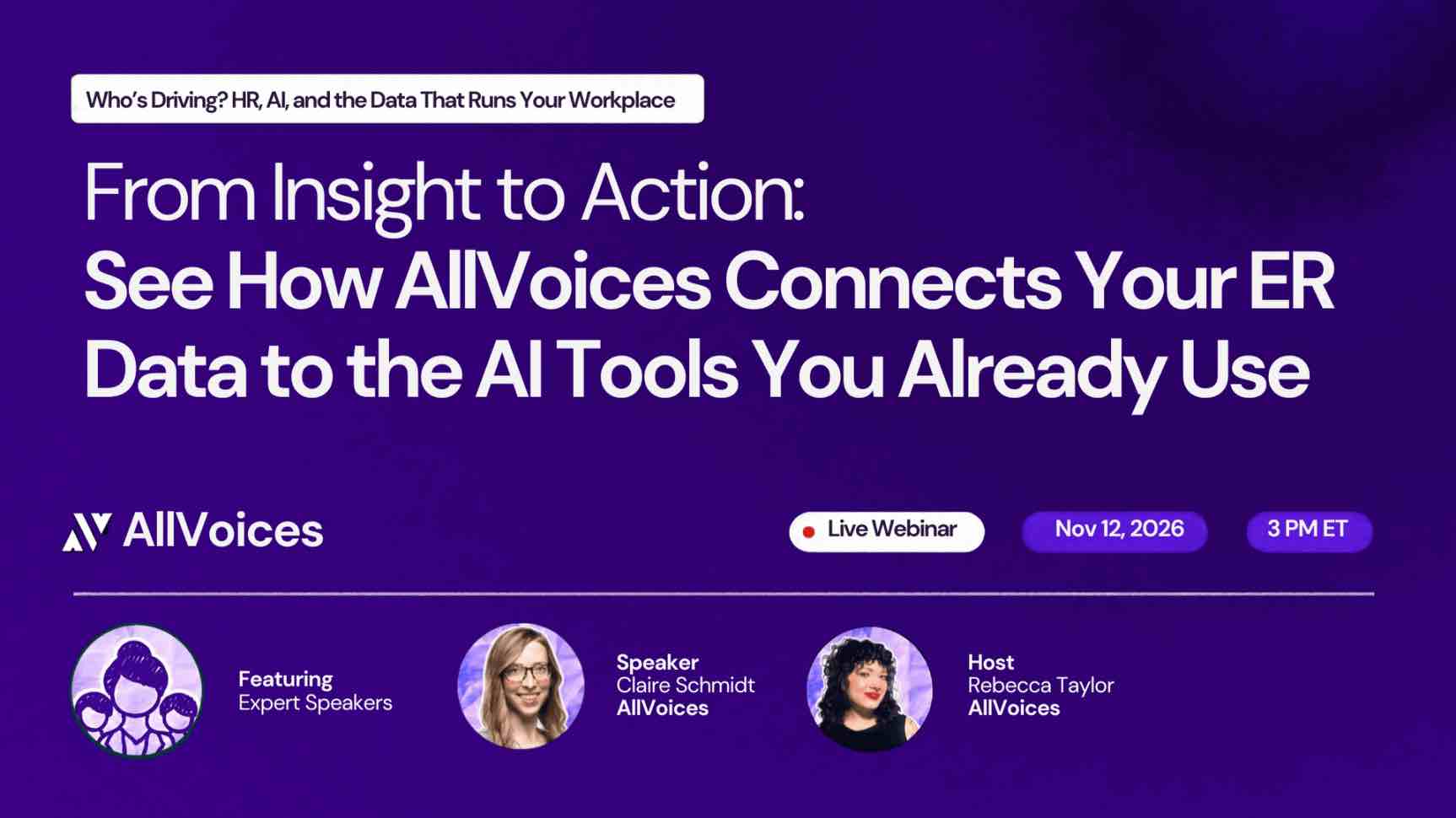
See how AllVoices connects ER data to the hiring lifecycle so the culture story holds up after day one.

Our next webinar
Frequently asked questions

Got more questions? Email us at support@allvoices.co and we'll respond ASAP.

No items found.
Frequently asked questions

Got more questions? Email us at support@allvoices.co and we'll respond ASAP.

No items found.
University Recruiting Manager at Chime, Jennifer Hillard - Building Trust In the Candidate Experience
Episode 216
About This Episode
In this episode of Reimagining Company Culture, we’re chatting with Jennifer Hillard, University Recruiting Manager at Chime. Jennifer Hillard was the first in her immediate family to graduate from college. “I know what it feels like to go to college and graduate without the support of a network that shares that experience,” she says. “That’s part of why I do what I do, to let people know that you can find support, build a network, and achieve a career — regardless of your background.” Tune in to learn Jennifer’s thoughts on prioritizing where to start as the first person in a new role, building trust with potential employees, feedback from candidates, and more!
About The Guest
Jennifer Hillard was the first in her immediate family to graduate from college. “I know what it feels like to go to college and graduate without the support of a network that shares that experience,” she says. “That’s part of why I do what I do, to let people know that you can find support, build a network, and achieve a career — regardless of your background.” 🎓 After college, Jennifer fell into recruiting because she liked working with people. She later volunteered to take on a university recruiting program because she was drawn to the variety of tasks involved in the work — and because of her own personal background. “University Recruiting is more than just one job, it’s a bunch of pieces that fit together year-round to make securing and starting an internship or first job a great experience for college students,” she explains. Jennifer is Chime’s first University Recruiting Manager, and helps set up Chime university students for success.
Episode Transcription

When Jennifer Hillard joined us on Reimagining Company Culture, the conversation focused on a part of the employee lifecycle most companies underinvest in. The candidate experience. Jennifer's view was direct. Companies spend years and millions on internal employee engagement, then run a hiring process that signals to every candidate that the engagement language was marketing copy. The candidate experience is where trust gets built or destroyed before day one.

Her argument was that candidate experience is not a recruiting metric. It is a culture metric. Every candidate who interviews becomes either a future employee, a future customer, or a future story shared on Glassdoor. Treat the candidate experience as the front door to the culture, and you start to see the design choices that build trust before anyone has signed an offer.

Why the Candidate Experience Has Become a Trust Problem

The data is unambiguous. SHRM's 2025 State of Recruiting research found that candidate contentment has been declining and resentment remains high. Mobile experience problems, slow processes, and ghosting all show up in the data, and they translate directly into negative reviews and reduced applicant volume.

The consequences run deeper than recruiting funnel math. A candidate who experiences a chaotic, slow, or disrespectful hiring process arrives skeptical even when they accept the offer. The first ninety days then become a recovery period for a problem the company created itself. Companies investing in People team efficiency often discover that candidate experience improvements reduce time-to-fill and time-to-productivity simultaneously.

What a Trust-Building Candidate Experience Includes

What Are the Non-Negotiables for Modern Hiring?

Acknowledgement within 24 hours of any application. A clear timeline shared at the start of every interview process. Honest feedback within five business days of any interview round. And a respectful close to every candidate who is not selected. These are not luxuries. They are the floor of a modern process, and most companies still fail at one or more of them.

How Do You Run a Structured Interview Without Making It Robotic?

A structured interview uses the same core questions for every candidate for the same role, scored against the same criteria. The structure improves fairness and reduces bias. The skill is in the conversation that surrounds the structured questions. Good interviewers create space for candidates to ask real questions, share context, and see who they would actually be working with. The structure protects fairness. The conversation builds trust.

What Actually Works for Candidate Experience

Train Hiring Managers Like the Brand Ambassadors They Are

The single biggest source of candidate experience failure is the hiring manager. Hiring managers usually receive no training on interviewing, no calibration on assessment, and no accountability for the candidate experience their decisions create. The companies investing in hiring manager training see immediate improvements in candidate ratings, offer-acceptance rates, and quality of hire.

Make the Process Mobile-First and Fast

SHRM's 2025 Recruiting Benchmarking Report found that only 20 percent of organizations track quality of hire. The companies that win in talent are the ones treating their funnel like a product, with mobile-first design, fast response times, and the discipline to remove every friction point that does not produce information about the candidate.

Close the Loop With Every Candidate

Most candidates never hear back. The cost of that silence is reputation damage that scales with every cohort the company runs through the funnel. Closing the loop costs a few minutes per candidate and produces a brand effect that compounds over years. A simple, respectful no is better than no answer at all.

Where Employee Relations Fits in the Candidate Lifecycle

Most companies separate ER from recruiting. The strongest cultures connect them. The ER function holds the pattern data on what kinds of issues come up after hire, which manager teams generate the most cases, and where the disconnect between hiring promises and post-hire reality is the widest. That data should feed the recruiting process.

If a hiring manager's team produces a disproportionate share of cases, the recruiter should know. If onboarding into a particular function consistently produces complaints in the first 90 days, the hiring profile or the manager's training is the place to start. HR case management data is part of the recruiting feedback loop, even though most companies do not yet use it that way.

How Does Connected ER Data Improve Hiring Outcomes?

It improves outcomes by closing the gap between what the recruiter promised and what the new hire experiences. Employee onboarding is most effective when the hiring profile, the manager's behavior, and the post-hire support are all aligned. Case data is the diagnostic for whether the alignment exists.

Frequently Asked Questions About Candidate Experience

What is the single most damaging part of the candidate experience?

Silence. The recruiter who never replies, the manager who never gives feedback, the company that goes dark after the final interview. Silence is what candidates remember and what they post about. Closing the loop with respect is the highest-return change most companies can make.

How fast should the hiring process actually move?

The benchmark for most professional roles is two to four weeks from application to offer. Faster is possible with good intake and structured interviewing. Slower than four weeks loses good candidates to other processes regardless of how the role pays.

How do you measure candidate experience?

A short survey at the close of every process, regardless of outcome. Measure responsiveness, clarity, respect, and willingness to apply again. Track the data by hiring manager and recruiter. The patterns are usually obvious within a quarter and produce coaching opportunities that translate into better outcomes for everyone involved.

How do you balance speed with quality of hire?

Through structured interviews, clear scorecards, and good intake on the role. The companies that move fast without sacrificing quality are the ones that know what they are looking for before the first resume comes in. Recruitment trends consistently point to clarity at the start of the funnel as the single biggest driver of speed and quality.

How does AllVoices support a healthier hiring lifecycle?

By giving the People team aggregate ER data that informs hiring profiles, manager training, and onboarding redesign. HR teams running this connected practice produce better hires and fewer first-year exits.

The shift Jennifer pointed to is also reshaping how mid-market companies compete with bigger employers. A small company with a fast, respectful, structured process can win candidates that the big-name competitor loses. The differentiator is not budget. It is discipline. Mid-market People teams that adopt this discipline punch well above their headcount in talent markets, and they hold their hires longer because the trust started early.

The Bottom Line for HR Leaders

Jennifer's argument from that conversation has aged into a structural blueprint. The candidate experience is where the culture story either holds up or collapses. The companies investing in fast, respectful, structured hiring with trained managers and connected post-hire data are the ones building the cultures their marketing copy describes. The companies still treating talent acquisition as a transaction are paying the cost in turnover, brand damage, and missed hires.

The candidate experience is the culture's first impression. The companies that take it seriously stop losing the people they should have hired and stop hiring the people they should have lost.

See how AllVoices connects ER data to the hiring lifecycle so the culture story holds up after day one.

Want to learn more?
See the power of AllVoices today
Thank you! We look forward to meeting you soon
Oops! Something went wrong while submitting the form.
Frequently asked questions

Got more questions? Email us at support@allvoices.co and we'll respond ASAP.

No items found.
Frequently asked questions

Got more questions? Email us at support@allvoices.co and we'll respond ASAP.

No items found.