About This Episode
In this episode of Reimagining Company Culture, we’re chatting with Jessica Williams, Vice President of People at Refine Labs and Founder & Career Coach with Hidden Gem Career Coaching. With an educational background in psychology and sociology, Jessica applies her experience in DE&I, leadership development, and project management to help employees seeking upward career mobility or new employment opportunities.
About The Guest
Jessica (pronouns she/her/hers) is a Vice President of People by day and Founder/Career Coach with Hidden Gem Career Coaching by nights and weekends. With an educational background in psychology and sociology, she applies her experience in DE&I, leadership development, and project management to help employees seeking upward career mobility or new employment opportunities. She utilizes a consulting approach to understand the candidate’s past and future in order to showcase their abilities as a hidden gem in corporate America. Based on her personal and professional experience as a female Professional of Color she understands how to pinpoint the best aspects of clients' professional experience and market it in the most attractive way possible to potential hiring managers. She's also well versed in writing resumes, career planning, motivation techniques and network building. In her free time she enjoys traveling, reading and yoga.
Episode Breakdown

Jessica Williams is the VP of People at Refine Labs and the founder of Hidden Gem Career Coaching. On Reimagining Company Culture, she joins us to break down the often-blurred lines between coaching, mentoring, and managing, and why high-performing companies invest in all three. Jessica's perspective is grounded in two roles that rarely sit in the same person: a senior People leader and a practicing career coach. The cross-pollination produces unusually crisp views on how managers should actually develop their teams.

Her thesis: companies that confuse these three roles get average results from all of them.

Coaching vs. Mentoring vs. Managing

Mentoring shares experience. Coaching draws insight from the coachee. Managing produces accountability. Harvard Business School research on mentoring found that new hires who received structured on-the-job mentoring outperformed unmentored peers by 18% and stayed longer.

That is a real number, and it depends on knowing which mode you are in. Mentoring, coaching, and performance appraisal are not interchangeable.

How To Build the Three Disciplines

Train managers in coaching first

Harvard Business Review's analysis of mentorship found that leaders rate coaching as nearly twice as effective as traditional skills training. Make this the manager-development backbone.

Build a mentoring program with intention

Pair mentors and mentees thoughtfully, set expectations, and review pairings. Default mentoring programs underperform because they skip the design step.

Keep managing rigorous

Clear goals, frequent feedback, and credible consequences. Managing without rigor undermines coaching and mentoring done well.

Career Conversations as the Connective Tissue

Jessica's coaching practice underscores how rare real career conversations are. Most managers run task-status meetings and hope the career stuff resolves itself. Companies that train managers to run regular development conversations and that pair them with reverse mentoring see retention improve fast.

This is also where people team efficiency matters. Automating the routine work frees managers for the conversations that move people.

Where Employee Relations Fits

Coaching cultures still have conflict. HR case management and AI-assisted employee relations provide the safety net that lets managers stretch their teams without losing people who feel unheard.

Jessica is direct: coaching depends on trust, and trust depends on credible recourse when something goes wrong.

Why This Conversation Matters Right Now

The HR field has been through three waves in the last few years: an emergency pivot to distributed work, a wave of public commitments around inclusion, and a slow correction as leaders started measuring which of those commitments actually moved retention and engagement.

That shift puts pressure on people leaders to be specific. Generic advice about belonging or psychological safety does not survive a budget review. The HR teams that are pulling ahead are the ones that connect cultural commitments to operating systems, instrument the resulting work, and report on outcomes in the same business-critical language the CFO uses for revenue. According to SHRM's reporting on retention strategies, the cost of underinvesting in culture shows up directly in voluntary attrition, and the math gets harder every year.

This is also where employee relations operations becomes a more visible part of the modern People organization. Employee relations is no longer a quiet compliance function; it is the data layer that tells leaders whether their stated values are being lived inside the organization, and it is increasingly the place where cultural drift first becomes visible.

A Practical Playbook for HR Leaders

Translating a great podcast conversation into actual change inside your organization takes a stepwise plan, not a rallying cry. The most consistent leaders we work with run a 90-day discovery loop, a 90-day pilot, and a 90-day expansion that together compress what would otherwise be a multi-year cultural shift into a single calendar year.

Discovery is mostly listening. That means structured conversations with managers, frontline employees, and recent leavers, paired with quantitative pulls from your HRIS, ATS, and case-management system. Most HR teams find that the data they already have, surfaced honestly, points to two or three high-impact interventions they had not previously prioritized.

Pilots are deliberately small. Pick one team, one geography, or one stage of the employee journey and instrument it well. Set a clear hypothesis, a measurable target, and a review cadence shorter than a quarter. The teams that pilot this way produce stories the rest of the organization actually wants to copy.

Expansion is the patient work. The organizations that scale change well treat the pilot lessons as the operating manual and resist the urge to rebrand the work. Manager training, listening infrastructure, and case-management discipline travel with the program; without those layers, even successful pilots fail to take root in the rest of the company.

The throughline across every successful version of this playbook is the same: change is treated as a system, not a moment. Hiring, performance, recognition, manager development, and reporting infrastructure all have to move together for the new culture to take root. The companies that move the whole stack at once, even imperfectly, usually compound their gains for the next several years.

One last note for HR leaders worried about whether the moment is right to invest. The cost of waiting always looks smaller than the cost of acting until the data comes in, and by then the talent has already left. The discipline is to move at the cadence of the workforce, not the cadence of the budget cycle, and the People leaders who hold that line tend to outlast the ones who do not.

Frequently Asked Questions About Coaching, Mentoring, and Managing

Should every manager also be a coach?

Most managers benefit from coaching skills, but not every manager needs to be a certified coach. The skill matters; the credential is optional.

Is mentoring better than sponsorship?

They are complementary. Mentoring shares wisdom; sponsorship opens doors. The most effective companies invest in both.

How do you measure coaching effectiveness?

Track promotion rates, retention, and qualitative growth feedback. The signal shows up over a few quarters.

What is the biggest mistake in coaching at work?

Trying to coach when the situation calls for managing. Confusing the two erodes accountability.

Should coaching be voluntary?

Manager-as-coach is not voluntary; it is part of the role. External coaching engagements typically work best when voluntary, with clear goals.

The Bottom Line for HR Leaders

Jessica's dual practice shows that companies built around clear coaching, mentoring, and managing disciplines develop people faster and keep them longer. The investment is in clarity, not in another program. The compounding returns are measured in retention, promotion, and engagement.
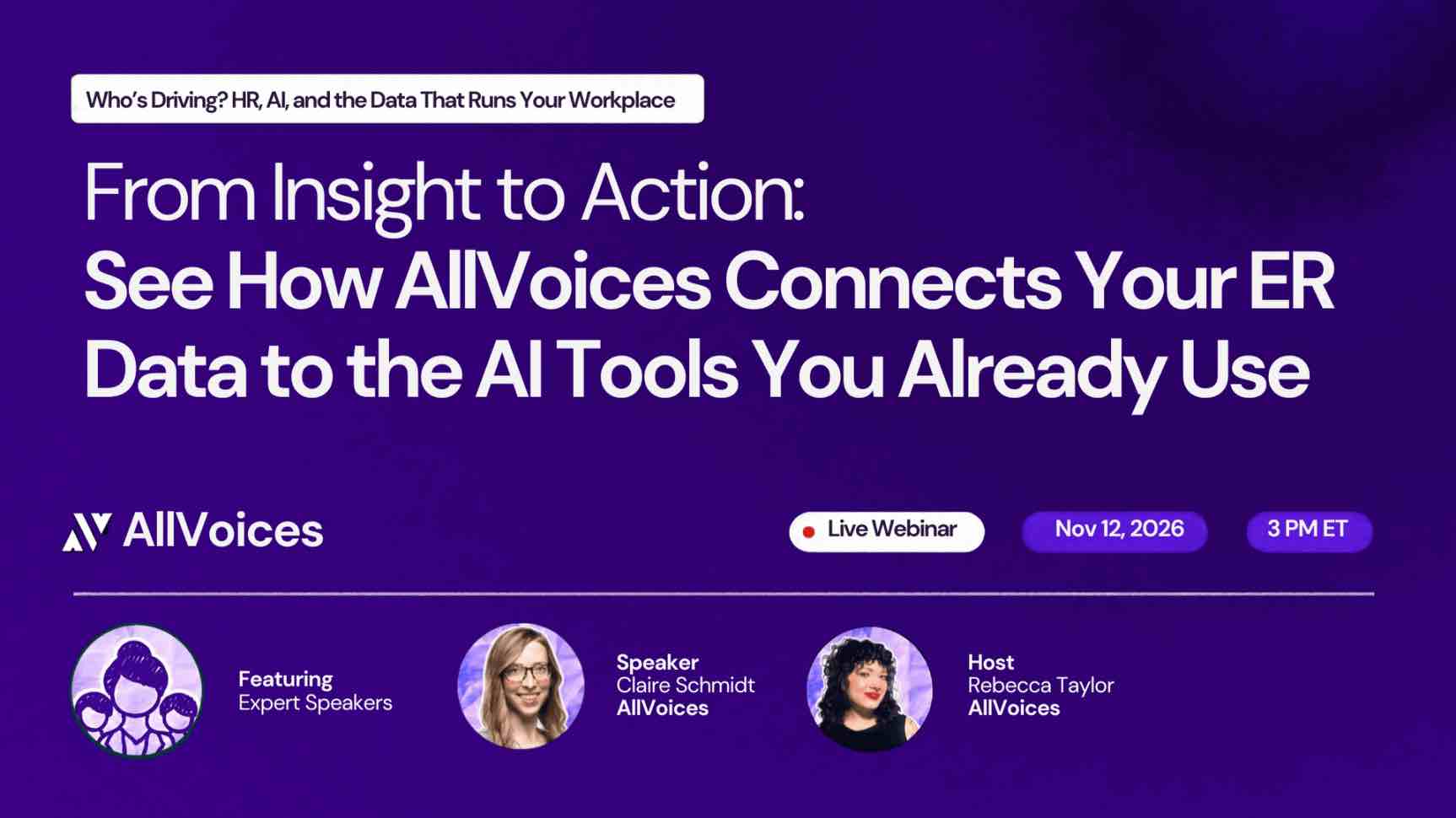
See how AllVoices helps coaching cultures protect their people with credible employee voice infrastructure.

Our next webinar
Frequently asked questions

Got more questions? Email us at support@allvoices.co and we'll respond ASAP.

No items found.
Frequently asked questions

Got more questions? Email us at support@allvoices.co and we'll respond ASAP.

No items found.
Vice President of People at Refine Labs and Founder & Career Coach with Hidden Gem Career Coaching, Jessica Williams- Coaching, Mentoring and Managing People
Episode 123
About This Episode
In this episode of Reimagining Company Culture, we’re chatting with Jessica Williams, Vice President of People at Refine Labs and Founder & Career Coach with Hidden Gem Career Coaching. With an educational background in psychology and sociology, Jessica applies her experience in DE&I, leadership development, and project management to help employees seeking upward career mobility or new employment opportunities.
About The Guest
Jessica (pronouns she/her/hers) is a Vice President of People by day and Founder/Career Coach with Hidden Gem Career Coaching by nights and weekends. With an educational background in psychology and sociology, she applies her experience in DE&I, leadership development, and project management to help employees seeking upward career mobility or new employment opportunities. She utilizes a consulting approach to understand the candidate’s past and future in order to showcase their abilities as a hidden gem in corporate America. Based on her personal and professional experience as a female Professional of Color she understands how to pinpoint the best aspects of clients' professional experience and market it in the most attractive way possible to potential hiring managers. She's also well versed in writing resumes, career planning, motivation techniques and network building. In her free time she enjoys traveling, reading and yoga.
Episode Transcription

Jessica Williams is the VP of People at Refine Labs and the founder of Hidden Gem Career Coaching. On Reimagining Company Culture, she joins us to break down the often-blurred lines between coaching, mentoring, and managing, and why high-performing companies invest in all three. Jessica's perspective is grounded in two roles that rarely sit in the same person: a senior People leader and a practicing career coach. The cross-pollination produces unusually crisp views on how managers should actually develop their teams.

Her thesis: companies that confuse these three roles get average results from all of them.

Coaching vs. Mentoring vs. Managing

Mentoring shares experience. Coaching draws insight from the coachee. Managing produces accountability. Harvard Business School research on mentoring found that new hires who received structured on-the-job mentoring outperformed unmentored peers by 18% and stayed longer.

That is a real number, and it depends on knowing which mode you are in. Mentoring, coaching, and performance appraisal are not interchangeable.

How To Build the Three Disciplines

Train managers in coaching first

Harvard Business Review's analysis of mentorship found that leaders rate coaching as nearly twice as effective as traditional skills training. Make this the manager-development backbone.

Build a mentoring program with intention

Pair mentors and mentees thoughtfully, set expectations, and review pairings. Default mentoring programs underperform because they skip the design step.

Keep managing rigorous

Clear goals, frequent feedback, and credible consequences. Managing without rigor undermines coaching and mentoring done well.

Career Conversations as the Connective Tissue

Jessica's coaching practice underscores how rare real career conversations are. Most managers run task-status meetings and hope the career stuff resolves itself. Companies that train managers to run regular development conversations and that pair them with reverse mentoring see retention improve fast.

This is also where people team efficiency matters. Automating the routine work frees managers for the conversations that move people.

Where Employee Relations Fits

Coaching cultures still have conflict. HR case management and AI-assisted employee relations provide the safety net that lets managers stretch their teams without losing people who feel unheard.

Jessica is direct: coaching depends on trust, and trust depends on credible recourse when something goes wrong.

Why This Conversation Matters Right Now

The HR field has been through three waves in the last few years: an emergency pivot to distributed work, a wave of public commitments around inclusion, and a slow correction as leaders started measuring which of those commitments actually moved retention and engagement.

That shift puts pressure on people leaders to be specific. Generic advice about belonging or psychological safety does not survive a budget review. The HR teams that are pulling ahead are the ones that connect cultural commitments to operating systems, instrument the resulting work, and report on outcomes in the same business-critical language the CFO uses for revenue. According to SHRM's reporting on retention strategies, the cost of underinvesting in culture shows up directly in voluntary attrition, and the math gets harder every year.

This is also where employee relations operations becomes a more visible part of the modern People organization. Employee relations is no longer a quiet compliance function; it is the data layer that tells leaders whether their stated values are being lived inside the organization, and it is increasingly the place where cultural drift first becomes visible.

A Practical Playbook for HR Leaders

Translating a great podcast conversation into actual change inside your organization takes a stepwise plan, not a rallying cry. The most consistent leaders we work with run a 90-day discovery loop, a 90-day pilot, and a 90-day expansion that together compress what would otherwise be a multi-year cultural shift into a single calendar year.

Discovery is mostly listening. That means structured conversations with managers, frontline employees, and recent leavers, paired with quantitative pulls from your HRIS, ATS, and case-management system. Most HR teams find that the data they already have, surfaced honestly, points to two or three high-impact interventions they had not previously prioritized.

Pilots are deliberately small. Pick one team, one geography, or one stage of the employee journey and instrument it well. Set a clear hypothesis, a measurable target, and a review cadence shorter than a quarter. The teams that pilot this way produce stories the rest of the organization actually wants to copy.

Expansion is the patient work. The organizations that scale change well treat the pilot lessons as the operating manual and resist the urge to rebrand the work. Manager training, listening infrastructure, and case-management discipline travel with the program; without those layers, even successful pilots fail to take root in the rest of the company.

The throughline across every successful version of this playbook is the same: change is treated as a system, not a moment. Hiring, performance, recognition, manager development, and reporting infrastructure all have to move together for the new culture to take root. The companies that move the whole stack at once, even imperfectly, usually compound their gains for the next several years.

One last note for HR leaders worried about whether the moment is right to invest. The cost of waiting always looks smaller than the cost of acting until the data comes in, and by then the talent has already left. The discipline is to move at the cadence of the workforce, not the cadence of the budget cycle, and the People leaders who hold that line tend to outlast the ones who do not.

Frequently Asked Questions About Coaching, Mentoring, and Managing

Should every manager also be a coach?

Most managers benefit from coaching skills, but not every manager needs to be a certified coach. The skill matters; the credential is optional.

Is mentoring better than sponsorship?

They are complementary. Mentoring shares wisdom; sponsorship opens doors. The most effective companies invest in both.

How do you measure coaching effectiveness?

Track promotion rates, retention, and qualitative growth feedback. The signal shows up over a few quarters.

What is the biggest mistake in coaching at work?

Trying to coach when the situation calls for managing. Confusing the two erodes accountability.

Should coaching be voluntary?

Manager-as-coach is not voluntary; it is part of the role. External coaching engagements typically work best when voluntary, with clear goals.

The Bottom Line for HR Leaders

Jessica's dual practice shows that companies built around clear coaching, mentoring, and managing disciplines develop people faster and keep them longer. The investment is in clarity, not in another program. The compounding returns are measured in retention, promotion, and engagement.

See how AllVoices helps coaching cultures protect their people with credible employee voice infrastructure.

Want to learn more?
See the power of AllVoices today
Thank you! We look forward to meeting you soon
Oops! Something went wrong while submitting the form.
Frequently asked questions

Got more questions? Email us at support@allvoices.co and we'll respond ASAP.

No items found.
Frequently asked questions

Got more questions? Email us at support@allvoices.co and we'll respond ASAP.

No items found.