About This Episode
In this episode of Reimagining Company Culture, we’re chatting with Matt Dubin, Founder & Principal at Dubin Consulting Group. Matt's passion is to help others see their jobs as more than just work, but a source of meaning, connection, and self-actualization. Tune in to learn Matt’s thoughts on redefining employee engagement and happiness in a remote world, the key pillars of a sustainable psychologically safe environment, working toward a future with more gender equity, and more!
About The Guest
Matt is the Founder and Principal of Dubin Consulting Group. When he was a student at the University of Michigan, his Mentor, Dr. Christopher Peterson (one of the founding fathers of Positive Psychology), often asked: “What makes life worth living?” According to Matt and the current research, fulfilling work is a major part of the answer. Considering that only a third of Americans are engaged in their jobs, there is a striking gap between what work is and what it could be. Matt's passion is to help others see their jobs as more than just work, but a source of meaning, connection, and self-actualization. Matt completed his PhD in Positive Organizational Psychology at Claremont Graduate University under the tutelage of Dr. Mihaly Csikszentmihalyi, the creator of the flow theory. He was awarded the inaugural “Mihaly Csikszentmihalyi Dissertation Award for Excellence in Positive Psychology” for his research on cultivating flow in the workplace. From start-ups to Fortune 100 companies, Matt has worked with a variety of organizations in a range of industries including tech, professional sports, entertainment, advertising, fashion, law, and finance. Matt previously was the Manager of Organization Development and Training at FOX entertainment group. Matt lives in Los Angeles with his wife, daughter, and two dogs. He loves all things basketball, playing guitar, and trying as many restaurants in LA as possible (and finishing everyone’s leftovers).
Episode Breakdown

Matt Dubin is the founder and principal of Dubin Consulting Group, where he advises People leaders on the intersection of performance, wellbeing, and organizational design. Before launching the firm, he spent years inside complex organizations watching what produces sustained focus and what produces burnout. The conversation that follows reflects that grounding.

On this episode of Reimagining Company Culture, Matt explores the idea of holistic moments of flow, the periods when people are doing their best, most absorbed work. He argues that companies have been engineering against flow for years without realizing it, and that the People function has the leverage to fix it. We have pulled the practical lessons together with patterns we see across AllVoices employee engagement solutions.

What Holistic Flow Actually Means at Work

Flow is the state of complete absorption in a task. Holistic flow extends the idea past the individual moment and asks whether the conditions for flow exist throughout the day, the week, and the year. Most organizations get the moment wrong, then wonder why output drops.

The data on the cost of disrupted attention is sobering. CDC research on workplace mental health shows that burnout rates have climbed steadily, and that protective factors include trust in management, manager support, and adequate time to complete work. Each of those is a flow precondition.

What Engineers Flow Out of the Day

Matt is direct about the culprits. Most companies build environments that fragment attention by default. Constant Slack notifications. Meeting-heavy calendars. Always-on email. The result is a workforce that performs reactively rather than reflectively.

What does a flow-friendly calendar look like?

It includes blocks of uninterrupted time, defended by team norms rather than individual willpower. Meeting-free mornings, no-meeting days, or dedicated focus blocks all work, but only when the team agrees to them as a contract. Individual focus practices fail when the surrounding culture rewards constant availability.

How do managers protect flow for their teams?

By writing down decision rights so people can act without escalating. By batching status updates instead of asking for them ad hoc. By measuring outcomes rather than presence. The job of the manager in a flow-friendly environment is to remove the small interruptions that compound across a week.

What Actually Works in Designing for Sustained Focus

Principle 1: Reduce the cost of saying no

Flow dies when every interruption feels mandatory. The strongest cultures give employees explicit permission to decline meetings, defer messages, and protect their focus. Permission has to be modeled by senior leaders, not just stated in policy.

Principle 2: Treat wellbeing as a system input, not a benefit

Wellbeing programs that exist alongside relentless workloads do not work. The math of burnout is structural. Work-life balance has to be designed into the operating model, not bolted on through perks.

Principle 3: Listen for early signals of fatigue

Burnout shows up in the data before it shows up in resignations. Pulse surveys, manager 1:1s, and engagement trends all flag where teams are running too hot. The AllVoices employee survey platform gives People teams the cadence to catch shifts in real time, and employee engagement data segmented by team is the leading indicator most companies underuse.

Where Employee Relations Fits in Wellbeing Strategy

ER cases are an underrated wellbeing signal. When a manager pushes a team past their limits, the team raises issues. When the workload itself is unsustainable, exit interviews and case data tell the story.

That is why centralized HR case management matters in any wellbeing strategy. ER teams sit on the data that connects manager behavior to team health, and that data is essential for any People function trying to engineer flow back into the organization. Concepts like psychological safety show up in the case data when the system is working.

How does ER data inform wellbeing investment?

Case patterns by team flag where workload or manager behavior is breaking people. Exit interviews and stay interviews surface the specific stressors. The combination tells leadership where to invest in coaching, restructuring, or policy change.

Frequently Asked Questions About Flow and Wellbeing at Work

What is holistic flow at work?

It is the sustained capacity for absorbed, focused work, supported by the conditions of the day, the week, and the year. Holistic flow goes past individual focus practices and asks whether the operating environment makes flow possible at all.

How do you measure burnout in an organization?

Through engagement scores, attrition trends, sick-day patterns, and direct survey questions about exhaustion and recovery. Matt Dubin recommends pairing quantitative data with qualitative manager check-ins, because the earliest signals are usually conversational rather than numerical.

What is the role of HR in protecting flow?

To redesign the operating model so flow is the default rather than the exception. That means smaller meeting loads, clearer decision rights, fewer status rituals, and explicit permission to decline. Policy follows from the design, not the other way around.

How do you balance performance and wellbeing?

By treating them as the same system rather than competing ones. Sustained performance requires recovery. Recovery enables performance. The companies that build that loop into operations outperform the ones that treat wellbeing as a separate budget line.

Why does manager behavior matter so much for wellbeing?

Because managers control the day-to-day experience of work for their teams. The CDC's research consistently identifies trust in management and supervisor support as protective factors against burnout. Manager development is the most leveraged wellbeing investment a People team can make.

The Bottom Line for HR Leaders

Matt Dubin's argument is that flow and wellbeing are downstream of operating design. The companies that engineer for sustained focus, clear decision rights, and protected time produce the work most companies wish they could. The People team owns the design.

The starting move for most People organizations is to look at the calendars, the messaging norms, and the meeting cadence. Where is attention being fragmented by default. The honest audit produces the next set of changes, and the changes show up in the data within a few cycles.

See how AllVoices supports wellbeing-focused People teams with listening, ER case management, and analytics that catch fatigue before it becomes attrition.
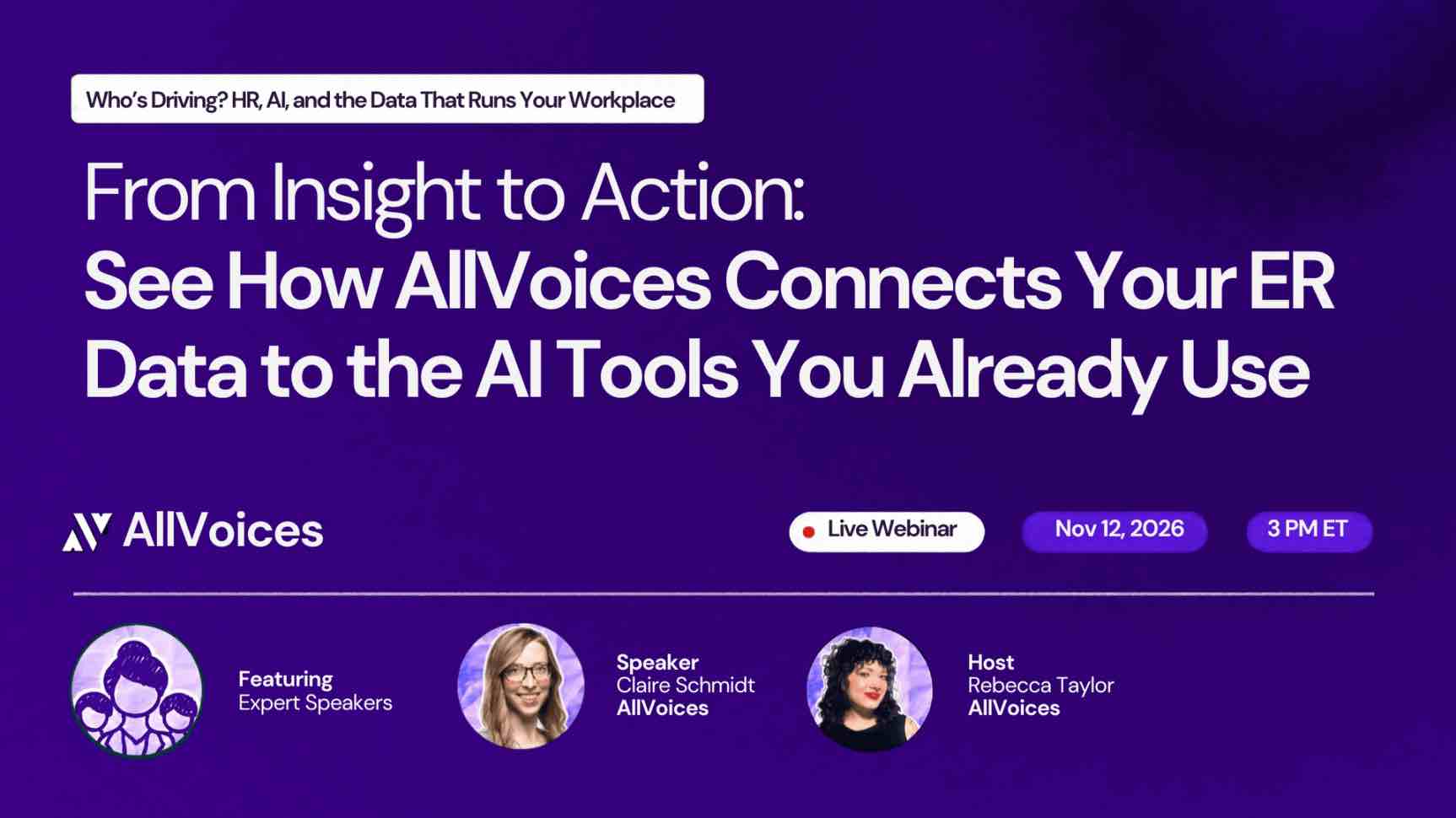
Our next webinar
Frequently asked questions

Got more questions? Email us at support@allvoices.co and we'll respond ASAP.

No items found.
Frequently asked questions

Got more questions? Email us at support@allvoices.co and we'll respond ASAP.

No items found.
Founder & Principal at Dubin Consulting Group, Matt Dubin- Think About Your Holistic Moments of Flow
Episode 207
About This Episode
In this episode of Reimagining Company Culture, we’re chatting with Matt Dubin, Founder & Principal at Dubin Consulting Group. Matt's passion is to help others see their jobs as more than just work, but a source of meaning, connection, and self-actualization. Tune in to learn Matt’s thoughts on redefining employee engagement and happiness in a remote world, the key pillars of a sustainable psychologically safe environment, working toward a future with more gender equity, and more!
About The Guest
Matt is the Founder and Principal of Dubin Consulting Group. When he was a student at the University of Michigan, his Mentor, Dr. Christopher Peterson (one of the founding fathers of Positive Psychology), often asked: “What makes life worth living?” According to Matt and the current research, fulfilling work is a major part of the answer. Considering that only a third of Americans are engaged in their jobs, there is a striking gap between what work is and what it could be. Matt's passion is to help others see their jobs as more than just work, but a source of meaning, connection, and self-actualization. Matt completed his PhD in Positive Organizational Psychology at Claremont Graduate University under the tutelage of Dr. Mihaly Csikszentmihalyi, the creator of the flow theory. He was awarded the inaugural “Mihaly Csikszentmihalyi Dissertation Award for Excellence in Positive Psychology” for his research on cultivating flow in the workplace. From start-ups to Fortune 100 companies, Matt has worked with a variety of organizations in a range of industries including tech, professional sports, entertainment, advertising, fashion, law, and finance. Matt previously was the Manager of Organization Development and Training at FOX entertainment group. Matt lives in Los Angeles with his wife, daughter, and two dogs. He loves all things basketball, playing guitar, and trying as many restaurants in LA as possible (and finishing everyone’s leftovers).
Episode Transcription

Matt Dubin is the founder and principal of Dubin Consulting Group, where he advises People leaders on the intersection of performance, wellbeing, and organizational design. Before launching the firm, he spent years inside complex organizations watching what produces sustained focus and what produces burnout. The conversation that follows reflects that grounding.

On this episode of Reimagining Company Culture, Matt explores the idea of holistic moments of flow, the periods when people are doing their best, most absorbed work. He argues that companies have been engineering against flow for years without realizing it, and that the People function has the leverage to fix it. We have pulled the practical lessons together with patterns we see across AllVoices employee engagement solutions.

What Holistic Flow Actually Means at Work

Flow is the state of complete absorption in a task. Holistic flow extends the idea past the individual moment and asks whether the conditions for flow exist throughout the day, the week, and the year. Most organizations get the moment wrong, then wonder why output drops.

The data on the cost of disrupted attention is sobering. CDC research on workplace mental health shows that burnout rates have climbed steadily, and that protective factors include trust in management, manager support, and adequate time to complete work. Each of those is a flow precondition.

What Engineers Flow Out of the Day

Matt is direct about the culprits. Most companies build environments that fragment attention by default. Constant Slack notifications. Meeting-heavy calendars. Always-on email. The result is a workforce that performs reactively rather than reflectively.

What does a flow-friendly calendar look like?

It includes blocks of uninterrupted time, defended by team norms rather than individual willpower. Meeting-free mornings, no-meeting days, or dedicated focus blocks all work, but only when the team agrees to them as a contract. Individual focus practices fail when the surrounding culture rewards constant availability.

How do managers protect flow for their teams?

By writing down decision rights so people can act without escalating. By batching status updates instead of asking for them ad hoc. By measuring outcomes rather than presence. The job of the manager in a flow-friendly environment is to remove the small interruptions that compound across a week.

What Actually Works in Designing for Sustained Focus

Principle 1: Reduce the cost of saying no

Flow dies when every interruption feels mandatory. The strongest cultures give employees explicit permission to decline meetings, defer messages, and protect their focus. Permission has to be modeled by senior leaders, not just stated in policy.

Principle 2: Treat wellbeing as a system input, not a benefit

Wellbeing programs that exist alongside relentless workloads do not work. The math of burnout is structural. Work-life balance has to be designed into the operating model, not bolted on through perks.

Principle 3: Listen for early signals of fatigue

Burnout shows up in the data before it shows up in resignations. Pulse surveys, manager 1:1s, and engagement trends all flag where teams are running too hot. The AllVoices employee survey platform gives People teams the cadence to catch shifts in real time, and employee engagement data segmented by team is the leading indicator most companies underuse.

Where Employee Relations Fits in Wellbeing Strategy

ER cases are an underrated wellbeing signal. When a manager pushes a team past their limits, the team raises issues. When the workload itself is unsustainable, exit interviews and case data tell the story.

That is why centralized HR case management matters in any wellbeing strategy. ER teams sit on the data that connects manager behavior to team health, and that data is essential for any People function trying to engineer flow back into the organization. Concepts like psychological safety show up in the case data when the system is working.

How does ER data inform wellbeing investment?

Case patterns by team flag where workload or manager behavior is breaking people. Exit interviews and stay interviews surface the specific stressors. The combination tells leadership where to invest in coaching, restructuring, or policy change.

Frequently Asked Questions About Flow and Wellbeing at Work

What is holistic flow at work?

It is the sustained capacity for absorbed, focused work, supported by the conditions of the day, the week, and the year. Holistic flow goes past individual focus practices and asks whether the operating environment makes flow possible at all.

How do you measure burnout in an organization?

Through engagement scores, attrition trends, sick-day patterns, and direct survey questions about exhaustion and recovery. Matt Dubin recommends pairing quantitative data with qualitative manager check-ins, because the earliest signals are usually conversational rather than numerical.

What is the role of HR in protecting flow?

To redesign the operating model so flow is the default rather than the exception. That means smaller meeting loads, clearer decision rights, fewer status rituals, and explicit permission to decline. Policy follows from the design, not the other way around.

How do you balance performance and wellbeing?

By treating them as the same system rather than competing ones. Sustained performance requires recovery. Recovery enables performance. The companies that build that loop into operations outperform the ones that treat wellbeing as a separate budget line.

Why does manager behavior matter so much for wellbeing?

Because managers control the day-to-day experience of work for their teams. The CDC's research consistently identifies trust in management and supervisor support as protective factors against burnout. Manager development is the most leveraged wellbeing investment a People team can make.

The Bottom Line for HR Leaders

Matt Dubin's argument is that flow and wellbeing are downstream of operating design. The companies that engineer for sustained focus, clear decision rights, and protected time produce the work most companies wish they could. The People team owns the design.

The starting move for most People organizations is to look at the calendars, the messaging norms, and the meeting cadence. Where is attention being fragmented by default. The honest audit produces the next set of changes, and the changes show up in the data within a few cycles.

See how AllVoices supports wellbeing-focused People teams with listening, ER case management, and analytics that catch fatigue before it becomes attrition.

Want to learn more?
See the power of AllVoices today
Thank you! We look forward to meeting you soon
Oops! Something went wrong while submitting the form.
Frequently asked questions

Got more questions? Email us at support@allvoices.co and we'll respond ASAP.

No items found.
Frequently asked questions

Got more questions? Email us at support@allvoices.co and we'll respond ASAP.

No items found.