About This Episode
In this episode of Reimagining Company Culture, we’re chatting with Kenrese Carter, VP of People and Culture at Genexa. Kenrese is keen on shaping a best-in-class culture. Before joining Genexa Kenrese served as the Chief Executive Officer of The NuMed Collective, where she oversaw day to day operations and HR. She is also a speaker and is very passionate about people development and wellbeing. Tune in to learn Kenrese’s thoughts on quantitative ways to measure company culture, "people over everything" examples, defining "clean medicine" at Genexa, and more!
About The Guest
Kenrese Carter is the Vice President of People at Genexa, a clean medicine company. In her capacity at Genexa, Kenrese is focused on employee retention, diversity equity and inclusion, and bringing value to Genexa’s employees. Kenrese is keen on shaping a best-in-class culture. Before joining Genexa Kenrese served as the Chief Executive Officer of The NuMed Collective, where she oversaw day to day operations and HR. Kenrese worked for United States Army as Nutrition & Wellness Consultant in Germany and other military installations. She is also a speaker and is very passionate about people development and wellbeing.
Episode Breakdown

Kenrese Carter, VP of People and Culture at Genexa, takes a bracingly practical view of culture work. Most People teams skip the hardest step. They never define what successful culture looks like in concrete terms. Then they wonder why every program lands soft. Definition is the work. Everything else is execution against the definition.

The definition has to be specific enough that two different managers in two different departments would interpret it the same way. Vague culture statements produce vague outcomes. Specific ones produce coachable behaviors that managers can repeat under pressure.

The companies that take this seriously stop measuring culture by the number of values printed on the wall and start measuring it by the spread between expected and observed behavior. The spread is the gap. Closing the gap is the real work. Every other culture initiative is downstream.

Why Culture Definition Is the Highest-Leverage HR Investment

Catalyst found that employees who feel respected at work are five times more likely to be engaged and three times more likely to stay. Respect is not vague. It shows up in specific manager behaviors, hiring decisions, and ER outcomes. Defining culture means defining what respect looks like in your specific company, role by role.

The teams that skip definition end up with engagement programs that fight each other. The teams that define carefully end up with programs that compound. The difference is the upfront work most leaders avoid.

That work happens inside a culture program with measurable outcomes, not a poster on the wall.

How HR Leaders Translate Culture Into Operations

What makes a culture definition operational?

Three tests. Can a new hire interpret it the same way as a five-year veteran? Does it inform a specific decision in a hiring debrief, a performance review, or an ER case? And can someone outside the company read it and predict how the company would handle a hard moment?

Most culture definitions fail all three tests. Aspirational language reads well in a deck and tells managers nothing about how to act on a Tuesday afternoon.

How do you measure whether the definition is showing up?

Compare hiring decisions, performance reviews, and case outcomes against the definition. Real-time HR analytics expose the gap between what the definition says and what the team actually does. The gap data is the most useful management tool the People team can produce.

What Actually Works in Mid-Stage Companies

Embed the definition in hiring rubrics

Hiring is the highest-leverage place to enforce culture. Talent acquisition teams that score candidates against documented culture behaviors hire more consistently than teams that rely on gut feel.

Use ER patterns to validate or challenge the definition

If the culture says respect and the ER patterns show repeated bullying complaints in the same team, the definition is not landing. Centralized case management turns the disconnect into a coaching opportunity instead of a surprise.

Run continuous listening against the definition

Survey questions tied to the specific culture behaviors are more useful than generic engagement metrics. Continuous pulse surveys with definition-aligned questions give the People team a sharper signal.

Operational Tests That Validate a Culture Definition

Once a definition exists, the People team needs tests that confirm it lands. Three tests work in most environments. The hiring debrief test. The performance review test. And the difficult conversation test.

The hiring debrief test asks whether two interviewers, on the same candidate, scored the cultural fit dimensions the same way. Wide spread means the definition is too vague. The performance review test asks whether managers cite the cultural definition when explaining decisions about ratings or promotions. Silence means the definition is not operational. The difficult conversation test asks whether managers reference the definition when delivering hard feedback. If they default to generic language, the definition has not landed.

Catalyst found that employees who feel respected at work are five times more likely to be engaged and three times more likely to stay. Respect translates into specific manager behaviors. The People teams that audit those behaviors against the definition see compounding gains.

How definition shifts ER patterns

A clear culture definition makes ER cases more consistent and faster to resolve. Investigators reference the same standard. Outcomes reflect the same priorities. The pattern is self-reinforcing once it starts.

Where Employee Relations Fits in a Defined Culture

ER outcomes are the truest test of culture. Workplace investigations that consistently align with stated values build trust. Investigations that drift produce cynicism. Sweetgreen's frontline-heavy operating model is an example of culture-driven ER discipline working at scale.

How AI raises the consistency bar

AI removes some of the variance that creeps in when humans triage cases under pressure. AI-assisted ER triage applies the same screening to every case. Humans then bring judgment to the hard parts.

Frequently Asked Questions About Defining Workplace Culture

How specific should a culture definition be?

Specific enough that two managers handling the same situation would respond the same way. If the definition leaves room for interpretation on the basics, it is too vague. The right level of specificity is uncomfortable. That is the point.

How often should a company revisit its culture definition?

Annually. Not because culture changes that fast, but because the world changes and the definition has to flex. The annual review keeps the language alive instead of frozen.

What is the role of senior leaders in defining culture?

Senior leaders own the definition and model it visibly. Without their participation, the work reads as bottom-up theater. Brookings notes that companies with diverse boards and leadership outperform peers in product development, revenues, and engagement. Visible leadership is the difference between definition that lands and definition that drifts.

How do you avoid culture statements that age badly?

Anchor the definition in behaviors, not slogans. Behaviors stay relevant longer than language trends. The slogan changes. The behavior persists.

How does culture definition shape onboarding?

The first 30 days set the cultural anchor. New hires interpret their early experiences as the real culture, regardless of what the deck says. Strong onboarding aligns the lived experience with the definition.

The Bottom Line for HR Leaders

Defining culture is the work most teams avoid. The avoidance is the cost. Companies that invest in definition compound across hiring, performance, retention, and ER. Companies that skip it end up retraining the same lessons every year.

Define. Measure. Coach. Repeat. The teams that do this work end up with retention numbers that look unfair to their peers.

Culture definition is the kind of work that does not show up in any quarter and shows up in every annual review. The flywheel takes a year to start spinning. Once it does, the compounding effect is the most durable advantage a People team can build. The teams that commit to it early start ahead. The teams that put it off pay the cost in turnover, missed hires, and ER drift.

The single best decision a new CHRO can make is to spend the first 90 days defining what successful culture looks like in concrete terms. Everything else gets easier from there. Recruiting becomes sharper. Performance management becomes consistent. ER outcomes become predictable. The definition is the leverage point for everything else.

See how AllVoices makes culture definition measurable in daily operations.
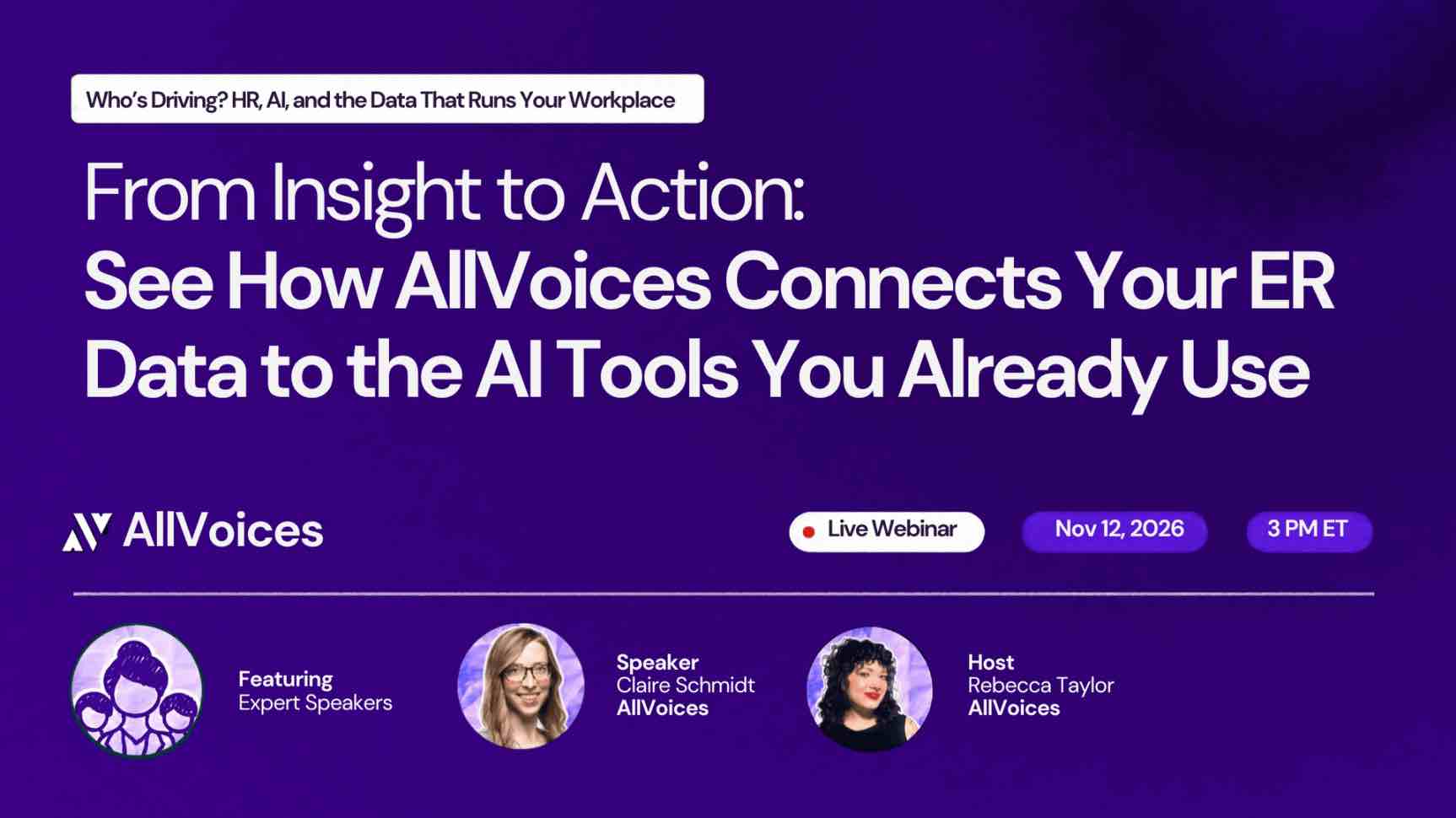
Our next webinar
Frequently asked questions

Got more questions? Email us at support@allvoices.co and we'll respond ASAP.

No items found.
Frequently asked questions

Got more questions? Email us at support@allvoices.co and we'll respond ASAP.

No items found.
Kenrese Carter, VP of People and Culture at Genexa - Defining and Demonstrating Successful Cultures
Episode 197
About This Episode
In this episode of Reimagining Company Culture, we’re chatting with Kenrese Carter, VP of People and Culture at Genexa. Kenrese is keen on shaping a best-in-class culture. Before joining Genexa Kenrese served as the Chief Executive Officer of The NuMed Collective, where she oversaw day to day operations and HR. She is also a speaker and is very passionate about people development and wellbeing. Tune in to learn Kenrese’s thoughts on quantitative ways to measure company culture, "people over everything" examples, defining "clean medicine" at Genexa, and more!
About The Guest
Kenrese Carter is the Vice President of People at Genexa, a clean medicine company. In her capacity at Genexa, Kenrese is focused on employee retention, diversity equity and inclusion, and bringing value to Genexa’s employees. Kenrese is keen on shaping a best-in-class culture. Before joining Genexa Kenrese served as the Chief Executive Officer of The NuMed Collective, where she oversaw day to day operations and HR. Kenrese worked for United States Army as Nutrition & Wellness Consultant in Germany and other military installations. She is also a speaker and is very passionate about people development and wellbeing.
Episode Transcription

Kenrese Carter, VP of People and Culture at Genexa, takes a bracingly practical view of culture work. Most People teams skip the hardest step. They never define what successful culture looks like in concrete terms. Then they wonder why every program lands soft. Definition is the work. Everything else is execution against the definition.

The definition has to be specific enough that two different managers in two different departments would interpret it the same way. Vague culture statements produce vague outcomes. Specific ones produce coachable behaviors that managers can repeat under pressure.

The companies that take this seriously stop measuring culture by the number of values printed on the wall and start measuring it by the spread between expected and observed behavior. The spread is the gap. Closing the gap is the real work. Every other culture initiative is downstream.

Why Culture Definition Is the Highest-Leverage HR Investment

Catalyst found that employees who feel respected at work are five times more likely to be engaged and three times more likely to stay. Respect is not vague. It shows up in specific manager behaviors, hiring decisions, and ER outcomes. Defining culture means defining what respect looks like in your specific company, role by role.

The teams that skip definition end up with engagement programs that fight each other. The teams that define carefully end up with programs that compound. The difference is the upfront work most leaders avoid.

That work happens inside a culture program with measurable outcomes, not a poster on the wall.

How HR Leaders Translate Culture Into Operations

What makes a culture definition operational?

Three tests. Can a new hire interpret it the same way as a five-year veteran? Does it inform a specific decision in a hiring debrief, a performance review, or an ER case? And can someone outside the company read it and predict how the company would handle a hard moment?

Most culture definitions fail all three tests. Aspirational language reads well in a deck and tells managers nothing about how to act on a Tuesday afternoon.

How do you measure whether the definition is showing up?

Compare hiring decisions, performance reviews, and case outcomes against the definition. Real-time HR analytics expose the gap between what the definition says and what the team actually does. The gap data is the most useful management tool the People team can produce.

What Actually Works in Mid-Stage Companies

Embed the definition in hiring rubrics

Hiring is the highest-leverage place to enforce culture. Talent acquisition teams that score candidates against documented culture behaviors hire more consistently than teams that rely on gut feel.

Use ER patterns to validate or challenge the definition

If the culture says respect and the ER patterns show repeated bullying complaints in the same team, the definition is not landing. Centralized case management turns the disconnect into a coaching opportunity instead of a surprise.

Run continuous listening against the definition

Survey questions tied to the specific culture behaviors are more useful than generic engagement metrics. Continuous pulse surveys with definition-aligned questions give the People team a sharper signal.

Operational Tests That Validate a Culture Definition

Once a definition exists, the People team needs tests that confirm it lands. Three tests work in most environments. The hiring debrief test. The performance review test. And the difficult conversation test.

The hiring debrief test asks whether two interviewers, on the same candidate, scored the cultural fit dimensions the same way. Wide spread means the definition is too vague. The performance review test asks whether managers cite the cultural definition when explaining decisions about ratings or promotions. Silence means the definition is not operational. The difficult conversation test asks whether managers reference the definition when delivering hard feedback. If they default to generic language, the definition has not landed.

Catalyst found that employees who feel respected at work are five times more likely to be engaged and three times more likely to stay. Respect translates into specific manager behaviors. The People teams that audit those behaviors against the definition see compounding gains.

How definition shifts ER patterns

A clear culture definition makes ER cases more consistent and faster to resolve. Investigators reference the same standard. Outcomes reflect the same priorities. The pattern is self-reinforcing once it starts.

Where Employee Relations Fits in a Defined Culture

ER outcomes are the truest test of culture. Workplace investigations that consistently align with stated values build trust. Investigations that drift produce cynicism. Sweetgreen's frontline-heavy operating model is an example of culture-driven ER discipline working at scale.

How AI raises the consistency bar

AI removes some of the variance that creeps in when humans triage cases under pressure. AI-assisted ER triage applies the same screening to every case. Humans then bring judgment to the hard parts.

Frequently Asked Questions About Defining Workplace Culture

How specific should a culture definition be?

Specific enough that two managers handling the same situation would respond the same way. If the definition leaves room for interpretation on the basics, it is too vague. The right level of specificity is uncomfortable. That is the point.

How often should a company revisit its culture definition?

Annually. Not because culture changes that fast, but because the world changes and the definition has to flex. The annual review keeps the language alive instead of frozen.

What is the role of senior leaders in defining culture?

Senior leaders own the definition and model it visibly. Without their participation, the work reads as bottom-up theater. Brookings notes that companies with diverse boards and leadership outperform peers in product development, revenues, and engagement. Visible leadership is the difference between definition that lands and definition that drifts.

How do you avoid culture statements that age badly?

Anchor the definition in behaviors, not slogans. Behaviors stay relevant longer than language trends. The slogan changes. The behavior persists.

How does culture definition shape onboarding?

The first 30 days set the cultural anchor. New hires interpret their early experiences as the real culture, regardless of what the deck says. Strong onboarding aligns the lived experience with the definition.

The Bottom Line for HR Leaders

Defining culture is the work most teams avoid. The avoidance is the cost. Companies that invest in definition compound across hiring, performance, retention, and ER. Companies that skip it end up retraining the same lessons every year.

Define. Measure. Coach. Repeat. The teams that do this work end up with retention numbers that look unfair to their peers.

Culture definition is the kind of work that does not show up in any quarter and shows up in every annual review. The flywheel takes a year to start spinning. Once it does, the compounding effect is the most durable advantage a People team can build. The teams that commit to it early start ahead. The teams that put it off pay the cost in turnover, missed hires, and ER drift.

The single best decision a new CHRO can make is to spend the first 90 days defining what successful culture looks like in concrete terms. Everything else gets easier from there. Recruiting becomes sharper. Performance management becomes consistent. ER outcomes become predictable. The definition is the leverage point for everything else.

See how AllVoices makes culture definition measurable in daily operations.

Want to learn more?
See the power of AllVoices today
Thank you! We look forward to meeting you soon
Oops! Something went wrong while submitting the form.
Frequently asked questions

Got more questions? Email us at support@allvoices.co and we'll respond ASAP.

No items found.
Frequently asked questions

Got more questions? Email us at support@allvoices.co and we'll respond ASAP.

No items found.