About This Episode
In this episode of Reimagining Company Culture, we’re chatting with Gabrielle Gonzalez, Director of People Experience at Sayge. Gabby has previously held people roles at mission-oriented start-ups, most recently being the head of culture & engagement at Change.org. Tune in to learn Gabrielle’s thoughts on redefining “employee engagement” in a world of hybrid and remote work, defining the people experience, building trust past an open door policy, and more!
About The Guest
Gabrielle Gonzalez (she/her) is the Director of People Experience at Sayge, whose mission is to enable every individual to realize their potential through access to coaching. Gabby has previously held people roles at mission-oriented start-ups, most recently being the head of culture & engagement at Change.org. A native new yorker and the child of immigrants, Gabby spends a lot of time mind-mapping ways companies can use a people-first mindset to truly foster inclusive cultures, ones that deepen staff's sense of purpose and connection. Through her authentic and strategic leadership, she hopes to inspire other companies throughout her career to do the same.
Episode Breakdown

The phrase "lead with your values" gets so much corporate airtime that it has lost most of its meaning. Gabrielle Gonzalez, Director of People Experience at Sayge, brings the phrase back to something practical on Reimagining Company Culture. Values, in her view, are operating constraints. They tell you what to do when the easier choice is in front of you.

Gabby's previous work running culture and engagement at Change.org sharpened a particular instinct: design the employee experience the way you would design a product. Map the touchpoints. Cut the friction. Pay attention to the moments most people skim past. That mindset is what separates companies whose values show up in real decisions from companies whose values show up in the careers page.

Why Engagement Means Something Different in Hybrid and Remote Work

The old model assumed proximity. People showed up, ran into each other, built rapport in passing, and someone called that engagement. Hybrid and remote work broke the assumption. Now every interaction has to be designed because none of it is going to happen by accident.

The data backs the urgency. Deloitte research on workplace trust shows that nearly a third of professionals will not use flexible work options because they are worried about how it looks to leadership. That is a designed experience problem, not a flexibility policy problem.

Defining the People Experience as a Discipline

Gabby is careful with the words. "People experience" is not a rebrand of HR. It is a recognition that the entire employee lifecycle is one continuous experience, and most companies have only designed pieces of it. Onboarding gets attention. Compensation gets attention. The middle years where most attrition happens get almost none.

The discipline borrows from product. A values statement works the same way as a product principle: it constrains decisions and signals intent. A company culture strategy works the same way as a roadmap: it sequences which problems get solved first.

What Does "People Experience" Cover That HR Does Not?

It covers the felt sense of working at the company. The way Slack notifications hit in the evening. Whether someone's first 1:1 with their new manager has a real agenda. How long it takes to get the laptop fixed. None of that lives in a traditional HR org chart, but all of it shapes whether a person stays.

How Do Values Show Up in Real Decisions?

You can usually spot a values-led company in two places: the promotion conversations and the performance plan conversations. If a high performer with bad behavior gets promoted anyway, the values are wallpaper. If a respected manager gets corrected publicly for cutting corners on inclusion, the values are operating.

Building Engagement Without Falling Into Survey Theater

The temptation is to measure engagement with one number and chase it. The number moves. People claim victory. Nothing actually changes. The trick is to measure the upstream behaviors instead. Did managers run their 1:1s this week? Did teams do retrospectives? Are stay interviews happening on the cadence that was committed?

When the upstream behaviors are healthy, the engagement number takes care of itself. When they are not, raising the number through better questions on the survey is just self-deception.

What Actually Works for People Experience Design

Map the Onboarding Experience Hour by Hour

The first thirty days set the trajectory. Most companies still hand new hires a benefits PDF and a Slack invite. The companies that have actually designed onboarding write a runbook of every touchpoint, every conversation, every artifact a new hire interacts with. Then they cut the friction one item at a time.

Treat the Manager Relationship as the Core Product

Most engagement comes down to the relationship with a direct manager. Investing in employee engagement at scale starts with investing in manager training and feedback loops. Skip-level interviews are the cheapest, highest-signal tool most companies underuse.

Build a Real Off-Boarding Experience

The exit interview is too late. The off-boarding experience starts the day someone signals dissatisfaction in a stay interview, an engagement comment, or a manager conversation. Companies that design that path retain more and learn more from the people who do leave.

Where Employee Relations Fits in the Experience

Employee relations is the layer that catches the experience failures that crossed into harm. A case management platform that handles the full lifecycle of complaints is a critical part of any people-experience strategy. The teams that try to handle ER through email and shared docs miss patterns and miss legal exposure.

Why ER Capacity Matters to Engagement

An unresolved complaint creates a much larger downstream problem than the original incident. Witnesses lose trust. The team learns what gets ignored. Engagement scores in the affected pocket of the company drop and do not come back. Resolution speed is one of the most underrated drivers of engagement.

Frequently Asked Questions About People Experience

What is the difference between people experience and employee experience?

The terms are mostly interchangeable. People experience reads slightly more humane and slightly more deliberate, which is why teams adopting the discipline tend to use it. The substance is the same.

Who owns the people experience inside a company?

It depends on size. In smaller companies, a head of people or HR business partner usually owns it. In larger companies, dedicated people experience or employee experience leaders sit inside the people org and partner with internal comms, IT, and facilities.

How do you measure the people experience without overfitting to surveys?

Triangulate. Use a mix of engagement scores, retention data, internal mobility rates, and qualitative pulse signals. Any single metric will be gamed if you over-rely on it.

How do values stay alive after a leadership change?

They have to be embedded in the operating cadence: hiring rubrics, promotion rubrics, performance reviews. Values that live only in keynote speeches die with the keynote speaker.

How does AI fit into people experience design?

It removes the drudge work that crowded out the human touchpoints. Vera, the AllVoices AI co-pilot, drafts case responses, summarizes long histories, and surfaces patterns. People teams get back the hours they used to spend in inboxes.

The Bottom Line for HR Leaders

Investments in people-experience design pay off in retention numbers that compound over years. SHRM research on workplace burnout shows that 44% of US employees feel burned out at work and that workers under burnout are nearly three times more likely to be actively job-hunting. The companies that have actually designed the experience absorb less of that downstream cost. The companies that have not pay for it in attrition, recruiting fees, and lost institutional knowledge.

The companies that take this seriously usually do so because they have already tried the easier path and watched it fail to produce a culture that survives growth.

Gabby's framing of values as operating constraints is the right one. The companies that lead with values do not announce them more often. They sequence them earlier, embed them deeper, and reinforce them in the unglamorous decisions that nobody outside HR sees.

People experience is the discipline that turns those values into a designed product. The teams who do it well build the operating cadence first, the measurement second, and the storytelling last. The teams who reverse the order produce values posters and not much else.

See how AllVoices supports people teams who are designing the employee experience deliberately.
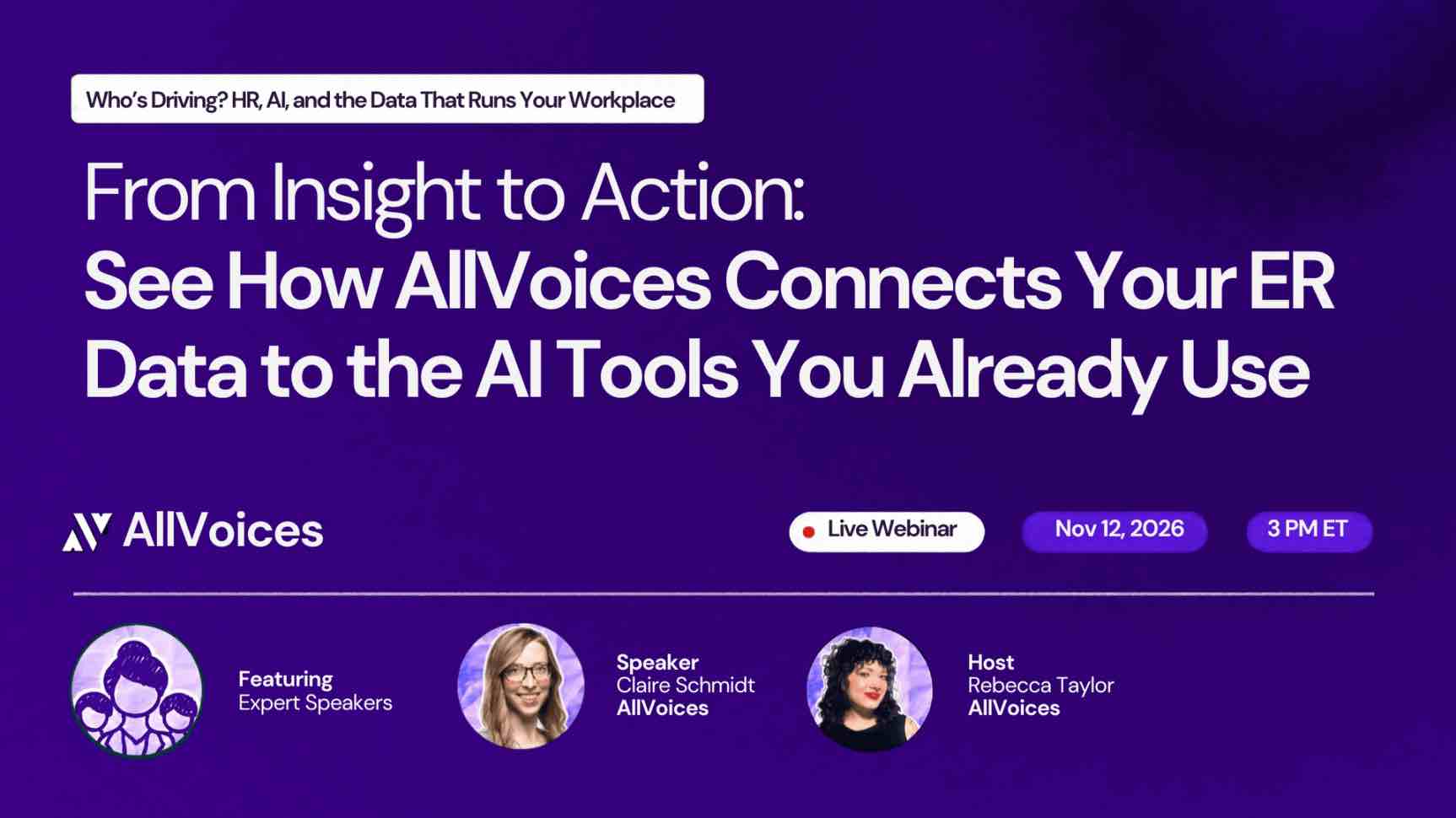
Our next webinar
Frequently asked questions

Got more questions? Email us at support@allvoices.co and we'll respond ASAP.

No items found.
Frequently asked questions

Got more questions? Email us at support@allvoices.co and we'll respond ASAP.

No items found.
Gabrielle Gonzalez, Director of People Experience at Sayge - Lead With Your Values
Episode 277
About This Episode
In this episode of Reimagining Company Culture, we’re chatting with Gabrielle Gonzalez, Director of People Experience at Sayge. Gabby has previously held people roles at mission-oriented start-ups, most recently being the head of culture & engagement at Change.org. Tune in to learn Gabrielle’s thoughts on redefining “employee engagement” in a world of hybrid and remote work, defining the people experience, building trust past an open door policy, and more!
About The Guest
Gabrielle Gonzalez (she/her) is the Director of People Experience at Sayge, whose mission is to enable every individual to realize their potential through access to coaching. Gabby has previously held people roles at mission-oriented start-ups, most recently being the head of culture & engagement at Change.org. A native new yorker and the child of immigrants, Gabby spends a lot of time mind-mapping ways companies can use a people-first mindset to truly foster inclusive cultures, ones that deepen staff's sense of purpose and connection. Through her authentic and strategic leadership, she hopes to inspire other companies throughout her career to do the same.
Episode Transcription

The phrase "lead with your values" gets so much corporate airtime that it has lost most of its meaning. Gabrielle Gonzalez, Director of People Experience at Sayge, brings the phrase back to something practical on Reimagining Company Culture. Values, in her view, are operating constraints. They tell you what to do when the easier choice is in front of you.

Gabby's previous work running culture and engagement at Change.org sharpened a particular instinct: design the employee experience the way you would design a product. Map the touchpoints. Cut the friction. Pay attention to the moments most people skim past. That mindset is what separates companies whose values show up in real decisions from companies whose values show up in the careers page.

Why Engagement Means Something Different in Hybrid and Remote Work

The old model assumed proximity. People showed up, ran into each other, built rapport in passing, and someone called that engagement. Hybrid and remote work broke the assumption. Now every interaction has to be designed because none of it is going to happen by accident.

The data backs the urgency. Deloitte research on workplace trust shows that nearly a third of professionals will not use flexible work options because they are worried about how it looks to leadership. That is a designed experience problem, not a flexibility policy problem.

Defining the People Experience as a Discipline

Gabby is careful with the words. "People experience" is not a rebrand of HR. It is a recognition that the entire employee lifecycle is one continuous experience, and most companies have only designed pieces of it. Onboarding gets attention. Compensation gets attention. The middle years where most attrition happens get almost none.

The discipline borrows from product. A values statement works the same way as a product principle: it constrains decisions and signals intent. A company culture strategy works the same way as a roadmap: it sequences which problems get solved first.

What Does "People Experience" Cover That HR Does Not?

It covers the felt sense of working at the company. The way Slack notifications hit in the evening. Whether someone's first 1:1 with their new manager has a real agenda. How long it takes to get the laptop fixed. None of that lives in a traditional HR org chart, but all of it shapes whether a person stays.

How Do Values Show Up in Real Decisions?

You can usually spot a values-led company in two places: the promotion conversations and the performance plan conversations. If a high performer with bad behavior gets promoted anyway, the values are wallpaper. If a respected manager gets corrected publicly for cutting corners on inclusion, the values are operating.

Building Engagement Without Falling Into Survey Theater

The temptation is to measure engagement with one number and chase it. The number moves. People claim victory. Nothing actually changes. The trick is to measure the upstream behaviors instead. Did managers run their 1:1s this week? Did teams do retrospectives? Are stay interviews happening on the cadence that was committed?

When the upstream behaviors are healthy, the engagement number takes care of itself. When they are not, raising the number through better questions on the survey is just self-deception.

What Actually Works for People Experience Design

Map the Onboarding Experience Hour by Hour

The first thirty days set the trajectory. Most companies still hand new hires a benefits PDF and a Slack invite. The companies that have actually designed onboarding write a runbook of every touchpoint, every conversation, every artifact a new hire interacts with. Then they cut the friction one item at a time.

Treat the Manager Relationship as the Core Product

Most engagement comes down to the relationship with a direct manager. Investing in employee engagement at scale starts with investing in manager training and feedback loops. Skip-level interviews are the cheapest, highest-signal tool most companies underuse.

Build a Real Off-Boarding Experience

The exit interview is too late. The off-boarding experience starts the day someone signals dissatisfaction in a stay interview, an engagement comment, or a manager conversation. Companies that design that path retain more and learn more from the people who do leave.

Where Employee Relations Fits in the Experience

Employee relations is the layer that catches the experience failures that crossed into harm. A case management platform that handles the full lifecycle of complaints is a critical part of any people-experience strategy. The teams that try to handle ER through email and shared docs miss patterns and miss legal exposure.

Why ER Capacity Matters to Engagement

An unresolved complaint creates a much larger downstream problem than the original incident. Witnesses lose trust. The team learns what gets ignored. Engagement scores in the affected pocket of the company drop and do not come back. Resolution speed is one of the most underrated drivers of engagement.

Frequently Asked Questions About People Experience

What is the difference between people experience and employee experience?

The terms are mostly interchangeable. People experience reads slightly more humane and slightly more deliberate, which is why teams adopting the discipline tend to use it. The substance is the same.

Who owns the people experience inside a company?

It depends on size. In smaller companies, a head of people or HR business partner usually owns it. In larger companies, dedicated people experience or employee experience leaders sit inside the people org and partner with internal comms, IT, and facilities.

How do you measure the people experience without overfitting to surveys?

Triangulate. Use a mix of engagement scores, retention data, internal mobility rates, and qualitative pulse signals. Any single metric will be gamed if you over-rely on it.

How do values stay alive after a leadership change?

They have to be embedded in the operating cadence: hiring rubrics, promotion rubrics, performance reviews. Values that live only in keynote speeches die with the keynote speaker.

How does AI fit into people experience design?

It removes the drudge work that crowded out the human touchpoints. Vera, the AllVoices AI co-pilot, drafts case responses, summarizes long histories, and surfaces patterns. People teams get back the hours they used to spend in inboxes.

The Bottom Line for HR Leaders

Investments in people-experience design pay off in retention numbers that compound over years. SHRM research on workplace burnout shows that 44% of US employees feel burned out at work and that workers under burnout are nearly three times more likely to be actively job-hunting. The companies that have actually designed the experience absorb less of that downstream cost. The companies that have not pay for it in attrition, recruiting fees, and lost institutional knowledge.

The companies that take this seriously usually do so because they have already tried the easier path and watched it fail to produce a culture that survives growth.

Gabby's framing of values as operating constraints is the right one. The companies that lead with values do not announce them more often. They sequence them earlier, embed them deeper, and reinforce them in the unglamorous decisions that nobody outside HR sees.

People experience is the discipline that turns those values into a designed product. The teams who do it well build the operating cadence first, the measurement second, and the storytelling last. The teams who reverse the order produce values posters and not much else.

See how AllVoices supports people teams who are designing the employee experience deliberately.

Want to learn more?
See the power of AllVoices today
Thank you! We look forward to meeting you soon
Oops! Something went wrong while submitting the form.
Frequently asked questions

Got more questions? Email us at support@allvoices.co and we'll respond ASAP.

No items found.
Frequently asked questions

Got more questions? Email us at support@allvoices.co and we'll respond ASAP.

No items found.