About This Episode
In this episode of Reimagining Company Culture, we’re chatting with Matt Soto, Diversity, Inclusion & Belonging Manager at BuzzFeed Inc. With ten years of experience working in the university setting, Matt recently transitioned into DEI work full-time in 2021. Tune in to learn Matt’s thoughts on the adoption of radical flexibility, the power of storytelling, leaning into hard conversations, and more!
About The Guest
Dr. Matthew Soto (he/him) is the Diversity, Inclusion and Belonging Manager at BuzzFeed Inc. With ten years of experience working in the university setting, Matt recently transitioned into DEI work full-time in 2021. Matt is passionate about helping work environments harness the power of sense of belonging to better serve and support employee satisfaction, retention and performance. Matt received his Bachelor’s degrees in Communication and Ethnic Studies from California Lutheran University, his Master’s degree in Educational Administration from California State University, Northridge, and most recently- his doctorate in Educational Leadership and Policy from California State University, Northridge. Beyond his work, Matt loves writing and spending time with his family and his three year-old Goldendoodle, Murphy.
Episode Breakdown

Belonging is the hardest of the DEIB letters to operationalize. You can hire for diversity, train for equity, and structure for inclusion. Belonging is what people feel, which makes it impossible to mandate and easy to undermine. Dr. Matthew Soto, Diversity, Inclusion and Belonging Manager at BuzzFeed, has been working on this problem for years. His conversation on Reimagining Company Culture is the working version of how to build belonging on purpose.

Matt spent ten years in higher education before transitioning into corporate DIB work. That background gives him a useful lens. Universities are belonging machines when they work and exclusion machines when they do not. The same dynamics show up in companies, often without the same level of intentionality applied to design.

What Belonging Means in an Operating Sense

Matt's framing is precise. Belonging is the felt sense that you can show up as yourself and be effective. It is not warmth, not friendship, not buy-in. It is the operational confidence that the system will work for you.

Deloitte research on workplace trust found that belonging is now considered one of the two greatest needs in modern organizations, but that working remotely for long stretches can create alienation. The design problem is not whether to enable flexible work; it is how to preserve belonging while enabling it.

Radical Flexibility as a Belonging Strategy

The pivot from "flexibility as perk" to "flexibility as strategy" is the core of Matt's argument. Companies that adopt radical flexibility without rebuilding the belonging infrastructure end up with disconnected workforces who do not know each other. Companies that pair flexibility with deliberate belonging design produce better outcomes than either pole alone.

The infrastructure looks like this. Asynchronous decision-making norms so people in different time zones can contribute. Documented onboarding so new hires can find their footing without depending on hallway conversations. Work-life balance norms that survive quarterly pressure. Workplace flexibility that is universal rather than ad hoc.

How Do You Tell If Belonging Is Working?

Survey questions specifically on belonging. Retention by demographic. Internal mobility data. The qualitative comments on engagement surveys. Companies that survey only on engagement miss belonging because the question is too narrow.

What Are the Quiet Killers of Belonging?

Inside jokes that newcomers cannot decode. Decisions made in informal channels that are not visible to people not in those channels. Public credit that consistently goes to the loudest voices. Each is small. Together they signal who belongs and who does not.

The Power of Storytelling in DEI Work

Matt's work at BuzzFeed taught him that storytelling is not optional. The numbers tell you the gap. The stories tell you what to do about it. Companies that publish only the numbers struggle to build belonging because employees see data without meaning. The ones that publish stories alongside the numbers produce a different kind of conversation.

The discipline matters. DEI programs that include storytelling alongside structural change tend to produce more sustainable outcomes than either approach alone.

Leaning Into Hard Conversations

The conversations that build belonging are the ones most managers avoid. The microaggression in a meeting. The pattern of someone being interrupted. The exit interview where someone names what they could not say while still employed. Matt's argument is that these conversations are the work, not the obstacle to the work.

Three Habits That Make Hard Conversations Easier

First, name the dynamic without assigning intent. Second, get specific about the behavior, not the personality. Third, agree on the next observable action. Most managers default to vagueness because they are afraid of the conflict; the vagueness is what makes the conflict worse.

What Actually Works for Building Belonging

Train Managers on the Hard Conversations

Belonging fails on the manager line. Managers who avoid hard conversations leave the team carrying the dynamic without resolution. Training, role-plays, and post-conversation debriefs build the muscle.

Use Anonymous Channels for the Stories That Will Not Come Through Formal HR

Anonymous reporting captures the patterns that the formal HR channel never sees. The patterns feed back into the belonging work in a way that closes the loop.

Calibrate Promotions With Belonging in Mind

Promotion calibration is one of the most powerful belonging signals a company sends. If the people getting promoted do not reflect the workforce, the belonging case dies in the calibration room.

Where Employee Relations Fits

ER is the function that catches the belonging failures that crossed into harm. A purpose-built case management platform handles those cases without forcing the team to choose between speed and care.

How AI Supports Belonging Work

Vera, the AllVoices AI co-pilot, surfaces patterns across cases that human investigators would not catch in real time. The patterns feed into the DIB strategy. The strategy reduces the next quarter's case volume.

Frequently Asked Questions About Workplace Belonging

What is the difference between inclusion and belonging?

Inclusion is structural; belonging is felt. A company can be structurally inclusive and still produce employees who do not feel they belong if the daily interactions undercut the structure.

Can belonging be measured?

Yes. Survey questions specifically about belonging are well-validated in research. Retention by demographic and internal mobility data are also useful proxies.

How does remote work affect belonging?

It depends on intentionality. Without explicit design, remote work erodes belonging. With intentional design, it can preserve or even strengthen it.

What kills belonging fastest in a company?

Mismatched promotion patterns, public credit going to the same voices repeatedly, and unaddressed microaggressions. Each compounds.

What is the role of HR vs. managers in belonging?

HR builds the infrastructure. Managers run the daily interactions. Belonging requires both functioning together.

How Newcomers Reveal the Real State of Belonging

The fastest test of whether a company has built belonging is to watch the experience of newcomers in their first ninety days. Do they get included in the small decisions and hallway conversations? Are they paired with someone whose job is to make introductions? Do their managers notice when they go quiet? The newcomer experience reveals what the long-tenured employees no longer notice because they have absorbed the dynamics over years.

The discipline is to design the newcomer path deliberately. Documented onboarding, intentional 1:1 schedules, and a feedback channel for the new hires that runs separately from the all-employee survey. Team building rituals that include rather than perform inclusion. The companies that have done this well have a different kind of newcomer attrition curve than the ones that have not.

The Bottom Line for HR Leaders

Matt's framing of belonging as deliberate design is the right altitude. The companies that produce belonging at scale do not announce it; they build it. The hard conversations, the storytelling, the calibration discipline, the anonymous channels, the radical flexibility paired with belonging infrastructure: each piece is small. The combined effect is significant.

Gallup's State of the Global Workplace report continues to show the gap between best-practice and average organizations is widening, mostly through the cumulative effect of small operational habits. Belonging is exactly that kind of compounding investment.

The pattern that holds up across companies investing in belonging is operational consistency. They train managers on hard conversations. They run skip-levels on a real cadence. They publish stories alongside the numbers. They have a working anonymous channel for the issues that brave conversations cannot resolve. None of those is novel. All of them are unevenly distributed across the market, which is exactly why they produce competitive advantage when consistently applied.
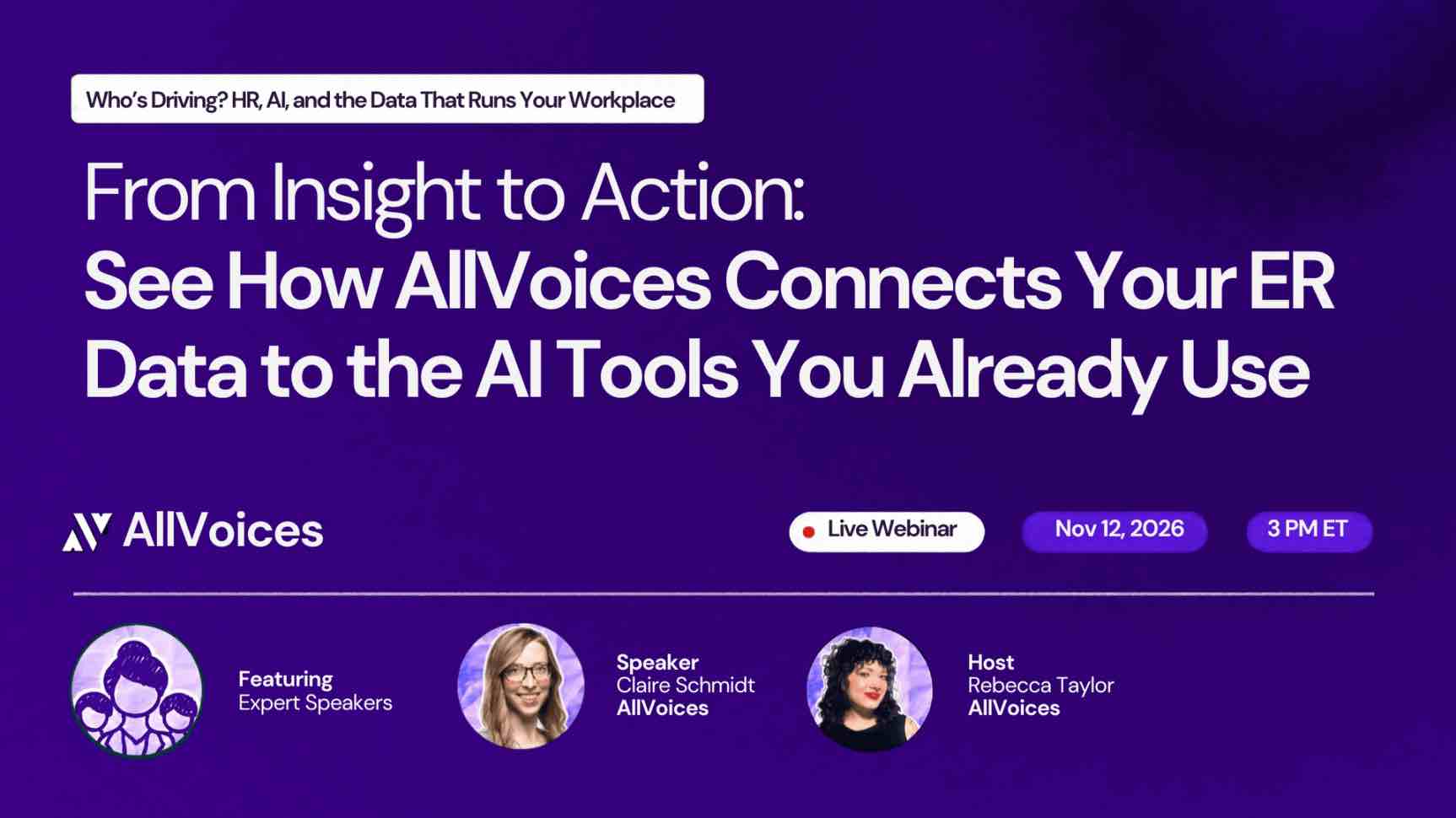
See how AllVoices supports DIB and HR teams who want to back up belonging work with real reporting and resolution.

Our next webinar
Frequently asked questions

Got more questions? Email us at support@allvoices.co and we'll respond ASAP.

No items found.
Frequently asked questions

Got more questions? Email us at support@allvoices.co and we'll respond ASAP.

No items found.
Matt Soto, Diversity, Inclusion & Belonging Manager at BuzzFeed Inc. - Intentionally Build Belonging
Episode 324
About This Episode
In this episode of Reimagining Company Culture, we’re chatting with Matt Soto, Diversity, Inclusion & Belonging Manager at BuzzFeed Inc. With ten years of experience working in the university setting, Matt recently transitioned into DEI work full-time in 2021. Tune in to learn Matt’s thoughts on the adoption of radical flexibility, the power of storytelling, leaning into hard conversations, and more!
About The Guest
Dr. Matthew Soto (he/him) is the Diversity, Inclusion and Belonging Manager at BuzzFeed Inc. With ten years of experience working in the university setting, Matt recently transitioned into DEI work full-time in 2021. Matt is passionate about helping work environments harness the power of sense of belonging to better serve and support employee satisfaction, retention and performance. Matt received his Bachelor’s degrees in Communication and Ethnic Studies from California Lutheran University, his Master’s degree in Educational Administration from California State University, Northridge, and most recently- his doctorate in Educational Leadership and Policy from California State University, Northridge. Beyond his work, Matt loves writing and spending time with his family and his three year-old Goldendoodle, Murphy.
Episode Transcription

Belonging is the hardest of the DEIB letters to operationalize. You can hire for diversity, train for equity, and structure for inclusion. Belonging is what people feel, which makes it impossible to mandate and easy to undermine. Dr. Matthew Soto, Diversity, Inclusion and Belonging Manager at BuzzFeed, has been working on this problem for years. His conversation on Reimagining Company Culture is the working version of how to build belonging on purpose.

Matt spent ten years in higher education before transitioning into corporate DIB work. That background gives him a useful lens. Universities are belonging machines when they work and exclusion machines when they do not. The same dynamics show up in companies, often without the same level of intentionality applied to design.

What Belonging Means in an Operating Sense

Matt's framing is precise. Belonging is the felt sense that you can show up as yourself and be effective. It is not warmth, not friendship, not buy-in. It is the operational confidence that the system will work for you.

Deloitte research on workplace trust found that belonging is now considered one of the two greatest needs in modern organizations, but that working remotely for long stretches can create alienation. The design problem is not whether to enable flexible work; it is how to preserve belonging while enabling it.

Radical Flexibility as a Belonging Strategy

The pivot from "flexibility as perk" to "flexibility as strategy" is the core of Matt's argument. Companies that adopt radical flexibility without rebuilding the belonging infrastructure end up with disconnected workforces who do not know each other. Companies that pair flexibility with deliberate belonging design produce better outcomes than either pole alone.

The infrastructure looks like this. Asynchronous decision-making norms so people in different time zones can contribute. Documented onboarding so new hires can find their footing without depending on hallway conversations. Work-life balance norms that survive quarterly pressure. Workplace flexibility that is universal rather than ad hoc.

How Do You Tell If Belonging Is Working?

Survey questions specifically on belonging. Retention by demographic. Internal mobility data. The qualitative comments on engagement surveys. Companies that survey only on engagement miss belonging because the question is too narrow.

What Are the Quiet Killers of Belonging?

Inside jokes that newcomers cannot decode. Decisions made in informal channels that are not visible to people not in those channels. Public credit that consistently goes to the loudest voices. Each is small. Together they signal who belongs and who does not.

The Power of Storytelling in DEI Work

Matt's work at BuzzFeed taught him that storytelling is not optional. The numbers tell you the gap. The stories tell you what to do about it. Companies that publish only the numbers struggle to build belonging because employees see data without meaning. The ones that publish stories alongside the numbers produce a different kind of conversation.

The discipline matters. DEI programs that include storytelling alongside structural change tend to produce more sustainable outcomes than either approach alone.

Leaning Into Hard Conversations

The conversations that build belonging are the ones most managers avoid. The microaggression in a meeting. The pattern of someone being interrupted. The exit interview where someone names what they could not say while still employed. Matt's argument is that these conversations are the work, not the obstacle to the work.

Three Habits That Make Hard Conversations Easier

First, name the dynamic without assigning intent. Second, get specific about the behavior, not the personality. Third, agree on the next observable action. Most managers default to vagueness because they are afraid of the conflict; the vagueness is what makes the conflict worse.

What Actually Works for Building Belonging

Train Managers on the Hard Conversations

Belonging fails on the manager line. Managers who avoid hard conversations leave the team carrying the dynamic without resolution. Training, role-plays, and post-conversation debriefs build the muscle.

Use Anonymous Channels for the Stories That Will Not Come Through Formal HR

Anonymous reporting captures the patterns that the formal HR channel never sees. The patterns feed back into the belonging work in a way that closes the loop.

Calibrate Promotions With Belonging in Mind

Promotion calibration is one of the most powerful belonging signals a company sends. If the people getting promoted do not reflect the workforce, the belonging case dies in the calibration room.

Where Employee Relations Fits

ER is the function that catches the belonging failures that crossed into harm. A purpose-built case management platform handles those cases without forcing the team to choose between speed and care.

How AI Supports Belonging Work

Vera, the AllVoices AI co-pilot, surfaces patterns across cases that human investigators would not catch in real time. The patterns feed into the DIB strategy. The strategy reduces the next quarter's case volume.

Frequently Asked Questions About Workplace Belonging

What is the difference between inclusion and belonging?

Inclusion is structural; belonging is felt. A company can be structurally inclusive and still produce employees who do not feel they belong if the daily interactions undercut the structure.

Can belonging be measured?

Yes. Survey questions specifically about belonging are well-validated in research. Retention by demographic and internal mobility data are also useful proxies.

How does remote work affect belonging?

It depends on intentionality. Without explicit design, remote work erodes belonging. With intentional design, it can preserve or even strengthen it.

What kills belonging fastest in a company?

Mismatched promotion patterns, public credit going to the same voices repeatedly, and unaddressed microaggressions. Each compounds.

What is the role of HR vs. managers in belonging?

HR builds the infrastructure. Managers run the daily interactions. Belonging requires both functioning together.

How Newcomers Reveal the Real State of Belonging

The fastest test of whether a company has built belonging is to watch the experience of newcomers in their first ninety days. Do they get included in the small decisions and hallway conversations? Are they paired with someone whose job is to make introductions? Do their managers notice when they go quiet? The newcomer experience reveals what the long-tenured employees no longer notice because they have absorbed the dynamics over years.

The discipline is to design the newcomer path deliberately. Documented onboarding, intentional 1:1 schedules, and a feedback channel for the new hires that runs separately from the all-employee survey. Team building rituals that include rather than perform inclusion. The companies that have done this well have a different kind of newcomer attrition curve than the ones that have not.

The Bottom Line for HR Leaders

Matt's framing of belonging as deliberate design is the right altitude. The companies that produce belonging at scale do not announce it; they build it. The hard conversations, the storytelling, the calibration discipline, the anonymous channels, the radical flexibility paired with belonging infrastructure: each piece is small. The combined effect is significant.

Gallup's State of the Global Workplace report continues to show the gap between best-practice and average organizations is widening, mostly through the cumulative effect of small operational habits. Belonging is exactly that kind of compounding investment.

The pattern that holds up across companies investing in belonging is operational consistency. They train managers on hard conversations. They run skip-levels on a real cadence. They publish stories alongside the numbers. They have a working anonymous channel for the issues that brave conversations cannot resolve. None of those is novel. All of them are unevenly distributed across the market, which is exactly why they produce competitive advantage when consistently applied.

See how AllVoices supports DIB and HR teams who want to back up belonging work with real reporting and resolution.

Want to learn more?
See the power of AllVoices today
Thank you! We look forward to meeting you soon
Oops! Something went wrong while submitting the form.
Frequently asked questions

Got more questions? Email us at support@allvoices.co and we'll respond ASAP.

No items found.
Frequently asked questions

Got more questions? Email us at support@allvoices.co and we'll respond ASAP.

No items found.