About This Episode
In this episode of Reimagining Company Culture, we’re chatting with Beth Steinberg, SVP of People and Talent at Chime. As VP of people and talent, Beth Steinberg is responsible for building out a skilled and diverse workforce at Chime, and for ensuring that employees continue to develop professionally.
About The Guest
As VP of people and talent, Beth Steinberg is responsible for building out a skilled and diverse workforce at Chime, and for ensuring that employees continue to develop professionally. She was previously chief people officer at Zenefits, SVP of people at BrightRoll, VP of talent at Sunrun, VP of HR at Facebook, VP of HR at Electronics Arts, and head of HR, corporate functions, at Nike. She earned a BA in psychology from San Jose State University.
Episode Breakdown

Beth Steinberg is the SVP of People and Talent at Chime, where she leads people strategy through high-growth organizational transformation. On Reimagining Company Culture, she joined us to talk about leadership and transformation, and what HR leaders can do to make change initiatives actually land.

Her view is that transformation programs fail more often than they succeed because they get framed as one-time projects rather than ongoing leadership disciplines. The companies that transform successfully treat the work as a permanent operating mode, not an event.

Why Most Organizational Transformations Stall

Transformation programs fail at predictable points. The strategy gets approved, the rollout begins, and then six months later the same patterns return. SHRM research on workplace challenges found that recruiting, employee experience, and leadership development top HR priorities, and each of those depends on transformation that holds.

Beth described the trap. Leaders confuse the announcement with the change. A new structure gets posted on the org chart. A new operating model gets walked through in an all-hands. The actual behaviors of managers and employees stay unchanged because the systems and incentives never shifted.

Her framing is that change management is the discipline that holds transformation in place. The leaders who run successful transformations invest in change capability across the leadership team, the manager population, and HR itself.

What also matters is patience. Real transformation takes years. Leaders who expect quarterly wins from transformation work usually pull back too early, undoing the foundation just as it starts to hold.

How Do You Run a Real Organizational Transformation?

What is the first move for a company starting transformation work?

Beth recommends an honest baseline of where the company is today. Where are the strongest leaders? Where are the gaps? Which managers can sustain transformation work? Where is the workforce engaged versus disengaged? Without that baseline, transformation becomes guesswork.

How do you handle leaders who resist transformation?

By being explicit about expectations and consequences. Coaching for leaders who can grow is a real investment. Patience for leaders who refuse to grow becomes a tax on the rest of the organization. Strong transformation programs name that trade-off clearly.

What Actually Works in Organizational Transformation

Anchor transformation to operational decisions

Transformation that does not change how decisions get made loses credibility quickly. Strong programs explicitly link transformation goals to hiring, performance review, and promotion criteria.

Invest in manager capability

Most employees experience transformation through their manager. Management training paired with feedback and accountability moves the needle further than any centralized initiative.

Hold the cadence through hard quarters

Transformation budgets are the first to get cut when finance squeezes. Strong programs anticipate that and protect the work with retention data, recruiting outcomes, and risk reduction metrics that hold up to financial scrutiny.

Where Employee Relations Fits

ER systems are critical during transformation. AllVoices' Employee Relations solution and our HR case management product give HR a clear way to handle the increased volume of concerns that transformation produces.

How does ER tooling support transformation programs?

It catches the friction that transformation creates. Concerns about new structures, new managers, and new expectations all surface in ER channels. Strong programs use that data to identify where the transformation is landing well and where it is breaking down.

Frequently Asked Questions About Organizational Leadership and Transformation

What is organizational transformation?

It is a sustained effort to change how an organization operates, including structure, leadership behavior, decision-making, and culture. Transformation is broader than a single initiative.

How long does transformation take?

Three to five years for meaningful change. The timeline depends on the starting point and the strength of leadership commitment.

Who owns transformation?

The CEO sets the ceiling. HR convenes the work. Managers translate it daily. Employees make it real. None of these alone produces transformation.

How do you measure transformation success?

Track retention by manager and demographic, engagement scores, promotion equity, and qualitative feedback over time. Year-over-year comparison is more useful than any single snapshot.

What kills transformation efforts?

Inconsistency at the leadership level, budget cuts during slow quarters, and failure to update operational systems. Symbolic statements without operational follow-through erode credibility quickly.

How do you handle attrition during transformation?

Some attrition is expected and even healthy. Tracking attrition by demographic and by manager helps distinguish productive turnover from problematic patterns.

The Bottom Line for HR Leaders

Beth's framing is grounded in years of running transformation work at high-growth companies. The discipline of organizational transformation is not a campaign. It is a sustained leadership practice that requires honesty, patience, and explicit accountability.

The leaders who get this right share a few habits. They start with an honest baseline. They anchor transformation to operational decisions. They invest in manager capability. And they hold the cadence through hard quarters.

Companies that hold this discipline produce stronger leadership benches, more resilient workforces, and the ability to absorb future shocks with less attrition.

Industry research keeps reinforcing this view. McKinsey research on skills-based talent strategy makes the case that 53 percent of leaders see building skills as the best way to close capability gaps. Transformation work is the operational expression of that strategy.

Across the conversation, the throughline was that transformation is leadership work. The companies that succeed at transformation are the ones whose leaders show up for the work consistently, even when the wins are not immediate.

Strong transformation programs also produce a quieter recruiting benefit. Candidates research how companies handle change before joining, and companies known for handling transformation well attract leaders who want to be part of that kind of work.

Strong programs also tend to produce a quieter recruiting benefit. Candidates research how companies handle this kind of work before joining, and the patterns become known in tight talent markets. The reputation that follows from sustained discipline becomes part of the company's competitive advantage in hiring.

The throughline across the conversation was that real change is operational, not symbolic. Cultures that build the discipline through years of consistent practice end up with workforces that hold under pressure and produce stronger outcomes than cultures relying on values statements alone.

Companies that handle this work well also develop internal expertise that pays back across cycles. The leaders, managers, and HR partners who develop the muscle become more valuable across the organization, and that expertise is what sustains the work through executive transitions.

Programs that hold this discipline also produce documentation and case studies that become useful internal teaching tools. The accumulated learning becomes a resource for future cohorts of leaders, and that knowledge transfer is part of what makes the work sustainable across years.

The companies that hold this work through hard quarters end up with cultures that are recognizably different from peer companies. Employees notice, candidates notice, and customers notice. That distinctiveness is what produces the recruiting and retention advantages that mature programs are known for.

Sustained programs also reshape how the company is seen externally. Industry analysts, peer organizations, and prospective talent all develop a view of the company based on whether the work holds up over years. That external perception becomes part of the brand and influences hiring outcomes for cycles to come.

The companies that build organizational transformation as a permanent capability also tend to handle their next strategic shift more easily, because the muscle is already built and the team knows what to expect.

See how AllVoices supports HR teams running organizational transformation.
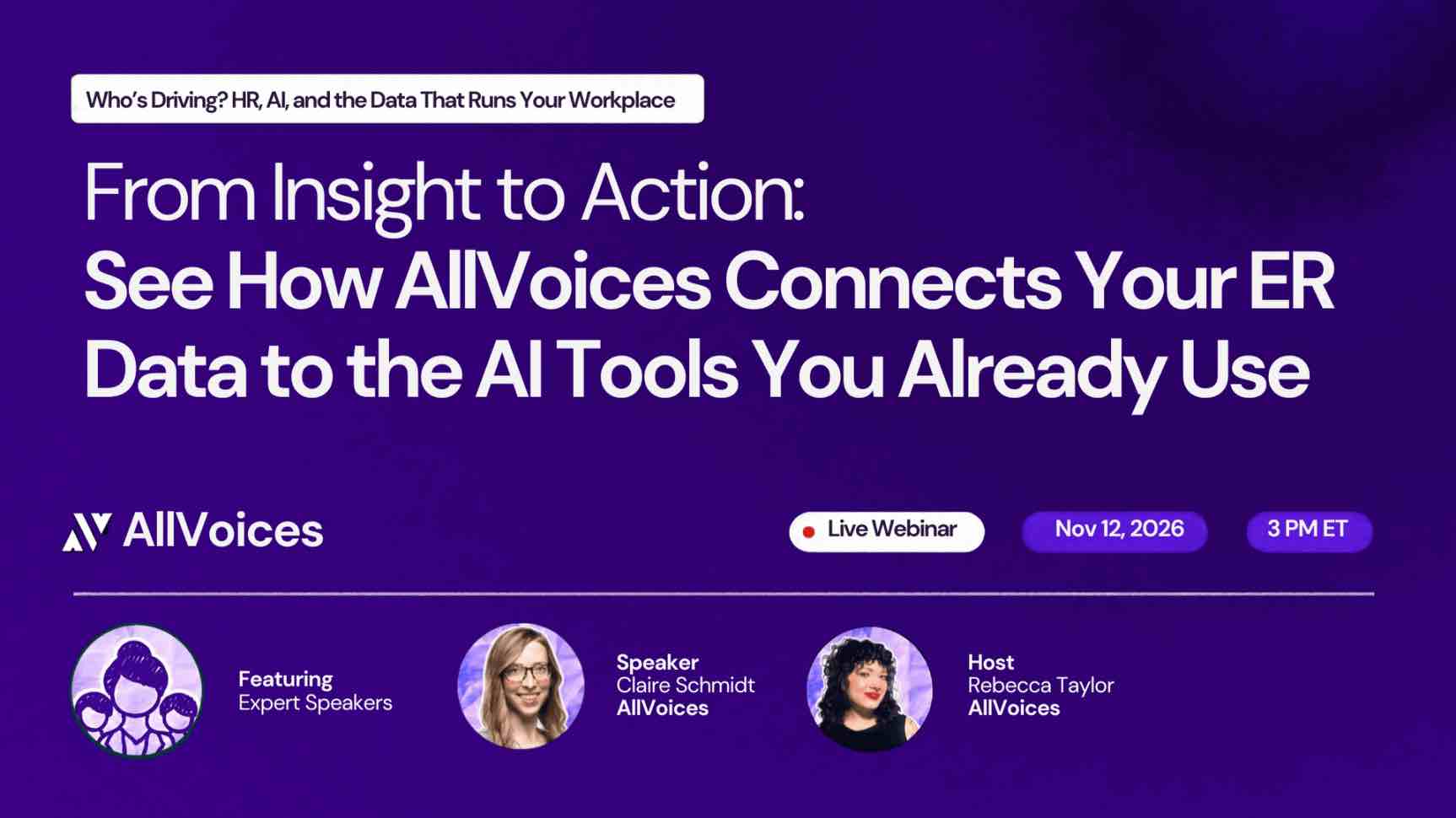
Our next webinar
Frequently asked questions

Got more questions? Email us at support@allvoices.co and we'll respond ASAP.

No items found.
Frequently asked questions

Got more questions? Email us at support@allvoices.co and we'll respond ASAP.

No items found.
Beth Steinberg, SVP of People and Talent at Chime - Organizational Leadership & Transformation
Episode 149
About This Episode
In this episode of Reimagining Company Culture, we’re chatting with Beth Steinberg, SVP of People and Talent at Chime. As VP of people and talent, Beth Steinberg is responsible for building out a skilled and diverse workforce at Chime, and for ensuring that employees continue to develop professionally.
About The Guest
As VP of people and talent, Beth Steinberg is responsible for building out a skilled and diverse workforce at Chime, and for ensuring that employees continue to develop professionally. She was previously chief people officer at Zenefits, SVP of people at BrightRoll, VP of talent at Sunrun, VP of HR at Facebook, VP of HR at Electronics Arts, and head of HR, corporate functions, at Nike. She earned a BA in psychology from San Jose State University.
Episode Transcription

Beth Steinberg is the SVP of People and Talent at Chime, where she leads people strategy through high-growth organizational transformation. On Reimagining Company Culture, she joined us to talk about leadership and transformation, and what HR leaders can do to make change initiatives actually land.

Her view is that transformation programs fail more often than they succeed because they get framed as one-time projects rather than ongoing leadership disciplines. The companies that transform successfully treat the work as a permanent operating mode, not an event.

Why Most Organizational Transformations Stall

Transformation programs fail at predictable points. The strategy gets approved, the rollout begins, and then six months later the same patterns return. SHRM research on workplace challenges found that recruiting, employee experience, and leadership development top HR priorities, and each of those depends on transformation that holds.

Beth described the trap. Leaders confuse the announcement with the change. A new structure gets posted on the org chart. A new operating model gets walked through in an all-hands. The actual behaviors of managers and employees stay unchanged because the systems and incentives never shifted.

Her framing is that change management is the discipline that holds transformation in place. The leaders who run successful transformations invest in change capability across the leadership team, the manager population, and HR itself.

What also matters is patience. Real transformation takes years. Leaders who expect quarterly wins from transformation work usually pull back too early, undoing the foundation just as it starts to hold.

How Do You Run a Real Organizational Transformation?

What is the first move for a company starting transformation work?

Beth recommends an honest baseline of where the company is today. Where are the strongest leaders? Where are the gaps? Which managers can sustain transformation work? Where is the workforce engaged versus disengaged? Without that baseline, transformation becomes guesswork.

How do you handle leaders who resist transformation?

By being explicit about expectations and consequences. Coaching for leaders who can grow is a real investment. Patience for leaders who refuse to grow becomes a tax on the rest of the organization. Strong transformation programs name that trade-off clearly.

What Actually Works in Organizational Transformation

Anchor transformation to operational decisions

Transformation that does not change how decisions get made loses credibility quickly. Strong programs explicitly link transformation goals to hiring, performance review, and promotion criteria.

Invest in manager capability

Most employees experience transformation through their manager. Management training paired with feedback and accountability moves the needle further than any centralized initiative.

Hold the cadence through hard quarters

Transformation budgets are the first to get cut when finance squeezes. Strong programs anticipate that and protect the work with retention data, recruiting outcomes, and risk reduction metrics that hold up to financial scrutiny.

Where Employee Relations Fits

ER systems are critical during transformation. AllVoices' Employee Relations solution and our HR case management product give HR a clear way to handle the increased volume of concerns that transformation produces.

How does ER tooling support transformation programs?

It catches the friction that transformation creates. Concerns about new structures, new managers, and new expectations all surface in ER channels. Strong programs use that data to identify where the transformation is landing well and where it is breaking down.

Frequently Asked Questions About Organizational Leadership and Transformation

What is organizational transformation?

It is a sustained effort to change how an organization operates, including structure, leadership behavior, decision-making, and culture. Transformation is broader than a single initiative.

How long does transformation take?

Three to five years for meaningful change. The timeline depends on the starting point and the strength of leadership commitment.

Who owns transformation?

The CEO sets the ceiling. HR convenes the work. Managers translate it daily. Employees make it real. None of these alone produces transformation.

How do you measure transformation success?

Track retention by manager and demographic, engagement scores, promotion equity, and qualitative feedback over time. Year-over-year comparison is more useful than any single snapshot.

What kills transformation efforts?

Inconsistency at the leadership level, budget cuts during slow quarters, and failure to update operational systems. Symbolic statements without operational follow-through erode credibility quickly.

How do you handle attrition during transformation?

Some attrition is expected and even healthy. Tracking attrition by demographic and by manager helps distinguish productive turnover from problematic patterns.

The Bottom Line for HR Leaders

Beth's framing is grounded in years of running transformation work at high-growth companies. The discipline of organizational transformation is not a campaign. It is a sustained leadership practice that requires honesty, patience, and explicit accountability.

The leaders who get this right share a few habits. They start with an honest baseline. They anchor transformation to operational decisions. They invest in manager capability. And they hold the cadence through hard quarters.

Companies that hold this discipline produce stronger leadership benches, more resilient workforces, and the ability to absorb future shocks with less attrition.

Industry research keeps reinforcing this view. McKinsey research on skills-based talent strategy makes the case that 53 percent of leaders see building skills as the best way to close capability gaps. Transformation work is the operational expression of that strategy.

Across the conversation, the throughline was that transformation is leadership work. The companies that succeed at transformation are the ones whose leaders show up for the work consistently, even when the wins are not immediate.

Strong transformation programs also produce a quieter recruiting benefit. Candidates research how companies handle change before joining, and companies known for handling transformation well attract leaders who want to be part of that kind of work.

Strong programs also tend to produce a quieter recruiting benefit. Candidates research how companies handle this kind of work before joining, and the patterns become known in tight talent markets. The reputation that follows from sustained discipline becomes part of the company's competitive advantage in hiring.

The throughline across the conversation was that real change is operational, not symbolic. Cultures that build the discipline through years of consistent practice end up with workforces that hold under pressure and produce stronger outcomes than cultures relying on values statements alone.

Companies that handle this work well also develop internal expertise that pays back across cycles. The leaders, managers, and HR partners who develop the muscle become more valuable across the organization, and that expertise is what sustains the work through executive transitions.

Programs that hold this discipline also produce documentation and case studies that become useful internal teaching tools. The accumulated learning becomes a resource for future cohorts of leaders, and that knowledge transfer is part of what makes the work sustainable across years.

The companies that hold this work through hard quarters end up with cultures that are recognizably different from peer companies. Employees notice, candidates notice, and customers notice. That distinctiveness is what produces the recruiting and retention advantages that mature programs are known for.

Sustained programs also reshape how the company is seen externally. Industry analysts, peer organizations, and prospective talent all develop a view of the company based on whether the work holds up over years. That external perception becomes part of the brand and influences hiring outcomes for cycles to come.

The companies that build organizational transformation as a permanent capability also tend to handle their next strategic shift more easily, because the muscle is already built and the team knows what to expect.

See how AllVoices supports HR teams running organizational transformation.

Want to learn more?
See the power of AllVoices today
Thank you! We look forward to meeting you soon
Oops! Something went wrong while submitting the form.
Frequently asked questions

Got more questions? Email us at support@allvoices.co and we'll respond ASAP.

No items found.
Frequently asked questions

Got more questions? Email us at support@allvoices.co and we'll respond ASAP.

No items found.