About This Episode
In this episode of Reimagining Company Culture, we’re chatting with Amy Knapp, SVP of People at Catalant. Amy Knapp (she/her) has over twenty years experience in recruiting and people operations. Previous to Catalant she led talent for the venture capital firm Redpoint Ventures where she partnered with portfolio companies on their talent and people programs and strategies, after receiving their first investment through different stages of growth. Tune in to learn Amy’s thoughts on qualitative and quantitative ways to measure employee happiness, stay interviews, promoting and improving internal mobility pathways, and more!
About The Guest
Amy Knapp (she/her) has over twenty years experience in recruiting and people operations. Currently she is SVP People at Catalant Technologies where she leads recruiting and HR. Previously she led talent for the venture capital firm Redpoint Ventures where she partnered with portfolio companies on their talent and people programs and strategies, after receiving their first investment through different stages of growth. She’s also been in operational Human Resources and recruiting roles at Google, Ning, and Chegg. Amy is currently on the board of Operation Troop Support, a non profit supporting deployed military troops and their families, and is active as a Cub Scout leader. Amy is a die hard Boston Bruins fan, a foster-adoptive parent, and an avid road tripper, having visited all 50 states.
Episode Breakdown

Amy Knapp has spent two decades watching companies invest enormous energy in pulling new people in the door, then almost no energy in keeping the ones already inside. As SVP of People at Catalant, she calls the fix re-recruiting. Treat the employees you have like the highest-value candidates in your funnel, because they are.

The case is not philosophical. It is operational. SHRM estimates that replacing an employee costs 50% to 200% of their annual salary. Every avoidable departure is a six-figure tax on the People budget. Re-recruiting is not a perk program. It is a P&L move.

The teams that internalize this stop treating their best employees as locked-in assets. They treat them as renewable subscribers. Each quarter is a renewal decision. Each one-on-one is part of the renewal conversation. The framing changes the calendar. The calendar changes the results.

Why Re-Recruiting Beats Traditional Retention Programs

Traditional retention programs hand out tenure-based perks and call it a strategy. Re-recruiting flips the model. The People team treats current employees as candidates who could leave any quarter, then earns the renewal the same way recruiting earns a yes from a new hire.

The numbers force the issue. BLS data shows median worker tenure dropped to 3.9 years in January 2024, the lowest reading since 2002. Workers ages 25 to 34 average just 2.7 years with an employer. The implicit contract that kept people in place for a decade no longer exists.

Closing the gap takes an engagement program built into the daily workflow instead of a once-a-year survey. The data has to land in front of managers fast enough to act on it.

What Re-Recruiting Looks Like in Practice

How often should managers have re-recruiting conversations?

At least quarterly. The cadence matters more than the format. A 30-minute conversation that asks what would make this person renew their commitment beats any annual stay interview. The questions are simple. What is energizing right now? What is draining? What would push you to leave? What would make you stay another year?

Most managers do not have this conversation because no one taught them how. Gallup found that only 44% of managers receive any formal training. The fix is structured prompts inside the manager workflow, not another lecture.

How do you measure re-recruiting effectiveness?

Track three numbers. Voluntary regrettable attrition by manager. Internal mobility rate. And the spread between exit interview themes and active employee feedback. When exit interviews surface issues that continuous pulse surveys never caught, the listening system is broken.

What Actually Works for Mid-Stage Companies

Build the listening loop before the engagement program

Companies skip listening and jump to perks because perks are visible. The order is backward. Without a feedback channel that surfaces real concerns by team and by manager, every retention dollar is a guess. Always-on employee survey tooling turns guesswork into pattern recognition.

Make manager performance visible

Employees do not leave companies. They leave managers. Heat maps of turnover rate by people leader expose the patterns that exit data alone hides. Coach the managers whose teams are leaking. Promote the ones whose teams are renewing.

Treat internal mobility as a retention lever

Employees who see a credible next role inside the company do not need to look outside. Catalyst found that employees who feel respected at work are five times more likely to be engaged and three times more likely to stay. Internal mobility is one of the strongest signals of respect a company can send.

How AI Reshapes Re-Recruiting at Scale

Manual re-recruiting hits a wall around 200 employees. Beyond that, no HR business partner can run quarterly conversations across every team. AI changes the math. AI-assisted ER triage can flag managers whose team data shows attrition risk, surface specific concerns from listening data, and draft conversation prompts before a manager opens a one-on-one.

Companies in the top quartile for ethnic diversity on executive teams are 36% more likely to outperform peers financially according to McKinsey. Retention work that misses underrepresented groups erodes that advantage. Re-recruiting deserves the same investment in equity that recruiting gets.

Where Employee Relations Fits in a Retention Strategy

Most retention programs ignore the employee relations function entirely. That is a mistake. Unresolved complaints, slow investigations, and inconsistent manager responses are direct drivers of regrettable attrition. Centralized case management shortens time-to-resolution and feeds the data that retention programs need.

How ER data sharpens a retention plan

The pattern is consistent across industries. Teams with rising case volume in the prior two quarters lose people the next quarter. Real-time HR analytics catch the trend early enough to intervene. Bungie's team is one of the clearest examples we've seen of pairing case data with retention planning.

Frequently Asked Questions About Re-Recruiting Employees

What is the difference between re-recruiting and a stay interview?

Stay interviews are a once-a-year diagnostic. Re-recruiting is a continuous practice. The conversation cadence, the manager skill set, and the system that captures the data all work differently. Stay interviews are a small part of a real re-recruiting program, not a substitute for it.

How does re-recruiting fit alongside compensation reviews?

Comp matters, but it is rarely the deciding factor in a regrettable departure. People leave because the work feels stuck, the manager is not investing in them, or the path forward is unclear. Comp is a hygiene factor. Re-recruiting addresses the things that actually move the decision.

How do you re-recruit remote employees specifically?

Remote workers need more deliberate attention, not less. Without hallway moments, every conversation has to be intentional. Remote managers who do not block time for one-on-ones lose people fastest. The cadence and the questions matter more in distributed teams.

What role should HR play in re-recruiting?

HR builds the system. Managers run it. The People team owns the playbook, the manager training, the listening tools, and the data. Managers own the conversations and the actions. When HR tries to run the conversations directly, the program collapses under volume.

How do you re-recruit a high performer who is already looking?

Move fast and be honest. Ask what is missing. Match what you can. Do not promise what you cannot deliver. The worst outcome is a counter-offer that buys six months and then loses the person anyway. Better to invest in the next high performer behind them.

How does manager training change re-recruiting outcomes?

Trained managers run better re-recruiting conversations. The data is consistent across industries. Transformational leadership training that focuses on listening, feedback, and developmental coaching produces measurably stronger retention than training that focuses on policy compliance.

The Bottom Line for HR Leaders

Re-recruiting is a discipline, not a campaign. It works because it forces a People team to take its own employees as seriously as its candidates. The investment is small relative to the cost of refilling the seat. The compounding effect across a few hundred employees is the difference between a company that grows on top of itself and a company that bleeds out the back door.

Start with one team. Run the cadence for a quarter. Track what changes. Then scale to the next.

The companies that build re-recruiting into their operating model end up with workforce stability that no amount of recruiting spend can replicate. The investment compounds. The return is visible in retention numbers, in engagement scores, and in the ER caseload that quietly stops climbing.

See how AllVoices helps People teams catch attrition risk earlier.
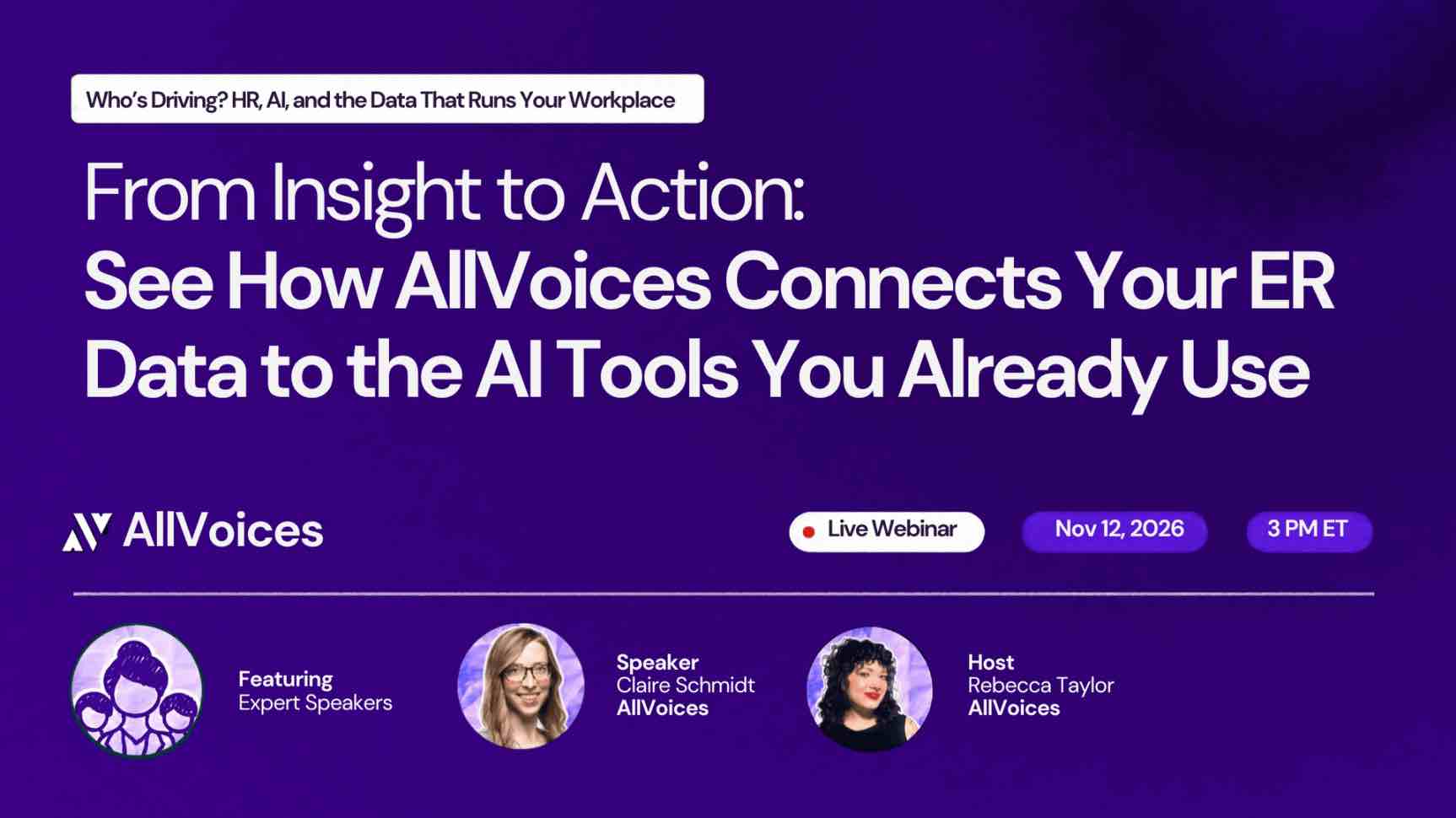
Our next webinar
Frequently asked questions

Got more questions? Email us at support@allvoices.co and we'll respond ASAP.

No items found.
Frequently asked questions

Got more questions? Email us at support@allvoices.co and we'll respond ASAP.

No items found.
SVP of People at Catalant, Amy Knapp - How Do We Re-Recruit People?
Episode 189
About This Episode
In this episode of Reimagining Company Culture, we’re chatting with Amy Knapp, SVP of People at Catalant. Amy Knapp (she/her) has over twenty years experience in recruiting and people operations. Previous to Catalant she led talent for the venture capital firm Redpoint Ventures where she partnered with portfolio companies on their talent and people programs and strategies, after receiving their first investment through different stages of growth. Tune in to learn Amy’s thoughts on qualitative and quantitative ways to measure employee happiness, stay interviews, promoting and improving internal mobility pathways, and more!
About The Guest
Amy Knapp (she/her) has over twenty years experience in recruiting and people operations. Currently she is SVP People at Catalant Technologies where she leads recruiting and HR. Previously she led talent for the venture capital firm Redpoint Ventures where she partnered with portfolio companies on their talent and people programs and strategies, after receiving their first investment through different stages of growth. She’s also been in operational Human Resources and recruiting roles at Google, Ning, and Chegg. Amy is currently on the board of Operation Troop Support, a non profit supporting deployed military troops and their families, and is active as a Cub Scout leader. Amy is a die hard Boston Bruins fan, a foster-adoptive parent, and an avid road tripper, having visited all 50 states.
Episode Transcription

Amy Knapp has spent two decades watching companies invest enormous energy in pulling new people in the door, then almost no energy in keeping the ones already inside. As SVP of People at Catalant, she calls the fix re-recruiting. Treat the employees you have like the highest-value candidates in your funnel, because they are.

The case is not philosophical. It is operational. SHRM estimates that replacing an employee costs 50% to 200% of their annual salary. Every avoidable departure is a six-figure tax on the People budget. Re-recruiting is not a perk program. It is a P&L move.

The teams that internalize this stop treating their best employees as locked-in assets. They treat them as renewable subscribers. Each quarter is a renewal decision. Each one-on-one is part of the renewal conversation. The framing changes the calendar. The calendar changes the results.

Why Re-Recruiting Beats Traditional Retention Programs

Traditional retention programs hand out tenure-based perks and call it a strategy. Re-recruiting flips the model. The People team treats current employees as candidates who could leave any quarter, then earns the renewal the same way recruiting earns a yes from a new hire.

The numbers force the issue. BLS data shows median worker tenure dropped to 3.9 years in January 2024, the lowest reading since 2002. Workers ages 25 to 34 average just 2.7 years with an employer. The implicit contract that kept people in place for a decade no longer exists.

Closing the gap takes an engagement program built into the daily workflow instead of a once-a-year survey. The data has to land in front of managers fast enough to act on it.

What Re-Recruiting Looks Like in Practice

How often should managers have re-recruiting conversations?

At least quarterly. The cadence matters more than the format. A 30-minute conversation that asks what would make this person renew their commitment beats any annual stay interview. The questions are simple. What is energizing right now? What is draining? What would push you to leave? What would make you stay another year?

Most managers do not have this conversation because no one taught them how. Gallup found that only 44% of managers receive any formal training. The fix is structured prompts inside the manager workflow, not another lecture.

How do you measure re-recruiting effectiveness?

Track three numbers. Voluntary regrettable attrition by manager. Internal mobility rate. And the spread between exit interview themes and active employee feedback. When exit interviews surface issues that continuous pulse surveys never caught, the listening system is broken.

What Actually Works for Mid-Stage Companies

Build the listening loop before the engagement program

Companies skip listening and jump to perks because perks are visible. The order is backward. Without a feedback channel that surfaces real concerns by team and by manager, every retention dollar is a guess. Always-on employee survey tooling turns guesswork into pattern recognition.

Make manager performance visible

Employees do not leave companies. They leave managers. Heat maps of turnover rate by people leader expose the patterns that exit data alone hides. Coach the managers whose teams are leaking. Promote the ones whose teams are renewing.

Treat internal mobility as a retention lever

Employees who see a credible next role inside the company do not need to look outside. Catalyst found that employees who feel respected at work are five times more likely to be engaged and three times more likely to stay. Internal mobility is one of the strongest signals of respect a company can send.

How AI Reshapes Re-Recruiting at Scale

Manual re-recruiting hits a wall around 200 employees. Beyond that, no HR business partner can run quarterly conversations across every team. AI changes the math. AI-assisted ER triage can flag managers whose team data shows attrition risk, surface specific concerns from listening data, and draft conversation prompts before a manager opens a one-on-one.

Companies in the top quartile for ethnic diversity on executive teams are 36% more likely to outperform peers financially according to McKinsey. Retention work that misses underrepresented groups erodes that advantage. Re-recruiting deserves the same investment in equity that recruiting gets.

Where Employee Relations Fits in a Retention Strategy

Most retention programs ignore the employee relations function entirely. That is a mistake. Unresolved complaints, slow investigations, and inconsistent manager responses are direct drivers of regrettable attrition. Centralized case management shortens time-to-resolution and feeds the data that retention programs need.

How ER data sharpens a retention plan

The pattern is consistent across industries. Teams with rising case volume in the prior two quarters lose people the next quarter. Real-time HR analytics catch the trend early enough to intervene. Bungie's team is one of the clearest examples we've seen of pairing case data with retention planning.

Frequently Asked Questions About Re-Recruiting Employees

What is the difference between re-recruiting and a stay interview?

Stay interviews are a once-a-year diagnostic. Re-recruiting is a continuous practice. The conversation cadence, the manager skill set, and the system that captures the data all work differently. Stay interviews are a small part of a real re-recruiting program, not a substitute for it.

How does re-recruiting fit alongside compensation reviews?

Comp matters, but it is rarely the deciding factor in a regrettable departure. People leave because the work feels stuck, the manager is not investing in them, or the path forward is unclear. Comp is a hygiene factor. Re-recruiting addresses the things that actually move the decision.

How do you re-recruit remote employees specifically?

Remote workers need more deliberate attention, not less. Without hallway moments, every conversation has to be intentional. Remote managers who do not block time for one-on-ones lose people fastest. The cadence and the questions matter more in distributed teams.

What role should HR play in re-recruiting?

HR builds the system. Managers run it. The People team owns the playbook, the manager training, the listening tools, and the data. Managers own the conversations and the actions. When HR tries to run the conversations directly, the program collapses under volume.

How do you re-recruit a high performer who is already looking?

Move fast and be honest. Ask what is missing. Match what you can. Do not promise what you cannot deliver. The worst outcome is a counter-offer that buys six months and then loses the person anyway. Better to invest in the next high performer behind them.

How does manager training change re-recruiting outcomes?

Trained managers run better re-recruiting conversations. The data is consistent across industries. Transformational leadership training that focuses on listening, feedback, and developmental coaching produces measurably stronger retention than training that focuses on policy compliance.

The Bottom Line for HR Leaders

Re-recruiting is a discipline, not a campaign. It works because it forces a People team to take its own employees as seriously as its candidates. The investment is small relative to the cost of refilling the seat. The compounding effect across a few hundred employees is the difference between a company that grows on top of itself and a company that bleeds out the back door.

Start with one team. Run the cadence for a quarter. Track what changes. Then scale to the next.

The companies that build re-recruiting into their operating model end up with workforce stability that no amount of recruiting spend can replicate. The investment compounds. The return is visible in retention numbers, in engagement scores, and in the ER caseload that quietly stops climbing.

See how AllVoices helps People teams catch attrition risk earlier.

Want to learn more?
See the power of AllVoices today
Thank you! We look forward to meeting you soon
Oops! Something went wrong while submitting the form.
Frequently asked questions

Got more questions? Email us at support@allvoices.co and we'll respond ASAP.

No items found.
Frequently asked questions

Got more questions? Email us at support@allvoices.co and we'll respond ASAP.

No items found.