About This Episode
In this episode of Reimagining Company Culture, we’re chatting with Mika J. Cross, Federal Workplace Expert and Workplace Transformation Strategic Advisor. Mika J. Cross is a distinguished transformational workplace strategist and human capital innovator.
About The Guest
Mika J. Cross is a distinguished transformational workplace strategist and human capital innovator. With extensive experience designing and implementing innovative, transformational workplace solutions she has expertise in remote and flexible work implementation, change management communications, talent acquisition/management, recruitment branding strategies, next generation/future workplace forecasting, workforce skills development, performance management, employee engagement and policy development. As the Vice President of Employer Engagement and Strategic Initiatives at FlexJobs, Mika worked with business executives across private, public, and non-profit sectors to customize their talent management capabilities, establish recruitment/marketing brand strategy and develop workforce planning and flex or remote work policy strategies for attracting, recruiting, hiring, and retaining top talent.
Episode Breakdown

Mika J. Cross has spent her career inside one of the largest workforces in the country. As a federal workplace expert and workplace transformation strategic advisor, she has seen what works when an organization actually redesigns work, not just relocates it. The lesson is consistent. Transformation is structural. Hybrid scheduling is logistics.

HR leaders who confuse the two end up with the same problems they had before remote work, just spread across more locations. The companies that get it right rebuild the operating model from the work outward. Schedule comes last.

The discipline matters because workplace transformation done wrong looks indistinguishable from workplace transformation done right for the first eighteen months. The difference shows up in retention numbers, engagement scores, and ER outcomes only after the new operating model has been tested under pressure. By then it is too late to course-correct without significant rework.

Why Workplace Transformation Means More Than Hybrid Scheduling

Pew Research found that 41% of workers with remote-capable jobs now work hybrid schedules, and 72% want to keep it that way. The schedule is settled. The operating model is not. That is where the transformation work actually lives.

Redesigning work means rethinking how decisions get made, how performance is measured, and how managers spend their time. Bolting hybrid scheduling onto a 1990s management model is the most common mistake mid-stage companies make. The result is a workforce that feels watched and unmotivated at the same time.

The fix starts with a real People team efficiency program that removes the manual work crowding out strategic thinking.

How HR Teams Actually Transform the Model of Work

What needs to change beyond schedule and location?

Three things. Performance frameworks that measure outcomes instead of presence. Manager training that focuses on coaching rather than supervising. And ER processes that work for distributed teams the same way they worked for collocated ones.

Most companies redesign the first two and forget the third. The result is investigations that drag on, complaints that fall through the cracks, and managers who do not know how to handle conflict over video. Distributed-friendly investigation workflows close that gap.

How do you measure whether transformation is working?

Track engagement, retention, and ER resolution time across collocated and distributed teams. The transformation is working when the spread between those groups narrows. The transformation is failing when the spread widens. Most companies do not track this. They should.

What Actually Works in Distributed Workforce Design

Build asynchronous decision-making into the workflow

Most decisions do not need a meeting. Real transformation includes documented decision frameworks, written status updates, and tools that capture context for people in other time zones. Companies that skip this step end up with hybrid schedules and synchronous bottlenecks.

Make manager performance visible

Managers in distributed environments fail or thrive based on their cadence and clarity. Real-time HR analytics show which managers are running tight one-on-ones and which are skipping them. The patterns are obvious in the data.

Invest in continuous listening

Annual surveys do not catch the problems that emerge in distributed teams. Continuous pulse surveys surface concerns while there is still time to act. Remote managers need this signal more than collocated managers do.

The Operating Model Shifts That Actually Compound

The companies that get workplace transformation right do three things consistently. They redesign their decision-making process. They redesign their measurement system. And they redesign the manager role from supervisor to coach.

Each shift reinforces the others. Asynchronous decisions reduce meeting load, which gives managers time to coach. Outcome-based measurement frees managers from monitoring activity. Coaching skills produce better outcomes, which justifies the investment in flexibility. The flywheel is real, but it only spins when all three pieces move together.

Catalyst found that 75% of employees on inclusive teams report high innovation, compared to 16% on non-inclusive teams. The gap is driven by manager behavior more than any other variable. Workplace transformation that does not retrain managers leaves the inclusion benefit on the table.

Building consistency across regions

Distributed workforces fragment fast without deliberate consistency work. Documented standards, repeated rituals, and shared dashboards keep teams aligned even when they never share a building.

Where Employee Relations Fits in a Modern Operating Model

Distributed work changes the ER pattern. Complaints come in through more channels. Cases involve people who have never met in person. Documentation matters more, not less. Centralized case management is the operational backbone every distributed company needs.

How AI shifts the ER load

AI handles intake triage, drafts response language, and surfaces patterns across regions. AI-assisted ER triage means a small ER team can support a much larger workforce without burning out. The math only works once the operating model is redesigned to support it.

Frequently Asked Questions About Workplace Transformation

How long does workplace transformation take?

Two to three years to build new operating muscle. The first year is unwinding old habits. The second year is establishing new ones. The third is hardening the system so it survives leadership changes. Companies that expect transformation in twelve months end up disappointed.

What is the biggest barrier to real transformation?

Senior leaders who say they want change but model the old behavior. The fix is leadership accountability tied to specific behaviors, measured quarterly. Without that, every transformation effort flattens out. Brookings notes that companies with diverse boards and leadership outperform peers in product development, revenues, and engagement. Leadership behavior shows up everywhere.

How does transformation affect compliance?

Distributed workforces add complexity to compliance workflows. Different states. Different rules. Different reporting obligations. The companies that get this right invest in tooling that handles the complexity at the system level.

How do you avoid transformation theater?

Tie every change to a measurable outcome. If the new performance framework does not move retention, fix it. If the new manager training does not move engagement, fix it. The discipline is in the measurement, not the rollout.

What role should HR play in workplace transformation?

HR co-owns it with operations and finance. The People team designs the workflow. Operations runs the daily mechanics. Finance funds the trade-offs. When any one of those is missing, the transformation stalls.

The Bottom Line for HR Leaders

Real workplace transformation is unsexy. It is workflow design, measurement discipline, and patience. The companies that do it well end up with workforces that are more flexible, more productive, and more resilient than the ones they started with.

Start with the operating model. Schedule comes second. The People teams that lead this work end up with retention numbers competitors cannot match.

The hardest part of transformation is sequencing. Most teams want to fix everything at once. The teams that succeed sequence carefully. They redesign decision-making first, because nothing else works without it. They redesign measurement second, because that is what unlocks manager behavior. They redesign manager training third, because skills follow expectations.

Two to three years from start to finish is the realistic timeline for a meaningful workplace transformation. The companies that promise faster results usually deliver theater. The companies that commit to the longer timeline build something durable. The retention numbers, the engagement scores, and the recruiting pipeline all reflect that durability years after the work is done.

See how AllVoices helps modern, distributed People teams stay efficient.
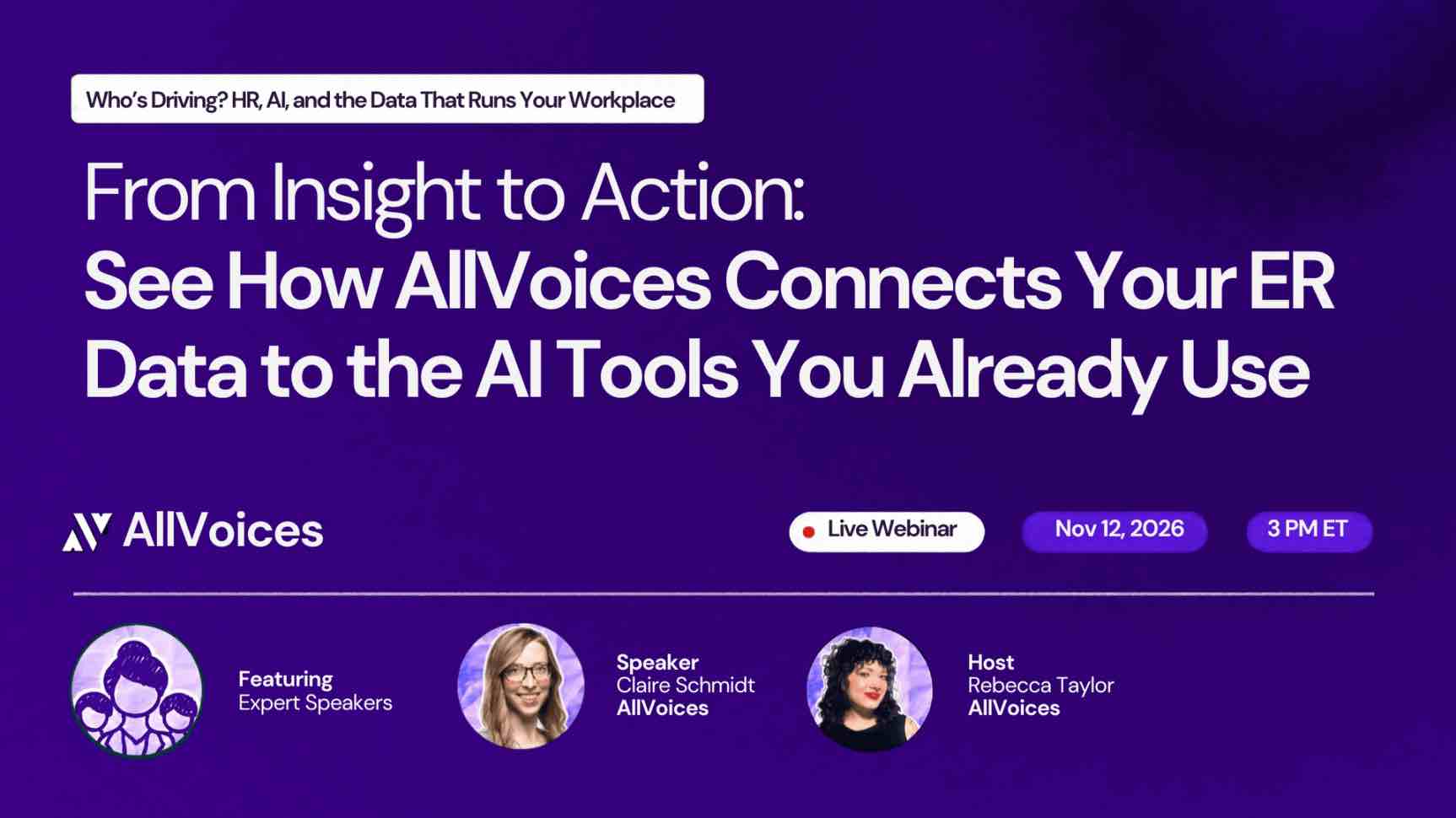
Our next webinar
Frequently asked questions

Got more questions? Email us at support@allvoices.co and we'll respond ASAP.

No items found.
Frequently asked questions

Got more questions? Email us at support@allvoices.co and we'll respond ASAP.

No items found.
Mika J. Cross, Federal Workplace Expert and Workplace Transformation Strategic Advisor - Redoing the Model of Work
Episode 198
About This Episode
In this episode of Reimagining Company Culture, we’re chatting with Mika J. Cross, Federal Workplace Expert and Workplace Transformation Strategic Advisor. Mika J. Cross is a distinguished transformational workplace strategist and human capital innovator.
About The Guest
Mika J. Cross is a distinguished transformational workplace strategist and human capital innovator. With extensive experience designing and implementing innovative, transformational workplace solutions she has expertise in remote and flexible work implementation, change management communications, talent acquisition/management, recruitment branding strategies, next generation/future workplace forecasting, workforce skills development, performance management, employee engagement and policy development. As the Vice President of Employer Engagement and Strategic Initiatives at FlexJobs, Mika worked with business executives across private, public, and non-profit sectors to customize their talent management capabilities, establish recruitment/marketing brand strategy and develop workforce planning and flex or remote work policy strategies for attracting, recruiting, hiring, and retaining top talent.
Episode Transcription

Mika J. Cross has spent her career inside one of the largest workforces in the country. As a federal workplace expert and workplace transformation strategic advisor, she has seen what works when an organization actually redesigns work, not just relocates it. The lesson is consistent. Transformation is structural. Hybrid scheduling is logistics.

HR leaders who confuse the two end up with the same problems they had before remote work, just spread across more locations. The companies that get it right rebuild the operating model from the work outward. Schedule comes last.

The discipline matters because workplace transformation done wrong looks indistinguishable from workplace transformation done right for the first eighteen months. The difference shows up in retention numbers, engagement scores, and ER outcomes only after the new operating model has been tested under pressure. By then it is too late to course-correct without significant rework.

Why Workplace Transformation Means More Than Hybrid Scheduling

Pew Research found that 41% of workers with remote-capable jobs now work hybrid schedules, and 72% want to keep it that way. The schedule is settled. The operating model is not. That is where the transformation work actually lives.

Redesigning work means rethinking how decisions get made, how performance is measured, and how managers spend their time. Bolting hybrid scheduling onto a 1990s management model is the most common mistake mid-stage companies make. The result is a workforce that feels watched and unmotivated at the same time.

The fix starts with a real People team efficiency program that removes the manual work crowding out strategic thinking.

How HR Teams Actually Transform the Model of Work

What needs to change beyond schedule and location?

Three things. Performance frameworks that measure outcomes instead of presence. Manager training that focuses on coaching rather than supervising. And ER processes that work for distributed teams the same way they worked for collocated ones.

Most companies redesign the first two and forget the third. The result is investigations that drag on, complaints that fall through the cracks, and managers who do not know how to handle conflict over video. Distributed-friendly investigation workflows close that gap.

How do you measure whether transformation is working?

Track engagement, retention, and ER resolution time across collocated and distributed teams. The transformation is working when the spread between those groups narrows. The transformation is failing when the spread widens. Most companies do not track this. They should.

What Actually Works in Distributed Workforce Design

Build asynchronous decision-making into the workflow

Most decisions do not need a meeting. Real transformation includes documented decision frameworks, written status updates, and tools that capture context for people in other time zones. Companies that skip this step end up with hybrid schedules and synchronous bottlenecks.

Make manager performance visible

Managers in distributed environments fail or thrive based on their cadence and clarity. Real-time HR analytics show which managers are running tight one-on-ones and which are skipping them. The patterns are obvious in the data.

Invest in continuous listening

Annual surveys do not catch the problems that emerge in distributed teams. Continuous pulse surveys surface concerns while there is still time to act. Remote managers need this signal more than collocated managers do.

The Operating Model Shifts That Actually Compound

The companies that get workplace transformation right do three things consistently. They redesign their decision-making process. They redesign their measurement system. And they redesign the manager role from supervisor to coach.

Each shift reinforces the others. Asynchronous decisions reduce meeting load, which gives managers time to coach. Outcome-based measurement frees managers from monitoring activity. Coaching skills produce better outcomes, which justifies the investment in flexibility. The flywheel is real, but it only spins when all three pieces move together.

Catalyst found that 75% of employees on inclusive teams report high innovation, compared to 16% on non-inclusive teams. The gap is driven by manager behavior more than any other variable. Workplace transformation that does not retrain managers leaves the inclusion benefit on the table.

Building consistency across regions

Distributed workforces fragment fast without deliberate consistency work. Documented standards, repeated rituals, and shared dashboards keep teams aligned even when they never share a building.

Where Employee Relations Fits in a Modern Operating Model

Distributed work changes the ER pattern. Complaints come in through more channels. Cases involve people who have never met in person. Documentation matters more, not less. Centralized case management is the operational backbone every distributed company needs.

How AI shifts the ER load

AI handles intake triage, drafts response language, and surfaces patterns across regions. AI-assisted ER triage means a small ER team can support a much larger workforce without burning out. The math only works once the operating model is redesigned to support it.

Frequently Asked Questions About Workplace Transformation

How long does workplace transformation take?

Two to three years to build new operating muscle. The first year is unwinding old habits. The second year is establishing new ones. The third is hardening the system so it survives leadership changes. Companies that expect transformation in twelve months end up disappointed.

What is the biggest barrier to real transformation?

Senior leaders who say they want change but model the old behavior. The fix is leadership accountability tied to specific behaviors, measured quarterly. Without that, every transformation effort flattens out. Brookings notes that companies with diverse boards and leadership outperform peers in product development, revenues, and engagement. Leadership behavior shows up everywhere.

How does transformation affect compliance?

Distributed workforces add complexity to compliance workflows. Different states. Different rules. Different reporting obligations. The companies that get this right invest in tooling that handles the complexity at the system level.

How do you avoid transformation theater?

Tie every change to a measurable outcome. If the new performance framework does not move retention, fix it. If the new manager training does not move engagement, fix it. The discipline is in the measurement, not the rollout.

What role should HR play in workplace transformation?

HR co-owns it with operations and finance. The People team designs the workflow. Operations runs the daily mechanics. Finance funds the trade-offs. When any one of those is missing, the transformation stalls.

The Bottom Line for HR Leaders

Real workplace transformation is unsexy. It is workflow design, measurement discipline, and patience. The companies that do it well end up with workforces that are more flexible, more productive, and more resilient than the ones they started with.

Start with the operating model. Schedule comes second. The People teams that lead this work end up with retention numbers competitors cannot match.

The hardest part of transformation is sequencing. Most teams want to fix everything at once. The teams that succeed sequence carefully. They redesign decision-making first, because nothing else works without it. They redesign measurement second, because that is what unlocks manager behavior. They redesign manager training third, because skills follow expectations.

Two to three years from start to finish is the realistic timeline for a meaningful workplace transformation. The companies that promise faster results usually deliver theater. The companies that commit to the longer timeline build something durable. The retention numbers, the engagement scores, and the recruiting pipeline all reflect that durability years after the work is done.

See how AllVoices helps modern, distributed People teams stay efficient.

Want to learn more?
See the power of AllVoices today
Thank you! We look forward to meeting you soon
Oops! Something went wrong while submitting the form.
Frequently asked questions

Got more questions? Email us at support@allvoices.co and we'll respond ASAP.

No items found.
Frequently asked questions

Got more questions? Email us at support@allvoices.co and we'll respond ASAP.

No items found.