About This Episode
In this episode of Reimagining Company Culture, we’re chatting with Thomas Igeme Head of Talent at Turn River Capital. Thomas is a passionate, mission-driven leader having cofounded Trybe.ai focused on helping people build habits to reach their full potential, and Right To Education for All Children, to increase awareness of and support for education in the developing world.
About The Guest
Thomas is a passionate, mission-driven leader having cofounded Trybe.ai focused on helping people build habits to reach their full potential, and Right To Education for All Children, to increase awareness of and support for education in the developing world.
Episode Breakdown

Thomas Igeme did not come to leadership development through corporate HR. He came through mission work. As a co-founder of Trybe.ai, he studied how people actually build habits, and then took those insights into talent leadership roles, now at Turn River Capital. His view on leadership development is the view of someone who has watched thousands of well-intentioned programs fail to change a single meeting next Tuesday.

Our conversation with Thomas centered on a simple question. If most leadership programs do not change how managers behave at work, what would. His answer was unromantic. You accelerate leadership by engineering the daily habits leaders practice, not by sending them to another workshop, and you hold the system accountable for using what they learned.

The post below turns that view into a playbook for People teams who want real leadership bench depth without another six-figure initiative.

Why Most Leadership Development Programs Produce No Change

Thomas’ starting position is that most leadership programs fail the moment attendees return to their calendars. The material is fine. The operating environment is unchanged. Nothing in their inbox, meeting agenda, or performance review tells them to apply what they just heard.

The research confirms it. Gallup’s work on manager effectiveness puts managers at the center of 70 percent of the variance in team engagement, and yet Gallup’s research on manager development finds that very few managers say their performance reviews inspire them to improve. The development system and the accountability system are running on different tracks.

That disconnect is what the AllVoices people team efficiency solutions framing helps eliminate. If managers see the consequences of their behavior in ER themes, engagement scores, and team outcomes, development gets traction that a standalone program cannot generate.

How Habit Design Changes the Math of Leadership Development

Thomas’ background in habit-formation work reframes the design question. You do not teach a leader a skill in a two-day workshop. You embed a behavior in the three interactions they will have this week. That means designing around cues they already see: stand-ups, one-on-ones, performance reviews, team rituals.

He recommends a three-part structure. Name the behavior. Attach it to an existing cue. Measure whether it happened. When leadership development runs on that loop, retention rates rise and skill transfer becomes visible rather than theoretical.

What habits separate effective managers from average ones

Short weekly one-on-ones with explicit asks for feedback. Fast recognition of good work. Direct naming of underperformance with a timeline. Clear escalation paths for conflict. The performance management discipline that sits behind these habits is what produces consistent output across a manager bench, and it only forms when someone is measuring the behavior, not the training attendance.

How do you measure leadership behaviors at scale

Use a quarterly 360 instrument that asks the team, not the manager, whether the behaviors showed up. Triangulate with engagement pulse items and ER intake. Managers whose teams say the behavior is not happening get a targeted conversation, not a training invitation. Managers whose teams say it is happening get public recognition.

What Actually Works to Accelerate a Manager Bench

Principle 1: Start with high-context, low-skill managers

The fastest leadership acceleration comes from new managers inside their first year. They have context, motivation, and a willingness to change that veterans often lack. Thomas recommends putting the biggest share of development spend on managers at the 6-to-18 month mark.

Principle 2: Tie development to an observable team outcome

Each cohort should end with a team-level metric the manager is improving, from retention in a specific segment to a measurable engagement item. That makes the program answerable to the business, not just to HR. Harvard Business Review’s coverage of leadership development consistently finds that programs with outcome accountability outperform those with attendance accountability by wide margins.

Principle 3: Build peer cohorts that survive the program

A 12-week program with 12 alumni is less valuable than a program that leaves a learning community intact for years. Thomas structures cohorts to have a shared artifact, a recurring cadence, and an open escalation path. Peer accountability outlasts facilitator attention.

Where Employee Relations Fits in Leadership Development

The sharpest leadership feedback tool most companies ignore sits in their ER intake. Managers whose direct reports file repeated concerns about communication, favoritism, or unclear expectations are giving the People team a live map of coaching priorities. When the intake system is structured and searchable, those managers become visible without guessing games.

The AllVoices HR case management platform connects individual cases to manager patterns, and Vera, the AllVoices AI co-pilot for employee relations, summarizes those patterns fast enough that development programs can match content to actual need rather than speculative gaps.

How do you use ER data without punishing managers unfairly

Use thresholds. One case is noise. Repeat cases across unrelated direct reports are a pattern. Present the data to the manager as development input, not evidence. A manager who sees the pattern and engages earns trust. A manager who deflects it surfaces a different kind of concern.

Frequently Asked Questions About Accelerating Leadership Development

What is the ideal length of a leadership development program

Long enough to embed habits, short enough to preserve attention. Twelve weeks is a common and workable length, with cohort reinforcement continuing for at least another quarter. Programs shorter than six weeks rarely produce behavioral change. Programs longer than six months lose momentum.

Which leadership skills are most transferable

Feedback delivery, meeting facilitation, and priority setting transfer across almost every industry and function. They are also the skills with the highest leverage for team engagement. Specialized skills like executive storytelling or M&A negotiation matter at senior levels but do not belong in the first leadership program a manager attends.

How does manager development affect retention

Directly. People leave managers more often than they leave companies. A 10 percent improvement in a manager’s one-on-one cadence and feedback quality can drop voluntary attrition in their team meaningfully over 12 to 18 months. The economics favor aggressive manager investment over external recruiting spend.

Should leadership development be centralized or federated

Curriculum should be centralized. Facilitation can be federated, using line leaders as teachers. Federated facilitation keeps development credible because the teachers are operating in the same environment the learners are trying to change. Pure centralization produces polished content that does not travel.

What is the biggest mistake companies make in leadership development

Decoupling the program from business outcomes. When leadership development reports into HR only and never to the line, it becomes a cost center that nobody protects. Linking it to retention, manager scorecards, and ER trends makes it part of the operating system, which is the only place it will stay funded when budgets tighten.

The Bottom Line for HR Leaders

Thomas’ view is that leadership development is a systems problem, not a learning problem. Managers change behavior when the operating environment rewards the new behavior and measures it. That means habit design, team-level metrics, peer accountability, and ER-informed coaching loops all working together.

The companies that accelerate a manager bench in 12 months are not smarter. They are better at closing the loop between what managers learn, what they practice, and what their teams experience. People teams that design for that loop compound advantage every year.

To see how AllVoices makes manager-level patterns visible so leadership development programs can target the right behaviors, request a product walkthrough from our team.
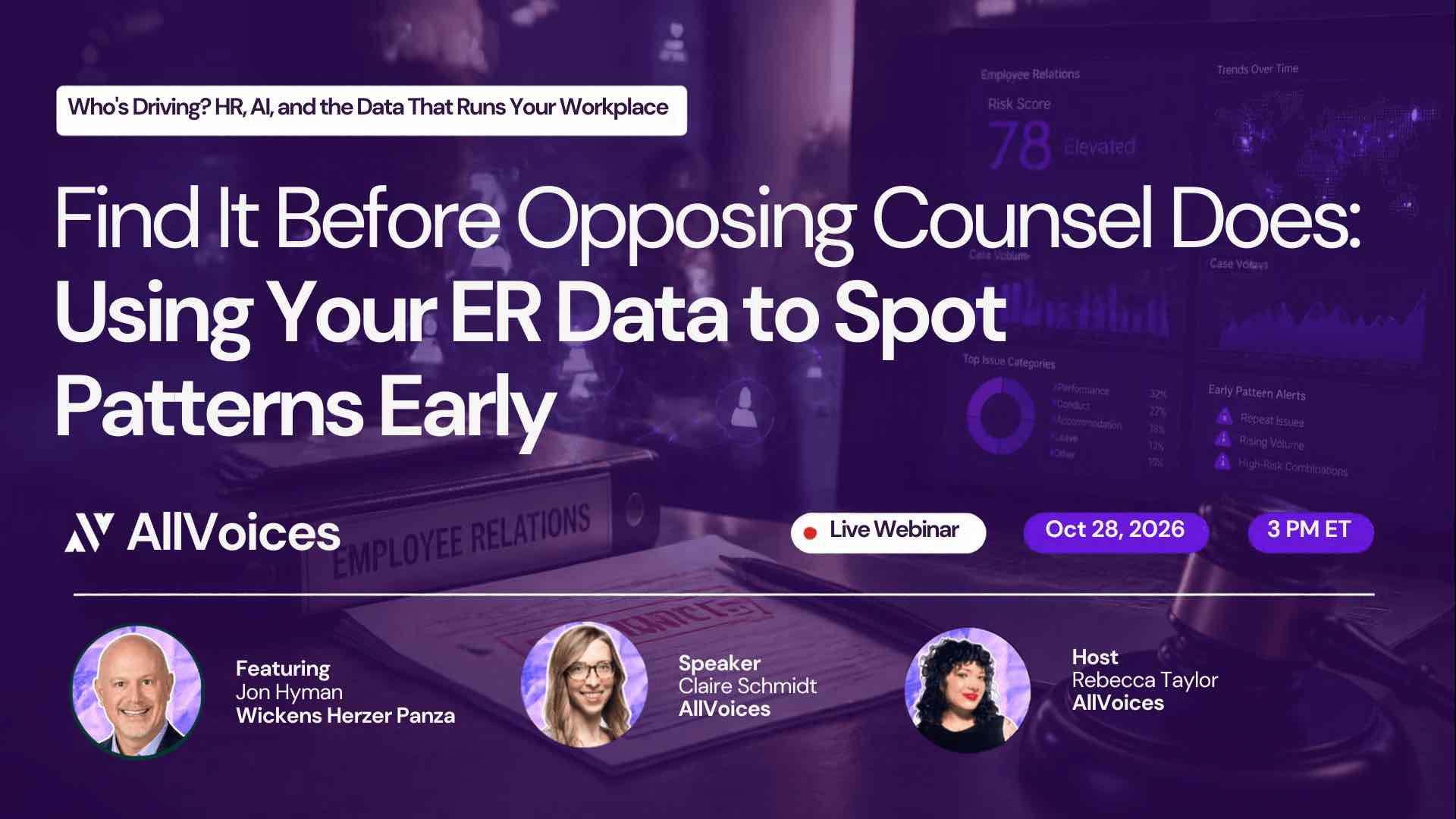
Our next webinar
Frequently asked questions

Got more questions? Email us at support@allvoices.co and we'll respond ASAP.

No items found.
Frequently asked questions

Got more questions? Email us at support@allvoices.co and we'll respond ASAP.

No items found.
Accelerating Leadership Development with Thomas Igeme
Episode 52
About This Episode
In this episode of Reimagining Company Culture, we’re chatting with Thomas Igeme Head of Talent at Turn River Capital. Thomas is a passionate, mission-driven leader having cofounded Trybe.ai focused on helping people build habits to reach their full potential, and Right To Education for All Children, to increase awareness of and support for education in the developing world.
About The Guest
Thomas is a passionate, mission-driven leader having cofounded Trybe.ai focused on helping people build habits to reach their full potential, and Right To Education for All Children, to increase awareness of and support for education in the developing world.
Episode Transcription

Thomas Igeme did not come to leadership development through corporate HR. He came through mission work. As a co-founder of Trybe.ai, he studied how people actually build habits, and then took those insights into talent leadership roles, now at Turn River Capital. His view on leadership development is the view of someone who has watched thousands of well-intentioned programs fail to change a single meeting next Tuesday.

Our conversation with Thomas centered on a simple question. If most leadership programs do not change how managers behave at work, what would. His answer was unromantic. You accelerate leadership by engineering the daily habits leaders practice, not by sending them to another workshop, and you hold the system accountable for using what they learned.

The post below turns that view into a playbook for People teams who want real leadership bench depth without another six-figure initiative.

Why Most Leadership Development Programs Produce No Change

Thomas’ starting position is that most leadership programs fail the moment attendees return to their calendars. The material is fine. The operating environment is unchanged. Nothing in their inbox, meeting agenda, or performance review tells them to apply what they just heard.

The research confirms it. Gallup’s work on manager effectiveness puts managers at the center of 70 percent of the variance in team engagement, and yet Gallup’s research on manager development finds that very few managers say their performance reviews inspire them to improve. The development system and the accountability system are running on different tracks.

That disconnect is what the AllVoices people team efficiency solutions framing helps eliminate. If managers see the consequences of their behavior in ER themes, engagement scores, and team outcomes, development gets traction that a standalone program cannot generate.

How Habit Design Changes the Math of Leadership Development

Thomas’ background in habit-formation work reframes the design question. You do not teach a leader a skill in a two-day workshop. You embed a behavior in the three interactions they will have this week. That means designing around cues they already see: stand-ups, one-on-ones, performance reviews, team rituals.

He recommends a three-part structure. Name the behavior. Attach it to an existing cue. Measure whether it happened. When leadership development runs on that loop, retention rates rise and skill transfer becomes visible rather than theoretical.

What habits separate effective managers from average ones

Short weekly one-on-ones with explicit asks for feedback. Fast recognition of good work. Direct naming of underperformance with a timeline. Clear escalation paths for conflict. The performance management discipline that sits behind these habits is what produces consistent output across a manager bench, and it only forms when someone is measuring the behavior, not the training attendance.

How do you measure leadership behaviors at scale

Use a quarterly 360 instrument that asks the team, not the manager, whether the behaviors showed up. Triangulate with engagement pulse items and ER intake. Managers whose teams say the behavior is not happening get a targeted conversation, not a training invitation. Managers whose teams say it is happening get public recognition.

What Actually Works to Accelerate a Manager Bench

Principle 1: Start with high-context, low-skill managers

The fastest leadership acceleration comes from new managers inside their first year. They have context, motivation, and a willingness to change that veterans often lack. Thomas recommends putting the biggest share of development spend on managers at the 6-to-18 month mark.

Principle 2: Tie development to an observable team outcome

Each cohort should end with a team-level metric the manager is improving, from retention in a specific segment to a measurable engagement item. That makes the program answerable to the business, not just to HR. Harvard Business Review’s coverage of leadership development consistently finds that programs with outcome accountability outperform those with attendance accountability by wide margins.

Principle 3: Build peer cohorts that survive the program

A 12-week program with 12 alumni is less valuable than a program that leaves a learning community intact for years. Thomas structures cohorts to have a shared artifact, a recurring cadence, and an open escalation path. Peer accountability outlasts facilitator attention.

Where Employee Relations Fits in Leadership Development

The sharpest leadership feedback tool most companies ignore sits in their ER intake. Managers whose direct reports file repeated concerns about communication, favoritism, or unclear expectations are giving the People team a live map of coaching priorities. When the intake system is structured and searchable, those managers become visible without guessing games.

The AllVoices HR case management platform connects individual cases to manager patterns, and Vera, the AllVoices AI co-pilot for employee relations, summarizes those patterns fast enough that development programs can match content to actual need rather than speculative gaps.

How do you use ER data without punishing managers unfairly

Use thresholds. One case is noise. Repeat cases across unrelated direct reports are a pattern. Present the data to the manager as development input, not evidence. A manager who sees the pattern and engages earns trust. A manager who deflects it surfaces a different kind of concern.

Frequently Asked Questions About Accelerating Leadership Development

What is the ideal length of a leadership development program

Long enough to embed habits, short enough to preserve attention. Twelve weeks is a common and workable length, with cohort reinforcement continuing for at least another quarter. Programs shorter than six weeks rarely produce behavioral change. Programs longer than six months lose momentum.

Which leadership skills are most transferable

Feedback delivery, meeting facilitation, and priority setting transfer across almost every industry and function. They are also the skills with the highest leverage for team engagement. Specialized skills like executive storytelling or M&A negotiation matter at senior levels but do not belong in the first leadership program a manager attends.

How does manager development affect retention

Directly. People leave managers more often than they leave companies. A 10 percent improvement in a manager’s one-on-one cadence and feedback quality can drop voluntary attrition in their team meaningfully over 12 to 18 months. The economics favor aggressive manager investment over external recruiting spend.

Should leadership development be centralized or federated

Curriculum should be centralized. Facilitation can be federated, using line leaders as teachers. Federated facilitation keeps development credible because the teachers are operating in the same environment the learners are trying to change. Pure centralization produces polished content that does not travel.

What is the biggest mistake companies make in leadership development

Decoupling the program from business outcomes. When leadership development reports into HR only and never to the line, it becomes a cost center that nobody protects. Linking it to retention, manager scorecards, and ER trends makes it part of the operating system, which is the only place it will stay funded when budgets tighten.

The Bottom Line for HR Leaders

Thomas’ view is that leadership development is a systems problem, not a learning problem. Managers change behavior when the operating environment rewards the new behavior and measures it. That means habit design, team-level metrics, peer accountability, and ER-informed coaching loops all working together.

The companies that accelerate a manager bench in 12 months are not smarter. They are better at closing the loop between what managers learn, what they practice, and what their teams experience. People teams that design for that loop compound advantage every year.

To see how AllVoices makes manager-level patterns visible so leadership development programs can target the right behaviors, request a product walkthrough from our team.

Want to learn more?
See the power of AllVoices today
Thank you! We look forward to meeting you soon
Oops! Something went wrong while submitting the form.
Frequently asked questions

Got more questions? Email us at support@allvoices.co and we'll respond ASAP.

No items found.
Frequently asked questions

Got more questions? Email us at support@allvoices.co and we'll respond ASAP.

No items found.