About This Episode
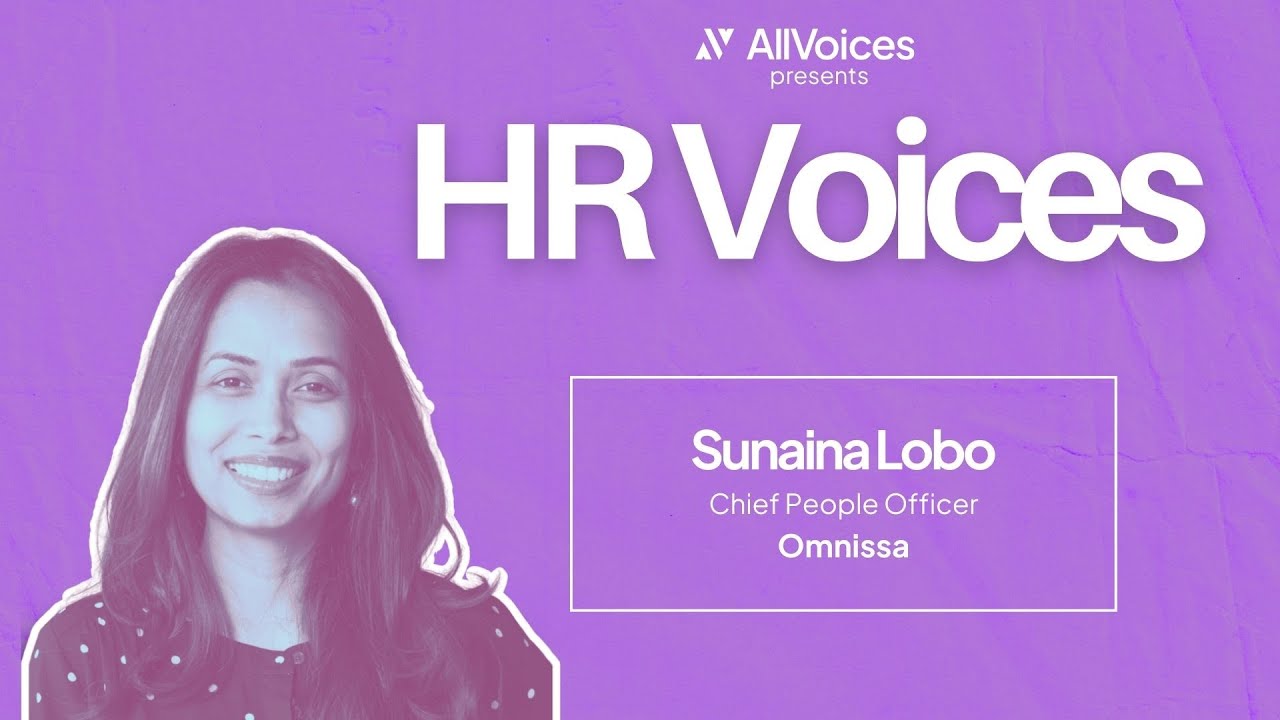
How can HR lead AI adoption without losing the human core of work? Sunaina Lobo, Chief People Officer at Omnissa — the AI-driven digital workforce platform carved out of VMware — describes building a modern hire-to-retire experience just six weeks into the role. She argues people teams must be change leaders rather than technology adopters, and that AI lets HR leapfrog legacy models like shared services entirely, delivering personalized support at scale. She walks through using conversational intelligence to transform career conversations.
About The Guest
Sunaina Lobo is Chief People Officer at Omnissa, the AI-driven digital workforce platform carved out of VMware, where she is building a hire-to-retire employee experience from an unusually blank slate. Her argument is that a company standing up its people function now should not rebuild the shared-services model at all — the tiered ticket queue was a compromise imposed by cost, and personalization at scale removes the reason it existed.
Episode Breakdown

Sunaina Lobo, Chief People Officer at Omnissa, was starting her sixth week in the job when Rebecca Taylor interviewed her for HR Voices. Her team was still crafting its People strategy and the org design behind it. Omnissa sells an AI-driven digital workforce platform to mostly enterprise customers. It spent years as part of VMware before it became a standalone software company in 2024.

Sunaina’s team owns what she calls the hire-to-retire cycle, the full employee lifecycle from the day someone is hired to the day they decide to leave. The new strategy had to settle how that work should run. Her answer was to skip the shared services center and put the People team at the front of AI adoption.

Why Sunaina Wants HR Leading AI Adoption

In tech, Sunaina said, AI sits front and center whatever the business goals. Omnissa builds AI-native products, so applying the same thinking to the People function is, in her words, “a natural evolution.”

The hard part, she argues, is not the technology. It is the change. People leaders sit at the center of change and transformation in any business, so the job is “not only being part of the adoption of AI, but actually leading the adoption of AI in organizations.” That makes AI adoption a change management problem first and a software decision second.

Gallup’s 2026 midyear data supports that order. Employees whose organizations provide a clear plan for integrating AI have a 15-point higher engagement rate than those without one. Employees whose managers actively support their team’s use of AI are engaged at 48 percent, compared with 30 percent among those who do not say so. Both are People team territory.

What Skipping the Shared Services Center Looks Like

As her team plans the People function’s operational work, a shared services center could be the goal. Sunaina wants to leapfrog it. Instead of routing employees through a center, she would use AI to create a personalized employee experience. “We can just actually go via an AI bot,” she said.

Her advice, for new and long-tenured Chief People Officers alike, is to keep AI at the front of the employee experience and use it to improve that experience in ways HR could not before. Teams weighing the same move can study how AI supports employees around the clock. The bot is a means to personalization, not the goal.

The bot fits a wider forecast. Sunaina expects global talent to reshape People work, and Omnissa alone has eighteen legal entities in different countries. She also expects a new era of insights-driven HR. Most HR technology today, she said, is “rear view looking.” The next step is people analytics that looks forward, using employee data to show how the workplace should be designed.

What Actually Works

Map the Whole Process Before Choosing What AI Handles

Most AI conversations in HR start with shared services or talent acquisition, Sunaina noted, so she chose a talent development example on purpose. Her method starts with the whole process: define what the team is solving for, whether in shared services, talent development, or recruiting.

Then break the work into pieces and sort them: the ones AI can take on and the ones that need human intervention. Her team ran that sort on career conversations and decided the conversation between manager and employee must stay.

Design Career Conversations Around the Relationship

The usual approach has an employee write down goals and career objectives, a manager review them, and the two discuss next steps. Sunaina would flip it. Conversational intelligence software would capture the employee’s thinking about their career and share it with the manager in a readable format.

AI tools would then suggest development options for both of them, acting almost as a career coach. The meeting can be about the conversation instead of note-taking, because the notes and next steps are automated. That leaves the pair free to talk through where a career path could lead.

Her reason is retention. What keeps employees, she argues, is the chance to bring their whole selves to work, have a real conversation, and find purpose and meaning in what they do. A manager conversation is where that can happen.

Build Rewards Around Where Each Employee Is

Total rewards is ripe for change, in Sunaina’s view, because so much of the work is analyzing spreadsheets and numbers. AI can take that analysis. HR can then focus on what employees want from their rewards and from the benefits package around them. The test is whether benefits fit where each employee is in life and career, or whether everyone gets one size.

She calls the broader idea hyper-personalization. Instead of pulling employees into an organizational construct, the company comes to them with recommendations based on who they are and where they are in their career. Personalization already shapes life outside work, she pointed out, so the employee experience should catch up.

Where Employee Relations Fits

Sunaina pairs hyper-personalization with what she called hyper-human interaction. Much of work today, as she put it, is remote and often alone. She tied falling engagement at work to two pressures: uncertainty about whether technology will take jobs away, and a loss of connection at work.

Gallup’s latest numbers point the same way. U.S. engagement fell to 29 percent in the third quarter of 2026, its lowest level since 2011, with a five-point drop among fully remote employees.

Her prescription is “putting the H back into HR.” Repeatable, operational work goes to AI, while conversations, community, and engagement stay with people. Employee relations is where that split gets tested. ER teams own conversations no tool should hold for them, while intake, documentation, and pattern-spotting across cases are the repeatable layer. AI-driven tools for employee relations take that layer, so ER time goes to the people involved.

Frequently Asked Questions About AI-Native HR at Omnissa

What Does Sunaina Lobo Do at Omnissa?

She is Chief People Officer, and her team runs what she calls the hire-to-retire cycle, from the day someone is hired until they decide to leave. She had joined Omnissa about five weeks before this episode.

Can AI Replace an HR Shared Services Center?

Sunaina Lobo is betting that it can at Omnissa. Rather than build a shared services center, she wants AI to deliver a personalized employee experience, with employees going through an AI bot instead of a service center.

How Can AI Improve Career Conversations?

It can take over the note-taking. Conversational intelligence captures what an employee thinks about their career, formats it for the manager, and suggests development options. The meeting then focuses on the relationship, which Sunaina sees as what keeps employees.

What Does Hyper-Personalization Mean in HR?

It means fitting the employee experience to the person. Sunaina describes coming to each employee with recommendations based on who they are and where they are in life and career, including rewards and benefits, instead of a one-size-fits-all approach.

What Trends Does Sunaina Lobo Expect to Shape HR?

She named five: AI-driven hyper-personalization, global talent, insights-driven HR, purpose-led culture building, and skills intelligence. The last one treats the skills a workforce holds as something to develop into a competitive advantage.

The Bottom Line for HR Leaders

Sunaina Lobo’s framing starts with the H in HR. AI should take the repeatable work, from service requests to the spreadsheets behind total rewards, so People teams spend their time on conversations, community, and strategy. She treats every disruption, from a pandemic to a skills revolution, as an opportunity.

Her team calls her a glass half full person, and sometimes glass half overflowing. The optimism comes with one condition: keep the human interaction and connection that drive productivity.

See how AllVoices helps ER teams pass the repeatable side of case work to AI and keep the human conversations.

Our next webinar
Frequently asked questions

Got more questions? Email us at support@allvoices.co and we'll respond ASAP.

No items found.
Frequently asked questions

Got more questions? Email us at support@allvoices.co and we'll respond ASAP.

No items found.

Sunaina Lobo, Chief People Officer at Omnissa

About the guest

Sunaina Lobo is Chief People Officer at Omnissa, the AI-driven digital workforce platform carved out of VMware, where she is building a hire-to-retire employee experience from an unusually blank slate. Her argument is that a company standing up its people function now should not rebuild the shared-services model at all — the tiered ticket queue was a compromise imposed by cost, and personalization at scale removes the reason it existed.

Episode Breakdown

Sunaina Lobo, Chief People Officer at Omnissa, was starting her sixth week in the job when Rebecca Taylor interviewed her for HR Voices. Her team was still crafting its People strategy and the org design behind it. Omnissa sells an AI-driven digital workforce platform to mostly enterprise customers. It spent years as part of VMware before it became a standalone software company in 2024.

Sunaina’s team owns what she calls the hire-to-retire cycle, the full employee lifecycle from the day someone is hired to the day they decide to leave. The new strategy had to settle how that work should run. Her answer was to skip the shared services center and put the People team at the front of AI adoption.

Why Sunaina Wants HR Leading AI Adoption

In tech, Sunaina said, AI sits front and center whatever the business goals. Omnissa builds AI-native products, so applying the same thinking to the People function is, in her words, “a natural evolution.”

The hard part, she argues, is not the technology. It is the change. People leaders sit at the center of change and transformation in any business, so the job is “not only being part of the adoption of AI, but actually leading the adoption of AI in organizations.” That makes AI adoption a change management problem first and a software decision second.

Gallup’s 2026 midyear data supports that order. Employees whose organizations provide a clear plan for integrating AI have a 15-point higher engagement rate than those without one. Employees whose managers actively support their team’s use of AI are engaged at 48 percent, compared with 30 percent among those who do not say so. Both are People team territory.

What Skipping the Shared Services Center Looks Like

As her team plans the People function’s operational work, a shared services center could be the goal. Sunaina wants to leapfrog it. Instead of routing employees through a center, she would use AI to create a personalized employee experience. “We can just actually go via an AI bot,” she said.

Her advice, for new and long-tenured Chief People Officers alike, is to keep AI at the front of the employee experience and use it to improve that experience in ways HR could not before. Teams weighing the same move can study how AI supports employees around the clock. The bot is a means to personalization, not the goal.

The bot fits a wider forecast. Sunaina expects global talent to reshape People work, and Omnissa alone has eighteen legal entities in different countries. She also expects a new era of insights-driven HR. Most HR technology today, she said, is “rear view looking.” The next step is people analytics that looks forward, using employee data to show how the workplace should be designed.

What Actually Works

Map the Whole Process Before Choosing What AI Handles

Most AI conversations in HR start with shared services or talent acquisition, Sunaina noted, so she chose a talent development example on purpose. Her method starts with the whole process: define what the team is solving for, whether in shared services, talent development, or recruiting.

Then break the work into pieces and sort them: the ones AI can take on and the ones that need human intervention. Her team ran that sort on career conversations and decided the conversation between manager and employee must stay.

Design Career Conversations Around the Relationship

The usual approach has an employee write down goals and career objectives, a manager review them, and the two discuss next steps. Sunaina would flip it. Conversational intelligence software would capture the employee’s thinking about their career and share it with the manager in a readable format.

AI tools would then suggest development options for both of them, acting almost as a career coach. The meeting can be about the conversation instead of note-taking, because the notes and next steps are automated. That leaves the pair free to talk through where a career path could lead.

Her reason is retention. What keeps employees, she argues, is the chance to bring their whole selves to work, have a real conversation, and find purpose and meaning in what they do. A manager conversation is where that can happen.

Build Rewards Around Where Each Employee Is

Total rewards is ripe for change, in Sunaina’s view, because so much of the work is analyzing spreadsheets and numbers. AI can take that analysis. HR can then focus on what employees want from their rewards and from the benefits package around them. The test is whether benefits fit where each employee is in life and career, or whether everyone gets one size.

She calls the broader idea hyper-personalization. Instead of pulling employees into an organizational construct, the company comes to them with recommendations based on who they are and where they are in their career. Personalization already shapes life outside work, she pointed out, so the employee experience should catch up.

Where Employee Relations Fits

Sunaina pairs hyper-personalization with what she called hyper-human interaction. Much of work today, as she put it, is remote and often alone. She tied falling engagement at work to two pressures: uncertainty about whether technology will take jobs away, and a loss of connection at work.

Gallup’s latest numbers point the same way. U.S. engagement fell to 29 percent in the third quarter of 2026, its lowest level since 2011, with a five-point drop among fully remote employees.

Her prescription is “putting the H back into HR.” Repeatable, operational work goes to AI, while conversations, community, and engagement stay with people. Employee relations is where that split gets tested. ER teams own conversations no tool should hold for them, while intake, documentation, and pattern-spotting across cases are the repeatable layer. AI-driven tools for employee relations take that layer, so ER time goes to the people involved.

Frequently Asked Questions About AI-Native HR at Omnissa

What Does Sunaina Lobo Do at Omnissa?

She is Chief People Officer, and her team runs what she calls the hire-to-retire cycle, from the day someone is hired until they decide to leave. She had joined Omnissa about five weeks before this episode.

Can AI Replace an HR Shared Services Center?

Sunaina Lobo is betting that it can at Omnissa. Rather than build a shared services center, she wants AI to deliver a personalized employee experience, with employees going through an AI bot instead of a service center.

How Can AI Improve Career Conversations?

It can take over the note-taking. Conversational intelligence captures what an employee thinks about their career, formats it for the manager, and suggests development options. The meeting then focuses on the relationship, which Sunaina sees as what keeps employees.

What Does Hyper-Personalization Mean in HR?

It means fitting the employee experience to the person. Sunaina describes coming to each employee with recommendations based on who they are and where they are in life and career, including rewards and benefits, instead of a one-size-fits-all approach.

What Trends Does Sunaina Lobo Expect to Shape HR?

She named five: AI-driven hyper-personalization, global talent, insights-driven HR, purpose-led culture building, and skills intelligence. The last one treats the skills a workforce holds as something to develop into a competitive advantage.

The Bottom Line for HR Leaders

Sunaina Lobo’s framing starts with the H in HR. AI should take the repeatable work, from service requests to the spreadsheets behind total rewards, so People teams spend their time on conversations, community, and strategy. She treats every disruption, from a pandemic to a skills revolution, as an opportunity.

Her team calls her a glass half full person, and sometimes glass half overflowing. The optimism comes with one condition: keep the human interaction and connection that drive productivity.

See how AllVoices helps ER teams pass the repeatable side of case work to AI and keep the human conversations.