About This Episode
In this episode of Reimagining Company Culture, we’re chatting with Chris Moreland, Chief Executive Officer and President of Moreland Accord. He has an established track record of performance and execution at Fortune 500 icons like Vizient, Microsoft, Expedia, General Electric, Johnson & Johnson, Pepsi, and Mobil. Tune in to learn Chris’ thoughts on investing in manager effectiveness, the unique role of CEO and senior leadership, dispelling DEIB conversations, and more!
About The Guest
Chris is known for possessing a contagious regard for winning, a bias for action, and a healthy disrespect for insurmountable challenges. Street Smart C-Level Leader with a diverse industry background. He is an indispensible partner for innovative organizations, people development, and building teams. Chris is best known for leading organizations through change, developing innovative solutions, and deciphering ambiguity. He has an established track record of performance and execution at Fortune 500 icons like Vizient, Microsoft, Expedia, General Electric, Johnson & Johnson, Pepsi, and Mobil.
Episode Breakdown

On a recent episode of Reimagining Company Culture, the conversation turned to defining DEI in operational terms that hold up across cycles. The guest, Chris Moreland, brought direct experience to the topic from their day-to-day work, and the conversation moved past the talking points most People teams have heard a hundred times. This recap pulls the practical thread of the discussion together and translates it into the workflows HR leaders are running today.

Chris's background sets the context for how Chris thinks about this work. Chris is known for possessing a contagious regard for winning, a bias for action, and a healthy disrespect for insurmountable challenges. Street Smart C-Level Leader with a diverse industry background. He is an indispensible partner for innovative organizations, people development, and building teams. Chris is best known for leading organizations through change, developing inno. That experience shapes the perspective the episode brings to defining DEI in operational terms that hold up across cycles, and the recap below stays grounded in the workflows leaders are running, not abstractions.

The conversation touches on the basics any People team is already managing, including unconscious bias in the workplace and workforce analysis fundamentals. The recap below assumes that grounding and focuses on the operating moves leaders make on top of it.

Most of the framework below holds up across industries and company stages. The specifics vary; the underlying mechanics rarely do.

Why DEI definitions need operational rigor, not slogans

DEI work that depends on shared assumptions about what the words mean fails the moment those assumptions get tested. The companies that survive political and economic cycles are the ones that defined DEI in operational terms, what we measure, how we report, what we change, and stopped relying on shared interpretation.

Chris's view from C-level operating roles points at the practical fix. Replace the slogans with operating definitions. Define diversity by representation across named cohorts. Define equity by gap closure on named metrics. Define inclusion by survey items with named thresholds. Once the words have operating definitions, the work survives whatever interpretation cycle is happening externally.

How leaders work through defining DEI in operational terms that hold up across cycles

How do you define inclusion in measurable terms?

Through validated survey items with thresholds. Inclusion is not feelings; it is whether employees report comparable experience across cohorts. Validated items, psychological safety, voice, growth access, segmented by demographic, with thresholds set against benchmarks, give the company a measurable definition.

guidance is consistent that operating definitions of inclusion outperform aspirational ones in both retention and legal defensibility.

How do you keep DEI definitions consistent across leadership change?

By documenting them in policy, not just in goals. Policies survive turnover. Goals reset with each new leader. DEI definitions in compensation policy, in promotion criteria, in vendor requirements, those are what hold across cycles.

Companies that put definitions only in OKRs lose them at the next OKR refresh.

What actually works in practice

The pattern across companies that handle defining DEI in operational terms that hold up across cycles well comes down to three operational habits.

  • Define DEI in operating terms, not slogans. Operating definitions survive cycles. Slogans do not.
  • Embed the definitions in policy, not goals. Policy survives turnover; goals reset.
  • Report against the definitions consistently. Consistent reporting is the credibility floor. Without it, the definitions drift.

None of these are aspirational. They are checklists the strongest People teams run on a cadence, and the consistency is what makes the difference.

What looks like a culture decision from the outside is usually the cumulative effect of those three habits, applied without theatrics.

This pattern shows up alongside familiar tools like untapped talent pools. The combination is what makes the operating model durable.

Where Employee Relations fits

AllVoices human resources solution programs that operationalize DEI rely on infrastructure. AllVoices data and insights dashboard measures against the definitions. AllVoices anonymous reporting tool captures the signals before they harden. AllVoices DEI hotline provides the named channel.

The companies pulling this off rarely run it on memory. They run it on infrastructure. AllVoices HR case management platform centralizes the case data; AllVoices data and insights dashboard surfaces the patterns nobody catches manually; AllVoices Vera AI co-pilot for ER teams accelerates the response time so the work is finishable. Together they cover the operating layer that this episode keeps pointing at.

How does ER apply DEI definitions consistently?

By keeping the case standards aligned with the definitions. AllVoices Vera AI co-pilot ensures that closeout language references the same standards consistently. The result is that employees see the definitions applied across thousands of touchpoints, not just in annual statements.

The supporting research is consistent. Independent analysis from Catalyst guidance on genuine inclusion policies points the same direction the episode does. The combination of operating discipline and outside data is what gets People leaders past the slogan stage.

The takeaway holds across companies of different sizes and industries. The teams that turn this episode's lesson into operating practice are the ones that name a target metric, run it on a cadence, and refuse to let activity stand in for outcomes. The metric does not have to be elaborate. It has to be visible to the people who can move it, and reviewed often enough that nothing falls off the radar for a quarter.

The other consistent pattern is that the work compounds. Year one of any of these practices feels like overhead. Year three is when the retention, engagement, and case-data signals start telling a clearly different story. People leaders who hold the line through the early part of the curve tend to be the ones who have the receipts when leadership asks for evidence later.

One more pattern worth naming: the People teams that scale this work fast share a common move. They put the operating habit on the same dashboard as the business metric it supports. Retention sits next to revenue. Case cycle time sits next to pipeline health. Engagement sits next to product velocity. The dashboards reinforce that this work is operations, not enrichment, and the cross-functional partners who see those side-by-side numbers stop questioning the spend within a quarter.

That dashboard discipline is also what survives leadership change. Whoever inherits the function inherits the dashboard, and the metrics keep reporting whether the new leader champions them or not. The work that lives only in personal commitment dies when the personal commitment moves on; the work that lives in shared operating systems keeps reporting itself.

Frequently Asked Questions About Defining Dei In Operational Terms That Hold Up Across Cycles

Why do most DEI definitions fail under pressure?

Because they were never written down operationally. Shared assumptions hold under stable conditions and collapse under pressure. Operating definitions hold.

Should DEI metrics be public?

Aggregated yes, individual no. Public aggregated reporting builds credibility. Private reporting feeds skepticism.

How do you define equity in compensation?

By regression analysis on pay, controlling for legitimate job-related factors. Equity is achieved when unexplained gaps are within a defined threshold and remediated when they exceed it.

Can DEI work survive political pressure?

Yes, when it is defined operationally. Operationally defined DEI is performance work, and performance work survives political cycles. Sentiment-defined DEI does not.

What's the most common DEI definition mistake?

Using the words without defining them. Companies that use 'inclusion' without specifying what they measure end up with strategies their critics can interpret freely.

The Bottom Line for HR Leaders

Chris's experience as a CEO and operator surfaces the simplest fix to the most common DEI failure pattern. Define the words operationally. Measure against the definitions. Embed them in policy. Report against them consistently.

Slogans do not survive scrutiny. Operating definitions do.

See how AllVoices supports the kind of culture work this episode is about.
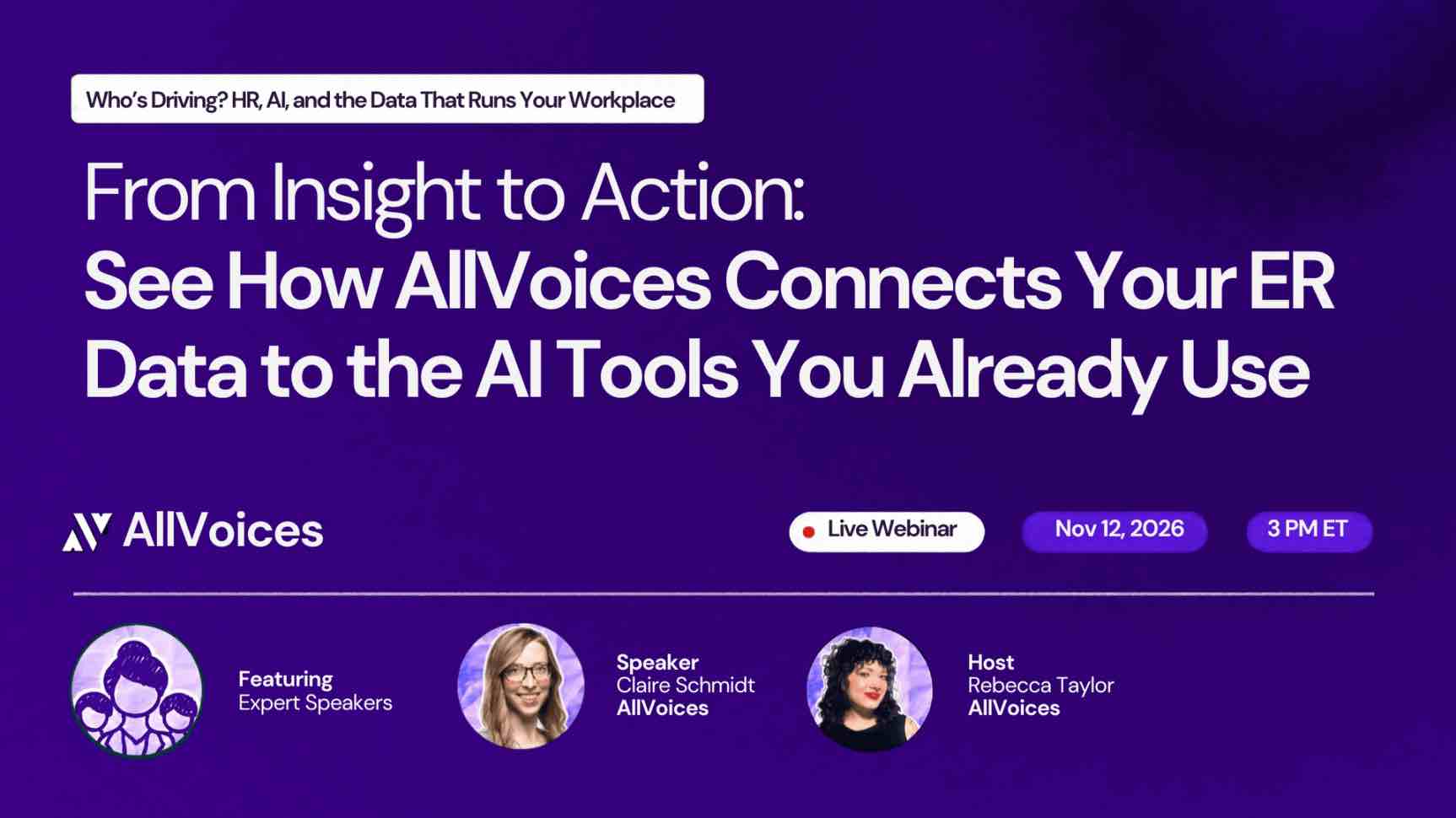
Our next webinar
Frequently asked questions

Got more questions? Email us at support@allvoices.co and we'll respond ASAP.

No items found.
Frequently asked questions

Got more questions? Email us at support@allvoices.co and we'll respond ASAP.

No items found.
Chris Moreland, Chief Executive Officer and President of Moreland Accord- Understanding and Defining DEI
Episode 292
About This Episode
In this episode of Reimagining Company Culture, we’re chatting with Chris Moreland, Chief Executive Officer and President of Moreland Accord. He has an established track record of performance and execution at Fortune 500 icons like Vizient, Microsoft, Expedia, General Electric, Johnson & Johnson, Pepsi, and Mobil. Tune in to learn Chris’ thoughts on investing in manager effectiveness, the unique role of CEO and senior leadership, dispelling DEIB conversations, and more!
About The Guest
Chris is known for possessing a contagious regard for winning, a bias for action, and a healthy disrespect for insurmountable challenges. Street Smart C-Level Leader with a diverse industry background. He is an indispensible partner for innovative organizations, people development, and building teams. Chris is best known for leading organizations through change, developing innovative solutions, and deciphering ambiguity. He has an established track record of performance and execution at Fortune 500 icons like Vizient, Microsoft, Expedia, General Electric, Johnson & Johnson, Pepsi, and Mobil.
Episode Transcription

On a recent episode of Reimagining Company Culture, the conversation turned to defining DEI in operational terms that hold up across cycles. The guest, Chris Moreland, brought direct experience to the topic from their day-to-day work, and the conversation moved past the talking points most People teams have heard a hundred times. This recap pulls the practical thread of the discussion together and translates it into the workflows HR leaders are running today.

Chris's background sets the context for how Chris thinks about this work. Chris is known for possessing a contagious regard for winning, a bias for action, and a healthy disrespect for insurmountable challenges. Street Smart C-Level Leader with a diverse industry background. He is an indispensible partner for innovative organizations, people development, and building teams. Chris is best known for leading organizations through change, developing inno. That experience shapes the perspective the episode brings to defining DEI in operational terms that hold up across cycles, and the recap below stays grounded in the workflows leaders are running, not abstractions.

The conversation touches on the basics any People team is already managing, including unconscious bias in the workplace and workforce analysis fundamentals. The recap below assumes that grounding and focuses on the operating moves leaders make on top of it.

Most of the framework below holds up across industries and company stages. The specifics vary; the underlying mechanics rarely do.

Why DEI definitions need operational rigor, not slogans

DEI work that depends on shared assumptions about what the words mean fails the moment those assumptions get tested. The companies that survive political and economic cycles are the ones that defined DEI in operational terms, what we measure, how we report, what we change, and stopped relying on shared interpretation.

Chris's view from C-level operating roles points at the practical fix. Replace the slogans with operating definitions. Define diversity by representation across named cohorts. Define equity by gap closure on named metrics. Define inclusion by survey items with named thresholds. Once the words have operating definitions, the work survives whatever interpretation cycle is happening externally.

How leaders work through defining DEI in operational terms that hold up across cycles

How do you define inclusion in measurable terms?

Through validated survey items with thresholds. Inclusion is not feelings; it is whether employees report comparable experience across cohorts. Validated items, psychological safety, voice, growth access, segmented by demographic, with thresholds set against benchmarks, give the company a measurable definition.

guidance is consistent that operating definitions of inclusion outperform aspirational ones in both retention and legal defensibility.

How do you keep DEI definitions consistent across leadership change?

By documenting them in policy, not just in goals. Policies survive turnover. Goals reset with each new leader. DEI definitions in compensation policy, in promotion criteria, in vendor requirements, those are what hold across cycles.

Companies that put definitions only in OKRs lose them at the next OKR refresh.

What actually works in practice

The pattern across companies that handle defining DEI in operational terms that hold up across cycles well comes down to three operational habits.

  • Define DEI in operating terms, not slogans. Operating definitions survive cycles. Slogans do not.
  • Embed the definitions in policy, not goals. Policy survives turnover; goals reset.
  • Report against the definitions consistently. Consistent reporting is the credibility floor. Without it, the definitions drift.

None of these are aspirational. They are checklists the strongest People teams run on a cadence, and the consistency is what makes the difference.

What looks like a culture decision from the outside is usually the cumulative effect of those three habits, applied without theatrics.

This pattern shows up alongside familiar tools like untapped talent pools. The combination is what makes the operating model durable.

Where Employee Relations fits

AllVoices human resources solution programs that operationalize DEI rely on infrastructure. AllVoices data and insights dashboard measures against the definitions. AllVoices anonymous reporting tool captures the signals before they harden. AllVoices DEI hotline provides the named channel.

The companies pulling this off rarely run it on memory. They run it on infrastructure. AllVoices HR case management platform centralizes the case data; AllVoices data and insights dashboard surfaces the patterns nobody catches manually; AllVoices Vera AI co-pilot for ER teams accelerates the response time so the work is finishable. Together they cover the operating layer that this episode keeps pointing at.

How does ER apply DEI definitions consistently?

By keeping the case standards aligned with the definitions. AllVoices Vera AI co-pilot ensures that closeout language references the same standards consistently. The result is that employees see the definitions applied across thousands of touchpoints, not just in annual statements.

The supporting research is consistent. Independent analysis from Catalyst guidance on genuine inclusion policies points the same direction the episode does. The combination of operating discipline and outside data is what gets People leaders past the slogan stage.

The takeaway holds across companies of different sizes and industries. The teams that turn this episode's lesson into operating practice are the ones that name a target metric, run it on a cadence, and refuse to let activity stand in for outcomes. The metric does not have to be elaborate. It has to be visible to the people who can move it, and reviewed often enough that nothing falls off the radar for a quarter.

The other consistent pattern is that the work compounds. Year one of any of these practices feels like overhead. Year three is when the retention, engagement, and case-data signals start telling a clearly different story. People leaders who hold the line through the early part of the curve tend to be the ones who have the receipts when leadership asks for evidence later.

One more pattern worth naming: the People teams that scale this work fast share a common move. They put the operating habit on the same dashboard as the business metric it supports. Retention sits next to revenue. Case cycle time sits next to pipeline health. Engagement sits next to product velocity. The dashboards reinforce that this work is operations, not enrichment, and the cross-functional partners who see those side-by-side numbers stop questioning the spend within a quarter.

That dashboard discipline is also what survives leadership change. Whoever inherits the function inherits the dashboard, and the metrics keep reporting whether the new leader champions them or not. The work that lives only in personal commitment dies when the personal commitment moves on; the work that lives in shared operating systems keeps reporting itself.

Frequently Asked Questions About Defining Dei In Operational Terms That Hold Up Across Cycles

Why do most DEI definitions fail under pressure?

Because they were never written down operationally. Shared assumptions hold under stable conditions and collapse under pressure. Operating definitions hold.

Should DEI metrics be public?

Aggregated yes, individual no. Public aggregated reporting builds credibility. Private reporting feeds skepticism.

How do you define equity in compensation?

By regression analysis on pay, controlling for legitimate job-related factors. Equity is achieved when unexplained gaps are within a defined threshold and remediated when they exceed it.

Can DEI work survive political pressure?

Yes, when it is defined operationally. Operationally defined DEI is performance work, and performance work survives political cycles. Sentiment-defined DEI does not.

What's the most common DEI definition mistake?

Using the words without defining them. Companies that use 'inclusion' without specifying what they measure end up with strategies their critics can interpret freely.

The Bottom Line for HR Leaders

Chris's experience as a CEO and operator surfaces the simplest fix to the most common DEI failure pattern. Define the words operationally. Measure against the definitions. Embed them in policy. Report against them consistently.

Slogans do not survive scrutiny. Operating definitions do.

See how AllVoices supports the kind of culture work this episode is about.

Want to learn more?
See the power of AllVoices today
Thank you! We look forward to meeting you soon
Oops! Something went wrong while submitting the form.
Frequently asked questions

Got more questions? Email us at support@allvoices.co and we'll respond ASAP.

No items found.
Frequently asked questions

Got more questions? Email us at support@allvoices.co and we'll respond ASAP.

No items found.