About This Episode
In this episode of Reimagining Company Culture, we’re chatting with Chloe Drew, Chief People Officer at Eden Health. Chloe is a senior human and social capital executive with a track record of building and leading strong diverse teams motivated by a shared vision and set of goals.
About The Guest
Chloe Drew is the Chief People Officer at Eden Health. She is a senior human and social capital executive with a track record of building and leading strong diverse teams motivated by a shared vision and set of goals. Prior to Eden Health, Chloe was the Chief of Staff for the Markle Foundation where she re-designed and led the HR function as well as a strategic advisor to the CEO. She also served as the Interim Chief People Officer and President of Philanthropy & Diversity at Compass, leading a team of 75 across talent acquisition, talent management, total rewards and HR functions. Chloe is deeply committed to building human centered organizations grounded in core values of inclusion, collaboration and community impact. Chloe earned an A.B. from Harvard College in History and Literature. She has served on nonprofit boards including Wellesley College Centers for Women, Latino Justice, Dance Theatre of Harlem, Emerge America and Oakland Vote. She lives in Brooklyn with her husband and two young children.
Episode Breakdown

Chloe Drew is the Chief People Officer at Eden Health, a senior human capital executive with a track record of building teams motivated by shared vision. Before Eden, she was Chief of Staff at the Markle Foundation and led HR functions across high-stakes organizations. On Reimagining Company Culture, she joined us to talk about empathy-driven environments in healthcare.

Her view is that healthcare HR work is uniquely demanding because the workforce itself is caring for others under pressure. The discipline of building empathy into systems, not just speeches, is what determines whether clinicians and support staff stay engaged or burn out at industry-leading rates.

Why Healthcare Workplaces Need Empathy as Infrastructure

Healthcare workforces are under pressure that most other industries do not see. SHRM research on workplace burnout found that 44 percent of U.S. employees feel burned out at work. In healthcare, the rates are higher and the consequences ripple into patient outcomes.

Chloe described the trap. Healthcare HR leaders default to wellness perks because they are easier to launch than systemic change. But the actual drivers of healthcare burnout are workload, manager skill, and psychological safety, not the absence of an EAP.

Her framing is that empathy must be designed into staffing, scheduling, manager training, and feedback systems. Otherwise the wellness investments are bandages on structural wounds.

What also matters is recognizing that empathy starts with leadership. When leaders model rest, healthy boundaries, and honest acknowledgment of hard moments, the rest of the organization gets permission to do the same.

How Do You Build Empathy Into Healthcare HR?

What is the first move for a healthcare HR team?

Chloe recommends auditing manager workload alongside employee workload. Most healthcare burnout investigations focus on clinicians and miss that managers are equally overloaded. Fixing manager bandwidth is what enables them to support their teams effectively.

How do you handle empathy at scale across hospital systems?

By codifying it into the standard of care for the workforce itself. Mentoring programs, structured peer support, and explicit time for processing hard cases all scale empathy beyond what any individual leader can do alone.

What Actually Works in Healthcare HR Empathy

Train managers as the front line of empathy

Most clinicians experience the system through their manager. Investing in manager listening skills, conflict resolution, and recognition behaviors moves engagement scores faster than any centralized program.

Build structured peer support

Empathy at scale requires peer networks, not just leader interventions. Coaching circles and peer support groups give staff space to process the work without making it the manager's full burden.

Tie empathy to operational decisions

Schedules, staffing ratios, and call patterns are where empathy gets tested. Programs that name those operational decisions as empathy issues outperform programs that treat empathy as a soft topic.

Where Employee Relations Fits

ER systems are critical in healthcare because the consequences of unaddressed concerns are higher. AllVoices' Healthcare solution and our workplace hotline product give HR a clear, trusted way for staff to report concerns about safety, harassment, or burnout before they affect patient care.

How does ER tooling support empathy in healthcare?

It captures the most sensitive concerns from a workforce that often feels they cannot speak up without consequences. Anonymous channels, structured intake, and clear resolution pathways are what give clinicians and support staff confidence that the system actually listens.

Frequently Asked Questions About Empathy in Healthcare Workplaces

Why is empathy important in healthcare HR?

Because healthcare staff are caring for others under pressure. Empathy from HR systems shapes whether the workforce can sustain that care over years rather than burning out within months.

What are the leading causes of healthcare burnout?

Workload, scheduling demands, weak manager support, lack of psychological safety, and the cumulative emotional load of patient care. Wellness perks rarely address any of these directly.

How do you measure empathy in a healthcare workplace?

Track retention by manager and unit, voluntary attrition, sick day patterns, engagement survey responses on belonging and support, and the volume of concerns raised through ER channels.

What role does scheduling play in empathy?

Schedules are the most concrete expression of how a healthcare system values its workforce. Empathy-driven scheduling balances coverage with rest, predictability with flexibility, and respects the human limits of clinical work.

How do you handle compassion fatigue in HR teams?

By rotating high-emotional-load work, capping case loads, and giving HR teams their own peer support. HR cannot sustain empathy externally if internally the team is depleted.

What is the role of leadership in healthcare empathy?

Leadership sets the ceiling. When senior leaders model healthy boundaries and acknowledge the emotional weight of clinical work, the rest of the system follows. When they do not, no centralized program can compensate.

The Bottom Line for HR Leaders

Chloe's framing is grounded in healthcare HR work that has to hold up under unique pressure. Empathy in healthcare is not a value statement. It is an operating discipline that determines whether the workforce sustains care or collapses under it.

The leaders who get this right share a few habits. They audit manager workload alongside employee workload. They build structured peer support. They tie empathy to operational decisions like staffing and scheduling. And they treat ER tooling as part of the empathy infrastructure, not separate from it.

Healthcare systems that hold this discipline produce a different kind of workforce. Clinicians stay longer, engage deeper, and refer their colleagues. Patient outcomes follow.

Industry research keeps reinforcing this. SHRM research on workplace mental health makes the case that workload realism and manager skill are the strongest predictors of healthy, sustainable teams. Healthcare workforces feel that pattern most acutely.

Across the conversation, the throughline was that empathy at scale requires design. The systems that hold empathy through hard quarters are the ones that have been built deliberately for it, not the ones that hope individual leaders will produce it on their own.

Strong empathy programs also produce a quieter benefit. Healthcare workers refer their colleagues, stay through hard quarters, and develop the kind of organizational loyalty that translates into better patient care.

The companies that get this right also invest in HR teams that can sustain the work. Healthcare HR is among the most demanding HR work in any industry, and protecting HR's own bandwidth is part of the empathy infrastructure.

Across the conversation, the throughline was that empathy is operational. The systems that produce it are visible, and the ones that lack it produce burnout that becomes visible eventually.

Healthcare HR teams that invest in modern listening infrastructure also gain a sharper view of where empathy is breaking down by unit and by manager. That data is part of what turns broad empathy commitments into operational improvements that staff can feel quarter over quarter.

The companies that hold this work over years end up with a different reputation in their markets. Top clinicians notice which systems treat their workforce with care, and that reputation becomes a recruiting asset that compounds.

Empathy in healthcare is also visible in how systems handle hard moments, like a patient outcome that stings or a colleague who is struggling. Those moments shape culture more than any wellness program could.

The most resilient healthcare workforces are the ones whose leaders show up for those hard moments without making it about themselves.

See how AllVoices supports HR teams building empathy-driven workplaces.
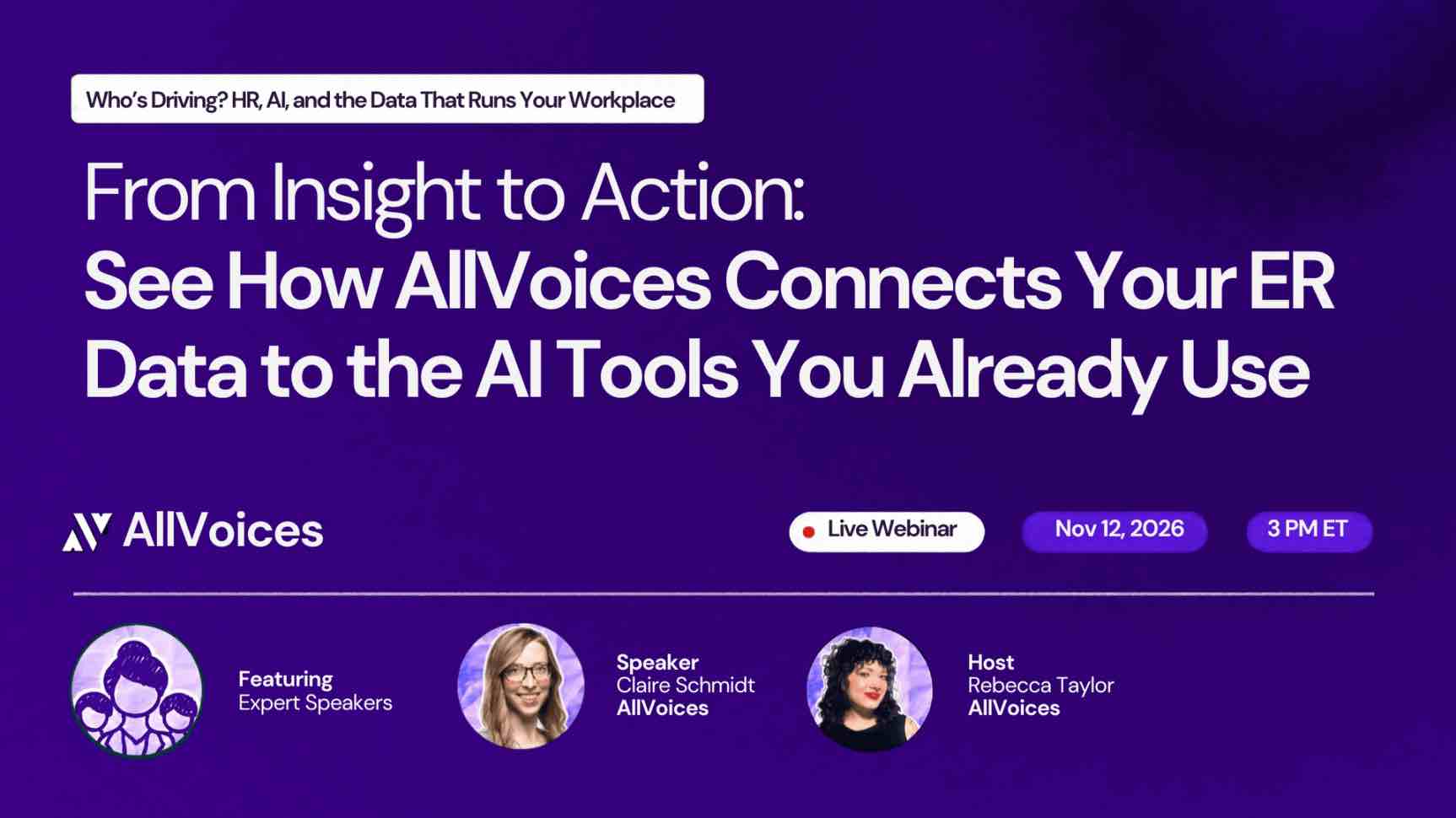
Our next webinar
Frequently asked questions

Got more questions? Email us at support@allvoices.co and we'll respond ASAP.

No items found.
Frequently asked questions

Got more questions? Email us at support@allvoices.co and we'll respond ASAP.

No items found.
Chloe Drew, Chief People Officer at Eden Health - Creating an Empathy Driven Environment in Healthcare
Episode 143
About This Episode
In this episode of Reimagining Company Culture, we’re chatting with Chloe Drew, Chief People Officer at Eden Health. Chloe is a senior human and social capital executive with a track record of building and leading strong diverse teams motivated by a shared vision and set of goals.
About The Guest
Chloe Drew is the Chief People Officer at Eden Health. She is a senior human and social capital executive with a track record of building and leading strong diverse teams motivated by a shared vision and set of goals. Prior to Eden Health, Chloe was the Chief of Staff for the Markle Foundation where she re-designed and led the HR function as well as a strategic advisor to the CEO. She also served as the Interim Chief People Officer and President of Philanthropy & Diversity at Compass, leading a team of 75 across talent acquisition, talent management, total rewards and HR functions. Chloe is deeply committed to building human centered organizations grounded in core values of inclusion, collaboration and community impact. Chloe earned an A.B. from Harvard College in History and Literature. She has served on nonprofit boards including Wellesley College Centers for Women, Latino Justice, Dance Theatre of Harlem, Emerge America and Oakland Vote. She lives in Brooklyn with her husband and two young children.
Episode Transcription

Chloe Drew is the Chief People Officer at Eden Health, a senior human capital executive with a track record of building teams motivated by shared vision. Before Eden, she was Chief of Staff at the Markle Foundation and led HR functions across high-stakes organizations. On Reimagining Company Culture, she joined us to talk about empathy-driven environments in healthcare.

Her view is that healthcare HR work is uniquely demanding because the workforce itself is caring for others under pressure. The discipline of building empathy into systems, not just speeches, is what determines whether clinicians and support staff stay engaged or burn out at industry-leading rates.

Why Healthcare Workplaces Need Empathy as Infrastructure

Healthcare workforces are under pressure that most other industries do not see. SHRM research on workplace burnout found that 44 percent of U.S. employees feel burned out at work. In healthcare, the rates are higher and the consequences ripple into patient outcomes.

Chloe described the trap. Healthcare HR leaders default to wellness perks because they are easier to launch than systemic change. But the actual drivers of healthcare burnout are workload, manager skill, and psychological safety, not the absence of an EAP.

Her framing is that empathy must be designed into staffing, scheduling, manager training, and feedback systems. Otherwise the wellness investments are bandages on structural wounds.

What also matters is recognizing that empathy starts with leadership. When leaders model rest, healthy boundaries, and honest acknowledgment of hard moments, the rest of the organization gets permission to do the same.

How Do You Build Empathy Into Healthcare HR?

What is the first move for a healthcare HR team?

Chloe recommends auditing manager workload alongside employee workload. Most healthcare burnout investigations focus on clinicians and miss that managers are equally overloaded. Fixing manager bandwidth is what enables them to support their teams effectively.

How do you handle empathy at scale across hospital systems?

By codifying it into the standard of care for the workforce itself. Mentoring programs, structured peer support, and explicit time for processing hard cases all scale empathy beyond what any individual leader can do alone.

What Actually Works in Healthcare HR Empathy

Train managers as the front line of empathy

Most clinicians experience the system through their manager. Investing in manager listening skills, conflict resolution, and recognition behaviors moves engagement scores faster than any centralized program.

Build structured peer support

Empathy at scale requires peer networks, not just leader interventions. Coaching circles and peer support groups give staff space to process the work without making it the manager's full burden.

Tie empathy to operational decisions

Schedules, staffing ratios, and call patterns are where empathy gets tested. Programs that name those operational decisions as empathy issues outperform programs that treat empathy as a soft topic.

Where Employee Relations Fits

ER systems are critical in healthcare because the consequences of unaddressed concerns are higher. AllVoices' Healthcare solution and our workplace hotline product give HR a clear, trusted way for staff to report concerns about safety, harassment, or burnout before they affect patient care.

How does ER tooling support empathy in healthcare?

It captures the most sensitive concerns from a workforce that often feels they cannot speak up without consequences. Anonymous channels, structured intake, and clear resolution pathways are what give clinicians and support staff confidence that the system actually listens.

Frequently Asked Questions About Empathy in Healthcare Workplaces

Why is empathy important in healthcare HR?

Because healthcare staff are caring for others under pressure. Empathy from HR systems shapes whether the workforce can sustain that care over years rather than burning out within months.

What are the leading causes of healthcare burnout?

Workload, scheduling demands, weak manager support, lack of psychological safety, and the cumulative emotional load of patient care. Wellness perks rarely address any of these directly.

How do you measure empathy in a healthcare workplace?

Track retention by manager and unit, voluntary attrition, sick day patterns, engagement survey responses on belonging and support, and the volume of concerns raised through ER channels.

What role does scheduling play in empathy?

Schedules are the most concrete expression of how a healthcare system values its workforce. Empathy-driven scheduling balances coverage with rest, predictability with flexibility, and respects the human limits of clinical work.

How do you handle compassion fatigue in HR teams?

By rotating high-emotional-load work, capping case loads, and giving HR teams their own peer support. HR cannot sustain empathy externally if internally the team is depleted.

What is the role of leadership in healthcare empathy?

Leadership sets the ceiling. When senior leaders model healthy boundaries and acknowledge the emotional weight of clinical work, the rest of the system follows. When they do not, no centralized program can compensate.

The Bottom Line for HR Leaders

Chloe's framing is grounded in healthcare HR work that has to hold up under unique pressure. Empathy in healthcare is not a value statement. It is an operating discipline that determines whether the workforce sustains care or collapses under it.

The leaders who get this right share a few habits. They audit manager workload alongside employee workload. They build structured peer support. They tie empathy to operational decisions like staffing and scheduling. And they treat ER tooling as part of the empathy infrastructure, not separate from it.

Healthcare systems that hold this discipline produce a different kind of workforce. Clinicians stay longer, engage deeper, and refer their colleagues. Patient outcomes follow.

Industry research keeps reinforcing this. SHRM research on workplace mental health makes the case that workload realism and manager skill are the strongest predictors of healthy, sustainable teams. Healthcare workforces feel that pattern most acutely.

Across the conversation, the throughline was that empathy at scale requires design. The systems that hold empathy through hard quarters are the ones that have been built deliberately for it, not the ones that hope individual leaders will produce it on their own.

Strong empathy programs also produce a quieter benefit. Healthcare workers refer their colleagues, stay through hard quarters, and develop the kind of organizational loyalty that translates into better patient care.

The companies that get this right also invest in HR teams that can sustain the work. Healthcare HR is among the most demanding HR work in any industry, and protecting HR's own bandwidth is part of the empathy infrastructure.

Across the conversation, the throughline was that empathy is operational. The systems that produce it are visible, and the ones that lack it produce burnout that becomes visible eventually.

Healthcare HR teams that invest in modern listening infrastructure also gain a sharper view of where empathy is breaking down by unit and by manager. That data is part of what turns broad empathy commitments into operational improvements that staff can feel quarter over quarter.

The companies that hold this work over years end up with a different reputation in their markets. Top clinicians notice which systems treat their workforce with care, and that reputation becomes a recruiting asset that compounds.

Empathy in healthcare is also visible in how systems handle hard moments, like a patient outcome that stings or a colleague who is struggling. Those moments shape culture more than any wellness program could.

The most resilient healthcare workforces are the ones whose leaders show up for those hard moments without making it about themselves.

See how AllVoices supports HR teams building empathy-driven workplaces.

Want to learn more?
See the power of AllVoices today
Thank you! We look forward to meeting you soon
Oops! Something went wrong while submitting the form.
Frequently asked questions

Got more questions? Email us at support@allvoices.co and we'll respond ASAP.

No items found.
Frequently asked questions

Got more questions? Email us at support@allvoices.co and we'll respond ASAP.

No items found.