About This Episode
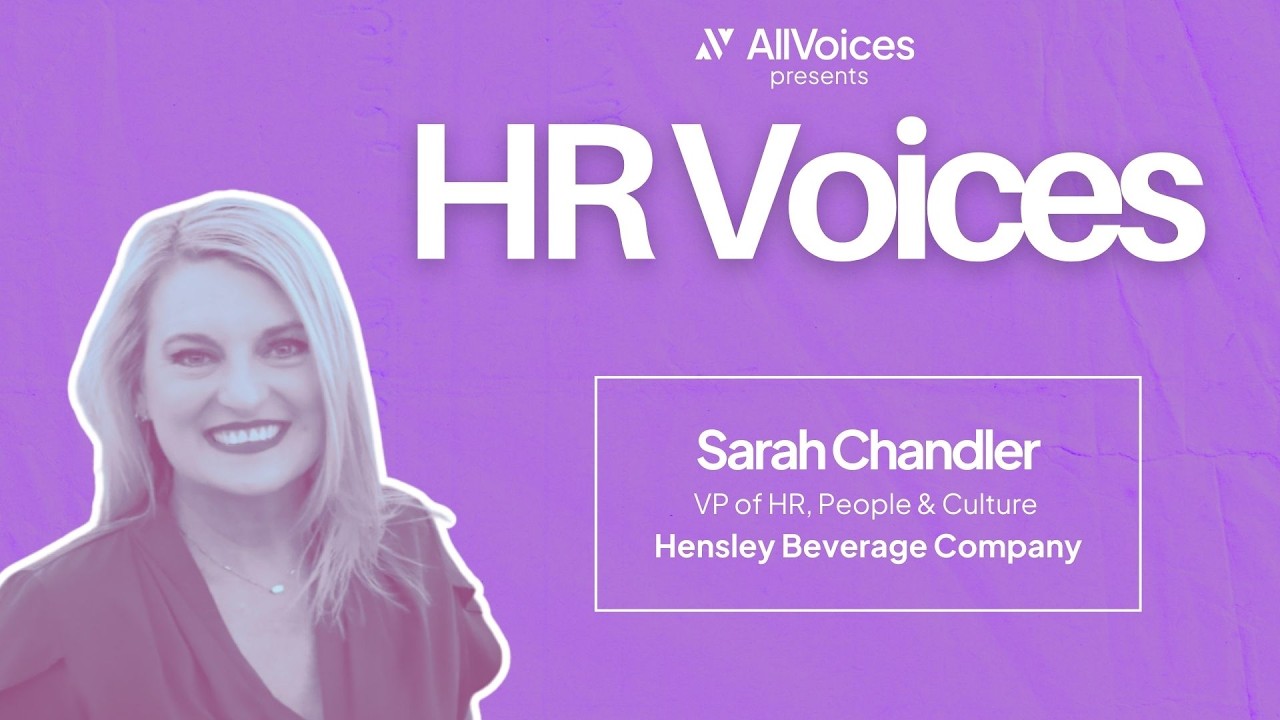
Company-wide keystroke, mouse and screenshot tracking sparks employee backlash, privacy concerns and attrition risk. Sarah Chandler, VP of HR at Hensley Beverage Company, joins Rebecca Taylor to unpack how seasoned HR leaders influence from the middle — starting with the business need, then addressing trust — to design guardrails that are fair, compliant and actually useful. She covers when monitoring may be appropriate, how to define thresholds and ROI, and why compliance is the floor rather than the ceiling.
About The Guest
Sarah Chandler is VP of HR at Hensley Beverage Company. Much of her work is the influence problem rather than the policy problem: what HR can still do when it is brought into a monitoring rollout late, after the tool is bought and the announcement is drafted. Her sequence is to establish the business need first and the trust question second, define thresholds and ROI before deployment rather than after the first complaint, and treat legal compliance as the minimum bar rather than the goal.
Episode Breakdown

The software was already bought when HR heard about it. In this HR Voices scenario, host Rebecca Taylor walked Sarah Chandler, VP of HR at Hensley Beverage Company, through a rollout that tracks keystrokes, mouse movements, and active screen time for every remote worker, plus random screenshots through the day. Employees call it invasive. Some threaten to quit, and others ask whether it breaks state privacy law.

Sarah’s first instinct was a distinction between capability and judgment. A company can watch every minute of a remote employee’s day, and AI tools keep making that easier. Whether it should is a separate question, and it is the one HR is paid to ask. Her answer was not to kill the program. It was to slow the leader down, find the business problem underneath, and write rules for the data before anyone gets disciplined by it.

Why HR Has to Earn the Trust Conversation First

Sarah argues that HR can lose the room by opening with empathy. Leaders already expect HR to take the employee’s side. She starts with the business instead: the result the leader wants and the problem the software is meant to solve.

Only then does she bring up trust. People who feel psychologically safe on the job tend to produce more and stay longer, and that case lands better once the leader knows HR heard the real need. A leader tempted to micromanage a remote team still has a need; HR has to address it before it can redirect it.

Her deeper point is about what gets measured. Sarah wants managers judging output, not the path to it. Keystrokes and screenshots measure activity, which is a different thing from performance standards for remote work. Sarah added that remote employees are not losing time at the water cooler, so any idle-time limit should allow for rest, focus, and the transition between tasks.

What Late Involvement Costs and How HR Recovers

The scenario is a familiar one. Leadership buys a tool, announces it, and HR finds out when the complaints arrive. Rebecca called that a change management failure: by launch day, employees should already know what is changing and why, and should have had a chance to weigh in.

Sarah does not dwell on who skipped the step. She asks what the software is for, whether it could apply only when productivity falls below a set threshold, and what return the reports show so far. She also wants to know who is complaining. If the loudest objections come from high performers, the company is looking at the kind of employee turnover that hurts most.

Then comes the debrief. Once the dust settles, Sarah documents what the company learned and asks to be in the room before the next big change.

Rebecca raised a cost that rarely shows up in the business case. As a recruiter, she pulled salespeople out of a company known for screen tracking with one pitch: we do not track your screens. At the same pay, that was enough. Rebecca called that talent pool vulnerable, and Sarah agreed. A monitored workforce is a recruiting target.

What Actually Works

Start With the Employee Who Spoke Up

Sarah would go to the complaining employee before leadership. She asks for the concern in writing first, because writing tends to cool the emotion and gives HR a record. Then she asks how the tool was introduced and why the employee thinks it exists. She also separates the message from the messenger. One person complaining usually means a quieter group feels the same way, and she has noticed that younger employees react more sharply to accountability tactics like this one. Five generations now share the workplace, and their ideas of privacy differ.

Write the Rules for How the Data Gets Used

Sarah’s biggest concern is not the monitoring itself. It is what happens next. She wants leaders to define when the data can inform hiring, firing, promotion, demotion, bonuses, stretch assignments, and corrective action, and to show those decisions are fair, consistent, and free of retaliation for raising concerns. She also wants an appeal path so employees can tell their side, the same way an investigation into time theft would hear from the accused. A formal grievance process is the natural model. In Sarah’s view, HR does not make the decision; it shapes how the decision gets made.

Put a Review Date on the Rollout

Sarah closes the scenario by asking leaders for a deal: support the policy now, and return to it after 90 days, six months, and a year to check whether it delivered what it promised. She shared a real example. When her own HR team moved under a new executive who asked everyone to keep a time diary, she coached the team to treat it as an opportunity to showcase their work, since the same data that exposes weak habits also exposes strong ones.

Where Employee Relations Fits

The privacy objection deserves a careful answer. Sarah’s view is that work time on company equipment carries little expectation of privacy, but some states still set rules for how monitoring is disclosed. New York Civil Rights Law Section 52-c, for example, requires employers that monitor phone, email, or internet use to give written notice at hiring, get an acknowledgment, and post the notice where employees can see it. Legal clearance is the floor, not the ceiling.

The research points the same way. A 2022 Harvard Business Review article by Chase Thiel and colleagues notes that global demand for monitoring software more than doubled in April 2020, and its authors argue that monitoring makes employees more likely to break rules.

Every complaint, appeal, and decision drawn from monitoring data needs one record. Teams that keep those conversations in one documented HR case system can show a regulator, or an employee, how the data was used. Rebecca suggested opening the door wider with anonymous surveys and town halls, so feedback from quieter employees reaches HR before it turns into resignations. A sibling episode, in which an employee staged his screen to fool undisclosed monitoring, shows what happens when the trust runs out on both sides.

Frequently Asked Questions About Employee Monitoring Software

Should HR push back when leadership buys monitoring software without asking?

Not by blocking it. Sarah starts by asking what business problem the tool solves, then raises trust and retention once the leader feels heard. Pushback lands better as questions than as objections.

Is it legal to track keystrokes and take screenshots of remote employees?

It depends on the state. New York, for example, requires written notice at hiring, an employee acknowledgment, and a posted notice for phone, email, or internet monitoring. Legal clearance is the minimum test, not the decision.

How should HR handle the first employee complaint about monitoring?

Listen first. Sarah asks for the concern in writing, asks how the rollout was explained, and helps the employee see the full picture. One complaint usually means others feel the same way.

How can monitoring data be used fairly in employment decisions?

Define the rules before anyone is disciplined. Sarah wants clear criteria for when the data informs hiring, firing, promotion, bonuses, or corrective action, and an appeal process so employees can explain their side.

When should a company review an employee monitoring program?

Set the dates at launch. Sarah recommends returning to the program at 90 days, six months, and one year to check whether it delivered the return leaders expected and what it cost in trust.

The Bottom Line for HR Leaders

Sarah’s parting warning was that the easiest way to manage people is rarely the best one. AI will keep offering systems that watch employees for managers, and each one will look efficient at first. The cost shows up later, in resignations, in recruiter pitches, and in complaints HR hears too late to shape the rollout.

Her answer is a sequence. Respect the business need, write the rules for the data, give employees a way to appeal, and set a date to check the results. Sarah’s last request was that People teams look at every policy and practice “through the human lens,” because human beings are the ones it touches.

See how AllVoices helps HR teams document every complaint and decision when a new policy meets employee pushback.

Our next webinar
Frequently asked questions

Got more questions? Email us at support@allvoices.co and we'll respond ASAP.

No items found.
Frequently asked questions

Got more questions? Email us at support@allvoices.co and we'll respond ASAP.

No items found.

Keystrokes, Screenshots, and Trust: An HR Playbook for Employee Monitoring

About the guest

Sarah Chandler is VP of HR at Hensley Beverage Company. Much of her work is the influence problem rather than the policy problem: what HR can still do when it is brought into a monitoring rollout late, after the tool is bought and the announcement is drafted. Her sequence is to establish the business need first and the trust question second, define thresholds and ROI before deployment rather than after the first complaint, and treat legal compliance as the minimum bar rather than the goal.

Episode Breakdown

The software was already bought when HR heard about it. In this HR Voices scenario, host Rebecca Taylor walked Sarah Chandler, VP of HR at Hensley Beverage Company, through a rollout that tracks keystrokes, mouse movements, and active screen time for every remote worker, plus random screenshots through the day. Employees call it invasive. Some threaten to quit, and others ask whether it breaks state privacy law.

Sarah’s first instinct was a distinction between capability and judgment. A company can watch every minute of a remote employee’s day, and AI tools keep making that easier. Whether it should is a separate question, and it is the one HR is paid to ask. Her answer was not to kill the program. It was to slow the leader down, find the business problem underneath, and write rules for the data before anyone gets disciplined by it.

Why HR Has to Earn the Trust Conversation First

Sarah argues that HR can lose the room by opening with empathy. Leaders already expect HR to take the employee’s side. She starts with the business instead: the result the leader wants and the problem the software is meant to solve.

Only then does she bring up trust. People who feel psychologically safe on the job tend to produce more and stay longer, and that case lands better once the leader knows HR heard the real need. A leader tempted to micromanage a remote team still has a need; HR has to address it before it can redirect it.

Her deeper point is about what gets measured. Sarah wants managers judging output, not the path to it. Keystrokes and screenshots measure activity, which is a different thing from performance standards for remote work. Sarah added that remote employees are not losing time at the water cooler, so any idle-time limit should allow for rest, focus, and the transition between tasks.

What Late Involvement Costs and How HR Recovers

The scenario is a familiar one. Leadership buys a tool, announces it, and HR finds out when the complaints arrive. Rebecca called that a change management failure: by launch day, employees should already know what is changing and why, and should have had a chance to weigh in.

Sarah does not dwell on who skipped the step. She asks what the software is for, whether it could apply only when productivity falls below a set threshold, and what return the reports show so far. She also wants to know who is complaining. If the loudest objections come from high performers, the company is looking at the kind of employee turnover that hurts most.

Then comes the debrief. Once the dust settles, Sarah documents what the company learned and asks to be in the room before the next big change.

Rebecca raised a cost that rarely shows up in the business case. As a recruiter, she pulled salespeople out of a company known for screen tracking with one pitch: we do not track your screens. At the same pay, that was enough. Rebecca called that talent pool vulnerable, and Sarah agreed. A monitored workforce is a recruiting target.

What Actually Works

Start With the Employee Who Spoke Up

Sarah would go to the complaining employee before leadership. She asks for the concern in writing first, because writing tends to cool the emotion and gives HR a record. Then she asks how the tool was introduced and why the employee thinks it exists. She also separates the message from the messenger. One person complaining usually means a quieter group feels the same way, and she has noticed that younger employees react more sharply to accountability tactics like this one. Five generations now share the workplace, and their ideas of privacy differ.

Write the Rules for How the Data Gets Used

Sarah’s biggest concern is not the monitoring itself. It is what happens next. She wants leaders to define when the data can inform hiring, firing, promotion, demotion, bonuses, stretch assignments, and corrective action, and to show those decisions are fair, consistent, and free of retaliation for raising concerns. She also wants an appeal path so employees can tell their side, the same way an investigation into time theft would hear from the accused. A formal grievance process is the natural model. In Sarah’s view, HR does not make the decision; it shapes how the decision gets made.

Put a Review Date on the Rollout

Sarah closes the scenario by asking leaders for a deal: support the policy now, and return to it after 90 days, six months, and a year to check whether it delivered what it promised. She shared a real example. When her own HR team moved under a new executive who asked everyone to keep a time diary, she coached the team to treat it as an opportunity to showcase their work, since the same data that exposes weak habits also exposes strong ones.

Where Employee Relations Fits

The privacy objection deserves a careful answer. Sarah’s view is that work time on company equipment carries little expectation of privacy, but some states still set rules for how monitoring is disclosed. New York Civil Rights Law Section 52-c, for example, requires employers that monitor phone, email, or internet use to give written notice at hiring, get an acknowledgment, and post the notice where employees can see it. Legal clearance is the floor, not the ceiling.

The research points the same way. A 2022 Harvard Business Review article by Chase Thiel and colleagues notes that global demand for monitoring software more than doubled in April 2020, and its authors argue that monitoring makes employees more likely to break rules.

Every complaint, appeal, and decision drawn from monitoring data needs one record. Teams that keep those conversations in one documented HR case system can show a regulator, or an employee, how the data was used. Rebecca suggested opening the door wider with anonymous surveys and town halls, so feedback from quieter employees reaches HR before it turns into resignations. A sibling episode, in which an employee staged his screen to fool undisclosed monitoring, shows what happens when the trust runs out on both sides.

Frequently Asked Questions About Employee Monitoring Software

Should HR push back when leadership buys monitoring software without asking?

Not by blocking it. Sarah starts by asking what business problem the tool solves, then raises trust and retention once the leader feels heard. Pushback lands better as questions than as objections.

Is it legal to track keystrokes and take screenshots of remote employees?

It depends on the state. New York, for example, requires written notice at hiring, an employee acknowledgment, and a posted notice for phone, email, or internet monitoring. Legal clearance is the minimum test, not the decision.

How should HR handle the first employee complaint about monitoring?

Listen first. Sarah asks for the concern in writing, asks how the rollout was explained, and helps the employee see the full picture. One complaint usually means others feel the same way.

How can monitoring data be used fairly in employment decisions?

Define the rules before anyone is disciplined. Sarah wants clear criteria for when the data informs hiring, firing, promotion, bonuses, or corrective action, and an appeal process so employees can explain their side.

When should a company review an employee monitoring program?

Set the dates at launch. Sarah recommends returning to the program at 90 days, six months, and one year to check whether it delivered the return leaders expected and what it cost in trust.

The Bottom Line for HR Leaders

Sarah’s parting warning was that the easiest way to manage people is rarely the best one. AI will keep offering systems that watch employees for managers, and each one will look efficient at first. The cost shows up later, in resignations, in recruiter pitches, and in complaints HR hears too late to shape the rollout.

Her answer is a sequence. Respect the business need, write the rules for the data, give employees a way to appeal, and set a date to check the results. Sarah’s last request was that People teams look at every policy and practice “through the human lens,” because human beings are the ones it touches.

See how AllVoices helps HR teams document every complaint and decision when a new policy meets employee pushback.