About This Episode
In this episode of Reimagining Company Culture, we’re chatting with Robin Corralez, Global Senior Vice President of Human Resources at PandaDoc. As a hands-on, diversified, human resources leader, Robin creates sustained value in fast-paced, dynamic environments by building strong teams and identifying, assessing, and executing organizational initiatives that drive business success. Tune in to learn Robin’s thoughts on how to lead with empathy, approach big announcements, equip managers to empower their teams, and more!
About The Guest
Robin Corralez is the Global Senior Vice President of HR at PandaDoc the leading all-in-one document workflow automation platform. As a hands-on, diversified, human resources leader, Robin creates sustained value in fast-paced, dynamic environments by building strong teams and identifying, assessing, and executing organizational initiatives that drive business success. In her role at PandaDoc, she is focused on building a talented organization that will help scale the business while maintaining its best workplace culture.Robin’s Long form Bio: *(pronouns = she/her)*Robin Corralez is a hands-on, diversified, human resources leader focused on creating sustained value in fast-paced, dynamic environments by building strong teams and identifying, assessing, and executing organizational initiatives that drive business success aligned with the overall strategy. In her role at PandaDoc, she focuses on building a talented organization that will help scale their business from $20M to $100M while maintaining the best workplace culture possible. Her specialties include executive coaching and developing new leaders; sourcing, hiring and aligning "A" players in critical positions; creating and maintaining talent pipelines; leading change and enhancing employee relations; improving performance and organizational development; employment law; and achieving cost efficiencies through better utilization of resources. Robin is eager to share her tips for your audience and is the author of multiple articles on the topic of managing a remote-first, globally distributed workforce. Under Robin's direction, PandaDoc was honored with multiple awards such as Inc. Magazine's 2021-2020 Best Workplaces, 2021 Forbes 500 Best Start Up Employer, and Quartz Best Companies for Remote Workers.
Episode Breakdown

When we sat down with Robin Corralez, Global Senior Vice President of Human Resources at PandaDoc, for this episode of Reimagining Company Culture, the conversation focused on a skill that becomes more important the faster a company grows. Leading with empathy. Robin has built a career creating sustained value in fast-paced, dynamic environments by building strong teams and assessing organizational initiatives that drive business success. Her argument was that empathy is not a soft trait that companies can defer until later. It is the operating skill that determines whether change actually lands or quietly produces resentment.

Her advice was unusually concrete. Approach big announcements as moments that require deliberate design. Equip managers with the tools and language to support their teams. Treat the operating model around change as part of the leadership work, not as a one-time communication exercise.

Why Empathy Becomes More Important as Companies Scale Faster

Speed amplifies the cost of empathy missteps. A small company can absorb a clumsy announcement because the relationships are tight and the recovery is fast. A larger company cannot. has documented for years that the way leaders handle change communication shapes culture more than any single program HR can run.

Gallup data on engagement adds another layer. With global engagement at 21% and falling, the companies that handle change badly accelerate the decline. The ones that handle it well preserve the engagement they have built. Empathy is the operating skill that separates the two outcomes.

What Approaching Big Announcements Well Actually Looks Like

What is a big announcement?

A big announcement is any communication that materially affects how employees experience the company. Reorganizations. Strategy shifts. Compensation changes. Return-to-office policies. New leadership. Each of these requires deliberate design rather than a corporate email written in a hurry.

How do you structure a big announcement?

Strong announcements include four elements. The decision and what it means in plain language. The reasoning that explains why now. The acknowledgment of the impact on employees. The clear next steps and the channels for follow-up questions. The acknowledgment is the step most companies skip and the one that produces the biggest gap between leadership intent and employee experience.

What Actually Works When You Equip Managers to Support Their Teams

Principle 1: Train managers on the skills support requires

Real support is not a state of mind. It is a set of behaviors managers can be taught. Asking the team for input before sharing their own view. Trusting team members with consequential decisions. Following up to support without micromanaging. Management training on these specific skills produces the support leaders are asking for.

Principle 2: Give managers context, not just direction

Managers cannot support their teams if they do not understand the broader context. Strong programs share strategic context openly with the manager population, equip them with talking points for the conversations they will need to have, and create channels for them to ask questions and surface concerns. Without that context, managers default to relaying corporate messaging that lands flat.

Principle 3: Build the listening systems that catch support failures early

Support fails most often through inconsistent application. Strong programs use pulse surveys and confidential channels to catch the moments where teams feel under-supported before the disengagement compounds. The data lets the People team intervene at the manager level before the team-level scores drift.

Where Employee Relations Fits Into Empathic Change Leadership

Change produces friction. Some of that friction shows up as formal concerns. Employee relations is the function that catches those concerns and resolves them consistently across the organization. Without ER, large changes tend to produce inconsistent experiences across teams that erode the trust the change communication tried to build.

How ER supports empathic leadership in real time

The right ER function provides a confidential channel for change-related concerns, pattern data about which teams are struggling most with the change, and a consistent investigation and resolution process. Anonymous reporting tools become especially valuable during periods of change because they catch the issues employees are not yet ready to raise to a manager whose own role may also be in flux.

How to Avoid Common Mistakes in Big Announcements

Avoid leaks and selective disclosure

Information that leaks before the formal announcement creates anxiety, speculation, and disengagement among employees who do not yet have the full picture. Strong programs minimize the gap between leadership decision and announcement and treat confidentiality as a core operating discipline.

Avoid corporate language that softens the truth

Phrases like restructuring, optimizing, and aligning rarely land. Employees know what is happening. Strong programs name the change in plain language and explain the reasoning. The honesty preserves the trust corporate language would have eroded.

Frequently Asked Questions About Leading With Empathy

What does leading with empathy mean?

Leading with empathy means accurately understanding what employees are experiencing and designing decisions and communication around that understanding. It is operational rather than emotional. Empathic leaders ask better questions, listen for the real concerns, and adjust their approach based on what they learn.

How does empathy show up in compensation conversations?

Compensation conversations are one of the highest-stakes empathy moments. Strong leaders explain the decision clearly, acknowledge the disappointment if the news is not what the employee hoped, and provide clear paths forward where they exist. The conversation that goes well preserves the relationship the conversation that goes badly damages.

How do you measure the effectiveness of change communication?

Useful measures include pulse data taken in the days after the announcement, themes from open-ended survey responses, ER case patterns related to the change, and qualitative feedback from manager listening sessions. Together they describe whether the change is landing as intended.

What is the role of transformational leadership during change?

Transformational leadership matters during change because it requires leaders to take responsibility for the system they are operating in. Transformational leaders model the behaviors they want, acknowledge the impact of decisions on the people affected, and create the conditions for the rest of the organization to do the same.

How does employee engagement survive a big announcement?

Engagement survives big announcements when leaders communicate clearly, acknowledge the impact, equip managers to support their teams, and use listening systems to catch issues early. The combination is what protects the engagement employees brought into the change.

The Role of Manager Resourcing in Sustained Support

Investing in manager development as a strategic priority

Manager development is one of the highest-impact investments a People function can make. Strong programs treat it as strategic rather than as compliance training. The dividends show up in retention, engagement, and the ability of the company to absorb change without losing its best people.

Building peer cohorts of managers

Managers learn faster from other managers facing similar situations. Strong programs build peer cohorts where managers can workshop hard conversations, share what is working, and develop the operational skills the role requires. The cohorts become a multiplier on individual coaching investment.

The Bottom Line for HR Leaders

Robin Corralez's framing of empathic leadership is the right discipline for HR leaders trying to support their executive teams through fast change. The skill is operational rather than emotional. It produces measurable improvements in how change lands, how engagement holds up, and how trust survives across the organization.

HR leaders who want change to land well should invest in three things. Approach big announcements as moments that require deliberate design rather than as communication exercises. Equip managers with the context, training, and tools to support their teams. Wire in listening and employee relations infrastructure that catches issues early enough to repair them. With those in place, empathy becomes an operating feature of how the company actually leads through change.

See how AllVoices supports the listening and ER infrastructure behind empathic change leadership.
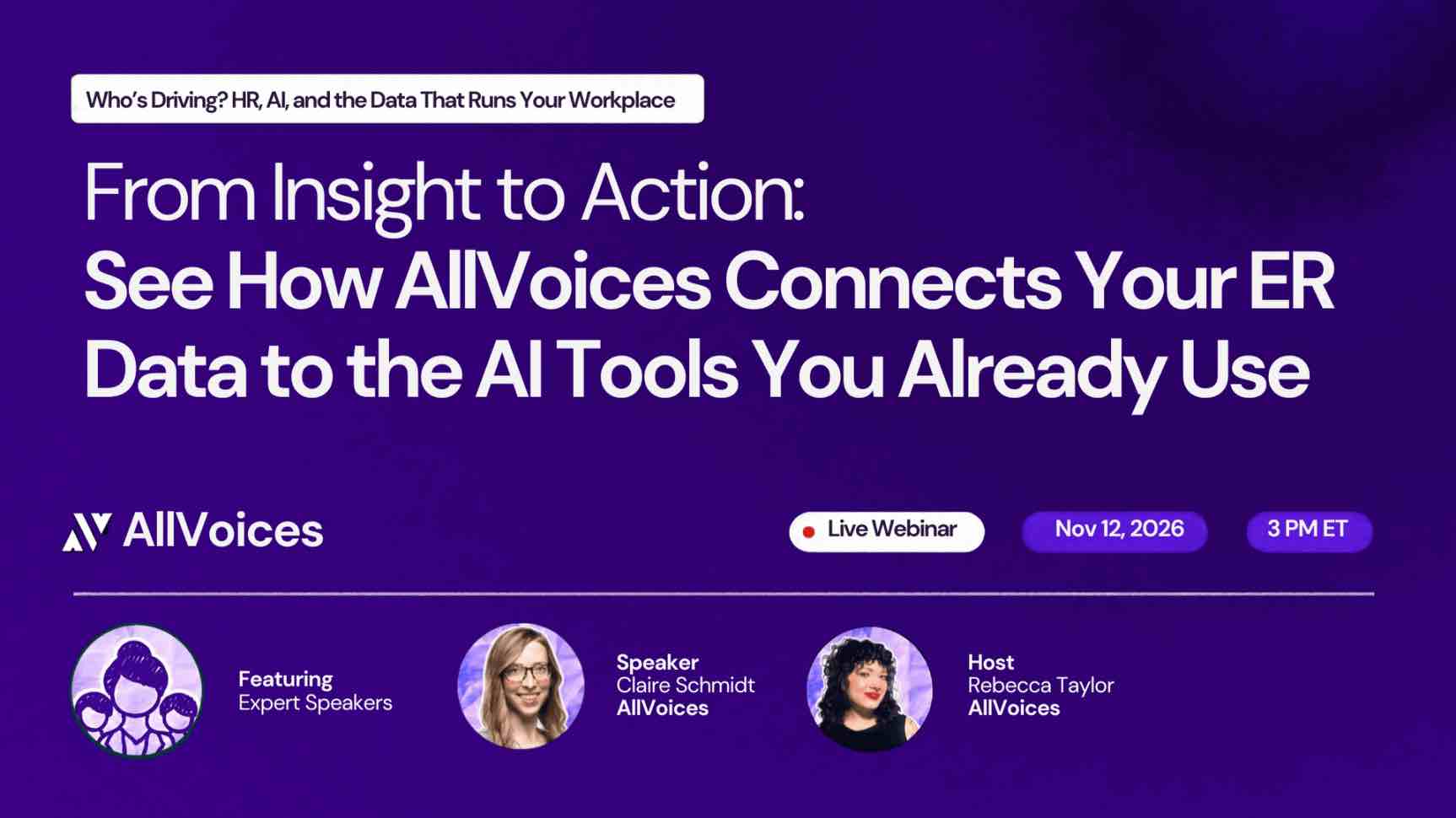
Our next webinar
Frequently asked questions

Got more questions? Email us at support@allvoices.co and we'll respond ASAP.

No items found.
Frequently asked questions

Got more questions? Email us at support@allvoices.co and we'll respond ASAP.

No items found.
Leading with Empathy- Robin Corralez, Global Senior Vice President of Human Resources at PandaDoc
Episode 326
About This Episode
In this episode of Reimagining Company Culture, we’re chatting with Robin Corralez, Global Senior Vice President of Human Resources at PandaDoc. As a hands-on, diversified, human resources leader, Robin creates sustained value in fast-paced, dynamic environments by building strong teams and identifying, assessing, and executing organizational initiatives that drive business success. Tune in to learn Robin’s thoughts on how to lead with empathy, approach big announcements, equip managers to empower their teams, and more!
About The Guest
Robin Corralez is the Global Senior Vice President of HR at PandaDoc the leading all-in-one document workflow automation platform. As a hands-on, diversified, human resources leader, Robin creates sustained value in fast-paced, dynamic environments by building strong teams and identifying, assessing, and executing organizational initiatives that drive business success. In her role at PandaDoc, she is focused on building a talented organization that will help scale the business while maintaining its best workplace culture.Robin’s Long form Bio: *(pronouns = she/her)*Robin Corralez is a hands-on, diversified, human resources leader focused on creating sustained value in fast-paced, dynamic environments by building strong teams and identifying, assessing, and executing organizational initiatives that drive business success aligned with the overall strategy. In her role at PandaDoc, she focuses on building a talented organization that will help scale their business from $20M to $100M while maintaining the best workplace culture possible. Her specialties include executive coaching and developing new leaders; sourcing, hiring and aligning "A" players in critical positions; creating and maintaining talent pipelines; leading change and enhancing employee relations; improving performance and organizational development; employment law; and achieving cost efficiencies through better utilization of resources. Robin is eager to share her tips for your audience and is the author of multiple articles on the topic of managing a remote-first, globally distributed workforce. Under Robin's direction, PandaDoc was honored with multiple awards such as Inc. Magazine's 2021-2020 Best Workplaces, 2021 Forbes 500 Best Start Up Employer, and Quartz Best Companies for Remote Workers.
Episode Transcription

When we sat down with Robin Corralez, Global Senior Vice President of Human Resources at PandaDoc, for this episode of Reimagining Company Culture, the conversation focused on a skill that becomes more important the faster a company grows. Leading with empathy. Robin has built a career creating sustained value in fast-paced, dynamic environments by building strong teams and assessing organizational initiatives that drive business success. Her argument was that empathy is not a soft trait that companies can defer until later. It is the operating skill that determines whether change actually lands or quietly produces resentment.

Her advice was unusually concrete. Approach big announcements as moments that require deliberate design. Equip managers with the tools and language to support their teams. Treat the operating model around change as part of the leadership work, not as a one-time communication exercise.

Why Empathy Becomes More Important as Companies Scale Faster

Speed amplifies the cost of empathy missteps. A small company can absorb a clumsy announcement because the relationships are tight and the recovery is fast. A larger company cannot. has documented for years that the way leaders handle change communication shapes culture more than any single program HR can run.

Gallup data on engagement adds another layer. With global engagement at 21% and falling, the companies that handle change badly accelerate the decline. The ones that handle it well preserve the engagement they have built. Empathy is the operating skill that separates the two outcomes.

What Approaching Big Announcements Well Actually Looks Like

What is a big announcement?

A big announcement is any communication that materially affects how employees experience the company. Reorganizations. Strategy shifts. Compensation changes. Return-to-office policies. New leadership. Each of these requires deliberate design rather than a corporate email written in a hurry.

How do you structure a big announcement?

Strong announcements include four elements. The decision and what it means in plain language. The reasoning that explains why now. The acknowledgment of the impact on employees. The clear next steps and the channels for follow-up questions. The acknowledgment is the step most companies skip and the one that produces the biggest gap between leadership intent and employee experience.

What Actually Works When You Equip Managers to Support Their Teams

Principle 1: Train managers on the skills support requires

Real support is not a state of mind. It is a set of behaviors managers can be taught. Asking the team for input before sharing their own view. Trusting team members with consequential decisions. Following up to support without micromanaging. Management training on these specific skills produces the support leaders are asking for.

Principle 2: Give managers context, not just direction

Managers cannot support their teams if they do not understand the broader context. Strong programs share strategic context openly with the manager population, equip them with talking points for the conversations they will need to have, and create channels for them to ask questions and surface concerns. Without that context, managers default to relaying corporate messaging that lands flat.

Principle 3: Build the listening systems that catch support failures early

Support fails most often through inconsistent application. Strong programs use pulse surveys and confidential channels to catch the moments where teams feel under-supported before the disengagement compounds. The data lets the People team intervene at the manager level before the team-level scores drift.

Where Employee Relations Fits Into Empathic Change Leadership

Change produces friction. Some of that friction shows up as formal concerns. Employee relations is the function that catches those concerns and resolves them consistently across the organization. Without ER, large changes tend to produce inconsistent experiences across teams that erode the trust the change communication tried to build.

How ER supports empathic leadership in real time

The right ER function provides a confidential channel for change-related concerns, pattern data about which teams are struggling most with the change, and a consistent investigation and resolution process. Anonymous reporting tools become especially valuable during periods of change because they catch the issues employees are not yet ready to raise to a manager whose own role may also be in flux.

How to Avoid Common Mistakes in Big Announcements

Avoid leaks and selective disclosure

Information that leaks before the formal announcement creates anxiety, speculation, and disengagement among employees who do not yet have the full picture. Strong programs minimize the gap between leadership decision and announcement and treat confidentiality as a core operating discipline.

Avoid corporate language that softens the truth

Phrases like restructuring, optimizing, and aligning rarely land. Employees know what is happening. Strong programs name the change in plain language and explain the reasoning. The honesty preserves the trust corporate language would have eroded.

Frequently Asked Questions About Leading With Empathy

What does leading with empathy mean?

Leading with empathy means accurately understanding what employees are experiencing and designing decisions and communication around that understanding. It is operational rather than emotional. Empathic leaders ask better questions, listen for the real concerns, and adjust their approach based on what they learn.

How does empathy show up in compensation conversations?

Compensation conversations are one of the highest-stakes empathy moments. Strong leaders explain the decision clearly, acknowledge the disappointment if the news is not what the employee hoped, and provide clear paths forward where they exist. The conversation that goes well preserves the relationship the conversation that goes badly damages.

How do you measure the effectiveness of change communication?

Useful measures include pulse data taken in the days after the announcement, themes from open-ended survey responses, ER case patterns related to the change, and qualitative feedback from manager listening sessions. Together they describe whether the change is landing as intended.

What is the role of transformational leadership during change?

Transformational leadership matters during change because it requires leaders to take responsibility for the system they are operating in. Transformational leaders model the behaviors they want, acknowledge the impact of decisions on the people affected, and create the conditions for the rest of the organization to do the same.

How does employee engagement survive a big announcement?

Engagement survives big announcements when leaders communicate clearly, acknowledge the impact, equip managers to support their teams, and use listening systems to catch issues early. The combination is what protects the engagement employees brought into the change.

The Role of Manager Resourcing in Sustained Support

Investing in manager development as a strategic priority

Manager development is one of the highest-impact investments a People function can make. Strong programs treat it as strategic rather than as compliance training. The dividends show up in retention, engagement, and the ability of the company to absorb change without losing its best people.

Building peer cohorts of managers

Managers learn faster from other managers facing similar situations. Strong programs build peer cohorts where managers can workshop hard conversations, share what is working, and develop the operational skills the role requires. The cohorts become a multiplier on individual coaching investment.

The Bottom Line for HR Leaders

Robin Corralez's framing of empathic leadership is the right discipline for HR leaders trying to support their executive teams through fast change. The skill is operational rather than emotional. It produces measurable improvements in how change lands, how engagement holds up, and how trust survives across the organization.

HR leaders who want change to land well should invest in three things. Approach big announcements as moments that require deliberate design rather than as communication exercises. Equip managers with the context, training, and tools to support their teams. Wire in listening and employee relations infrastructure that catches issues early enough to repair them. With those in place, empathy becomes an operating feature of how the company actually leads through change.

See how AllVoices supports the listening and ER infrastructure behind empathic change leadership.

Want to learn more?
See the power of AllVoices today
Thank you! We look forward to meeting you soon
Oops! Something went wrong while submitting the form.
Frequently asked questions

Got more questions? Email us at support@allvoices.co and we'll respond ASAP.

No items found.
Frequently asked questions

Got more questions? Email us at support@allvoices.co and we'll respond ASAP.

No items found.