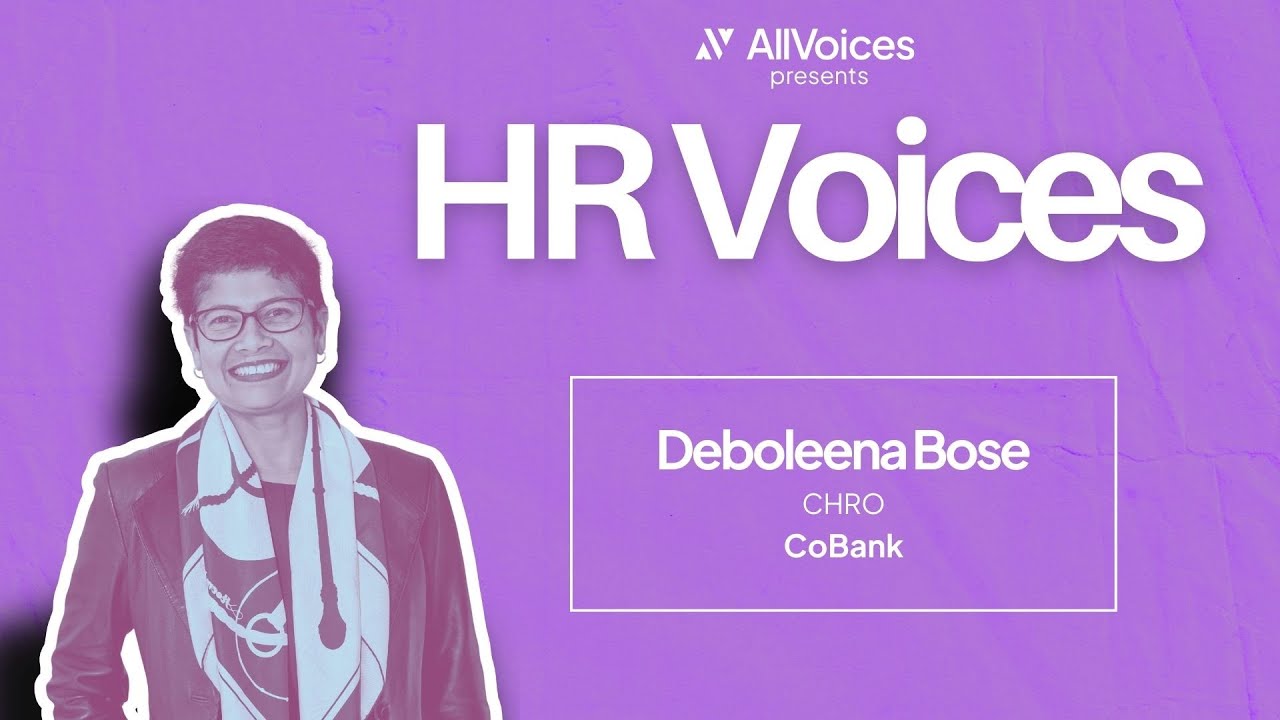

A bank that lends only to rural America has an easier answer than most to the question of what holds a distributed workforce together. Deboleena Bose, Chief Human Resources Officer at CoBank, joined Rebecca Taylor on HR Voices to explain how that mission shapes hiring, promotion, and team design across a national footprint.
CoBank has just under 1,400 associates, headquartered in Denver with offices such as Minneapolis and regional banking centers across the country. Most of the workforce is salaried and exempt. Deboleena described the business as an intersection of great purpose and strong profitability, and she treats both as part of the job. Her view of culture is practical: a mission only unifies people if hiring, development, and team design keep returning to it.
Why a Cooperative Plans Its People Decisions in Years, Not Quarters
CoBank describes itself as a national cooperative bank whose customers are also its owners, and a member of the Farm Credit System. Deboleena drew the contrast with public and private companies, which tend to focus on quarterly earnings. A cooperative is built for the longer term, and that changes how HR thinks about talent.
Employee development, in her framing, always takes the long view. People are not machines where a few adjusted screws suddenly make everything work. Each person brings strengths and development needs, and the work is bringing those people together as a team that can move forward.
That same long horizon sits behind the culture work. The goal is teams focused on long-term customer relationships and long-term solutions, which Deboleena called part of the cooperative principle itself.
What Separates People When Everyone Has the Same AI Tools
Deboleena was candid about her own learning curve. When AI tools first arrived, she championed them at an all-team meeting. Afterward, some team members told her they understood the enthusiasm but worried their jobs would go away. The fear was real, and she took it seriously.
Her conclusion is that AI levels the toolset. Whether a workplace runs on ChatGPT, Copilot, Gemini, or Perplexity, everyone has access to the same platforms. The difference will come from the human side. As she put it, “AI does not yet have empathy.” Listening to customers and employees, using judgment, and thinking critically will matter more, not less.
She contrasted this with a few years ago, when coding and analysis looked like the skills to bet on. Nearly thirty years into her career, Deboleena sees the oldest skill returning: making a connection. Part of that is digging deeper, asking why repeatedly until the conversation reaches the core of a problem.
Her practical rule for AI follows from the same idea. A bare prompt produces little. A person who writes the first version of a difficult message and then asks Copilot to adjust the tone gets something useful. The point of view has to come first; AI refines it. Today CoBank uses AI in two places: a knowledge chatbot that answers routine employee questions where the underlying data is clean, such as how many vacation days someone has, and Copilot for productivity. That chatbot is a way of making company knowledge easy to find, not a replacement for judgment.
What Actually Works
Make the Mission the Test for Hiring and Promotion
When CoBank hires, promotes, develops, and retains people, the lens is whether they will be passionate about serving rural America. Deboleena said the bank will sometimes pass on a best-in-class candidate in favor of someone terrific who is excited about the mission. Without that connection, she argued, the work is hard to understand and harder to do.
A clear statement of what the company is for helps only when it shows up in those decisions. At CoBank, it is the thread that turns a dispersed workforce into one entity.
Build Teams Around Diversity of Perspective
CoBank has a long partnership with Gallup and uses StrengthsFinder to look at the makeup of its teams. Gallup’s CliftonStrengths assessment, which Gallup still labels StrengthsFinder, ranks a person’s 34 talent themes. Deboleena’s point is that workplace diversity covers more than race and gender. It also means diversity of perspectives.
The bank applies the strengths data most deliberately during team assimilations. Used that way, the assessment becomes a tool for building teams that work well together, not a label on a profile.
Design the Culture With Employees Instead of Announcing It
In the last three years, 40 percent of CoBank’s people are new to the bank, through retirements, changing skill needs, and growth. For 2026, Deboleena’s priority is what the bank calls building an intentional culture. The starting premise: every company already has a culture. The question is whether people understand it, like it, and want it, and what else belongs in it.
The approach is not senior leadership disappearing into a room and returning with values carved in stone. That never works, in Deboleena’s view. CoBank is engaging the whole organization instead, helped by being neither too small nor too big, through a set of newly launched programs. Teams that want a structured start can borrow from exercises that put core values in employees’ hands. Deboleena treats the wave of change as a catalyst, not something to wait out, which makes the project managing organizational change as much as culture work.
Where Employee Relations Fits
Deboleena closed with a message for HR peers. With cost optimization pressure across many companies, HR often carries the brunt of tough decisions and the job of communicating them. It can feel lonely. Her reminder is that HR exists because it deals with human beings, and that humanity has to stay in business.
An intentional culture gets tested in the cases that come after the launch: the concern raised by a new hire, the conflict on a freshly assimilated team, the complaint about a decision that felt top-down. AI-powered case management keeps those signals in one record, so People teams can see whether the culture they described is the one employees experience. Engagement among employees tends to follow when they see their concerns handled consistently, and a structured employee relations practice is how that consistency gets built.
Frequently Asked Questions About Mission-First HR at CoBank
It lengthens the time horizon. Deboleena Bose contrasts the cooperative model with companies focused on quarterly earnings. At CoBank, employee development and team design are planned for long-term customer relationships, not short-term results.
It uses it to design teams. CoBank has a long partnership with Gallup and draws on StrengthsFinder results to build teams with diverse perspectives, especially during team assimilations.
In two places so far. A knowledge chatbot answers routine employee questions where the data is clean, like vacation balances, and Copilot helps employees refine the tone of messages they have already drafted themselves.
Empathy first. Because AI gives everyone the same tools, Deboleena expects listening, judgment, critical thinking, and the habit of asking why until you reach the core of a problem to set people apart.
It is the bank’s 2026 culture priority. With 40 percent of employees new in the last three years, CoBank is asking the whole organization whether today’s culture is the one it wants, instead of issuing values from the top.
The Bottom Line for HR Leaders
Deboleena Bose’s framing holds up well beyond banking. A mission unifies a workforce only when it decides who is hired and promoted, strengths data earns its place when it shapes real teams, and AI helps most when a person brings the point of view first.
Her shortest line came in that closing message: “one size fits one.” Rebecca said the whole message belonged on a plaque. In HR, that means treating each employee as an individual, especially when the decisions get hard.
See how AllVoices supports HR leaders in testing a new culture against the employee concerns that arrive during rapid growth.