About This Episode
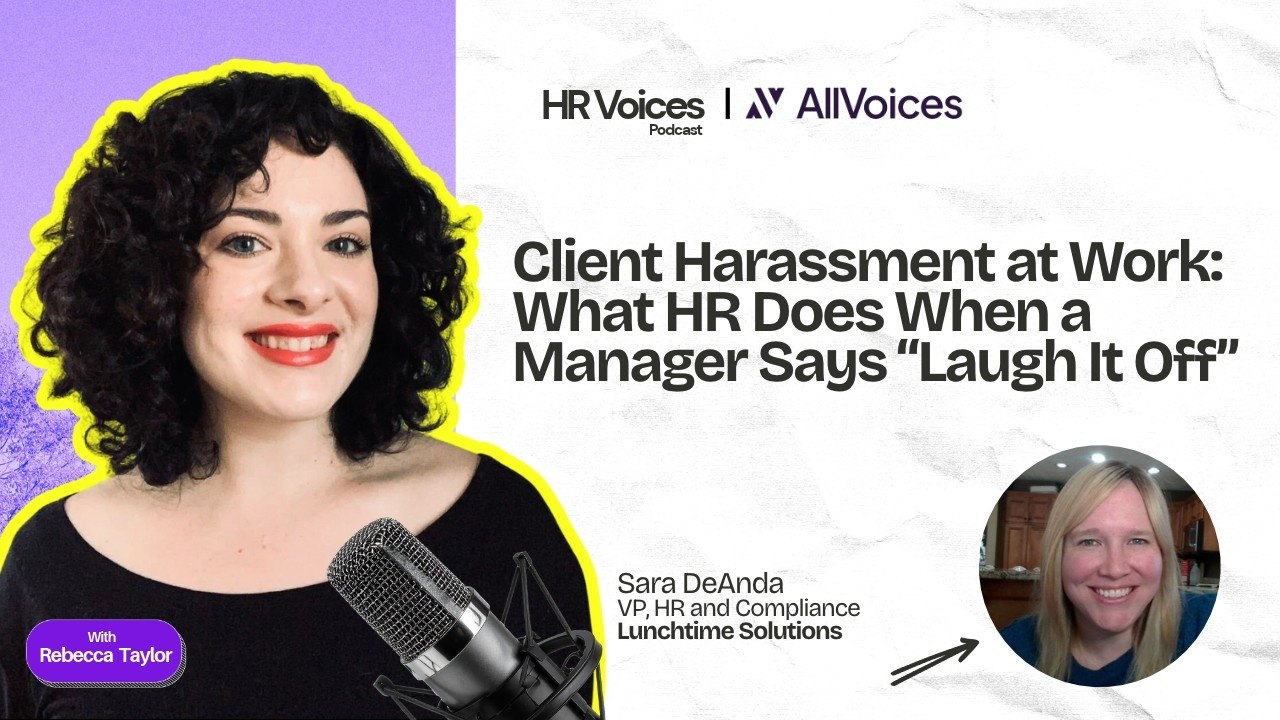
A major client keeps making inappropriate comments to a junior account manager on calls, and the account is worth 8% of company revenue. When she tells her manager, he says to laugh it off. Sara DeAnda, Vice President of Human Resources and Compliance at Lunchtime Solutions, and Rebecca Taylor cover why the manager's response may carry more risk than the client's comments, correcting him without triggering defensiveness, why HR can't promise confidentiality, and who decides whether she moves off the account.
About The Guest
Sara DeAnda is Vice President of Human Resources and Compliance at Lunchtime Solutions, a K-12 school food service management company in Dakota Dunes, South Dakota, serving Midwest schools since 1997. She holds a bachelor's in HR management from Bellevue University, a master's from Briar Cliff University and SHRM certification, and teaches as an adjunct at Bellevue, Morningside and Southern New Hampshire universities. Her investigation approach: stay calm, keep assumptions in check, and accept being the messenger.
Episode Breakdown

A major client keeps making inappropriate comments to a junior account manager on calls, and the account is worth 8 percent of company revenue. When she raises it, her manager tells her to laugh it off because the account is not worth losing. Sara DeAnda, Vice President of Human Resources and Compliance at Lunchtime Solutions, took that case apart on HR Voices, in a conversation hosted by Rebecca Taylor.

Sara named the obvious risk first and then looked past it. The client is not an employee, which limits what HR can do on that side. The manager is an employee, and in Sara’s view, the manager represents the company. Telling a junior employee to tolerate it signals that nobody has her back. It can also make her think twice about a formal complaint, or about staying at all.

Why the Manager’s Response Carries More Risk Than the Client

Sara pointed to the pattern the EEOC keeps reporting: retaliation, not the original discrimination or harassment, is the most common charge. The EEOC’s charge statistics for fiscal year 2025 list retaliation as a basis in 54,350 of the 88,201 charges filed, the most of any basis.

“Laugh it off” is not clear-cut retaliation under the law. Sara’s view is that it starts down that road, and Rebecca agreed: not retaliation yet, but it could become retaliation if HR handles it badly.

The client side carries its own exposure. For sexual harassment, the EEOC’s regulation says an employer may be responsible for the acts of non-employees when it knows or should have known of the conduct and fails to take immediate and appropriate corrective action.

That makes the first interview with the employee delicate. Sara tells employees upfront that HR can never promise confidentiality. Details go only to people with a need to know, but the matter could escalate. Sara also reaffirms retaliation protections. A promise of privacy might buy candor for a day. It costs trust the moment it breaks.

What the Manager’s Answer Says About the Culture

Sara approaches the manager without assumptions or accusations, to avoid the reflex that a talk with HR means trouble. Handling a report badly is not automatic cause for termination. The conversation stays constructive: gather the facts, then explain the environment that response may be creating.

Sara also turns the lens on the company. The company’s own small microaggressions may have built that environment in the first place. The manager may be too green to know the right response, or may have seen the same answer go unchallenged before. The test Sara described is not what the company wants to be, but what it is.

Rebecca suspected projection, a manager without the confidence to push back on the client. Sara has also seen managers who are lazy about it, or too overloaded to deal with it. More often, Sara finds, people struggle with conflict itself, so avoidance happens far more than confrontation. For a conflict-avoidant manager, the fix starts with the skills managers need to handle conflict. Whatever the motive, the behavior gets corrected; the motive decides whether that takes training, development, or a harder talk.

The revenue figure raises the obvious fear. Rebecca expected most clients, asked civilly to stop, would simply agree. Sara allowed that a client could walk, and then the better question is whether the company picks its partners well. The conversation came back to culture: being in business to make money does not require a company to sell its soul, and long-term partners tend to share its values.

What Actually Works

Ask Who Else Should Be Interviewed

Sara does not ask whether anyone else has problems with this manager. Sara asks whether there are other people HR should talk to, usually while looking the person in the eye. Nine out of ten times, people offer names freely. In a couple of investigations Sara expected to be quick, the question “is there anyone else that I should talk to” led to a statement from every single person there.

Once, a witness held back during an interview. Within an hour, that witness called Sara to apologize and told the whole story, which let Sara fix the situation faster. Each statement still has to be weighed, and a checklist for judging witness credibility applies the same test to each one.

Keep the Employee Updated When Nothing Has Changed

HR knows the investigation is on track. The people waiting do not, and as Sara put it, “they think one day is a century.” A short note saying there is no update yet, and the work continues, calms the situation.

Rebecca pictured the junior employee here, someone who just reported a manager and may fear being fired. Running the matter through one system for every HR case makes the last check-in easy to see.

Give the Employee the Decision About the Account

Moving the employee off the account is an option. Sara never wants it pushed on the employee. The comparison Sara drew was to accommodations: ask what the employee needs and wants to come of it. Most employees, in Sara’s experience, first say they do not want the other person fired or removed.

If the employee asks to move, it makes sense to arrange it. A move does not replace the conversation with the manager or the one with the client. Those steps run at the same time, so the situation stops now and does not repeat.

Where Employee Relations Fits

Early in Sara’s career, no news felt like good news. Experience changed that. If even a glimmer reaches HR, Sara acts quickly, because most people do not raise something unless it is real to them.

One incident also travels. It reaches everyone who witnessed it, not only the person on the receiving end, and work is supposed to feel safe. Psychological safety on a team erodes fast when a report goes nowhere. Interviews, witness statements, and follow-ups belong in one record, the job of investigations software for HR and ER teams.

Frequently Asked Questions About Client Harassment at Work

Can an Employer Be Responsible When a Client Harasses an Employee?

Yes, in some cases. For sexual harassment, EEOC regulations say an employer may be responsible for non-employees when it knew or should have known and failed to act. Severe or pervasive conduct can amount to the legal standard for a hostile workplace.

Is Telling an Employee to Laugh Off Harassment Retaliation?

Not on its own, in Sara DeAnda’s view, but it heads that way. It tells the employee the company will not back her and can discourage a formal complaint. These examples of retaliation and the laws behind them show where the line sits.

Can HR Keep a Client Harassment Report Confidential?

No. Sara tells employees upfront that details go only to people with a need to know, that the matter may escalate, and that retaliation protections apply. A privacy promise wins candor briefly and costs trust later.

Should HR Move the Employee Off the Client Account?

Only if the employee asks. Sara treats the choice like an accommodation conversation that the employee leads. A move never replaces correcting the manager or addressing the comments with the client, and those steps can happen at the same time.

What Question Does Sara DeAnda Ask Witnesses?

Whether there are other people HR should talk to. Sara keeps the question open instead of naming the manager, and in most investigations people offer names freely. Once, that single question produced a statement from every person there.

The Bottom Line for HR Leaders

In Sara DeAnda’s framing, a client problem becomes a culture check. The client made the comments, but the manager’s answer showed the junior employee how much backing the company would give.

Sara’s advice for newer HR professionals is to stay calm and keep the biases everyone carries from jumping to conclusions. HR is also the messenger, and sometimes people shoot the messenger. Reminding people of the role is part of the job.

See how AllVoices supports People teams when a complaint points at a manager as well as a client.

Our next webinar
Frequently asked questions

Got more questions? Email us at support@allvoices.co and we'll respond ASAP.

No items found.
Frequently asked questions

Got more questions? Email us at support@allvoices.co and we'll respond ASAP.

No items found.

When a Manager Tells an Employee to Laugh Off Client Harassment

About the guest

Sara DeAnda is Vice President of Human Resources and Compliance at Lunchtime Solutions, a K-12 school food service management company in Dakota Dunes, South Dakota, serving Midwest schools since 1997. She holds a bachelor's in HR management from Bellevue University, a master's from Briar Cliff University and SHRM certification, and teaches as an adjunct at Bellevue, Morningside and Southern New Hampshire universities. Her investigation approach: stay calm, keep assumptions in check, and accept being the messenger.

Episode Breakdown

A major client keeps making inappropriate comments to a junior account manager on calls, and the account is worth 8 percent of company revenue. When she raises it, her manager tells her to laugh it off because the account is not worth losing. Sara DeAnda, Vice President of Human Resources and Compliance at Lunchtime Solutions, took that case apart on HR Voices, in a conversation hosted by Rebecca Taylor.

Sara named the obvious risk first and then looked past it. The client is not an employee, which limits what HR can do on that side. The manager is an employee, and in Sara’s view, the manager represents the company. Telling a junior employee to tolerate it signals that nobody has her back. It can also make her think twice about a formal complaint, or about staying at all.

Why the Manager’s Response Carries More Risk Than the Client

Sara pointed to the pattern the EEOC keeps reporting: retaliation, not the original discrimination or harassment, is the most common charge. The EEOC’s charge statistics for fiscal year 2025 list retaliation as a basis in 54,350 of the 88,201 charges filed, the most of any basis.

“Laugh it off” is not clear-cut retaliation under the law. Sara’s view is that it starts down that road, and Rebecca agreed: not retaliation yet, but it could become retaliation if HR handles it badly.

The client side carries its own exposure. For sexual harassment, the EEOC’s regulation says an employer may be responsible for the acts of non-employees when it knows or should have known of the conduct and fails to take immediate and appropriate corrective action.

That makes the first interview with the employee delicate. Sara tells employees upfront that HR can never promise confidentiality. Details go only to people with a need to know, but the matter could escalate. Sara also reaffirms retaliation protections. A promise of privacy might buy candor for a day. It costs trust the moment it breaks.

What the Manager’s Answer Says About the Culture

Sara approaches the manager without assumptions or accusations, to avoid the reflex that a talk with HR means trouble. Handling a report badly is not automatic cause for termination. The conversation stays constructive: gather the facts, then explain the environment that response may be creating.

Sara also turns the lens on the company. The company’s own small microaggressions may have built that environment in the first place. The manager may be too green to know the right response, or may have seen the same answer go unchallenged before. The test Sara described is not what the company wants to be, but what it is.

Rebecca suspected projection, a manager without the confidence to push back on the client. Sara has also seen managers who are lazy about it, or too overloaded to deal with it. More often, Sara finds, people struggle with conflict itself, so avoidance happens far more than confrontation. For a conflict-avoidant manager, the fix starts with the skills managers need to handle conflict. Whatever the motive, the behavior gets corrected; the motive decides whether that takes training, development, or a harder talk.

The revenue figure raises the obvious fear. Rebecca expected most clients, asked civilly to stop, would simply agree. Sara allowed that a client could walk, and then the better question is whether the company picks its partners well. The conversation came back to culture: being in business to make money does not require a company to sell its soul, and long-term partners tend to share its values.

What Actually Works

Ask Who Else Should Be Interviewed

Sara does not ask whether anyone else has problems with this manager. Sara asks whether there are other people HR should talk to, usually while looking the person in the eye. Nine out of ten times, people offer names freely. In a couple of investigations Sara expected to be quick, the question “is there anyone else that I should talk to” led to a statement from every single person there.

Once, a witness held back during an interview. Within an hour, that witness called Sara to apologize and told the whole story, which let Sara fix the situation faster. Each statement still has to be weighed, and a checklist for judging witness credibility applies the same test to each one.

Keep the Employee Updated When Nothing Has Changed

HR knows the investigation is on track. The people waiting do not, and as Sara put it, “they think one day is a century.” A short note saying there is no update yet, and the work continues, calms the situation.

Rebecca pictured the junior employee here, someone who just reported a manager and may fear being fired. Running the matter through one system for every HR case makes the last check-in easy to see.

Give the Employee the Decision About the Account

Moving the employee off the account is an option. Sara never wants it pushed on the employee. The comparison Sara drew was to accommodations: ask what the employee needs and wants to come of it. Most employees, in Sara’s experience, first say they do not want the other person fired or removed.

If the employee asks to move, it makes sense to arrange it. A move does not replace the conversation with the manager or the one with the client. Those steps run at the same time, so the situation stops now and does not repeat.

Where Employee Relations Fits

Early in Sara’s career, no news felt like good news. Experience changed that. If even a glimmer reaches HR, Sara acts quickly, because most people do not raise something unless it is real to them.

One incident also travels. It reaches everyone who witnessed it, not only the person on the receiving end, and work is supposed to feel safe. Psychological safety on a team erodes fast when a report goes nowhere. Interviews, witness statements, and follow-ups belong in one record, the job of investigations software for HR and ER teams.

Frequently Asked Questions About Client Harassment at Work

Can an Employer Be Responsible When a Client Harasses an Employee?

Yes, in some cases. For sexual harassment, EEOC regulations say an employer may be responsible for non-employees when it knew or should have known and failed to act. Severe or pervasive conduct can amount to the legal standard for a hostile workplace.

Is Telling an Employee to Laugh Off Harassment Retaliation?

Not on its own, in Sara DeAnda’s view, but it heads that way. It tells the employee the company will not back her and can discourage a formal complaint. These examples of retaliation and the laws behind them show where the line sits.

Can HR Keep a Client Harassment Report Confidential?

No. Sara tells employees upfront that details go only to people with a need to know, that the matter may escalate, and that retaliation protections apply. A privacy promise wins candor briefly and costs trust later.

Should HR Move the Employee Off the Client Account?

Only if the employee asks. Sara treats the choice like an accommodation conversation that the employee leads. A move never replaces correcting the manager or addressing the comments with the client, and those steps can happen at the same time.

What Question Does Sara DeAnda Ask Witnesses?

Whether there are other people HR should talk to. Sara keeps the question open instead of naming the manager, and in most investigations people offer names freely. Once, that single question produced a statement from every person there.

The Bottom Line for HR Leaders

In Sara DeAnda’s framing, a client problem becomes a culture check. The client made the comments, but the manager’s answer showed the junior employee how much backing the company would give.

Sara’s advice for newer HR professionals is to stay calm and keep the biases everyone carries from jumping to conclusions. HR is also the messenger, and sometimes people shoot the messenger. Reminding people of the role is part of the job.

See how AllVoices supports People teams when a complaint points at a manager as well as a client.