About This Episode
In this episode of Reimagining Company Culture, we’re chatting with Anish Lalchandani, Former Global Head of Talent Management at Standard Chartered Bank. Anish advises and consults with CEOs and HR leaders in sustainable building Talent & Diversity strategy to support their business growth and ambition. His work involves coaching senior business leaders and making work more human for today and tomorrow.
About The Guest
Anish Lalchandani is the founder & CEO of HumanWorkz. He advises and consults with CEOs and HR leaders in sustainable building Talent & Diversity strategy to support their business growth and ambition. His work involves coaching senior business leaders, and making work more human for today and tomorrow. He has worked extensively at the intersection of transformation, development, and culture. His corporate career spans across 2 decades; he was the Global Head of Talent Management for Standard Chartered Bank (SCB) and was responsible for the Talent Management and Development strategy from the Management team to the Director level. In addition, he has done various global roles with SCB in Singapore, with a focus on - defining people leader practices, building talent culture, designing how we improve people decisions based on assessments and data, and embedding sustainable D&I and talent practices across Asia Middle East, Europe and Americas. He has also been a Board member and HR committee Chair with a large Charity in Singapore.He is a certified Coach (ICF, ACC), a Member of the CIPD institute and a Mental Health First Aider (MHFA, England) He has spoken at various international conferences and webinars covering the Future of work, leadership development, talent management, and cultural transformation.
Episode Breakdown

Anish Lalchandani is the former Global Head of Talent Management at Standard Chartered Bank, where he led upskilling programs across one of the largest international banking workforces. On Reimagining Company Culture, he joined us to talk about upskilling as a future-proofing strategy.

His view is that upskilling is not a training program. It is an organizational capability that determines whether a company can adapt as work changes. Companies that treat upskilling as continuous infrastructure end up with workforces that compound in capability over years.

Why Most Upskilling Programs Fail to Move the Needle

Most upskilling programs are episodic. A new technology emerges, the company runs a training, and then the topic is considered handled. McKinsey research on skills-based talent strategy makes the case clearly. Fifty-three percent of leaders see building skills as the best way to close capability gaps, more than twice as often as they prefer hiring.

Anish described the trap. The training rolls out, the metrics look good for a quarter, and then nothing changes in the actual work. Upskilling sticks only when it is paired with stretch assignments, manager support, and explicit recognition of new skills in performance conversations.

His framing is that skills gap analysis should drive the upskilling roadmap, not the other way around. Companies that start with the gap and design programs to close it outperform companies that start with available training and hope it lands.

What also matters is treating upskilling as a leadership commitment, not just an HR program. When senior leaders publicly invest time in their own upskilling, the rest of the organization gets permission to do the same.

How Do You Build a Real Upskilling Program?

What is the first move for a company starting from scratch?

Anish's answer is to start with the business strategy and work backward. What capabilities will the company need in three years, where are the gaps, and which roles bridge from current state to future state. McKinsey research on reskilling shows that companies which built explicit roadmaps reskilled thousands of employees and outperformed peers on adaptability.

How do you handle managers who do not prioritize upskilling?

By making upskilling a manager performance criterion. Managers who develop their teams' capabilities should be recognized. Managers who do not should hear that explicitly in performance conversations. Coaching for managers on how to run development conversations is a parallel investment.

What Actually Works in Upskilling Programs

Tie skills to real work, not just courses

The strongest upskilling happens on the job. Stretch assignments, cross-functional projects, and shadowing pair with formal training to produce capability that holds. Programs that rely only on courses tend to produce certificates rather than competence.

Build the cadence into normal work rhythms

Upskilling that requires people to step away from their work for long periods rarely sticks. Programs that integrate learning into normal work patterns, with manageable time commitments and immediate application, produce stronger outcomes.

Recognize skills explicitly in performance conversations

Skills that do not show up in performance reviews fade. Programs that connect new capabilities to compensation, promotion, and recognition decisions produce upskilling cultures that last.

Where Employee Relations Fits

ER systems support upskilling by surfacing the friction that development conversations are supposed to address. AllVoices' HR solution and our employee helpline product give HR a single place to track concerns about manager capability and fairness in development opportunities.

How does ER data support upskilling programs?

It surfaces the manager populations where development is breaking down. Concerns about a manager's failure to invest in their team often correlate with poor upskilling outcomes. ER data tied to development metrics helps HR work with the manager populations that need the most support.

Frequently Asked Questions About Upskilling and Workforce Readiness

What is upskilling?

It is the practice of building new capabilities in current employees to keep them effective as work and technology evolve. Upskilling differs from reskilling, which moves people into entirely different roles.

Why is upskilling important now?

Because technology and work patterns are changing faster than hiring can keep up. Building skills internally is often faster, cheaper, and more reliable than trying to hire all the new capabilities the business needs.

How do you measure upskilling success?

Track skill acquisition rates, internal mobility into roles requiring new skills, retention of upskilled employees, and the percentage of business goals where upskilling closed a capability gap.

What is the role of the manager in upskilling?

Managers translate strategic upskilling priorities into individual development plans for their team members. Their willingness to make time for development conversations and stretch assignments determines whether programs land.

How do you handle upskilling for employees near retirement?

By making upskilling explicitly available to everyone who wants it. Some employees near retirement engage actively with new skills, others choose to coast. Both choices are legitimate. The mistake is assuming based on age.

What investments produce the best upskilling outcomes?

Manager training paired with stretch assignments, with formal courses as a supplement. Programs that invest only in courses tend to underperform programs that invest in the work environment around the courses.

The Bottom Line for HR Leaders

Anish's framing is a useful corrective for any company that has run training programs without seeing capability change. Upskilling is an organizational discipline, not a training event. The companies that hold the discipline through years end up with workforces that adapt as work changes.

The leaders who get this right share a few habits. They start with the business strategy and work backward. They tie skills to real work, not just courses. They build the cadence into normal work rhythms. And they recognize new skills explicitly in performance conversations.

Companies that hold this discipline see stronger retention of high performers and better adaptation to new technologies. The investment compounds because each cohort of upskilled employees becomes the trainers and mentors for the next.

Industry research keeps reinforcing this. McKinsey research on workforce mobility shows that almost half of a worker's lifetime earnings come from skills acquired through work experience. Upskilling is the operational expression of that reality.

Across the conversation, the throughline was that upskilling is an investment in the relationship between the company and its employees. Companies that invest produce workforces that stay, grow, and adapt. Companies that do not invest produce workforces that interview elsewhere when the work changes.

The leaders who hold this discipline also tend to attract the right kind of employees. Workers who care about their growth seek out companies that invest in upskilling and avoid companies that do not. The recruiting outcomes follow over years.

Across the conversation, the throughline was that upskilling is a long game. Quarterly metrics rarely capture the value of an upskilling program because the value compounds across cohorts and years. Patience is part of the design.

The companies that build upskilling well also tend to handle organizational change more smoothly. When the workforce is already in the habit of learning new things, a new strategy or product launch lands faster because the muscle is already built.

Across the conversation, the throughline was respect. Respect for the existing capability of the workforce, respect for the time it takes to build new skills, and respect for the relationship that intentional development creates between a company and its people.

See how AllVoices supports HR teams running upskilling programs that hold.
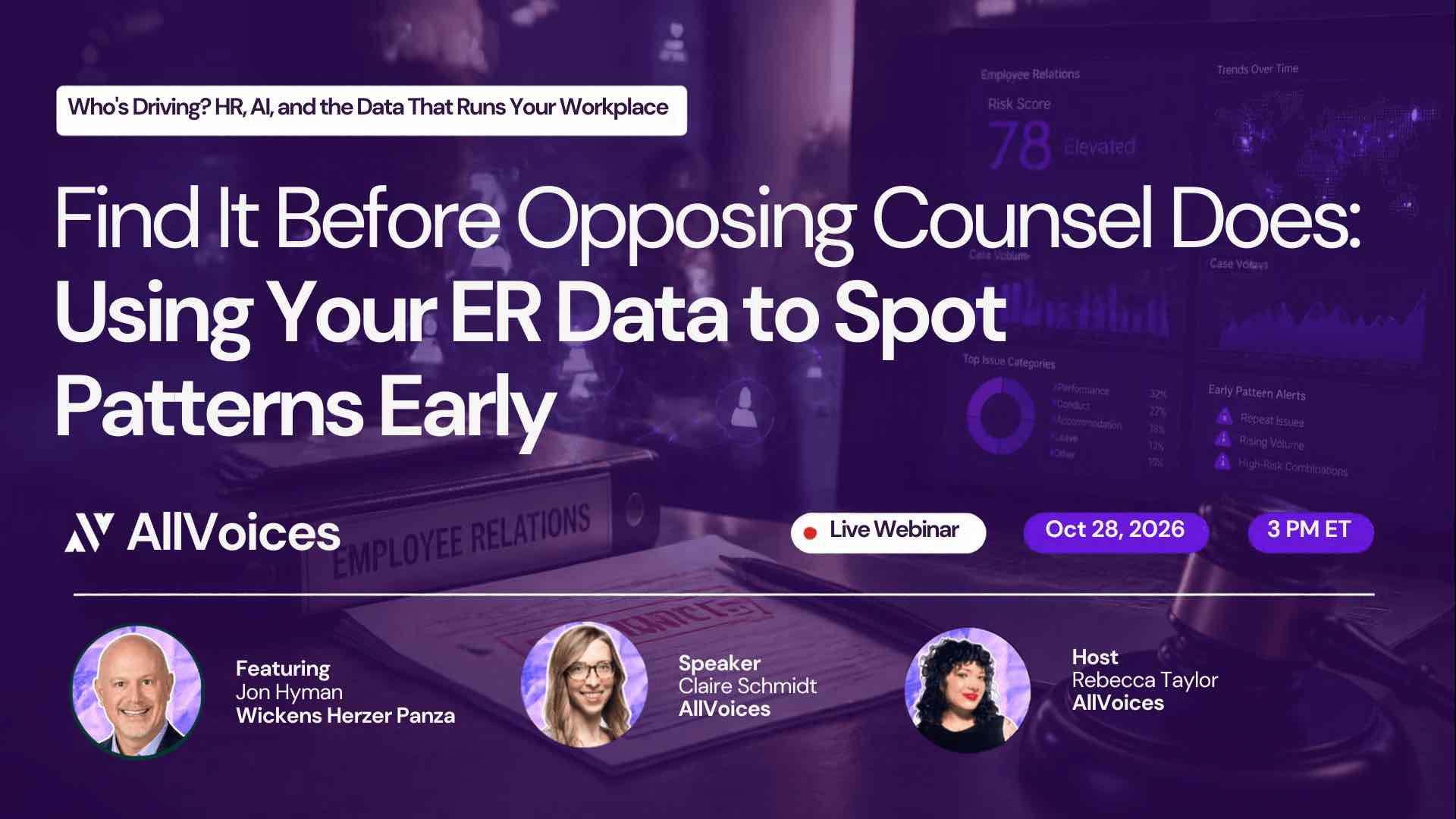
Our next webinar
Frequently asked questions

Got more questions? Email us at support@allvoices.co and we'll respond ASAP.

No items found.
Frequently asked questions

Got more questions? Email us at support@allvoices.co and we'll respond ASAP.

No items found.
Anish Lalchandani, Former Global Head of Talent Management at Standard Chartered Bank- Upskilling to Future Proof Your Organization
Episode 145
About This Episode
In this episode of Reimagining Company Culture, we’re chatting with Anish Lalchandani, Former Global Head of Talent Management at Standard Chartered Bank. Anish advises and consults with CEOs and HR leaders in sustainable building Talent & Diversity strategy to support their business growth and ambition. His work involves coaching senior business leaders and making work more human for today and tomorrow.
About The Guest
Anish Lalchandani is the founder & CEO of HumanWorkz. He advises and consults with CEOs and HR leaders in sustainable building Talent & Diversity strategy to support their business growth and ambition. His work involves coaching senior business leaders, and making work more human for today and tomorrow. He has worked extensively at the intersection of transformation, development, and culture. His corporate career spans across 2 decades; he was the Global Head of Talent Management for Standard Chartered Bank (SCB) and was responsible for the Talent Management and Development strategy from the Management team to the Director level. In addition, he has done various global roles with SCB in Singapore, with a focus on - defining people leader practices, building talent culture, designing how we improve people decisions based on assessments and data, and embedding sustainable D&I and talent practices across Asia Middle East, Europe and Americas. He has also been a Board member and HR committee Chair with a large Charity in Singapore.He is a certified Coach (ICF, ACC), a Member of the CIPD institute and a Mental Health First Aider (MHFA, England) He has spoken at various international conferences and webinars covering the Future of work, leadership development, talent management, and cultural transformation.
Episode Transcription

Anish Lalchandani is the former Global Head of Talent Management at Standard Chartered Bank, where he led upskilling programs across one of the largest international banking workforces. On Reimagining Company Culture, he joined us to talk about upskilling as a future-proofing strategy.

His view is that upskilling is not a training program. It is an organizational capability that determines whether a company can adapt as work changes. Companies that treat upskilling as continuous infrastructure end up with workforces that compound in capability over years.

Why Most Upskilling Programs Fail to Move the Needle

Most upskilling programs are episodic. A new technology emerges, the company runs a training, and then the topic is considered handled. McKinsey research on skills-based talent strategy makes the case clearly. Fifty-three percent of leaders see building skills as the best way to close capability gaps, more than twice as often as they prefer hiring.

Anish described the trap. The training rolls out, the metrics look good for a quarter, and then nothing changes in the actual work. Upskilling sticks only when it is paired with stretch assignments, manager support, and explicit recognition of new skills in performance conversations.

His framing is that skills gap analysis should drive the upskilling roadmap, not the other way around. Companies that start with the gap and design programs to close it outperform companies that start with available training and hope it lands.

What also matters is treating upskilling as a leadership commitment, not just an HR program. When senior leaders publicly invest time in their own upskilling, the rest of the organization gets permission to do the same.

How Do You Build a Real Upskilling Program?

What is the first move for a company starting from scratch?

Anish's answer is to start with the business strategy and work backward. What capabilities will the company need in three years, where are the gaps, and which roles bridge from current state to future state. McKinsey research on reskilling shows that companies which built explicit roadmaps reskilled thousands of employees and outperformed peers on adaptability.

How do you handle managers who do not prioritize upskilling?

By making upskilling a manager performance criterion. Managers who develop their teams' capabilities should be recognized. Managers who do not should hear that explicitly in performance conversations. Coaching for managers on how to run development conversations is a parallel investment.

What Actually Works in Upskilling Programs

Tie skills to real work, not just courses

The strongest upskilling happens on the job. Stretch assignments, cross-functional projects, and shadowing pair with formal training to produce capability that holds. Programs that rely only on courses tend to produce certificates rather than competence.

Build the cadence into normal work rhythms

Upskilling that requires people to step away from their work for long periods rarely sticks. Programs that integrate learning into normal work patterns, with manageable time commitments and immediate application, produce stronger outcomes.

Recognize skills explicitly in performance conversations

Skills that do not show up in performance reviews fade. Programs that connect new capabilities to compensation, promotion, and recognition decisions produce upskilling cultures that last.

Where Employee Relations Fits

ER systems support upskilling by surfacing the friction that development conversations are supposed to address. AllVoices' HR solution and our employee helpline product give HR a single place to track concerns about manager capability and fairness in development opportunities.

How does ER data support upskilling programs?

It surfaces the manager populations where development is breaking down. Concerns about a manager's failure to invest in their team often correlate with poor upskilling outcomes. ER data tied to development metrics helps HR work with the manager populations that need the most support.

Frequently Asked Questions About Upskilling and Workforce Readiness

What is upskilling?

It is the practice of building new capabilities in current employees to keep them effective as work and technology evolve. Upskilling differs from reskilling, which moves people into entirely different roles.

Why is upskilling important now?

Because technology and work patterns are changing faster than hiring can keep up. Building skills internally is often faster, cheaper, and more reliable than trying to hire all the new capabilities the business needs.

How do you measure upskilling success?

Track skill acquisition rates, internal mobility into roles requiring new skills, retention of upskilled employees, and the percentage of business goals where upskilling closed a capability gap.

What is the role of the manager in upskilling?

Managers translate strategic upskilling priorities into individual development plans for their team members. Their willingness to make time for development conversations and stretch assignments determines whether programs land.

How do you handle upskilling for employees near retirement?

By making upskilling explicitly available to everyone who wants it. Some employees near retirement engage actively with new skills, others choose to coast. Both choices are legitimate. The mistake is assuming based on age.

What investments produce the best upskilling outcomes?

Manager training paired with stretch assignments, with formal courses as a supplement. Programs that invest only in courses tend to underperform programs that invest in the work environment around the courses.

The Bottom Line for HR Leaders

Anish's framing is a useful corrective for any company that has run training programs without seeing capability change. Upskilling is an organizational discipline, not a training event. The companies that hold the discipline through years end up with workforces that adapt as work changes.

The leaders who get this right share a few habits. They start with the business strategy and work backward. They tie skills to real work, not just courses. They build the cadence into normal work rhythms. And they recognize new skills explicitly in performance conversations.

Companies that hold this discipline see stronger retention of high performers and better adaptation to new technologies. The investment compounds because each cohort of upskilled employees becomes the trainers and mentors for the next.

Industry research keeps reinforcing this. McKinsey research on workforce mobility shows that almost half of a worker's lifetime earnings come from skills acquired through work experience. Upskilling is the operational expression of that reality.

Across the conversation, the throughline was that upskilling is an investment in the relationship between the company and its employees. Companies that invest produce workforces that stay, grow, and adapt. Companies that do not invest produce workforces that interview elsewhere when the work changes.

The leaders who hold this discipline also tend to attract the right kind of employees. Workers who care about their growth seek out companies that invest in upskilling and avoid companies that do not. The recruiting outcomes follow over years.

Across the conversation, the throughline was that upskilling is a long game. Quarterly metrics rarely capture the value of an upskilling program because the value compounds across cohorts and years. Patience is part of the design.

The companies that build upskilling well also tend to handle organizational change more smoothly. When the workforce is already in the habit of learning new things, a new strategy or product launch lands faster because the muscle is already built.

Across the conversation, the throughline was respect. Respect for the existing capability of the workforce, respect for the time it takes to build new skills, and respect for the relationship that intentional development creates between a company and its people.

See how AllVoices supports HR teams running upskilling programs that hold.

Want to learn more?
See the power of AllVoices today
Thank you! We look forward to meeting you soon
Oops! Something went wrong while submitting the form.
Frequently asked questions

Got more questions? Email us at support@allvoices.co and we'll respond ASAP.

No items found.
Frequently asked questions

Got more questions? Email us at support@allvoices.co and we'll respond ASAP.

No items found.