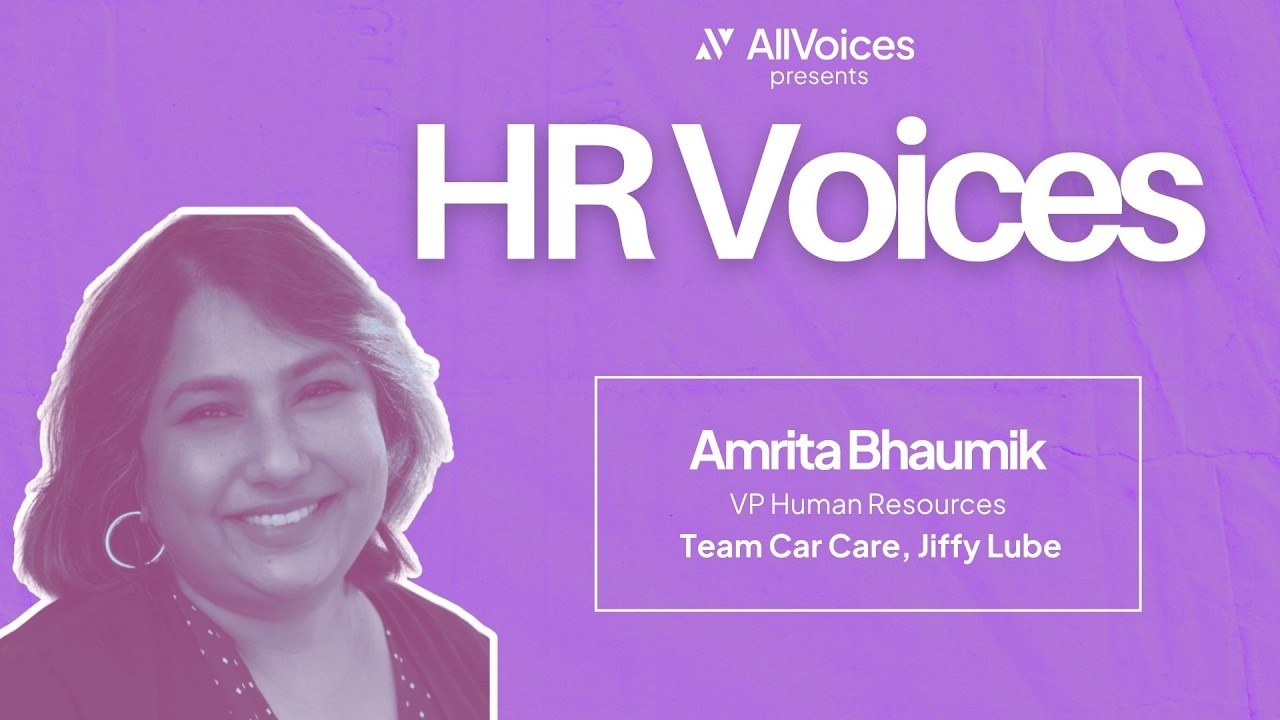

Host Rebecca Taylor took a case from the headlines to Amrita Bhaumik, VP of HR at Team Car Care, the largest Jiffy Lube franchisee. A customer films a frontline worker at a national food chain directing racial slurs at a couple. The clip spreads, and the company fires the worker the same day. The case behind it is real. In December 2025, NBC News reported that a Cinnabon franchise owner in Wisconsin immediately terminated a worker after a TikTok video showed her using a racial slur at a couple.
Amrita did not start with the verdict. She asked whether due process came before the termination, and who at a franchise location made the call. Move too slowly, she said, and the company looks as if it is not taking the conduct seriously. Move too fast, and the due diligence gets skipped.
Why a Same-Day Firing Carries Its Own Risk
The pressure on the brand is real. In retail, the parent company’s reputation travels far, and social media amplifies whatever a camera catches. Amrita called recordings the “bane of our existence because everything is now recorded.” Pew Research Center puts smartphone ownership at 91 percent of U.S. adults, so the customer at the counter is usually carrying a camera.
That is why Amrita treats a social media use policy as foundational. It sets expectations for employees in uniform, in the store, and on their personal accounts, whether they work for a franchisee or for corporate.
Speed carries its own exposure. A termination decided in hours, under public pressure, can skip the investigation that a disciplinary procedure puts first, and it sets a precedent the company has to live with. A fast call that cannot be defended later is not decisive. It is a second problem.
Once the facts are in, Amrita tests them against the company’s policy and values. Conduct that is misaligned with them makes “a pretty easy decision,” though “not a unilateral decision which HR takes.” Legal, employee relations lawyers, and operations should align on the outcome, and overlooked warning signs become lessons.
Who Owns the Call When the Store Is a Franchise
Amrita raised the ownership question early. At a franchise location, the employment decision sits with the franchise owner, and NBC described the Cinnabon store as independently owned and operated. In a franchise business, the brand and the employer are different companies, so she would dig into who made the call and who else was involved.
Team Car Care sits on the franchisee side, protecting the brand and its processes. Amrita’s view is that the owner holds the decision but still owes due process, a response to customers and media, and a look at the HR and legal consequences. Rebecca added the franchisor’s side. Corporate should equip franchisees with policies and standards, and a franchisee facing a viral incident should call for help.
The targeted customers deserve a call. Amrita sees “no harm in also reaching out to the concerned customers” to say the conduct does not reflect the organization and that it is being looked into. Public statements wait until the process is complete.
What Actually Works
Hold the Final Call With a Suspension
Amrita’s first recommendation rests on the “principles of natural justice.” Whatever the video appears to show, she would suspend the employee rather than terminate on the spot. Suspension removes the person from the scene, leaves room for an unbiased assessment, and gives everyone a fair chance to be part of the process.
An investigative suspension is a sequencing decision, not a verdict. The termination can still follow once the facts corroborate the conduct. What changes is the order.
Start at the Store, Then Test the Footage
Amrita expects a retail operator to have a defined procedure for handling investigations before an incident arrives. The first interviews go to the store managers who witnessed it, the “first line of defense,” and every conversation is documented. She keeps the witness list short, because too many interviews invite secondhand versions and personal color.
The store’s own cameras are her first source of truth, and she wants a mechanism for verifying AI-generated evidence before anyone acts on a clip. A 2024 GAO report found that current deepfake detection technologies have limited effectiveness in real-world scenarios. Footage the store recorded itself does not depend on that technology.
Train for the Scenarios the Handbook Misses
Large retailers tend to hand out the employee handbook at orientation and expect everyone to have read “the 160 pages.” Amrita’s experience is that real situations are too nuanced for that, and that “constant training around it is critical.” Her training uses real scenarios. It starts with the store general manager, the “head of the household,” and reaches frontline managers learning de-escalation techniques.
Hiring carries the rest. Team Car Care can teach someone to service a vehicle or change the oil, but not the desire to work with customers, so it looks for that competency in the hiring process.
Where Employee Relations Fits
HR is often told it exists to protect the company. Amrita, who leads a large employee relations team across a distributed, multi-site business, says HR is “actually protecting the situation” by building a proper record of what happened. The mistakes she sees come from dropping that discipline. Investigators lose neutrality when conduct looks egregious, skip the suspension, or start without a plan.
Thin documentation “leaves it open to interpretation,” and the decision may not hold up once it is challenged. These are the common investigation mistakes Amrita has watched HR teams make. Across many locations, every store needs the same steps, evidence, and decision trail, which is the argument for investigation workflows built for stores.
Frequently Asked Questions About Viral Misconduct Investigations
Not before the facts are confirmed. Amrita Bhaumik recommends suspending the employee first, which removes them from the scene while HR investigates. A termination made under public pressure, without a documented investigation, is harder to defend later.
Start with independent footage. Amrita treats the store’s own cameras as the first source of truth, and she wants a mechanism in place to confirm that a recording is not a deepfake or AI-generated before anyone acts on it.
The franchise owner, in most cases. Amrita’s view is that the owner holds the decision but must still follow due process, address the customers and the media, and weigh the HR and legal consequences.
The store managers who witnessed it. Amrita starts with the frontline managers on site, documents every conversation, and keeps the witness list short so that secondhand accounts and personal opinions do not color the facts.
Yes. Amrita sees no harm in a short note or a call telling the customers that the behavior does not reflect what the organization stands for and that it is being looked into. Public statements can wait until the investigation is complete.
The Bottom Line for HR Leaders
Amrita Bhaumik’s advice for a first-time HR leader in this spot comes down to three habits. Be thorough, stay unbiased, and document everything, however loud the pressure gets. Corporate reputation will be at stake, and the noise will come from every direction.
“HR has that wide angle lens,” she said, and it can see implications that operations often miss. The work is to speak up, partner with legal and operations, and reach a decision everyone supports. Longer term, the investment goes to frontline managers, who face these moments every day. The better trained they are, the fewer of these incidents there will be.
See how AllVoices helps People teams investigate a viral store incident with the same care as a quiet one.