About This Episode
In this episode of Reimagining Company Culture, we’re chatting with Andrew Ives, Director of Culture & Talent Development at Fusion Medical Staffing. Prior to Fusion Andrew worked at Deloitte as an Audit Senior Manager. Tune in to learn Andrew’s thoughts on cultivating a great place to work, adopting radical flexibility, employee feedback inspiring a change, and more!
About The Guest
Andrew Ives is the Director of Culture & Talent Development at Fusion Medical Staffing. Prior to Fusion he worked at Deloitte as an Audit Senior Manager where he provided integrated audit and assurance services for several Fortune 500 and private clients in a wide variety of industries, including Aerospace & Defense, Construction, Government & Non-Profit, Insurance, Manufacturing, Power & Utilities, and Retail.
Episode Breakdown

On a recent episode of Reimagining Company Culture, the conversation turned to defining culture intentionally rather than letting it accumulate. The guest, Andrew Ives, brought direct experience to the topic from their day-to-day work, and the conversation moved past the talking points most People teams have heard a hundred times. This recap pulls the practical thread of the discussion together and translates it into the workflows HR leaders are running today.

Andrew's background sets the context for how Andrew thinks about this work. Andrew Ives is the Director of Culture & Talent Development at Fusion Medical Staffing. Prior to Fusion he worked at Deloitte as an Audit Senior Manager where he provided integrated audit and assurance services for several Fortune 500 and private clients in a wide variety of industries, including Aerospace & Defense, Construction, Government & Non-Profit, Insurance, Manufacturi. That experience shapes the perspective the episode brings to defining culture intentionally rather than letting it accumulate, and the recap below stays grounded in the workflows leaders are running, not abstractions.

The conversation touches on the basics any People team is already managing, including values statement design and vision statement design. The recap below assumes that grounding and focuses on the operating moves leaders make on top of it.

Most of the framework below holds up across industries and company stages. The specifics vary; the underlying mechanics rarely do.

What it means to define culture instead of inheriting it

Andrew's path through Deloitte and into Fusion Medical Staffing put him in two extreme cultural environments. The Big Four lesson was how rigorously a culture can be socialized when the company invests in it. The Fusion lesson was how quickly a culture can shift when the company outgrows the founder's voice.

Defined cultures are not louder cultures. They are more specific cultures. The companies that get this right write down what they mean by their values in behavioral terms, train managers on the behavioral examples, and use the same examples in performance reviews. Without that specificity, values become decoration.

How leaders work through defining culture intentionally rather than letting it accumulate

How do you write a value people can use?

Pair it with two behavioral examples and one anti-example. 'We are direct' is a poster. 'We are direct, we share critical feedback within a week, we tell people what we will do before we do it, we do not run the same complaint through three managers' is a tool.

McKinsey research on culture in new businesses research finds that values written in behavioral terms outperform abstract values on every measurable engagement dimension. The discipline is in the specificity.

How do you keep a defined culture from going stale?

By refreshing the examples annually. The values themselves should be stable. The examples, the stories, the named behaviors, the recent calls, should change with the company. Stale examples are how culture loses its grip on the next cohort of employees.

The annual refresh is also when leaders decide whether the values are still right. Most do not need to change. The few that do are revealing.

What actually works in practice

The pattern across companies that handle defining culture intentionally rather than letting it accumulate well comes down to three operational habits.

  • Write values as behaviors, not adjectives. Adjectives are slogans. Behaviors are tools.
  • Use values in performance reviews. If values do not affect ratings, they will not affect behavior.
  • Refresh the examples every year. The values stay. The stories change. The annual refresh keeps the values current.

None of these are aspirational. They are checklists the strongest People teams run on a cadence, and the consistency is what makes the difference.

What looks like a culture decision from the outside is usually the cumulative effect of those three habits, applied without theatrics.

This pattern shows up alongside familiar tools like training and development guidance. The combination is what makes the operating model durable.

Where Employee Relations fits

AllVoices company culture solution programs in healthcare staffing need cultural consistency across distributed teams. AllVoices pulse surveys catch drift early. AllVoices HR case management platform keeps the documentation aligned with the named values when complaints test them.

The companies pulling this off rarely run it on memory. They run it on infrastructure. AllVoices HR case management platform centralizes the case data; AllVoices data and insights dashboard surfaces the patterns nobody catches manually; AllVoices Vera AI co-pilot for ER teams accelerates the response time so the work is finishable. Together they cover the operating layer that this episode keeps pointing at.

How does ER reinforce defined values?

By naming the value in the closeout communication. When a case closes with reference to the value that was in play, employees see the value getting applied, not just spoken. AllVoices Vera AI co-pilot keeps that language consistent across thousands of cases.

The supporting research is consistent. Independent analysis from SHRM analysis of declining employee engagement points the same direction the episode does. The combination of operating discipline and outside data is what gets People leaders past the slogan stage.

For a concrete example of how this plays out at scale, look at Bungie's culture and retention story, which shows the same operational pattern in a real customer environment.

The takeaway holds across companies of different sizes and industries. The teams that turn this episode's lesson into operating practice are the ones that name a target metric, run it on a cadence, and refuse to let activity stand in for outcomes. The metric does not have to be elaborate. It has to be visible to the people who can move it, and reviewed often enough that nothing falls off the radar for a quarter.

The other consistent pattern is that the work compounds. Year one of any of these practices feels like overhead. Year three is when the retention, engagement, and case-data signals start telling a clearly different story. People leaders who hold the line through the early part of the curve tend to be the ones who have the receipts when leadership asks for evidence later.

Frequently Asked Questions About Defining Culture Intentionally Rather Than Letting It Accumu

How many values is too many?

More than five. Most employees cannot retain more than five values, which means anything beyond that becomes decoration. Three to five is the practical range.

Should values be different for different teams?

Company-wide values stay the same. Team-level operating principles can vary. Conflating the two, calling team norms 'values', dilutes both.

What's the role of HR in defining culture?

HR builds the infrastructure. Leadership writes the words. Employees test them daily. When any of those three is missing, the culture drifts.

How do you handle a high performer who violates values?

Address it once with specificity. If the behavior continues, exit them, even if performance is strong. Tolerance for value violations from top performers is the fastest way to lose the culture.

Can a remote-first company have a strong defined culture?

Yes. Remote-first cultures are usually stronger because they had to write everything down. The discipline of documentation forces specificity that office cultures get to skip.

The Bottom Line for HR Leaders

Andrew's lesson from two very different cultures is that the form is less important than the rigor. A defined culture in writing, refreshed annually, used in performance reviews, defended in hiring and firing, that is the floor.

Below the floor, cultures accumulate. Above it, cultures compound.

See how AllVoices supports the kind of culture work this episode is about.
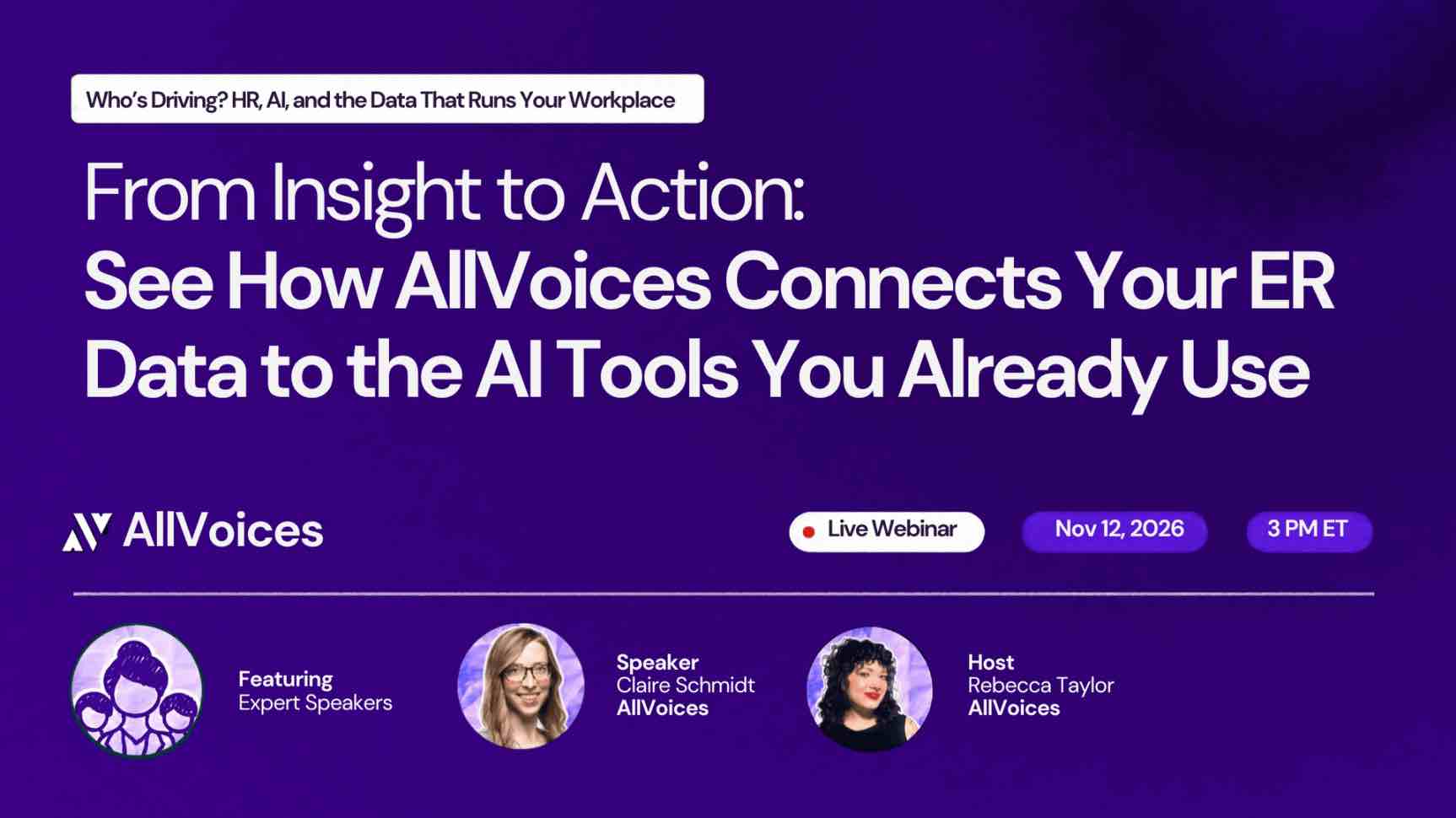
Our next webinar
Frequently asked questions

Got more questions? Email us at support@allvoices.co and we'll respond ASAP.

No items found.
Frequently asked questions

Got more questions? Email us at support@allvoices.co and we'll respond ASAP.

No items found.
Andrew Ives, Director of Culture & Talent Development at Fusion Medical Staffing - Defining Culture Intentionally
Episode 303
About This Episode
In this episode of Reimagining Company Culture, we’re chatting with Andrew Ives, Director of Culture & Talent Development at Fusion Medical Staffing. Prior to Fusion Andrew worked at Deloitte as an Audit Senior Manager. Tune in to learn Andrew’s thoughts on cultivating a great place to work, adopting radical flexibility, employee feedback inspiring a change, and more!
About The Guest
Andrew Ives is the Director of Culture & Talent Development at Fusion Medical Staffing. Prior to Fusion he worked at Deloitte as an Audit Senior Manager where he provided integrated audit and assurance services for several Fortune 500 and private clients in a wide variety of industries, including Aerospace & Defense, Construction, Government & Non-Profit, Insurance, Manufacturing, Power & Utilities, and Retail.
Episode Transcription

On a recent episode of Reimagining Company Culture, the conversation turned to defining culture intentionally rather than letting it accumulate. The guest, Andrew Ives, brought direct experience to the topic from their day-to-day work, and the conversation moved past the talking points most People teams have heard a hundred times. This recap pulls the practical thread of the discussion together and translates it into the workflows HR leaders are running today.

Andrew's background sets the context for how Andrew thinks about this work. Andrew Ives is the Director of Culture & Talent Development at Fusion Medical Staffing. Prior to Fusion he worked at Deloitte as an Audit Senior Manager where he provided integrated audit and assurance services for several Fortune 500 and private clients in a wide variety of industries, including Aerospace & Defense, Construction, Government & Non-Profit, Insurance, Manufacturi. That experience shapes the perspective the episode brings to defining culture intentionally rather than letting it accumulate, and the recap below stays grounded in the workflows leaders are running, not abstractions.

The conversation touches on the basics any People team is already managing, including values statement design and vision statement design. The recap below assumes that grounding and focuses on the operating moves leaders make on top of it.

Most of the framework below holds up across industries and company stages. The specifics vary; the underlying mechanics rarely do.

What it means to define culture instead of inheriting it

Andrew's path through Deloitte and into Fusion Medical Staffing put him in two extreme cultural environments. The Big Four lesson was how rigorously a culture can be socialized when the company invests in it. The Fusion lesson was how quickly a culture can shift when the company outgrows the founder's voice.

Defined cultures are not louder cultures. They are more specific cultures. The companies that get this right write down what they mean by their values in behavioral terms, train managers on the behavioral examples, and use the same examples in performance reviews. Without that specificity, values become decoration.

How leaders work through defining culture intentionally rather than letting it accumulate

How do you write a value people can use?

Pair it with two behavioral examples and one anti-example. 'We are direct' is a poster. 'We are direct, we share critical feedback within a week, we tell people what we will do before we do it, we do not run the same complaint through three managers' is a tool.

McKinsey research on culture in new businesses research finds that values written in behavioral terms outperform abstract values on every measurable engagement dimension. The discipline is in the specificity.

How do you keep a defined culture from going stale?

By refreshing the examples annually. The values themselves should be stable. The examples, the stories, the named behaviors, the recent calls, should change with the company. Stale examples are how culture loses its grip on the next cohort of employees.

The annual refresh is also when leaders decide whether the values are still right. Most do not need to change. The few that do are revealing.

What actually works in practice

The pattern across companies that handle defining culture intentionally rather than letting it accumulate well comes down to three operational habits.

  • Write values as behaviors, not adjectives. Adjectives are slogans. Behaviors are tools.
  • Use values in performance reviews. If values do not affect ratings, they will not affect behavior.
  • Refresh the examples every year. The values stay. The stories change. The annual refresh keeps the values current.

None of these are aspirational. They are checklists the strongest People teams run on a cadence, and the consistency is what makes the difference.

What looks like a culture decision from the outside is usually the cumulative effect of those three habits, applied without theatrics.

This pattern shows up alongside familiar tools like training and development guidance. The combination is what makes the operating model durable.

Where Employee Relations fits

AllVoices company culture solution programs in healthcare staffing need cultural consistency across distributed teams. AllVoices pulse surveys catch drift early. AllVoices HR case management platform keeps the documentation aligned with the named values when complaints test them.

The companies pulling this off rarely run it on memory. They run it on infrastructure. AllVoices HR case management platform centralizes the case data; AllVoices data and insights dashboard surfaces the patterns nobody catches manually; AllVoices Vera AI co-pilot for ER teams accelerates the response time so the work is finishable. Together they cover the operating layer that this episode keeps pointing at.

How does ER reinforce defined values?

By naming the value in the closeout communication. When a case closes with reference to the value that was in play, employees see the value getting applied, not just spoken. AllVoices Vera AI co-pilot keeps that language consistent across thousands of cases.

The supporting research is consistent. Independent analysis from SHRM analysis of declining employee engagement points the same direction the episode does. The combination of operating discipline and outside data is what gets People leaders past the slogan stage.

For a concrete example of how this plays out at scale, look at Bungie's culture and retention story, which shows the same operational pattern in a real customer environment.

The takeaway holds across companies of different sizes and industries. The teams that turn this episode's lesson into operating practice are the ones that name a target metric, run it on a cadence, and refuse to let activity stand in for outcomes. The metric does not have to be elaborate. It has to be visible to the people who can move it, and reviewed often enough that nothing falls off the radar for a quarter.

The other consistent pattern is that the work compounds. Year one of any of these practices feels like overhead. Year three is when the retention, engagement, and case-data signals start telling a clearly different story. People leaders who hold the line through the early part of the curve tend to be the ones who have the receipts when leadership asks for evidence later.

Frequently Asked Questions About Defining Culture Intentionally Rather Than Letting It Accumu

How many values is too many?

More than five. Most employees cannot retain more than five values, which means anything beyond that becomes decoration. Three to five is the practical range.

Should values be different for different teams?

Company-wide values stay the same. Team-level operating principles can vary. Conflating the two, calling team norms 'values', dilutes both.

What's the role of HR in defining culture?

HR builds the infrastructure. Leadership writes the words. Employees test them daily. When any of those three is missing, the culture drifts.

How do you handle a high performer who violates values?

Address it once with specificity. If the behavior continues, exit them, even if performance is strong. Tolerance for value violations from top performers is the fastest way to lose the culture.

Can a remote-first company have a strong defined culture?

Yes. Remote-first cultures are usually stronger because they had to write everything down. The discipline of documentation forces specificity that office cultures get to skip.

The Bottom Line for HR Leaders

Andrew's lesson from two very different cultures is that the form is less important than the rigor. A defined culture in writing, refreshed annually, used in performance reviews, defended in hiring and firing, that is the floor.

Below the floor, cultures accumulate. Above it, cultures compound.

See how AllVoices supports the kind of culture work this episode is about.

Want to learn more?
See the power of AllVoices today
Thank you! We look forward to meeting you soon
Oops! Something went wrong while submitting the form.
Frequently asked questions

Got more questions? Email us at support@allvoices.co and we'll respond ASAP.

No items found.
Frequently asked questions

Got more questions? Email us at support@allvoices.co and we'll respond ASAP.

No items found.