About This Episode
In this episode of Reimagining Company Culture, we’re chatting with Kathleen Ragelis, Senior Director of People at Komodo Health. Kathleen has extensive experience supporting teams from 100 to 1,000+ employees across the US, Europe, and Asia as a strategic HR partner. Tune in to learn Kathleen’s thoughts on intentionally growing your company culture at scale, innovating your retention strategy, equity-driven leadership, and more!
About The Guest
Kathleen Ragelis (she/her) is the Sr. Director, People Strategy & Operations and the Co-Lead of Diversity, Equity, and Inclusion programming at Komodo Health. Kathleen is responsible for driving alignment between business goals and people strategy while overseeing a cross-functional team across people partners and operations, programs, total rewards, learning and development, and employee experience. Kathleen has extensive experience supporting teams from 100 to 1,000+ employees across the US, Europe, and Asia as a strategic HR partner. Before joining Komodo, Kathleen worked at multiple high-growth startups and large world-class organizations, including Pivotal Software, nuTonomy, Accenture DayNine, and McKesson. She is passionate about building people-first HR practices and creating cultures of authenticity, empowerment, and engagement. Kathleen received her BA and Master’s in Human Resources Management from The Ohio State University.
Episode Breakdown

On a recent episode of Reimagining Company Culture, the conversation turned to building equitable company culture during high-growth scaling. The guest, Kathleen Ragelis, brought direct experience to the topic from their day-to-day work, and the conversation moved past the talking points most People teams have heard a hundred times. This recap pulls the practical thread of the discussion together and translates it into the workflows HR leaders are running today.

Kathleen's background sets the context for how Kathleen thinks about this work. Kathleen Ragelis (she/her) is the Sr. Director, People Strategy & Operations and the Co-Lead of Diversity, Equity, and Inclusion programming at Komodo Health. Kathleen is responsible for driving alignment between business goals and people strategy while overseeing a cross-functional team across people partners and operations, programs, total rewards, learning and development, a. That experience shapes the perspective the episode brings to building equitable company culture during high-growth scaling, and the recap below stays grounded in the workflows leaders are running, not abstractions.

The conversation touches on the basics any People team is already managing, including unconscious bias in the workplace and workforce analysis fundamentals. The recap below assumes that grounding and focuses on the operating moves leaders make on top of it.

Most of the framework below holds up across industries and company stages. The specifics vary; the underlying mechanics rarely do.

Why equity drift is the silent cost of fast scaling

Pay equity, promotion equity, and access equity all drift in the same direction during fast hiring. The reasons are mechanical, competitive offers vary, hiring managers vary, and informal access scales unevenly. Without intentional intervention, the gaps that opened in year two compound by year four into structural problems that take a decade to close.

Kathleen's experience scaling People programs from 100 to 1,000-plus surfaces a consistent finding. Equity audits done quarterly during fast growth catch most drift before it hardens. Audits done annually catch about half. Audits done less than that catch the drift after it has shaped the culture.

How leaders work through building equitable company culture during high-growth scaling

How do you audit pay equity in a fast-growing company?

Quarterly regression analysis controlling for level, function, and tenure. Annual deep audits that include benefits, equity grants, and promotion timing. SHRM pay equity strategic toolkit guidance is direct that even one unexplained pay difference can create legal risk if it is not based on a documented, job-related factor.

The discipline is consistency. Most companies audit during fundraising cycles and skip the rest of the year. The drift happens in the months between.

How do you maintain equity through reorgs?

By auditing before and after every reorg. Reorgs are the single most common moment when equity drift accelerates because the level mappings, manager assignments, and equity grants all change simultaneously. Without a pre/post audit, the cumulative effect is invisible until the next compliance review.

EEOC equal pay enforcement guidance enforcement data is consistent that reorg-driven pay disparities are among the most-charged categories. The audit is also the legal protection.

What actually works in practice

The pattern across companies that handle building equitable company culture during high-growth scaling well comes down to three operational habits.

  • Audit pay equity quarterly during fast growth. Annual audits catch about half the drift. Quarterly audits catch most of it.
  • Audit before and after every reorg. Reorgs accelerate drift. Pre/post audits are the only durable protection.
  • Tie equity findings to specific corrective actions. Audits without corrective actions accumulate liability. Audits with corrective actions reduce it.

None of these are aspirational. They are checklists the strongest People teams run on a cadence, and the consistency is what makes the difference.

What looks like a culture decision from the outside is usually the cumulative effect of those three habits, applied without theatrics.

This pattern shows up alongside familiar tools like untapped talent pools. The combination is what makes the operating model durable.

Where Employee Relations fits

AllVoices compliance solution programs in fast-growth companies need automated infrastructure. AllVoices data and insights dashboard surfaces equity patterns continuously. AllVoices HR case management platform keeps the documentation aligned with the audit findings when individual cases test them.

The companies pulling this off rarely run it on memory. They run it on infrastructure. AllVoices HR case management platform centralizes the case data; AllVoices data and insights dashboard surfaces the patterns nobody catches manually; AllVoices Vera AI co-pilot for ER teams accelerates the response time so the work is finishable. Together they cover the operating layer that this episode keeps pointing at.

How does ER support equity audit findings?

By treating systemic findings as systemic cases. When a pay equity audit surfaces a pattern, AllVoices workplace discrimination hotline workflows treat the pattern as its own case with its own owner. AllVoices Vera AI co-pilot keeps the closeout documentation tight enough to defend later.

The supporting research is consistent. Independent analysis from EEOC equal pay enforcement guidance points the same direction the episode does. The combination of operating discipline and outside data is what gets People leaders past the slogan stage.

For a concrete example of how this plays out at scale, look at Intercom's people-first culture story, which shows the same operational pattern in a real customer environment.

The takeaway holds across companies of different sizes and industries. The teams that turn this episode's lesson into operating practice are the ones that name a target metric, run it on a cadence, and refuse to let activity stand in for outcomes. The metric does not have to be elaborate. It has to be visible to the people who can move it, and reviewed often enough that nothing falls off the radar for a quarter.

The other consistent pattern is that the work compounds. Year one of any of these practices feels like overhead. Year three is when the retention, engagement, and case-data signals start telling a clearly different story. People leaders who hold the line through the early part of the curve tend to be the ones who have the receipts when leadership asks for evidence later.

Frequently Asked Questions About Building Equitable Company Culture During High-Growth Scalin

How often should pay equity audits run?

Quarterly during fast growth, annually during steady state. Most companies under-invest in audits in growth periods, when the drift is largest.

Are pay equity adjustments legally required?

When an audit identifies unexplained gaps, EEOC guidance and most state laws require documentation of legitimate business reasons or remediation. Documenting the audit and ignoring the finding is a worse legal posture than not auditing.

How do you handle pay equity in mergers and acquisitions?

Pre-close audits, post-close integration audits, and a documented integration plan that includes pay band reconciliation. Skipping the audit produces multi-year drift that is expensive to fix later.

Should pay equity findings be shared with employees?

Aggregated yes, individual no. Sharing the company-level analysis builds trust. Sharing identifiable individual data violates privacy and legal norms.

What's the most common pay equity mistake in growth-stage companies?

Closing the audit without funding the remediation. Audits without remediation create liability rather than reducing it.

The Bottom Line for HR Leaders

Kathleen's experience across high-growth scaling points at the same operational truth. Equity is mechanical work, not aspirational work. The companies that scale equitably do so because they audited, named the gaps, and funded the closure. The ones that did not are paying for it now.

The work compounds in either direction.

See how AllVoices supports the kind of culture work this episode is about.
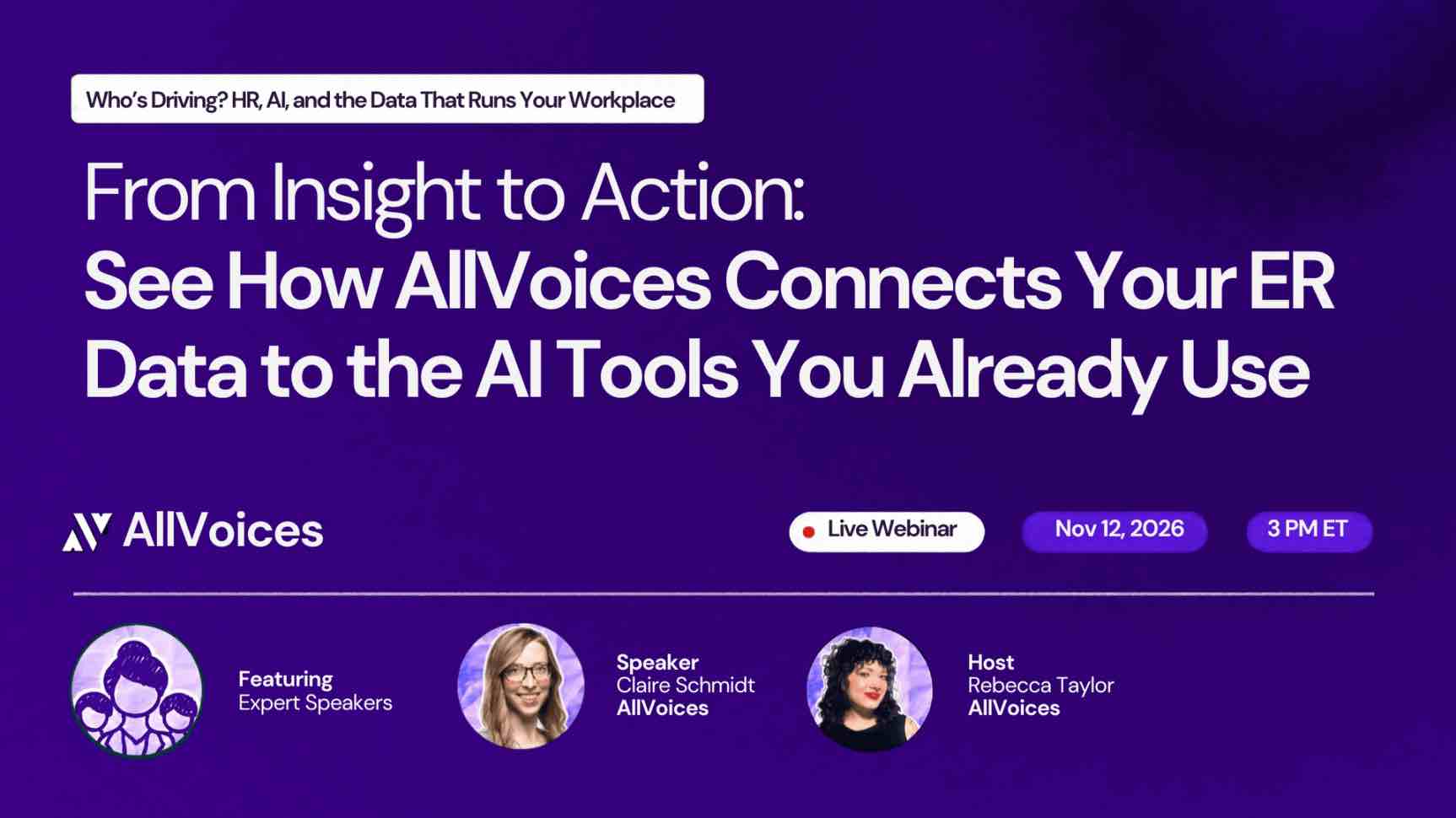
Our next webinar
Frequently asked questions

Got more questions? Email us at support@allvoices.co and we'll respond ASAP.

No items found.
Frequently asked questions

Got more questions? Email us at support@allvoices.co and we'll respond ASAP.

No items found.
Building Equitable Company Culture with Kathleen Ragelis, Senior Director of People at Komodo Health
Episode 336
About This Episode
In this episode of Reimagining Company Culture, we’re chatting with Kathleen Ragelis, Senior Director of People at Komodo Health. Kathleen has extensive experience supporting teams from 100 to 1,000+ employees across the US, Europe, and Asia as a strategic HR partner. Tune in to learn Kathleen’s thoughts on intentionally growing your company culture at scale, innovating your retention strategy, equity-driven leadership, and more!
About The Guest
Kathleen Ragelis (she/her) is the Sr. Director, People Strategy & Operations and the Co-Lead of Diversity, Equity, and Inclusion programming at Komodo Health. Kathleen is responsible for driving alignment between business goals and people strategy while overseeing a cross-functional team across people partners and operations, programs, total rewards, learning and development, and employee experience. Kathleen has extensive experience supporting teams from 100 to 1,000+ employees across the US, Europe, and Asia as a strategic HR partner. Before joining Komodo, Kathleen worked at multiple high-growth startups and large world-class organizations, including Pivotal Software, nuTonomy, Accenture DayNine, and McKesson. She is passionate about building people-first HR practices and creating cultures of authenticity, empowerment, and engagement. Kathleen received her BA and Master’s in Human Resources Management from The Ohio State University.
Episode Transcription

On a recent episode of Reimagining Company Culture, the conversation turned to building equitable company culture during high-growth scaling. The guest, Kathleen Ragelis, brought direct experience to the topic from their day-to-day work, and the conversation moved past the talking points most People teams have heard a hundred times. This recap pulls the practical thread of the discussion together and translates it into the workflows HR leaders are running today.

Kathleen's background sets the context for how Kathleen thinks about this work. Kathleen Ragelis (she/her) is the Sr. Director, People Strategy & Operations and the Co-Lead of Diversity, Equity, and Inclusion programming at Komodo Health. Kathleen is responsible for driving alignment between business goals and people strategy while overseeing a cross-functional team across people partners and operations, programs, total rewards, learning and development, a. That experience shapes the perspective the episode brings to building equitable company culture during high-growth scaling, and the recap below stays grounded in the workflows leaders are running, not abstractions.

The conversation touches on the basics any People team is already managing, including unconscious bias in the workplace and workforce analysis fundamentals. The recap below assumes that grounding and focuses on the operating moves leaders make on top of it.

Most of the framework below holds up across industries and company stages. The specifics vary; the underlying mechanics rarely do.

Why equity drift is the silent cost of fast scaling

Pay equity, promotion equity, and access equity all drift in the same direction during fast hiring. The reasons are mechanical, competitive offers vary, hiring managers vary, and informal access scales unevenly. Without intentional intervention, the gaps that opened in year two compound by year four into structural problems that take a decade to close.

Kathleen's experience scaling People programs from 100 to 1,000-plus surfaces a consistent finding. Equity audits done quarterly during fast growth catch most drift before it hardens. Audits done annually catch about half. Audits done less than that catch the drift after it has shaped the culture.

How leaders work through building equitable company culture during high-growth scaling

How do you audit pay equity in a fast-growing company?

Quarterly regression analysis controlling for level, function, and tenure. Annual deep audits that include benefits, equity grants, and promotion timing. SHRM pay equity strategic toolkit guidance is direct that even one unexplained pay difference can create legal risk if it is not based on a documented, job-related factor.

The discipline is consistency. Most companies audit during fundraising cycles and skip the rest of the year. The drift happens in the months between.

How do you maintain equity through reorgs?

By auditing before and after every reorg. Reorgs are the single most common moment when equity drift accelerates because the level mappings, manager assignments, and equity grants all change simultaneously. Without a pre/post audit, the cumulative effect is invisible until the next compliance review.

EEOC equal pay enforcement guidance enforcement data is consistent that reorg-driven pay disparities are among the most-charged categories. The audit is also the legal protection.

What actually works in practice

The pattern across companies that handle building equitable company culture during high-growth scaling well comes down to three operational habits.

  • Audit pay equity quarterly during fast growth. Annual audits catch about half the drift. Quarterly audits catch most of it.
  • Audit before and after every reorg. Reorgs accelerate drift. Pre/post audits are the only durable protection.
  • Tie equity findings to specific corrective actions. Audits without corrective actions accumulate liability. Audits with corrective actions reduce it.

None of these are aspirational. They are checklists the strongest People teams run on a cadence, and the consistency is what makes the difference.

What looks like a culture decision from the outside is usually the cumulative effect of those three habits, applied without theatrics.

This pattern shows up alongside familiar tools like untapped talent pools. The combination is what makes the operating model durable.

Where Employee Relations fits

AllVoices compliance solution programs in fast-growth companies need automated infrastructure. AllVoices data and insights dashboard surfaces equity patterns continuously. AllVoices HR case management platform keeps the documentation aligned with the audit findings when individual cases test them.

The companies pulling this off rarely run it on memory. They run it on infrastructure. AllVoices HR case management platform centralizes the case data; AllVoices data and insights dashboard surfaces the patterns nobody catches manually; AllVoices Vera AI co-pilot for ER teams accelerates the response time so the work is finishable. Together they cover the operating layer that this episode keeps pointing at.

How does ER support equity audit findings?

By treating systemic findings as systemic cases. When a pay equity audit surfaces a pattern, AllVoices workplace discrimination hotline workflows treat the pattern as its own case with its own owner. AllVoices Vera AI co-pilot keeps the closeout documentation tight enough to defend later.

The supporting research is consistent. Independent analysis from EEOC equal pay enforcement guidance points the same direction the episode does. The combination of operating discipline and outside data is what gets People leaders past the slogan stage.

For a concrete example of how this plays out at scale, look at Intercom's people-first culture story, which shows the same operational pattern in a real customer environment.

The takeaway holds across companies of different sizes and industries. The teams that turn this episode's lesson into operating practice are the ones that name a target metric, run it on a cadence, and refuse to let activity stand in for outcomes. The metric does not have to be elaborate. It has to be visible to the people who can move it, and reviewed often enough that nothing falls off the radar for a quarter.

The other consistent pattern is that the work compounds. Year one of any of these practices feels like overhead. Year three is when the retention, engagement, and case-data signals start telling a clearly different story. People leaders who hold the line through the early part of the curve tend to be the ones who have the receipts when leadership asks for evidence later.

Frequently Asked Questions About Building Equitable Company Culture During High-Growth Scalin

How often should pay equity audits run?

Quarterly during fast growth, annually during steady state. Most companies under-invest in audits in growth periods, when the drift is largest.

Are pay equity adjustments legally required?

When an audit identifies unexplained gaps, EEOC guidance and most state laws require documentation of legitimate business reasons or remediation. Documenting the audit and ignoring the finding is a worse legal posture than not auditing.

How do you handle pay equity in mergers and acquisitions?

Pre-close audits, post-close integration audits, and a documented integration plan that includes pay band reconciliation. Skipping the audit produces multi-year drift that is expensive to fix later.

Should pay equity findings be shared with employees?

Aggregated yes, individual no. Sharing the company-level analysis builds trust. Sharing identifiable individual data violates privacy and legal norms.

What's the most common pay equity mistake in growth-stage companies?

Closing the audit without funding the remediation. Audits without remediation create liability rather than reducing it.

The Bottom Line for HR Leaders

Kathleen's experience across high-growth scaling points at the same operational truth. Equity is mechanical work, not aspirational work. The companies that scale equitably do so because they audited, named the gaps, and funded the closure. The ones that did not are paying for it now.

The work compounds in either direction.

See how AllVoices supports the kind of culture work this episode is about.

Want to learn more?
See the power of AllVoices today
Thank you! We look forward to meeting you soon
Oops! Something went wrong while submitting the form.
Frequently asked questions

Got more questions? Email us at support@allvoices.co and we'll respond ASAP.

No items found.
Frequently asked questions

Got more questions? Email us at support@allvoices.co and we'll respond ASAP.

No items found.