About This Episode
In this episode of Reimagining Company Culture, we’re chatting with Dr. Ayanna Cummings, Director of Diversity & Inclusion at Compass Group National Accounts and Author. Dr. Ayanna Cummings is passionate about eradicating the malignant diseases of racism, sexism, heterosexism, ageism, ableism, and other ills which plague our social and organizational environs.
About The Guest
Dr. Ayanna Cummings is passionate about eradicating the malignant diseases of racism, sexism, heterosexism, ageism, ableism, and other ills which plague our social and organizational environs. She has over 21 years of experience as a diversity consultant, specialist, researcher, and trainer. In her current role as Director of Diversity + Inclusion with Compass Group National Accounts, Ayanna serves as a change agent for cultural transformation. Ayanna is also currently a postdoctoral scholar at Georgia Institute of Technology in the School of Psychology. Her scientific research seeks to examine the plight of, issues affecting, and identification of solutions relevant to African-Americans and other diverse and marginalized groups. Her research findings give her unique expertise in diversity, equity, & inclusion training and consulting strategies and cultural change methods. As a volunteer leader, she serves as Chair of the HR for Change committee with SHRM-Atlanta, Chair of Economic Empowerment with Urban League of Greater Atlanta Young Professionals, and as VP of Diversity, Equity, & Inclusion with the NBMBAA Seattle Chapter & Head of that chapter’s Leaders of Tomorrow program. Prior to being offered the role of Director of Diversity + Inclusion for Compass Group, Dr. Cummings worked with R. Thomas Consulting of Atlantaand Blackbird Leadership of New York City, as well as her own company Tapestry Consulting, LLC and served as Diversity Specialist with Terry University Systems (http://mytus.org). In these capacities she has served as lead and point of contact diversity specialist on a City of Atlanta proposal which would address diversity, equity, and inclusion cultural strategies in a municipality of more than 8,000 employees. She has held contracts with a digital ad agency in Atlanta, GA, a Diversification management company in Decatur, GA, and a diversity consulting company to law firms in New York City. She wrote, produced, directed, and narrated her own Diversity, Equity, and Inclusion training video and accompanying workbook, “Lifting the Veil of Hatred,” available for purchase online at http://tapestrydiversity.com. Dr. Cummings holds a PhD in Industrial/Organizational Psychology from the City University of New York Graduate Center in Manhattan as well as the MBA in Marketing from Clark Atlanta University. She also holds the SPHR Certification. Dr. Cummings is a Presidential Scholar and alumnus of her beloved alma mater, Hampton University in Hampton, Virginia, where she was inducted into the Forty.
Episode Breakdown

Dr. Ayanna Cummings is the Director of Diversity and Inclusion at Compass Group National Accounts and a postdoctoral scholar at Georgia Tech. With more than 21 years of experience in cultural change work, she joined Reimagining Company Culture to talk about what it actually takes to transform a workplace beyond the obvious symbolic moves.

Her view is that cultural transformation is not a single initiative or a quarterly campaign. It is the cumulative result of leaders, systems, and employees moving in the same direction over years. Most companies stall because they treat the work as episodic instead of structural.

Why Most Cultural Transformation Programs Stall

Cultural transformation programs often start with a town hall, a values refresh, and a manager training rollout. Then six months later, the same patterns return because the underlying systems did not change. SHRM research on workplace culture and retention found that workers in positive cultures are nearly four times more likely to stay, but the cultures that produce that outcome are built operationally, not announced.

Ayanna described the trap. Leaders confuse the visible artifacts of transformation, like training sessions and statements, with the actual work. The actual work is in performance review criteria, promotion decisions, hiring loops, and how managers handle conflict on a Wednesday afternoon. If those systems do not change, the transformation does not stick.

Her framing is that change management is the discipline that holds transformation in place. The companies that get this right invest in change capability across leadership, HR, and the manager population in equal measure.

What also matters is patience with the cadence. Real transformation takes three to five years. Leaders who expect to see culture change in a quarter often pull back too early, undoing the foundation just as it starts to hold.

How Do You Build a Transformation Program That Actually Holds?

What is the first move for a leader starting from scratch?

Ayanna recommends an honest baseline. Where is the culture today, by team, by demographic, by manager? Without that baseline, transformation becomes guesswork. The baseline includes employee survey data, retention by group, promotion rates, and feedback gathered through real conversations rather than just surveys.

How do you keep transformation from becoming performative?

By tying it to operational decisions. Inclusion work that does not change how hiring, promotion, and discipline decisions get made loses credibility quickly. Strong programs name the decisions that will change and report on whether they have.

What Actually Works in Cultural Transformation

Move beyond the values poster

Ayanna pushed back on the impulse to spend transformation budgets on training and statements. The highest-impact investments are in manager skill, accountability systems, and feedback channels that actually catch friction early.

Recognize that transformation lives at the manager level

Most employees experience the company through their manager. Transformation programs that skip the manager population almost always stall. Management training that is paired with feedback and accountability moves the needle further than any single executive initiative.

Hold the cadence through hard quarters

Transformation budgets are the first to get cut when finance squeezes. Strong programs anticipate that and build the case for sustained investment with retention data, recruiting data, and risk reduction metrics that protect the work in lean quarters.

Where Employee Relations Fits

ER systems are where cultural transformation is tested. AllVoices' DEI solution and our DEI hotline product give HR a clear, trusted way to surface and act on the friction that transformation work is supposed to address.

How does ER tooling support cultural transformation?

It surfaces the patterns that transformation programs are designed to fix. Aggregated case data shows where managers, teams, or systems are producing outcomes that contradict stated values. That data lets HR work upstream rather than reactively responding to one case at a time.

Frequently Asked Questions About Cultural Transformation

What is cultural transformation?

It is the deliberate, sustained work of changing the values, behaviors, and systems that define how a workplace operates. It includes leadership behavior, manager capability, decision-making processes, and the systems that hold values in place.

How long does cultural transformation take?

Three to five years for meaningful change. The timeline depends on the starting point, the strength of leadership commitment, and the extent to which underlying systems change.

Who owns cultural transformation?

The CEO sets the ceiling. HR convenes the work. Managers translate it daily. Employees make it real. None of these alone produces transformation, and skipping any of them stalls the program.

What is the difference between culture change and DEI?

DEI is one important domain of culture change but not the whole thing. Culture change can also include leadership style shifts, performance norms, and operating cadence. DEI work often catalyzes broader cultural transformation.

How do you measure cultural transformation?

Track retention by manager and demographic, promotion equity, voluntary attrition, engagement scores, and qualitative employee feedback over time. Year-over-year comparison is more useful than any single snapshot.

What kills transformation efforts fastest?

Inconsistency at the leadership level, budget cuts during slow quarters, and failure to update operational systems. Symbolic statements without operational follow-through erode credibility quickly.

The Bottom Line for HR Leaders

Ayanna's framing is grounded in 21 years of doing this work across organizations of different sizes and sectors. Cultural transformation is not a campaign. It is the discipline of changing systems, building manager capability, and holding the cadence even when the work feels slow.

The leaders who get this right share a few habits. They start with an honest baseline. They tie transformation to operational decisions. They invest in managers as the translation layer. And they hold the cadence through hard quarters, building the case with data that protects the work.

Programs that hold this discipline end up with cultures that recruit better, retain better, and handle hard moments with less attrition. The investment compounds over years, in ways that show up most clearly when other companies are losing their best people.

Across the conversation, the throughline was that transformation is not glamorous. It is a slow, steady reshaping of how decisions get made, how managers behave, and how employees experience the company. The teams that do that work end up with cultures that hold under pressure rather than crumbling at the first hard quarter.

Industry research keeps reinforcing this view. SHRM research on workplace culture and retention found that workers in positive cultures are nearly four times more likely to stay. Cultural transformation done well is one of the most durable retention investments a company can make.

Programs that hold this discipline also become organizational case studies. Internally, they create a sense of momentum that recruits the next wave of talent who want to be part of the work. Externally, they shape the company's reputation in ways that attract talent for years afterward.

The hardest part of transformation is keeping the discipline through quarters when there is no obvious win to point to. The companies that hold the discipline through those quarters end up with a different kind of culture than the ones that pulled back. Patience is part of the operational design.

HR teams that lead transformation also tend to develop a unique kind of organizational credibility. Their reputation, both internally and externally, becomes one of the most valuable assets in their toolkit. That credibility is what gets the program through executive transitions and budget shocks.

See how AllVoices supports cultural transformation work that holds.
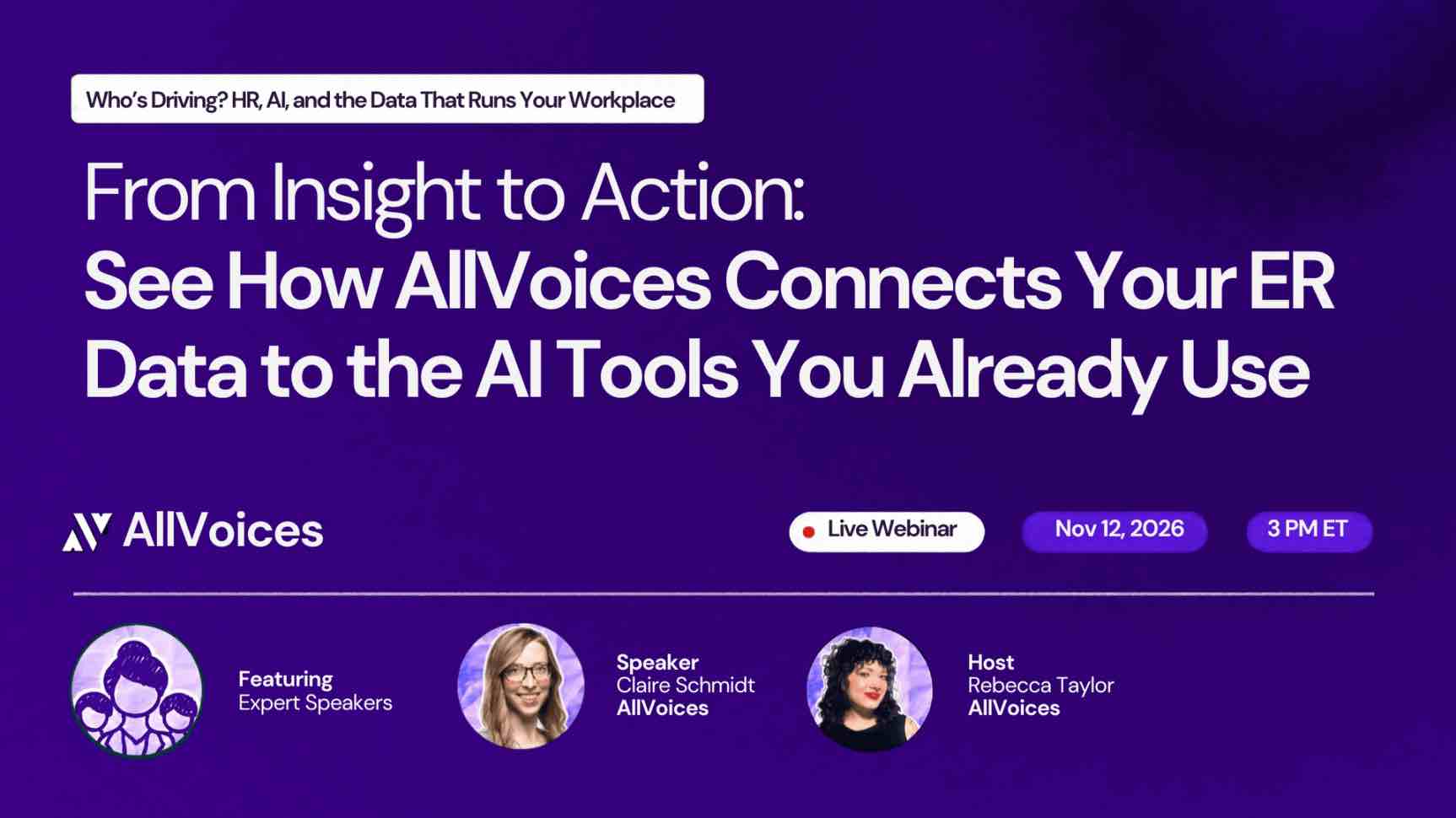
Our next webinar
Frequently asked questions

Got more questions? Email us at support@allvoices.co and we'll respond ASAP.

No items found.
Frequently asked questions

Got more questions? Email us at support@allvoices.co and we'll respond ASAP.

No items found.
Dr. Ayanna Cummings, Director of Diversity & Inclusion at Compass Group National Accounts and Author - Cultural Transformation More than One Step at a Time
Episode 139
About This Episode
In this episode of Reimagining Company Culture, we’re chatting with Dr. Ayanna Cummings, Director of Diversity & Inclusion at Compass Group National Accounts and Author. Dr. Ayanna Cummings is passionate about eradicating the malignant diseases of racism, sexism, heterosexism, ageism, ableism, and other ills which plague our social and organizational environs.
About The Guest
Dr. Ayanna Cummings is passionate about eradicating the malignant diseases of racism, sexism, heterosexism, ageism, ableism, and other ills which plague our social and organizational environs. She has over 21 years of experience as a diversity consultant, specialist, researcher, and trainer. In her current role as Director of Diversity + Inclusion with Compass Group National Accounts, Ayanna serves as a change agent for cultural transformation. Ayanna is also currently a postdoctoral scholar at Georgia Institute of Technology in the School of Psychology. Her scientific research seeks to examine the plight of, issues affecting, and identification of solutions relevant to African-Americans and other diverse and marginalized groups. Her research findings give her unique expertise in diversity, equity, & inclusion training and consulting strategies and cultural change methods. As a volunteer leader, she serves as Chair of the HR for Change committee with SHRM-Atlanta, Chair of Economic Empowerment with Urban League of Greater Atlanta Young Professionals, and as VP of Diversity, Equity, & Inclusion with the NBMBAA Seattle Chapter & Head of that chapter’s Leaders of Tomorrow program. Prior to being offered the role of Director of Diversity + Inclusion for Compass Group, Dr. Cummings worked with R. Thomas Consulting of Atlantaand Blackbird Leadership of New York City, as well as her own company Tapestry Consulting, LLC and served as Diversity Specialist with Terry University Systems (http://mytus.org). In these capacities she has served as lead and point of contact diversity specialist on a City of Atlanta proposal which would address diversity, equity, and inclusion cultural strategies in a municipality of more than 8,000 employees. She has held contracts with a digital ad agency in Atlanta, GA, a Diversification management company in Decatur, GA, and a diversity consulting company to law firms in New York City. She wrote, produced, directed, and narrated her own Diversity, Equity, and Inclusion training video and accompanying workbook, “Lifting the Veil of Hatred,” available for purchase online at http://tapestrydiversity.com. Dr. Cummings holds a PhD in Industrial/Organizational Psychology from the City University of New York Graduate Center in Manhattan as well as the MBA in Marketing from Clark Atlanta University. She also holds the SPHR Certification. Dr. Cummings is a Presidential Scholar and alumnus of her beloved alma mater, Hampton University in Hampton, Virginia, where she was inducted into the Forty.
Episode Transcription

Dr. Ayanna Cummings is the Director of Diversity and Inclusion at Compass Group National Accounts and a postdoctoral scholar at Georgia Tech. With more than 21 years of experience in cultural change work, she joined Reimagining Company Culture to talk about what it actually takes to transform a workplace beyond the obvious symbolic moves.

Her view is that cultural transformation is not a single initiative or a quarterly campaign. It is the cumulative result of leaders, systems, and employees moving in the same direction over years. Most companies stall because they treat the work as episodic instead of structural.

Why Most Cultural Transformation Programs Stall

Cultural transformation programs often start with a town hall, a values refresh, and a manager training rollout. Then six months later, the same patterns return because the underlying systems did not change. SHRM research on workplace culture and retention found that workers in positive cultures are nearly four times more likely to stay, but the cultures that produce that outcome are built operationally, not announced.

Ayanna described the trap. Leaders confuse the visible artifacts of transformation, like training sessions and statements, with the actual work. The actual work is in performance review criteria, promotion decisions, hiring loops, and how managers handle conflict on a Wednesday afternoon. If those systems do not change, the transformation does not stick.

Her framing is that change management is the discipline that holds transformation in place. The companies that get this right invest in change capability across leadership, HR, and the manager population in equal measure.

What also matters is patience with the cadence. Real transformation takes three to five years. Leaders who expect to see culture change in a quarter often pull back too early, undoing the foundation just as it starts to hold.

How Do You Build a Transformation Program That Actually Holds?

What is the first move for a leader starting from scratch?

Ayanna recommends an honest baseline. Where is the culture today, by team, by demographic, by manager? Without that baseline, transformation becomes guesswork. The baseline includes employee survey data, retention by group, promotion rates, and feedback gathered through real conversations rather than just surveys.

How do you keep transformation from becoming performative?

By tying it to operational decisions. Inclusion work that does not change how hiring, promotion, and discipline decisions get made loses credibility quickly. Strong programs name the decisions that will change and report on whether they have.

What Actually Works in Cultural Transformation

Move beyond the values poster

Ayanna pushed back on the impulse to spend transformation budgets on training and statements. The highest-impact investments are in manager skill, accountability systems, and feedback channels that actually catch friction early.

Recognize that transformation lives at the manager level

Most employees experience the company through their manager. Transformation programs that skip the manager population almost always stall. Management training that is paired with feedback and accountability moves the needle further than any single executive initiative.

Hold the cadence through hard quarters

Transformation budgets are the first to get cut when finance squeezes. Strong programs anticipate that and build the case for sustained investment with retention data, recruiting data, and risk reduction metrics that protect the work in lean quarters.

Where Employee Relations Fits

ER systems are where cultural transformation is tested. AllVoices' DEI solution and our DEI hotline product give HR a clear, trusted way to surface and act on the friction that transformation work is supposed to address.

How does ER tooling support cultural transformation?

It surfaces the patterns that transformation programs are designed to fix. Aggregated case data shows where managers, teams, or systems are producing outcomes that contradict stated values. That data lets HR work upstream rather than reactively responding to one case at a time.

Frequently Asked Questions About Cultural Transformation

What is cultural transformation?

It is the deliberate, sustained work of changing the values, behaviors, and systems that define how a workplace operates. It includes leadership behavior, manager capability, decision-making processes, and the systems that hold values in place.

How long does cultural transformation take?

Three to five years for meaningful change. The timeline depends on the starting point, the strength of leadership commitment, and the extent to which underlying systems change.

Who owns cultural transformation?

The CEO sets the ceiling. HR convenes the work. Managers translate it daily. Employees make it real. None of these alone produces transformation, and skipping any of them stalls the program.

What is the difference between culture change and DEI?

DEI is one important domain of culture change but not the whole thing. Culture change can also include leadership style shifts, performance norms, and operating cadence. DEI work often catalyzes broader cultural transformation.

How do you measure cultural transformation?

Track retention by manager and demographic, promotion equity, voluntary attrition, engagement scores, and qualitative employee feedback over time. Year-over-year comparison is more useful than any single snapshot.

What kills transformation efforts fastest?

Inconsistency at the leadership level, budget cuts during slow quarters, and failure to update operational systems. Symbolic statements without operational follow-through erode credibility quickly.

The Bottom Line for HR Leaders

Ayanna's framing is grounded in 21 years of doing this work across organizations of different sizes and sectors. Cultural transformation is not a campaign. It is the discipline of changing systems, building manager capability, and holding the cadence even when the work feels slow.

The leaders who get this right share a few habits. They start with an honest baseline. They tie transformation to operational decisions. They invest in managers as the translation layer. And they hold the cadence through hard quarters, building the case with data that protects the work.

Programs that hold this discipline end up with cultures that recruit better, retain better, and handle hard moments with less attrition. The investment compounds over years, in ways that show up most clearly when other companies are losing their best people.

Across the conversation, the throughline was that transformation is not glamorous. It is a slow, steady reshaping of how decisions get made, how managers behave, and how employees experience the company. The teams that do that work end up with cultures that hold under pressure rather than crumbling at the first hard quarter.

Industry research keeps reinforcing this view. SHRM research on workplace culture and retention found that workers in positive cultures are nearly four times more likely to stay. Cultural transformation done well is one of the most durable retention investments a company can make.

Programs that hold this discipline also become organizational case studies. Internally, they create a sense of momentum that recruits the next wave of talent who want to be part of the work. Externally, they shape the company's reputation in ways that attract talent for years afterward.

The hardest part of transformation is keeping the discipline through quarters when there is no obvious win to point to. The companies that hold the discipline through those quarters end up with a different kind of culture than the ones that pulled back. Patience is part of the operational design.

HR teams that lead transformation also tend to develop a unique kind of organizational credibility. Their reputation, both internally and externally, becomes one of the most valuable assets in their toolkit. That credibility is what gets the program through executive transitions and budget shocks.

See how AllVoices supports cultural transformation work that holds.

Want to learn more?
See the power of AllVoices today
Thank you! We look forward to meeting you soon
Oops! Something went wrong while submitting the form.
Frequently asked questions

Got more questions? Email us at support@allvoices.co and we'll respond ASAP.

No items found.
Frequently asked questions

Got more questions? Email us at support@allvoices.co and we'll respond ASAP.

No items found.