About This Episode
In this episode of Reimagining Company Culture, we’re chatting with Janelle Aaker, Former VP, Global Diversity & Inclusion at lululemon. As the VP of Global Diversity & Inclusion at lululemon, Janelle created and executed the DEI strategy for over 20,000 employees. Janelle held various senior leader roles at lululemon, including VP of Leadership & Development, Director of Talent Acquisition, and Director of People & Culture Business Partners.
About The Guest
Janelle Aaker, she/her (former VP, Global Diversity & Inclusion at lululemon) As the VP of Global Diversity & Inclusion at lululemon, Janelle created and executed the DEI strategy for over 20,000 employees. Janelle held various senior leader roles at lululemon, including VP of Leadership & Development, Director of Talent Acquisition, and Director of People & Culture Business Partners. Prior to joining lululemon in 2015, Janelle spent 9 years at Nike, Inc where she held various roles in HR, including Talent Acquisition, Talent Development, HR Operations and HR Generalist. She also spent 3 years working in Global Sales and Brand Marketing. Currently, Janelle consults and advises leaders across multiple industries in diversity, equity & inclusion practices.
Episode Breakdown

Janelle Aaker is the former Vice President of Global Diversity and Inclusion at lululemon, where she built the DEI strategy for more than 20,000 employees. She held senior leadership roles at lululemon across leadership and development, talent acquisition, and people and culture business partners. Before lululemon, she spent nine years at Nike across talent acquisition, talent development, and HR generalist roles. Her work today involves consulting and advising leaders across industries on diversity, equity, and inclusion practices, with a particular focus on the intersection of mental health and inclusion.

This Reimagining Company Culture conversation focused on the practical work of destigmatizing mental health resources. Most companies offer mental health benefits and watch utilization stay below the level the need would justify. Janelle walked through what changes when destigmatization becomes an operating commitment rather than a benefits page reference.

The synthesis below pulls in research and field practice from People teams running this work today.

Why Mental Health Stigma Persists at Work

Stigma persists because the workplace signals around using mental health resources are usually negative. Promotion patterns, project allocation patterns, and informal feedback all communicate to employees that disclosure has a cost. Until those signals change, benefit catalogs alone do not move utilization.

SHRM’s 2025 Workplace Mental Health insights reported that 30 percent of U.S. workers would take a pay cut to get better mental health support, and 49 percent of managers feel pressured to prioritize organizational wellbeing over the people they manage. The data shows that need is high and the operating environment is working against the stated commitment.

Janelle’s framing pushes destigmatization into operational territory. The work is not a campaign; it is a series of structural changes to who talks about mental health, how managers handle disclosures, and how the company protects employees who use the resources offered to them.

What Real Destigmatization Looks Like

How do you destigmatize mental health at work?

Visible executive use of mental health resources, clear manager scripts for disclosure conversations, and protected time off that is enforced rather than aspirational. Wellness programs only become real when these structural changes happen alongside the benefit catalog.

How does the Mental Health Parity Act fit in?

The Mental Health Parity Act requires group health plans to cover mental health benefits at parity with medical and surgical benefits. The law sets a floor; destigmatization happens at the operational practice level above that floor.

What Actually Works in Destigmatization

Tie mental health to DEI strategy

Mental health stigma falls disproportionately on the same populations DEI work supports. Treating mental health as part of DEI strategy produces better outcomes for the populations most affected by the stigma. Treating mental health as a separate workstream usually produces uneven results.

Train managers in disclosure conversations

Most managers want to support mental health but lack specific training. Explicit scripts (how to acknowledge a disclosure, how to maintain confidentiality, how to adjust workload temporarily) close the gap. Training managers in the language is more effective than running another company-wide awareness campaign.

Build anonymous reporting infrastructure for retaliation cases

Anonymous reporting channels matter most for employees who fear retaliation. Mental health disclosures sometimes lead to subtle retaliation (project withdrawal, exclusion from key meetings, reduced visibility), and employees need a credible channel to surface those patterns without paying a professional cost.

Where Employee Relations Fits in Mental Health Destigmatization

ER cases related to mental health are diagnostic. Patterns reveal whether the workplace signals match the stated commitment. Companies running mature DEI programs treat mental health-adjacent ER trends as a primary signal of cultural health.

How ER signal exposes stigma

Repeat retaliation complaints from employees who used mental health resources reveal exactly where the stigma operates. Deloitte’s 2025 Gen Z and Millennial Survey shows that 40 percent of Gen Z and 35 percent of millennial employees report stress all or most of the time. The combination of high stress and high stigma produces the conditions for both undisclosed need and ER cases when disclosures go badly.

Frequently Asked Questions About Workplace Mental Health

What does it mean to destigmatize mental health at work?

Destigmatizing mental health at work means changing the operating practices, manager behaviors, and cultural signals that currently make disclosure costly. It is not a single program; it is a series of structural changes implemented over multiple years.

How do executives reduce stigma?

Visible use of mental health resources, honest discussion of pressure and recovery, and protection of employees who disclose all signal that the cultural commitment is real. Executives who avoid the topic signal the opposite, regardless of what is on the benefits page.

How does mental health connect to inclusion?

Mental health stigma operates differently across demographics. Inclusion strategy that ignores mental health misses one of the most consequential parts of the lived experience for many employees, especially in populations historically marginalized in workplaces.

How can small companies build mental health practice?

Small companies often do this better because the founders set the cultural tone directly. Visible founder use of mental health resources, deliberate boundaries around work hours, and direct communication about workload calibration produce strong destigmatization without expensive program infrastructure.

How does mental health practice tie to retention?

Employee engagement connects tightly to whether employees feel cared for as people, not just as productive units. Companies that destigmatize mental health usually retain people longer, especially in roles with high cognitive or emotional load.

One additional discipline that consistently separates strong mental health practice from weak practice is the willingness to talk about workload as a leadership decision. Most chronic mental health problems trace back to workload calibration that no individual employee can solve. Companies that frame workload as a leadership accountability produce dramatically better outcomes than companies that frame it as a personal time management issue.

How does mental health practice connect to performance management?

Performance management systems sometimes implicitly penalize employees who use mental health resources, even when the formal policy says otherwise. Auditing performance review patterns by employees who have used mental health resources reveals whether the implicit pattern matches the explicit policy. Companies that catch the gap can correct it before it becomes a retention issue.

What is the role of HR in mental health policy?

HR sets the policy framework, trains managers, and audits implementation. Strong HR teams treat mental health as connected work that touches benefits, ER, performance management, and DEI. Weak HR teams treat mental health as a benefits issue and miss the operational practices that determine whether the policy is real.

One additional pattern worth highlighting: the most credible mental health practice is the one that protects employees during business pressure rather than promoting it during calm periods. Companies that maintain mental health commitments through layoffs, reorgs, and missed quarters build durable trust; companies that drop the commitments under pressure show employees what the stated values were really worth.

The Bottom Line for HR Leaders

Janelle’s argument is structural: destigmatization happens through operating practice, not through awareness campaigns alone. Companies that change the workplace signals around mental health (manager scripts, executive modeling, retaliation protection, workload calibration) produce utilization that actually matches need.

For People teams running this work, the practical move is to integrate mental health into DEI strategy, train managers in the specific conversational moves, and instrument the system through ER signal that catches retaliation before it becomes systemic. The combination produces durable destigmatization that survives executive transitions and economic pressure.

See how AllVoices helps People teams turn workplace signals into action.
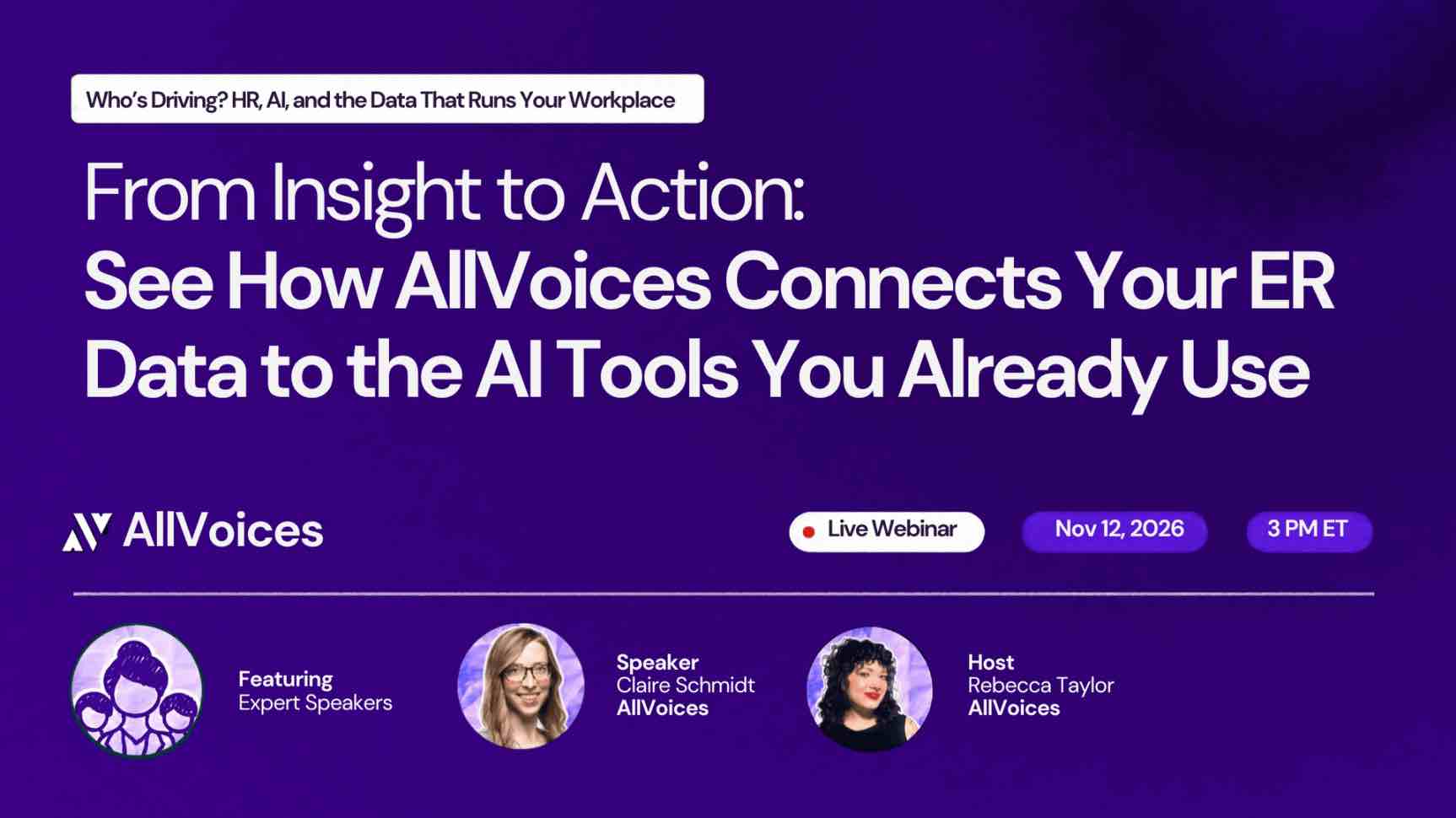
Our next webinar
Frequently asked questions

Got more questions? Email us at support@allvoices.co and we'll respond ASAP.

No items found.
Frequently asked questions

Got more questions? Email us at support@allvoices.co and we'll respond ASAP.

No items found.
Former VP, Global Diversity & Inclusion at lululemon, Janelle Aaker- Destigmatizing Mental Health Resources
Episode 107
About This Episode
In this episode of Reimagining Company Culture, we’re chatting with Janelle Aaker, Former VP, Global Diversity & Inclusion at lululemon. As the VP of Global Diversity & Inclusion at lululemon, Janelle created and executed the DEI strategy for over 20,000 employees. Janelle held various senior leader roles at lululemon, including VP of Leadership & Development, Director of Talent Acquisition, and Director of People & Culture Business Partners.
About The Guest
Janelle Aaker, she/her (former VP, Global Diversity & Inclusion at lululemon) As the VP of Global Diversity & Inclusion at lululemon, Janelle created and executed the DEI strategy for over 20,000 employees. Janelle held various senior leader roles at lululemon, including VP of Leadership & Development, Director of Talent Acquisition, and Director of People & Culture Business Partners. Prior to joining lululemon in 2015, Janelle spent 9 years at Nike, Inc where she held various roles in HR, including Talent Acquisition, Talent Development, HR Operations and HR Generalist. She also spent 3 years working in Global Sales and Brand Marketing. Currently, Janelle consults and advises leaders across multiple industries in diversity, equity & inclusion practices.
Episode Transcription

Janelle Aaker is the former Vice President of Global Diversity and Inclusion at lululemon, where she built the DEI strategy for more than 20,000 employees. She held senior leadership roles at lululemon across leadership and development, talent acquisition, and people and culture business partners. Before lululemon, she spent nine years at Nike across talent acquisition, talent development, and HR generalist roles. Her work today involves consulting and advising leaders across industries on diversity, equity, and inclusion practices, with a particular focus on the intersection of mental health and inclusion.

This Reimagining Company Culture conversation focused on the practical work of destigmatizing mental health resources. Most companies offer mental health benefits and watch utilization stay below the level the need would justify. Janelle walked through what changes when destigmatization becomes an operating commitment rather than a benefits page reference.

The synthesis below pulls in research and field practice from People teams running this work today.

Why Mental Health Stigma Persists at Work

Stigma persists because the workplace signals around using mental health resources are usually negative. Promotion patterns, project allocation patterns, and informal feedback all communicate to employees that disclosure has a cost. Until those signals change, benefit catalogs alone do not move utilization.

SHRM’s 2025 Workplace Mental Health insights reported that 30 percent of U.S. workers would take a pay cut to get better mental health support, and 49 percent of managers feel pressured to prioritize organizational wellbeing over the people they manage. The data shows that need is high and the operating environment is working against the stated commitment.

Janelle’s framing pushes destigmatization into operational territory. The work is not a campaign; it is a series of structural changes to who talks about mental health, how managers handle disclosures, and how the company protects employees who use the resources offered to them.

What Real Destigmatization Looks Like

How do you destigmatize mental health at work?

Visible executive use of mental health resources, clear manager scripts for disclosure conversations, and protected time off that is enforced rather than aspirational. Wellness programs only become real when these structural changes happen alongside the benefit catalog.

How does the Mental Health Parity Act fit in?

The Mental Health Parity Act requires group health plans to cover mental health benefits at parity with medical and surgical benefits. The law sets a floor; destigmatization happens at the operational practice level above that floor.

What Actually Works in Destigmatization

Tie mental health to DEI strategy

Mental health stigma falls disproportionately on the same populations DEI work supports. Treating mental health as part of DEI strategy produces better outcomes for the populations most affected by the stigma. Treating mental health as a separate workstream usually produces uneven results.

Train managers in disclosure conversations

Most managers want to support mental health but lack specific training. Explicit scripts (how to acknowledge a disclosure, how to maintain confidentiality, how to adjust workload temporarily) close the gap. Training managers in the language is more effective than running another company-wide awareness campaign.

Build anonymous reporting infrastructure for retaliation cases

Anonymous reporting channels matter most for employees who fear retaliation. Mental health disclosures sometimes lead to subtle retaliation (project withdrawal, exclusion from key meetings, reduced visibility), and employees need a credible channel to surface those patterns without paying a professional cost.

Where Employee Relations Fits in Mental Health Destigmatization

ER cases related to mental health are diagnostic. Patterns reveal whether the workplace signals match the stated commitment. Companies running mature DEI programs treat mental health-adjacent ER trends as a primary signal of cultural health.

How ER signal exposes stigma

Repeat retaliation complaints from employees who used mental health resources reveal exactly where the stigma operates. Deloitte’s 2025 Gen Z and Millennial Survey shows that 40 percent of Gen Z and 35 percent of millennial employees report stress all or most of the time. The combination of high stress and high stigma produces the conditions for both undisclosed need and ER cases when disclosures go badly.

Frequently Asked Questions About Workplace Mental Health

What does it mean to destigmatize mental health at work?

Destigmatizing mental health at work means changing the operating practices, manager behaviors, and cultural signals that currently make disclosure costly. It is not a single program; it is a series of structural changes implemented over multiple years.

How do executives reduce stigma?

Visible use of mental health resources, honest discussion of pressure and recovery, and protection of employees who disclose all signal that the cultural commitment is real. Executives who avoid the topic signal the opposite, regardless of what is on the benefits page.

How does mental health connect to inclusion?

Mental health stigma operates differently across demographics. Inclusion strategy that ignores mental health misses one of the most consequential parts of the lived experience for many employees, especially in populations historically marginalized in workplaces.

How can small companies build mental health practice?

Small companies often do this better because the founders set the cultural tone directly. Visible founder use of mental health resources, deliberate boundaries around work hours, and direct communication about workload calibration produce strong destigmatization without expensive program infrastructure.

How does mental health practice tie to retention?

Employee engagement connects tightly to whether employees feel cared for as people, not just as productive units. Companies that destigmatize mental health usually retain people longer, especially in roles with high cognitive or emotional load.

One additional discipline that consistently separates strong mental health practice from weak practice is the willingness to talk about workload as a leadership decision. Most chronic mental health problems trace back to workload calibration that no individual employee can solve. Companies that frame workload as a leadership accountability produce dramatically better outcomes than companies that frame it as a personal time management issue.

How does mental health practice connect to performance management?

Performance management systems sometimes implicitly penalize employees who use mental health resources, even when the formal policy says otherwise. Auditing performance review patterns by employees who have used mental health resources reveals whether the implicit pattern matches the explicit policy. Companies that catch the gap can correct it before it becomes a retention issue.

What is the role of HR in mental health policy?

HR sets the policy framework, trains managers, and audits implementation. Strong HR teams treat mental health as connected work that touches benefits, ER, performance management, and DEI. Weak HR teams treat mental health as a benefits issue and miss the operational practices that determine whether the policy is real.

One additional pattern worth highlighting: the most credible mental health practice is the one that protects employees during business pressure rather than promoting it during calm periods. Companies that maintain mental health commitments through layoffs, reorgs, and missed quarters build durable trust; companies that drop the commitments under pressure show employees what the stated values were really worth.

The Bottom Line for HR Leaders

Janelle’s argument is structural: destigmatization happens through operating practice, not through awareness campaigns alone. Companies that change the workplace signals around mental health (manager scripts, executive modeling, retaliation protection, workload calibration) produce utilization that actually matches need.

For People teams running this work, the practical move is to integrate mental health into DEI strategy, train managers in the specific conversational moves, and instrument the system through ER signal that catches retaliation before it becomes systemic. The combination produces durable destigmatization that survives executive transitions and economic pressure.

See how AllVoices helps People teams turn workplace signals into action.

Want to learn more?
See the power of AllVoices today
Thank you! We look forward to meeting you soon
Oops! Something went wrong while submitting the form.
Frequently asked questions

Got more questions? Email us at support@allvoices.co and we'll respond ASAP.

No items found.
Frequently asked questions

Got more questions? Email us at support@allvoices.co and we'll respond ASAP.

No items found.