About This Episode
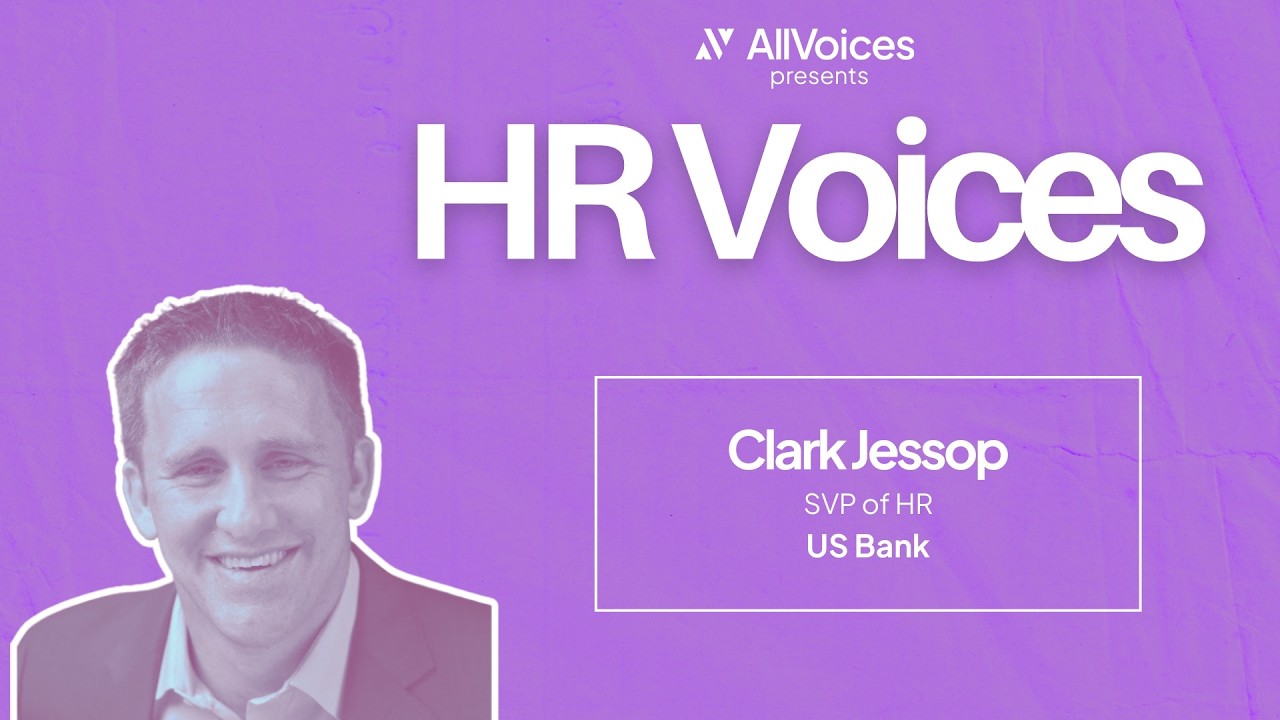
AI is accelerating everything, but speed without clarity just creates noise. Clark Jessop, Senior Vice President of HR at U.S. Bank and the HR lead for its digital, data and AI and product teams, describes how he helps leaders manage acceleration without losing focus. He makes the case that discernment is the defining human skill of the AI age, and gets specific about simplifying decision flows, clarifying decision rights, and identifying where human judgment has to be actively protected.
About The Guest
Clark Jessop is Senior Vice President of HR at U.S. Bank, where he leads HR for the digital, data and AI, and product organizations — which puts him close to the teams generating the acceleration everyone else is absorbing. His argument is that the scarce skill in an AI-saturated environment is not analysis but discernment: knowing which decisions deserve attention, who actually holds the call, and where speed is quietly degrading judgment.
Episode Breakdown

AI has made almost every task faster. It has not made decisions better by default. Clark Jessop, Senior Vice President of HR at U.S. Bank, sees that gap up close as the HR lead for the bank’s digital, data and AI teams and its product teams across the company. He described his core challenge to host Rebecca Taylor in five words: “managing acceleration without losing clarity.”

His leaders do not lack information. They are buried in it: customer data, regulatory updates, stakeholder requests, and performance dashboards for nearly everything. Clark’s view is that the scarce skill is no longer analysis. It is discernment, the judgment to decide which inputs deserve a human and which should flow through on their own. For People teams, that reframes the job from building more programs to removing the noise that slows the business down.

Why Faster Output Creates More Noise

Clark was careful to separate speed from quality. AI drafts, analyzes, and synthesizes at a pace no team could match, but the output still lands on someone’s desk. He pointed to the AI-generated notes that now follow nearly every meeting he attends: thorough, and long. The chief digital officer he supports recently put the risk plainly, saying the biggest danger of the AI age is probably data overload.

The research backs up the feeling. Microsoft’s analysis of the infinite workday found employees are interrupted every two minutes during core work hours, roughly 275 interruptions a day from meetings, emails, and chats. More AI output on top of that load does not produce clarity. It produces more to sort.

Clark’s metaphor is a control tower at a busy airport. Weather updates, fuel levels, runway availability, and maintenance alerts arrive constantly. A sudden weather shift or two aircraft approaching the same runway demands experienced human judgment right away. Most other signals should flow automatically. Treat every signal as urgent and the system overloads; automate everything and the risk climbs.

What Discernment Looks Like in Practice

Clark traced the problem back to a business school lesson: a TV remote with a dizzying number of buttons, used to teach the difference between features and benefits. In his words, organizations are “still in that phase of introducing features without having clear benefits.” The test for any new tool or workflow is whether it moves an actual business outcome.

He was candid that discernment is hard to define at the macro level. It shows up in small decisions, made by the people applying the technology inside their own jobs. What leaders can supply is the North Star: hold every workflow up against the outcome it is supposed to drive, and change the workflow when the two drift apart.

That lens applies to HR as much as to any digital team. Clark’s role, as he described it, is to clarify who actually makes decisions, simplify structures where possible, and put the right expertise where it matters most. He is deliberately trying not to add process.

What Actually Works

Design Workflows Around the Moments That Need Judgment

Clark argues the real skill of the AI age is “deciding which signals deserve deep human focus,” then designing the workflow so those moments stay protected. The fix is triage by design, not by heroics. Routine inputs move automatically, and the decisions that carry customer, regulatory, or people risk get a named human owner. Teams that skip this step end up treating every alert the same way, which is how important signals get missed.

Tie HR Priorities to Business Outcomes, Not the Calendar

Clark grew up watching his parents run a small furniture store, where the link between work and survival was direct: either sales happened and furniture got delivered, or the business felt it immediately. His first job inside a large company shocked him with how much time people spent formatting PowerPoint decks.

Early in his career, at a previous employer, he watched HR celebrate a performance management and compensation cycle because the team had hit every deadline and met every deliverable. Ask the business, and the process had been painful. Clark now pushes his teams to ask whether HR is helping the business move faster, reducing noise, and aligning talent and structure with where value is actually created.

Build Programs With the Leaders Who Will Use Them

Clark’s rule is simple: if you are enabling a digital strategy, sit with digital leaders and design it together. His warning sign is a leader who answers a proposed program with “Knock yourself out.” The answer he wants is “Yes, I want that. I need that.” Co-created work reflects real constraints, and adoption is stronger because people have ownership. It can take longer up front, but it moves faster in execution. Angela Scalpello made a similar case for co-creation as a leadership habit on an earlier episode.

This is where the embedded HR business partner earns its seat. Clark also admitted he once fell into the opposite trap, eager to “put an atom bomb on an anthill” with slides and process documents. Executives, he noted, want simplicity and a path to value, not a brain dump.

Where Employee Relations Fits

Employee relations faces the same control tower problem Clark described. Complaints, questions, accommodation requests, and manager escalations all arrive through different channels, and each one can look urgent. The work is separating the routine from the cases that need an experienced investigator, and doing it consistently across every manager and location.

The case work employee relations owns depends on that triage. HR teams that capture every concern in one system built for routing and triage can let intake and documentation flow automatically, then protect investigator time for the matters that carry legal or cultural risk. Pattern data from those cases also gives leaders people analytics they can act on, rather than one more dashboard to skim.

Frequently Asked Questions About Discernment in the AI Era

What does Clark Jessop do at U.S. Bank?

He is Senior Vice President of HR. Clark leads HR for the bank’s digital, data and AI teams and for its product teams, so he supports work from the point customer needs are defined through how they are built and delivered.

What is the control tower approach to AI signals?

It is a way to sort inputs by the judgment they need. Some signals, like two aircraft approaching one runway, demand an experienced human. Most should flow automatically. Treating everything as urgent overloads the system, while automating everything adds risk.

Why does Clark Jessop call discernment the key human skill?

Because AI raises output without improving decisions. Discernment means deciding which signals deserve deep human focus and testing every tool against a real business outcome. Clark sees organizations still adding features without clear benefits, which only adds noise.

What does outcome-driven HR mean?

It means measuring HR by whether the business moves faster, not by deadlines met. Clark recalls a compensation cycle HR celebrated for hitting every deliverable while the business found it painful. Outcome-driven HR reduces friction instead of adding process.

What advice does Clark Jessop give new graduates about AI?

Lean in rather than playing defense. Clark bought his college-age son a premium AI subscription to experiment and build fluency, not for coursework. His view is that you should help define what work looks like in the AI era.

The Bottom Line for HR Leaders

Clark’s framing gets more useful as AI output grows. Speed at the task level is now cheap; clarity is the constraint. HR’s contribution is deciding where human judgment belongs, simplifying the decision flows around it, and building programs alongside the business instead of in isolation. That kind of change management in a transitional phase asks HR to accept that the new way of working is not fully defined yet.

There is a workforce stake as well. Stanford Digital Economy Lab research found employment of workers ages 22 to 25 in AI-exposed occupations now stands 19 percent below where it would be had it kept pace with less-exposed peers. Clark’s answer, for his own sons and for anyone else, is to design and adapt. In his words, “fortune usually favors people who are open and optimistic versus people who are cynical and resistant.”

See how AllVoices helps HR teams cut through case noise and save human judgment for the cases that need it in a short demo of the platform.

Our next webinar
Frequently asked questions

Got more questions? Email us at support@allvoices.co and we'll respond ASAP.

No items found.
Frequently asked questions

Got more questions? Email us at support@allvoices.co and we'll respond ASAP.

No items found.

From Data Overload to Discernment: US Bank’s SVP of HR on Outcome-Driven Work in the AI Era

About the guest

Clark Jessop is Senior Vice President of HR at U.S. Bank, where he leads HR for the digital, data and AI, and product organizations — which puts him close to the teams generating the acceleration everyone else is absorbing. His argument is that the scarce skill in an AI-saturated environment is not analysis but discernment: knowing which decisions deserve attention, who actually holds the call, and where speed is quietly degrading judgment.

Episode Breakdown

AI has made almost every task faster. It has not made decisions better by default. Clark Jessop, Senior Vice President of HR at U.S. Bank, sees that gap up close as the HR lead for the bank’s digital, data and AI teams and its product teams across the company. He described his core challenge to host Rebecca Taylor in five words: “managing acceleration without losing clarity.”

His leaders do not lack information. They are buried in it: customer data, regulatory updates, stakeholder requests, and performance dashboards for nearly everything. Clark’s view is that the scarce skill is no longer analysis. It is discernment, the judgment to decide which inputs deserve a human and which should flow through on their own. For People teams, that reframes the job from building more programs to removing the noise that slows the business down.

Why Faster Output Creates More Noise

Clark was careful to separate speed from quality. AI drafts, analyzes, and synthesizes at a pace no team could match, but the output still lands on someone’s desk. He pointed to the AI-generated notes that now follow nearly every meeting he attends: thorough, and long. The chief digital officer he supports recently put the risk plainly, saying the biggest danger of the AI age is probably data overload.

The research backs up the feeling. Microsoft’s analysis of the infinite workday found employees are interrupted every two minutes during core work hours, roughly 275 interruptions a day from meetings, emails, and chats. More AI output on top of that load does not produce clarity. It produces more to sort.

Clark’s metaphor is a control tower at a busy airport. Weather updates, fuel levels, runway availability, and maintenance alerts arrive constantly. A sudden weather shift or two aircraft approaching the same runway demands experienced human judgment right away. Most other signals should flow automatically. Treat every signal as urgent and the system overloads; automate everything and the risk climbs.

What Discernment Looks Like in Practice

Clark traced the problem back to a business school lesson: a TV remote with a dizzying number of buttons, used to teach the difference between features and benefits. In his words, organizations are “still in that phase of introducing features without having clear benefits.” The test for any new tool or workflow is whether it moves an actual business outcome.

He was candid that discernment is hard to define at the macro level. It shows up in small decisions, made by the people applying the technology inside their own jobs. What leaders can supply is the North Star: hold every workflow up against the outcome it is supposed to drive, and change the workflow when the two drift apart.

That lens applies to HR as much as to any digital team. Clark’s role, as he described it, is to clarify who actually makes decisions, simplify structures where possible, and put the right expertise where it matters most. He is deliberately trying not to add process.

What Actually Works

Design Workflows Around the Moments That Need Judgment

Clark argues the real skill of the AI age is “deciding which signals deserve deep human focus,” then designing the workflow so those moments stay protected. The fix is triage by design, not by heroics. Routine inputs move automatically, and the decisions that carry customer, regulatory, or people risk get a named human owner. Teams that skip this step end up treating every alert the same way, which is how important signals get missed.

Tie HR Priorities to Business Outcomes, Not the Calendar

Clark grew up watching his parents run a small furniture store, where the link between work and survival was direct: either sales happened and furniture got delivered, or the business felt it immediately. His first job inside a large company shocked him with how much time people spent formatting PowerPoint decks.

Early in his career, at a previous employer, he watched HR celebrate a performance management and compensation cycle because the team had hit every deadline and met every deliverable. Ask the business, and the process had been painful. Clark now pushes his teams to ask whether HR is helping the business move faster, reducing noise, and aligning talent and structure with where value is actually created.

Build Programs With the Leaders Who Will Use Them

Clark’s rule is simple: if you are enabling a digital strategy, sit with digital leaders and design it together. His warning sign is a leader who answers a proposed program with “Knock yourself out.” The answer he wants is “Yes, I want that. I need that.” Co-created work reflects real constraints, and adoption is stronger because people have ownership. It can take longer up front, but it moves faster in execution. Angela Scalpello made a similar case for co-creation as a leadership habit on an earlier episode.

This is where the embedded HR business partner earns its seat. Clark also admitted he once fell into the opposite trap, eager to “put an atom bomb on an anthill” with slides and process documents. Executives, he noted, want simplicity and a path to value, not a brain dump.

Where Employee Relations Fits

Employee relations faces the same control tower problem Clark described. Complaints, questions, accommodation requests, and manager escalations all arrive through different channels, and each one can look urgent. The work is separating the routine from the cases that need an experienced investigator, and doing it consistently across every manager and location.

The case work employee relations owns depends on that triage. HR teams that capture every concern in one system built for routing and triage can let intake and documentation flow automatically, then protect investigator time for the matters that carry legal or cultural risk. Pattern data from those cases also gives leaders people analytics they can act on, rather than one more dashboard to skim.

Frequently Asked Questions About Discernment in the AI Era

What does Clark Jessop do at U.S. Bank?

He is Senior Vice President of HR. Clark leads HR for the bank’s digital, data and AI teams and for its product teams, so he supports work from the point customer needs are defined through how they are built and delivered.

What is the control tower approach to AI signals?

It is a way to sort inputs by the judgment they need. Some signals, like two aircraft approaching one runway, demand an experienced human. Most should flow automatically. Treating everything as urgent overloads the system, while automating everything adds risk.

Why does Clark Jessop call discernment the key human skill?

Because AI raises output without improving decisions. Discernment means deciding which signals deserve deep human focus and testing every tool against a real business outcome. Clark sees organizations still adding features without clear benefits, which only adds noise.

What does outcome-driven HR mean?

It means measuring HR by whether the business moves faster, not by deadlines met. Clark recalls a compensation cycle HR celebrated for hitting every deliverable while the business found it painful. Outcome-driven HR reduces friction instead of adding process.

What advice does Clark Jessop give new graduates about AI?

Lean in rather than playing defense. Clark bought his college-age son a premium AI subscription to experiment and build fluency, not for coursework. His view is that you should help define what work looks like in the AI era.

The Bottom Line for HR Leaders

Clark’s framing gets more useful as AI output grows. Speed at the task level is now cheap; clarity is the constraint. HR’s contribution is deciding where human judgment belongs, simplifying the decision flows around it, and building programs alongside the business instead of in isolation. That kind of change management in a transitional phase asks HR to accept that the new way of working is not fully defined yet.

There is a workforce stake as well. Stanford Digital Economy Lab research found employment of workers ages 22 to 25 in AI-exposed occupations now stands 19 percent below where it would be had it kept pace with less-exposed peers. Clark’s answer, for his own sons and for anyone else, is to design and adapt. In his words, “fortune usually favors people who are open and optimistic versus people who are cynical and resistant.”

See how AllVoices helps HR teams cut through case noise and save human judgment for the cases that need it in a short demo of the platform.