About This Episode
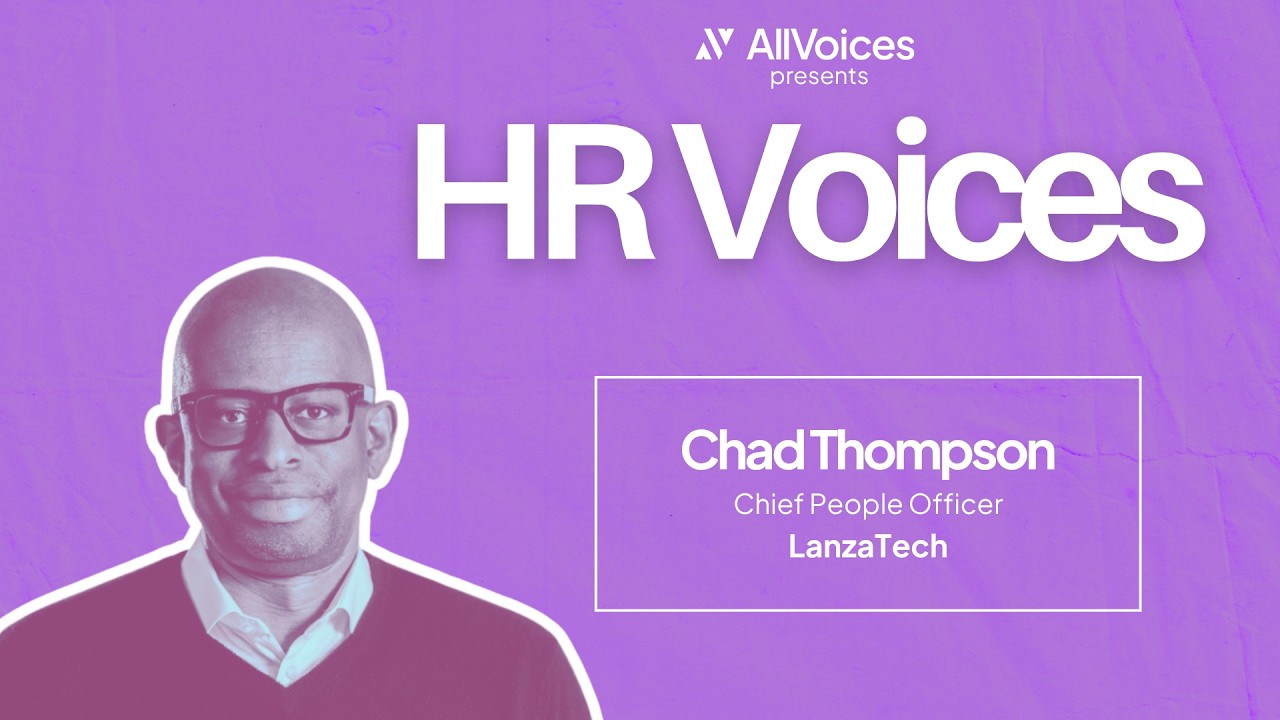
A manager discloses an employee's performance improvement plan in a team meeting, and a confidentiality complaint follows. Rebecca Taylor and Chad Thompson, Chief People Officer at LanzaTech, use it to open the bigger questions underneath: is HR confidentiality even real, how do you hold employee advocate and business partner at the same time, and why does HR keep getting cast as the policeman instead of the strategist? Chad's argument is that the credibility problem is largely self-inflicted, and fixable.
About The Guest
Chad Thompson is Chief People Officer at LanzaTech, where he leads the global people function. He works at the intersection of employee relations and business strategy, and makes the case that HR's reputation problems are mostly self-inflicted — the product of a function that has allowed itself to be cast as the company's police force rather than its strategist. His focus is on performance conversations, confidentiality, and rebuilding credibility with the leaders HR exists to advise.
Episode Breakdown

A manager tells his team that a colleague is on a performance improvement plan, to explain why projects are moving. She files a formal complaint: the plan was confidential, the disclosure humiliated her, and she calls it harassment. He says he shared only what the work required. Rebecca Taylor put the scenario to Chad Thompson, Chief People Officer at LanzaTech, on HR Voices. The twist is that the complaint turns on a process HR designed.

Chad began with trust, which he called the most important issue, and with a fact People teams know well. In corporate America, few things stay secret. His larger argument was that HR’s credibility problem is largely self-inflicted, and fixable. The fixes are practical: honest drafting, careful briefing, and an HR function that partners with the business instead of policing it.

Why a PIP Was Never Fully Confidential

Once a rating sits in a performance management system, Chad said, “there is no confidentiality.” People know roughly who the top and bottom performers are, and in most companies a bottom performer is expected to land on a plan.

Confidentiality also leaks by necessity. Managers have to “read one or two people into it,” and those people are “not always advised and prefaced with the right amount of context.” For Chad, the weak point is the briefing, not the plan.

Context can also justify a disclosure. Chad imagined a colleague whose financial analysis cost the company $20 million the year before, now working a major customer issue. Silence carries its own risk there. Rebecca added that the team needed to know why new projects had landed on their desks.

Why HR Takes the Blame for a Process It Does Not Own

Rebecca objected to the premise that HR designed the PIP, calling it “a little cheap” to blame HR alone for a plan built with the manager who runs the work.

Chad agreed. He does not own PIPs, hire, or fire, and he called himself “a facilitator of the business outcomes.” HR is still “that convenient place” people reach for instead of a direct conversation.

HR also has to act as employee advocate and fill the HR business partner role at once, and Chad warned against being “indexed too heavily in either direction.” Lean toward the business and HR loses the trust that tells it what is happening; lean toward employees against the business and it loses its effectiveness. His advice to the profession was to “toughen up, thicken up.”

What Actually Works

Start With the Manager, Then Test the Story

Chad interviews the manager first, since the disclosure itself is not in doubt. He asks why the plan was shared, with what context and what instructions, then weighs “the business need for the knowledge” against the plan as drafted.

If the manager got it wrong, an honest “I messed up here and I apologize” can recover the situation. Chad also makes the cost plain. A team that thinks its leader cannot keep a confidence stops wanting to work for him.

The employee comes next, to test whether the stories match, followed by a few people from the room. If the complaint came through a hotline for confidential concerns, HR must be able to “demonstrate that you took it seriously.”

Write the Reassignment Into the Plan

Chad’s sharpest question was about drafting. If the PIP never said responsibilities might change, a reassignment reads as a verdict, as if the manager has already made up his mind. If the plan promised partnering or training while she built a missing skill, the same move reads as support.

His example was a contract that would not be fully paid if the cost estimate missed, so pulling the employee off it removes her chance to prove herself. A good plan also asks what help she needs, from a mentor to training. A step-by-step PIP template puts those terms in writing before anyone else hears about the plan.

Treat the Plan as an Investment Worth Redeeming

Most plans are given reluctantly because people see them as final, yet Chad said most employees do well afterward. He calls a PIP “the most genuine attempt to redeem the investment that you made,” with a search costing $30,000 to $40,000 once time and value are counted. Nobody abandons a marriage or a child at the first sign of a challenge, he argued.

The framing also forces honesty. Many companies do not tell people the truth, so a plan can be “the first truth that someone ever gets.” Gallup research on performance reviews found that only 14 percent of employees strongly agree their reviews inspire them to improve. With his own team, Chad’s obligation is “to be honest, direct, and supportive.”

Where Employee Relations Fits

The word harassment raises the stakes. The EEOC describes harassment under federal law as unwelcome conduct based on a protected characteristic such as race, religion, sex, disability, or age, and nothing in this scenario makes that link. Rebecca flags the word to legal anyway, since nobody can predict what an employee will do with it, and Chad would involve general counsel.

The employee relations side of the case decides what repair looks like. Chad sees two honest endings. The apology lands and the plan can still be met, or she moves on through a settlement with a release.

Rebecca argued that a public plan may even make a fair evaluation easier, because nobody has to pretend. Chad reached for a benched quarterback. “In sports, you have to deal with your shame publicly,” he said. If the leader owns his mistake and commits to a fair shot, Chad’s verdict came down to one word: redeemable.

Frequently Asked Questions About HR Confidentiality and PIPs

Is a Performance Improvement Plan Confidential?

Only in part. HR and the manager should share a plan only as far as the work requires, but ratings live in systems and colleagues notice patterns. Absolute secrecy is a promise HR cannot keep.

Can a Manager Tell the Team an Employee Is on a PIP?

Sometimes, when the work depends on it. Chad weighs the business need for the knowledge against the plan as drafted, and anyone told should get enough context to keep it contained.

Does Disclosing a PIP Count as Harassment?

Usually not on its own, because workplace harassment under federal law turns on a protected trait such as race, sex, or disability. Still flag the claim to legal counsel, since the word signals where the employee may take the case.

Who Should HR Talk to First After a PIP Is Disclosed?

The manager who disclosed it. Chad starts there, then checks the manager’s account against the employee’s and against what people in the meeting heard.

Can an Employee Get a Fair Evaluation After a PIP Goes Public?

Yes, if the leader owns the mistake and the plan still gives her a real chance. Chad compares it to a benched quarterback: the setback is public, but the way back runs through performance.

The Bottom Line for HR Leaders

Chad Thompson’s framing turns a confidentiality complaint into a credibility test. The assumption he most wants gone is that HR is not a strategic function, and he places much of the blame on the profession itself: “we are largely at fault as HR practitioners.” Reciting processes to leaders, in his words, “is not HR.”

He wants HR judged on hard calls instead, such as remote work, AI, and how a company treats its people. “I hate HR as the police officer who is just keeping the laws and following the rules and writing tickets,” he said. The role he wants is “the career whisperer, the coach, the advisor.”

See how AllVoices helps People teams run performance improvement plans with structure and a record that holds up.
Our next webinar
Frequently asked questions

Got more questions? Email us at support@allvoices.co and we'll respond ASAP.

No items found.
Frequently asked questions

Got more questions? Email us at support@allvoices.co and we'll respond ASAP.

No items found.

Is HR Confidentiality Real? A PIP Disclosure Puts It to the Test

About the guest

Chad Thompson is Chief People Officer at LanzaTech, where he leads the global people function. He works at the intersection of employee relations and business strategy, and makes the case that HR's reputation problems are mostly self-inflicted — the product of a function that has allowed itself to be cast as the company's police force rather than its strategist. His focus is on performance conversations, confidentiality, and rebuilding credibility with the leaders HR exists to advise.

Episode Breakdown

A manager tells his team that a colleague is on a performance improvement plan, to explain why projects are moving. She files a formal complaint: the plan was confidential, the disclosure humiliated her, and she calls it harassment. He says he shared only what the work required. Rebecca Taylor put the scenario to Chad Thompson, Chief People Officer at LanzaTech, on HR Voices. The twist is that the complaint turns on a process HR designed.

Chad began with trust, which he called the most important issue, and with a fact People teams know well. In corporate America, few things stay secret. His larger argument was that HR’s credibility problem is largely self-inflicted, and fixable. The fixes are practical: honest drafting, careful briefing, and an HR function that partners with the business instead of policing it.

Why a PIP Was Never Fully Confidential

Once a rating sits in a performance management system, Chad said, “there is no confidentiality.” People know roughly who the top and bottom performers are, and in most companies a bottom performer is expected to land on a plan.

Confidentiality also leaks by necessity. Managers have to “read one or two people into it,” and those people are “not always advised and prefaced with the right amount of context.” For Chad, the weak point is the briefing, not the plan.

Context can also justify a disclosure. Chad imagined a colleague whose financial analysis cost the company $20 million the year before, now working a major customer issue. Silence carries its own risk there. Rebecca added that the team needed to know why new projects had landed on their desks.

Why HR Takes the Blame for a Process It Does Not Own

Rebecca objected to the premise that HR designed the PIP, calling it “a little cheap” to blame HR alone for a plan built with the manager who runs the work.

Chad agreed. He does not own PIPs, hire, or fire, and he called himself “a facilitator of the business outcomes.” HR is still “that convenient place” people reach for instead of a direct conversation.

HR also has to act as employee advocate and fill the HR business partner role at once, and Chad warned against being “indexed too heavily in either direction.” Lean toward the business and HR loses the trust that tells it what is happening; lean toward employees against the business and it loses its effectiveness. His advice to the profession was to “toughen up, thicken up.”

What Actually Works

Start With the Manager, Then Test the Story

Chad interviews the manager first, since the disclosure itself is not in doubt. He asks why the plan was shared, with what context and what instructions, then weighs “the business need for the knowledge” against the plan as drafted.

If the manager got it wrong, an honest “I messed up here and I apologize” can recover the situation. Chad also makes the cost plain. A team that thinks its leader cannot keep a confidence stops wanting to work for him.

The employee comes next, to test whether the stories match, followed by a few people from the room. If the complaint came through a hotline for confidential concerns, HR must be able to “demonstrate that you took it seriously.”

Write the Reassignment Into the Plan

Chad’s sharpest question was about drafting. If the PIP never said responsibilities might change, a reassignment reads as a verdict, as if the manager has already made up his mind. If the plan promised partnering or training while she built a missing skill, the same move reads as support.

His example was a contract that would not be fully paid if the cost estimate missed, so pulling the employee off it removes her chance to prove herself. A good plan also asks what help she needs, from a mentor to training. A step-by-step PIP template puts those terms in writing before anyone else hears about the plan.

Treat the Plan as an Investment Worth Redeeming

Most plans are given reluctantly because people see them as final, yet Chad said most employees do well afterward. He calls a PIP “the most genuine attempt to redeem the investment that you made,” with a search costing $30,000 to $40,000 once time and value are counted. Nobody abandons a marriage or a child at the first sign of a challenge, he argued.

The framing also forces honesty. Many companies do not tell people the truth, so a plan can be “the first truth that someone ever gets.” Gallup research on performance reviews found that only 14 percent of employees strongly agree their reviews inspire them to improve. With his own team, Chad’s obligation is “to be honest, direct, and supportive.”

Where Employee Relations Fits

The word harassment raises the stakes. The EEOC describes harassment under federal law as unwelcome conduct based on a protected characteristic such as race, religion, sex, disability, or age, and nothing in this scenario makes that link. Rebecca flags the word to legal anyway, since nobody can predict what an employee will do with it, and Chad would involve general counsel.

The employee relations side of the case decides what repair looks like. Chad sees two honest endings. The apology lands and the plan can still be met, or she moves on through a settlement with a release.

Rebecca argued that a public plan may even make a fair evaluation easier, because nobody has to pretend. Chad reached for a benched quarterback. “In sports, you have to deal with your shame publicly,” he said. If the leader owns his mistake and commits to a fair shot, Chad’s verdict came down to one word: redeemable.

Frequently Asked Questions About HR Confidentiality and PIPs

Is a Performance Improvement Plan Confidential?

Only in part. HR and the manager should share a plan only as far as the work requires, but ratings live in systems and colleagues notice patterns. Absolute secrecy is a promise HR cannot keep.

Can a Manager Tell the Team an Employee Is on a PIP?

Sometimes, when the work depends on it. Chad weighs the business need for the knowledge against the plan as drafted, and anyone told should get enough context to keep it contained.

Does Disclosing a PIP Count as Harassment?

Usually not on its own, because workplace harassment under federal law turns on a protected trait such as race, sex, or disability. Still flag the claim to legal counsel, since the word signals where the employee may take the case.

Who Should HR Talk to First After a PIP Is Disclosed?

The manager who disclosed it. Chad starts there, then checks the manager’s account against the employee’s and against what people in the meeting heard.

Can an Employee Get a Fair Evaluation After a PIP Goes Public?

Yes, if the leader owns the mistake and the plan still gives her a real chance. Chad compares it to a benched quarterback: the setback is public, but the way back runs through performance.

The Bottom Line for HR Leaders

Chad Thompson’s framing turns a confidentiality complaint into a credibility test. The assumption he most wants gone is that HR is not a strategic function, and he places much of the blame on the profession itself: “we are largely at fault as HR practitioners.” Reciting processes to leaders, in his words, “is not HR.”

He wants HR judged on hard calls instead, such as remote work, AI, and how a company treats its people. “I hate HR as the police officer who is just keeping the laws and following the rules and writing tickets,” he said. The role he wants is “the career whisperer, the coach, the advisor.”

See how AllVoices helps People teams run performance improvement plans with structure and a record that holds up.