About This Episode
In this episode of Reimagining Company Culture, we’re chatting with Jaclyn Mack, VP of People at Chainalysis. Jaclyn is proficient in providing strong internal consulting in employee relations, talent management, performance management, and change management. Tune in to learn Jaclyn’s thoughts on intentionally growing a culture, changing over time, celebrating Pride, and more!
About The Guest
Jaclyn is a results oriented Human Resources professional who is proficient in providing strong internal consulting in employee relations, talent management, performance management, and change management. She is experianced in managing cultural change in mergers and acquisitions while ensuring smooth integration and alignment with business goals and direction.
Episode Breakdown

When we sat down with Jaclyn Mack, Vice President of People at Chainalysis, for this episode of Reimagining Company Culture, the conversation centered on a question every fast-growing company eventually faces. How does culture stay intentional when the company keeps changing shape? Jaclyn brings deep experience in employee relations, talent management, performance management, and change management, and her answer was practical. The People team has to grow alongside the organization rather than trying to hold the previous version of the culture in place.

Her advice was useful because it was specific. Lean into support during change. Treat culture as a living thing that evolves across stages. Celebrate communities and identities meaningfully rather than performatively. Each move is a piece of the operating practice that lets culture survive growth.

Why Intentional Culture Growth Beats Reactive Defense

Most companies treat culture as something to defend. Jaclyn's framing was different. Culture has to grow. Each new stage of the company brings new challenges, and the culture either adapts or it ossifies. has documented for years that the strongest cultures are the ones that evolve deliberately as the company grows. Gallup data on engagement reinforces the case. With global engagement at 21%, companies that fail to evolve their cultures see disengagement compound across each new stage of growth.

That evolution requires the People team to keep asking what the next stage of the company will need rather than what the current version is comfortable with. New hires bring new perspectives. New geographies bring new norms. New leadership brings new behaviors. Companies that lean into the change keep their culture coherent. Companies that resist it produce a gap between the stated values and the lived experience that employees notice immediately.

What Leaning Into Support Actually Looks Like

What does support look like during change?

Support during change includes clear communication about what is happening, explicit acknowledgment of the disruption it causes, and a structured way for employees to raise concerns. Leaders who skip the acknowledgment step often find that change is met with resistance that the People team then has to manage downstream. Leaders who acknowledge the disruption upfront move through it faster.

How does peer support build durable culture?

Peer support networks distribute the work of culture maintenance across the team. Employees who feel supported by peers are more likely to support new hires, raise concerns when needed, and stay through the rough quarters. The People team's role is to design the conditions that let peer support emerge and to remove the barriers that prevent it.

What Actually Works When You Grow Culture Intentionally

Principle 1: Treat culture as a living system

Static culture statements break when the company changes. Living culture systems include explicit mechanisms for surfacing where the stated values and the lived experience are diverging. Pulse data, ER pattern data, and listening sessions all feed into a regular review of whether the culture is keeping pace with the organization.

Principle 2: Build manager capacity to carry culture through change

Managers are the unit where culture either gets transmitted or lost. Investment in management training on change communication, feedback, and inclusion produces better outcomes than centralized programs that bypass the manager layer. Strong programs treat managers as the primary culture carriers and resource them accordingly.

Principle 3: Use structured listening to catch what changes break

Change always breaks something. The strongest People teams use pulse surveys, structured 1:1 themes, and ER pattern data to catch what is breaking before it produces resignations. Without structured listening, leaders learn about the breakage at exit interviews when it is already too late.

Where Employee Relations Fits Into Intentional Culture Growth

Growth produces friction. Employee relations is the function that catches the friction across teams and translates it into specific interventions. With ER wired into the operating model, the People team can spot patterns developing in real time rather than discovering them in the next engagement survey.

How ER supports the People team during change

The right ER function gives the People team a confidential intake channel for issues, a consistent investigation process, and pattern reporting that surfaces where the change is producing the most stress. Anonymous reporting tools become especially valuable during periods of change because they catch the issues employees are not yet ready to raise to a manager whose role may also be in flux.

Celebrating Communities Without Performance

Why authentic Pride and identity celebrations matter

Celebrations of identity matter when they are paired with year-round support for the communities they celebrate. Pride that funds ERG leaders, supports LGBTQ employees, and shows up in policy and benefits is real. Pride that is a marketing campaign without the underlying support reads as performative and damages trust.

The role of inclusion in culture growth

Inclusion is the discipline that lets diverse teams produce their best work. As companies grow, inclusion has to grow with them, including in the rituals, the language, and the operating decisions that affect each new cohort of employees. Companies that treat inclusion as a static program rather than a living practice usually lose ground in the population they are trying to support.

Frequently Asked Questions About Growing Culture Intentionally

How does culture change as a company scales?

Culture stretches as the company adds new people, new geographies, and new leaders. Without deliberate maintenance, the stated values and the lived experience diverge. Companies that scale culture well invest in the rituals, manager training, and listening systems that keep the two aligned.

What does leaning into support mean?

Leaning into support means treating employee well-being and peer connection as operating priorities rather than optional perks. It includes manager training on empathy, structured peer support networks, and benefits that reflect the actual life stages of the workforce.

How do you know when culture is breaking?

Useful signals include rising voluntary attrition, declining engagement scores by team, increased ER cases of a particular type, and patterns in exit interviews. Together they describe where the culture is straining and where to invest in repair.

What is the role of transformational leadership in culture change?

Transformational leadership matters during culture growth because it requires leaders to take responsibility for the system they operate in. Leaders who model the behaviors they want and engage with feedback honestly produce the conditions that let culture grow rather than ossify.

How do you celebrate identity authentically?

Useful practices include funding ERGs as strategic teams, paying ERG leaders, supporting affected communities year-round in policy and benefits, and avoiding marketing-led celebrations that lack underlying support. Authentic celebration is what employees recognize.

The Bottom Line for HR Leaders

Jaclyn Mack's framing of intentional culture growth is exactly the lens fast-growing companies need. Culture is not a fixed asset to be defended. It is a living practice that has to keep evolving as the organization does. The People teams that get this right invest in the rituals, the manager training, and the listening systems that let the culture grow alongside the company.

HR leaders who want their culture work to compound across the next era of growth should invest in three things. Treat culture as a living system that requires regular maintenance. Build manager capacity to carry culture through change. Wire in the listening and employee relations infrastructure that catches the moments where culture and operating reality diverge. Together those moves make culture a feature of how the company grows rather than something it leaves behind.

See how AllVoices supports the listening and ER infrastructure behind durable, growing cultures.
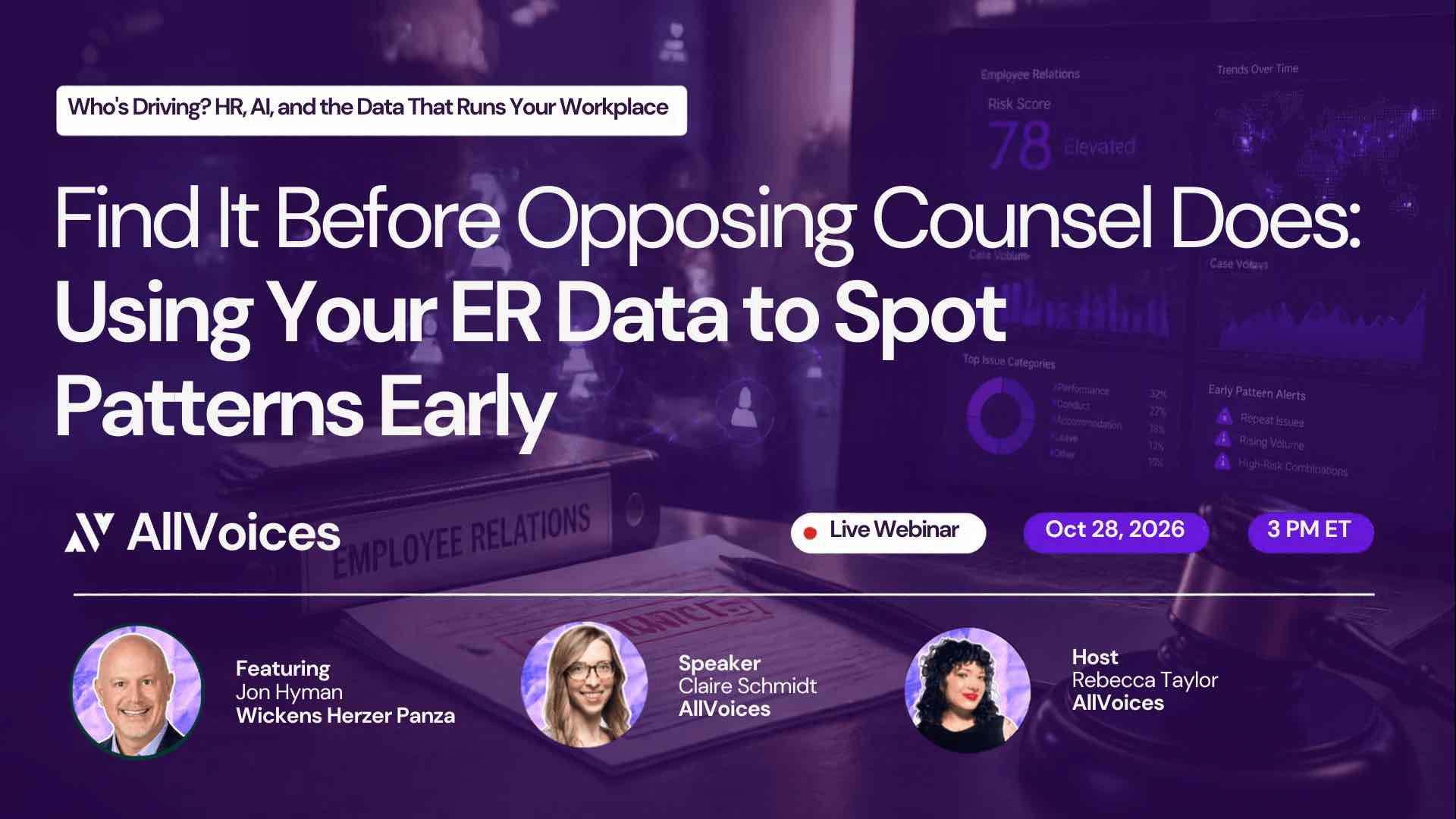
Our next webinar
Frequently asked questions

Got more questions? Email us at support@allvoices.co and we'll respond ASAP.

No items found.
Frequently asked questions

Got more questions? Email us at support@allvoices.co and we'll respond ASAP.

No items found.
Jaclyn Mack, VP of People at Jaclyn Mack, VP of People at Chainalysis - Leaning Into Support
Episode 285
About This Episode
In this episode of Reimagining Company Culture, we’re chatting with Jaclyn Mack, VP of People at Chainalysis. Jaclyn is proficient in providing strong internal consulting in employee relations, talent management, performance management, and change management. Tune in to learn Jaclyn’s thoughts on intentionally growing a culture, changing over time, celebrating Pride, and more!
About The Guest
Jaclyn is a results oriented Human Resources professional who is proficient in providing strong internal consulting in employee relations, talent management, performance management, and change management. She is experianced in managing cultural change in mergers and acquisitions while ensuring smooth integration and alignment with business goals and direction.
Episode Transcription

When we sat down with Jaclyn Mack, Vice President of People at Chainalysis, for this episode of Reimagining Company Culture, the conversation centered on a question every fast-growing company eventually faces. How does culture stay intentional when the company keeps changing shape? Jaclyn brings deep experience in employee relations, talent management, performance management, and change management, and her answer was practical. The People team has to grow alongside the organization rather than trying to hold the previous version of the culture in place.

Her advice was useful because it was specific. Lean into support during change. Treat culture as a living thing that evolves across stages. Celebrate communities and identities meaningfully rather than performatively. Each move is a piece of the operating practice that lets culture survive growth.

Why Intentional Culture Growth Beats Reactive Defense

Most companies treat culture as something to defend. Jaclyn's framing was different. Culture has to grow. Each new stage of the company brings new challenges, and the culture either adapts or it ossifies. has documented for years that the strongest cultures are the ones that evolve deliberately as the company grows. Gallup data on engagement reinforces the case. With global engagement at 21%, companies that fail to evolve their cultures see disengagement compound across each new stage of growth.

That evolution requires the People team to keep asking what the next stage of the company will need rather than what the current version is comfortable with. New hires bring new perspectives. New geographies bring new norms. New leadership brings new behaviors. Companies that lean into the change keep their culture coherent. Companies that resist it produce a gap between the stated values and the lived experience that employees notice immediately.

What Leaning Into Support Actually Looks Like

What does support look like during change?

Support during change includes clear communication about what is happening, explicit acknowledgment of the disruption it causes, and a structured way for employees to raise concerns. Leaders who skip the acknowledgment step often find that change is met with resistance that the People team then has to manage downstream. Leaders who acknowledge the disruption upfront move through it faster.

How does peer support build durable culture?

Peer support networks distribute the work of culture maintenance across the team. Employees who feel supported by peers are more likely to support new hires, raise concerns when needed, and stay through the rough quarters. The People team's role is to design the conditions that let peer support emerge and to remove the barriers that prevent it.

What Actually Works When You Grow Culture Intentionally

Principle 1: Treat culture as a living system

Static culture statements break when the company changes. Living culture systems include explicit mechanisms for surfacing where the stated values and the lived experience are diverging. Pulse data, ER pattern data, and listening sessions all feed into a regular review of whether the culture is keeping pace with the organization.

Principle 2: Build manager capacity to carry culture through change

Managers are the unit where culture either gets transmitted or lost. Investment in management training on change communication, feedback, and inclusion produces better outcomes than centralized programs that bypass the manager layer. Strong programs treat managers as the primary culture carriers and resource them accordingly.

Principle 3: Use structured listening to catch what changes break

Change always breaks something. The strongest People teams use pulse surveys, structured 1:1 themes, and ER pattern data to catch what is breaking before it produces resignations. Without structured listening, leaders learn about the breakage at exit interviews when it is already too late.

Where Employee Relations Fits Into Intentional Culture Growth

Growth produces friction. Employee relations is the function that catches the friction across teams and translates it into specific interventions. With ER wired into the operating model, the People team can spot patterns developing in real time rather than discovering them in the next engagement survey.

How ER supports the People team during change

The right ER function gives the People team a confidential intake channel for issues, a consistent investigation process, and pattern reporting that surfaces where the change is producing the most stress. Anonymous reporting tools become especially valuable during periods of change because they catch the issues employees are not yet ready to raise to a manager whose role may also be in flux.

Celebrating Communities Without Performance

Why authentic Pride and identity celebrations matter

Celebrations of identity matter when they are paired with year-round support for the communities they celebrate. Pride that funds ERG leaders, supports LGBTQ employees, and shows up in policy and benefits is real. Pride that is a marketing campaign without the underlying support reads as performative and damages trust.

The role of inclusion in culture growth

Inclusion is the discipline that lets diverse teams produce their best work. As companies grow, inclusion has to grow with them, including in the rituals, the language, and the operating decisions that affect each new cohort of employees. Companies that treat inclusion as a static program rather than a living practice usually lose ground in the population they are trying to support.

Frequently Asked Questions About Growing Culture Intentionally

How does culture change as a company scales?

Culture stretches as the company adds new people, new geographies, and new leaders. Without deliberate maintenance, the stated values and the lived experience diverge. Companies that scale culture well invest in the rituals, manager training, and listening systems that keep the two aligned.

What does leaning into support mean?

Leaning into support means treating employee well-being and peer connection as operating priorities rather than optional perks. It includes manager training on empathy, structured peer support networks, and benefits that reflect the actual life stages of the workforce.

How do you know when culture is breaking?

Useful signals include rising voluntary attrition, declining engagement scores by team, increased ER cases of a particular type, and patterns in exit interviews. Together they describe where the culture is straining and where to invest in repair.

What is the role of transformational leadership in culture change?

Transformational leadership matters during culture growth because it requires leaders to take responsibility for the system they operate in. Leaders who model the behaviors they want and engage with feedback honestly produce the conditions that let culture grow rather than ossify.

How do you celebrate identity authentically?

Useful practices include funding ERGs as strategic teams, paying ERG leaders, supporting affected communities year-round in policy and benefits, and avoiding marketing-led celebrations that lack underlying support. Authentic celebration is what employees recognize.

The Bottom Line for HR Leaders

Jaclyn Mack's framing of intentional culture growth is exactly the lens fast-growing companies need. Culture is not a fixed asset to be defended. It is a living practice that has to keep evolving as the organization does. The People teams that get this right invest in the rituals, the manager training, and the listening systems that let the culture grow alongside the company.

HR leaders who want their culture work to compound across the next era of growth should invest in three things. Treat culture as a living system that requires regular maintenance. Build manager capacity to carry culture through change. Wire in the listening and employee relations infrastructure that catches the moments where culture and operating reality diverge. Together those moves make culture a feature of how the company grows rather than something it leaves behind.

See how AllVoices supports the listening and ER infrastructure behind durable, growing cultures.

Want to learn more?
See the power of AllVoices today
Thank you! We look forward to meeting you soon
Oops! Something went wrong while submitting the form.
Frequently asked questions

Got more questions? Email us at support@allvoices.co and we'll respond ASAP.

No items found.
Frequently asked questions

Got more questions? Email us at support@allvoices.co and we'll respond ASAP.

No items found.