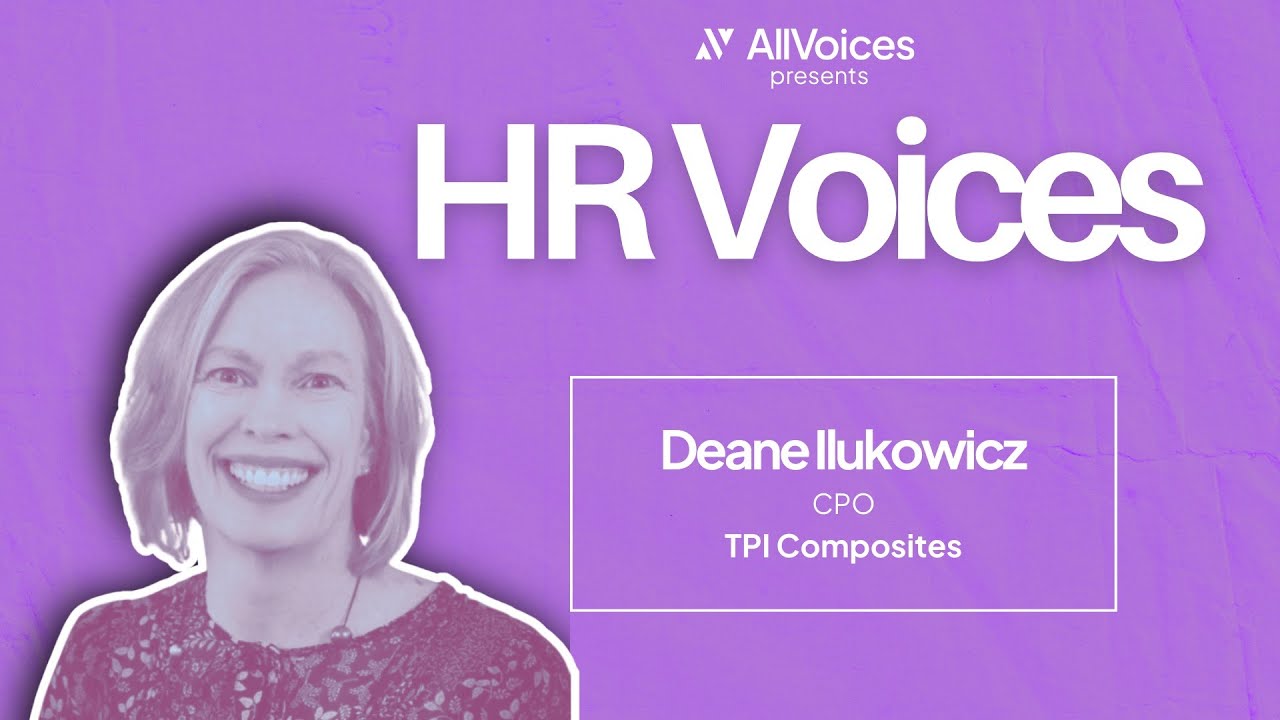

When Deane Ilukowicz joined TPI Composites ten years ago, the story was growth. By the time she sat down with Rebecca Taylor on HR Voices, it was a Chapter 11 case. Deane, Chief People Officer at TPI Composites, leads people work for the company she describes as the largest industrial manufacturer of wind turbine blades in the world, with operations in the US, Mexico, and India and almost 10,000 people.
TPI announced on August 11, 2025 that it had commenced voluntary chapter 11 proceedings in the U.S. Bankruptcy Court for the Southern District of Texas, and that it would continue operations in the normal course. Deane wanted to talk about what that period teaches. Her answer was mostly about the people who carry the news, not the people who receive it.
Why Employees Look to HR for Answers It Does Not Have
In a corporate restructuring, Deane argues, the organization looks to HR as if it knows more than anybody else. Sometimes the Chief People Officer does hold information. Sometimes that information has to be publicly disclosed before it can be shared inside. Most of the time, there is more unknown than known.
Her first rule is transparency with context. Deane wants her team able to say plainly that they do not know, and that they will share what they can once they learn it. That admission, in her view, builds trust.
The second rule is about the HR team itself. Site closures, redundancies, exiting markets, and divestitures put a lot of weight on HR’s shoulders. Deane does not run reductions in force by sending people to HR’s office. The leader and an HR professional sit down with the person together. Then the HR leader makes room for the team to process what it just carried.
Deane put it bluntly: there is no complaint department for the HR organization. HR people know who is being impacted when they walk down the hallway. Sometimes being in HR “can be pretty lonely.”
What Honest Performance Conversations Have to Do With Trust
For Deane, “trust comes from truth.” People want to know what is going on and how it might affect them, even when the message is not positive.
The proof she offered is a manufacturing leader from about fifteen years ago. People called him the “pip king.” He handed out more performance improvement plans than anyone, and he also had the highest engagement. The reason was honesty. His people knew where they stood, what was expected, and where he wanted them to improve.
Leaders trip up, Deane finds, when they avoid the hard conversation. They do not want to hurt feelings or affect families. Deane describes herself as painfully empathetic, and still says that when something is not salvageable, the most graceful move is to “rip the band-aid off.” The person and the organization are both better for it.
Rebecca added the other side of the PIP story. Too often a plan is a formality before a firing, and HR first hears about a problem when a manager says the person needs to go. A manager who documents clearly and sees people succeed on a plan is worth keeping.
What Actually Works
Name What Is Unknown, Then Share What Becomes Known
The phrase Deane coaches is simple: HR does not know yet, and it will share what it can when it does. It works because it is true. Information arrives at the speed of light, in Deane’s words, and HR loses credibility the moment it pretends to know more than it does.
Give the HR Team Its Own Place to Process
Deane wants her team to feel free to come into her office, call her on Teams, take a walk, or have a coffee. HR professionals need trusted leaders to confide in and a network across regions. A grounded HR organization, she argues, is what the business needs most during uncertainty. Psychological safety for the HR team is part of that, not a perk.
Make Feedback a Two-Question Habit
Deane considers milestone reviews archaic, because people need feedback more often than twice a year. She learned a simpler approach years ago from a Kellogg speaker. After any presentation, call, or conversation, each person names one thing that went well. Then each names one thing to improve or do differently.
If the answers match, the conversation is short. If they do not, the mismatch opens a rich conversation from almost no structure. That habit is a working form of continuous feedback. It also answers the employee who leaves a semiannual review asking why nobody said this six months ago.
Where Employee Relations Fits
Deane does not want HR bound by black and white. Her picture is a road with guardrails: stay on the road, use good judgment, and “let the policy be your guide.” Some policies are strict because the law requires it. Most workplace policies work better as guardrails than as lanes.
The trouble starts when someone flies off the road and HR finds out later. Then a small issue becomes a bigger one. Honest performance conversations need the same discipline. A structured record of each improvement plan shows what was expected and when, and a shared home for employee relations work keeps every conversation in one place.
Frequently Asked Questions About Leading HR Through Chapter 11
The truth. Deane Ilukowicz has her team say they do not know yet and will share what they can once they learn it. Some information must be publicly disclosed before it can be shared internally, so saying plainly that the news is not ready protects trust.
Share the weight. At TPI, the leader and an HR professional deliver hard news together. Deane also gives her team room to process with her directly, through a walk, a call, or a coffee.
No. Deane’s example is a manager who handed out the most PIPs and had the highest engagement, because his people always knew where they stood. A plan built on clear expectations tells the employee the truth early.
It is a two-question habit. After a call or presentation, each person names one thing that went well, then one thing to improve or do differently. Where the answers differ, the real conversation starts.
Yes. On July 6, 2026, TPI announced it had emerged from Chapter 11 under new ownership, with its Iowa and Juarez, Mexico manufacturing and its global field services business owned by Energy Capital Partners. The episode was recorded during the case.
The Bottom Line for HR Leaders
Deane’s framing starts with where she came from. She began in operations and planned to be a plant manager, not a People leader. Her advice to HR at every level is to be “a good business person first and a strong HR strategist and practitioner second.”
That view shaped how she led HR through Chapter 11. The company still had customers, products, and commitments, and Deane reminded her leaders that “we still have 10,000 people working for this company.” Deane Ilukowicz shows that the seat at the table goes to the HR leader who understands how the business makes money.
See how AllVoices keeps every hard conversation documented in one place while the company is under pressure.