About This Episode
In this episode of Reimagining Company Culture, we’re chatting with Kristi Robinson, VP, Talent & DEI at BARK. Over the years, Kristi has had the opportunity to build strong teams that share the same goal of hiring the best in a timely manner while focusing on quality, customer service, and the candidate experience.
About The Guest
Kristi has had the pleasure of working in the Human Resources field for 15+ years and has found a passion for Talent Acquisition. Over the years, she has had the opportunity to build strong teams that share the same goal of hiring the best in a timely manner while focusing on quality, customer service, and the candidate experience. Her specialties include executive recruitment, large-scale and niche recruiting programs, creative sourcing strategies for newly developed offices, functions, strategic partnerships, leadership, management, and development.
Episode Breakdown

Kristi Robinson is the VP of Talent and DEI at BARK, with 15-plus years building strong teams that share a common direction. On Reimagining Company Culture, she joins us to argue that vision and mission are not marketing artifacts. They are the operating glue that holds growing companies together when individual managers, products, or markets diverge. Kristi has seen what happens when companies skip the work and what happens when they take it seriously.

Her message: hiring for fit dies with the wrong vision; hiring for shared vision creates teams that adapt.

Why Vision and Mission Are Not Soft

Companies that align hiring, onboarding, performance, and promotion to a clear vision statement and mission statement consistently outperform peers on retention. Deloitte's 2024 Global Human Capital Trends report confirms that belonging, anchored in shared purpose, is among the strongest predictors of intent to stay.

This is also where company culture programs earn their keep. They translate the vision into observable behavior.

Operationalizing Shared Vision

Translate vision into observable behaviors

Vague visions stay on the wall. Visions translated into 'how we make decisions, how we treat each other, and what we recognize publicly' show up in performance.

Hire and promote against the vision

Use vision-aligned criteria in interviews and calibration. The signal carries through every people decision.

Retire the vision when it stops fitting

Visions have lifecycles. Companies that update theirs after major pivots avoid the cynicism of marching to a slogan that no longer matches reality.

Where Vision Breaks Down

Vision usually fails for one of three reasons: it is not specific, leaders do not model it, or the rewards and recognition system contradicts it. Most companies hit at least two of those.

Pairing vision with employee engagement programs and clear feedback channels helps surface the contradictions early.

Where Employee Relations Fits

A clear vision creates a higher standard, which means concerns also have to flow more freely. Anonymous reporting and HR case management support vision-driven cultures by giving employees a way to flag when reality drifts from the stated values.

Kristi treats this loop as part of the vision system, not separate from it.

Why This Conversation Matters Right Now

The HR field has been through three waves in the last few years: an emergency pivot to distributed work, a wave of public commitments around inclusion, and a slow correction as leaders started measuring which of those commitments actually moved retention and engagement. Conversations like this one matter because they sit on the other side of that correction.

That shift puts pressure on people leaders to be specific. Generic advice about belonging or psychological safety does not survive a budget review. The HR teams that are pulling ahead are the ones that connect cultural commitments to operating systems, instrument the resulting work, and report on outcomes in the same business-critical language the CFO uses for revenue. According to SHRM's reporting on retention strategies, the cost of underinvesting in culture shows up directly in voluntary attrition, and the math gets harder every year.

This is also where employee relations operations becomes a more visible part of the modern People organization. Employee relations is no longer a quiet compliance function; it is the data layer that tells leaders whether their stated values are being lived inside the organization, and it is increasingly the place where cultural drift first becomes visible.

A Practical Playbook for HR Leaders

Translating a great podcast conversation into actual change inside your organization takes a stepwise plan, not a rallying cry. The most consistent leaders we work with run a 90-day discovery loop, a 90-day pilot, and a 90-day expansion that together compress what would otherwise be a multi-year cultural shift into a single calendar year.

Discovery is mostly listening. That means structured conversations with managers, frontline employees, and recent leavers, paired with quantitative pulls from your HRIS, ATS, and case-management system. Most HR teams find that the data they already have, surfaced honestly, points to two or three high-impact interventions they had not previously prioritized.

Pilots are deliberately small. Pick one team, one geography, or one stage of the employee journey and instrument it well. Set a clear hypothesis, a measurable target, and a review cadence shorter than a quarter. The teams that pilot this way produce stories the rest of the organization actually wants to copy.

Expansion is the patient work. The organizations that scale change well treat the pilot lessons as the operating manual and resist the urge to rebrand the work. Manager training, listening infrastructure, and case-management discipline travel with the program; without those layers, even successful pilots fail to take root in the rest of the company.

The throughline across every successful version of this playbook is the same: change is treated as a system, not a moment. Hiring, performance, recognition, manager development, and reporting infrastructure all have to move together for the new culture to take root. The companies that move the whole stack at once, even imperfectly, usually compound their gains for the next several years.

One last note for HR leaders worried about whether the moment is right to invest. The cost of waiting always looks smaller than the cost of acting until the data comes in, and by then the talent has already left. The discipline is to move at the cadence of the workforce, not the cadence of the budget cycle, and the People leaders who hold that line tend to outlast the ones who do not.

Frequently Asked Questions About Vision and Mission

Are vision and mission the same?

No. Vision is the long-term aspiration; mission is the present-tense work. Companies need both, written separately.

How often should we update them?

Vision every five to ten years; mission whenever the business model changes meaningfully.

How do I know if our vision is working?

When new hires can repeat it, managers reference it in real decisions, and it shows up in performance reviews.

What if leadership disagrees on the vision?

Resolve it before publishing. Visions written by committee and never agreed are worse than no vision at all.

How do you keep the vision alive in a remote company?

Bring it into onboarding, all-hands meetings, and recognition. Repetition over channels matters more than a single launch event.

The Bottom Line for HR Leaders

Kristi's argument is that vision and mission are operational tools, not branding. Companies that hire, develop, and recognize against a clear shared direction build cultures that survive growth, downturns, and leadership transitions. The work is patient, but the payoff is durable.
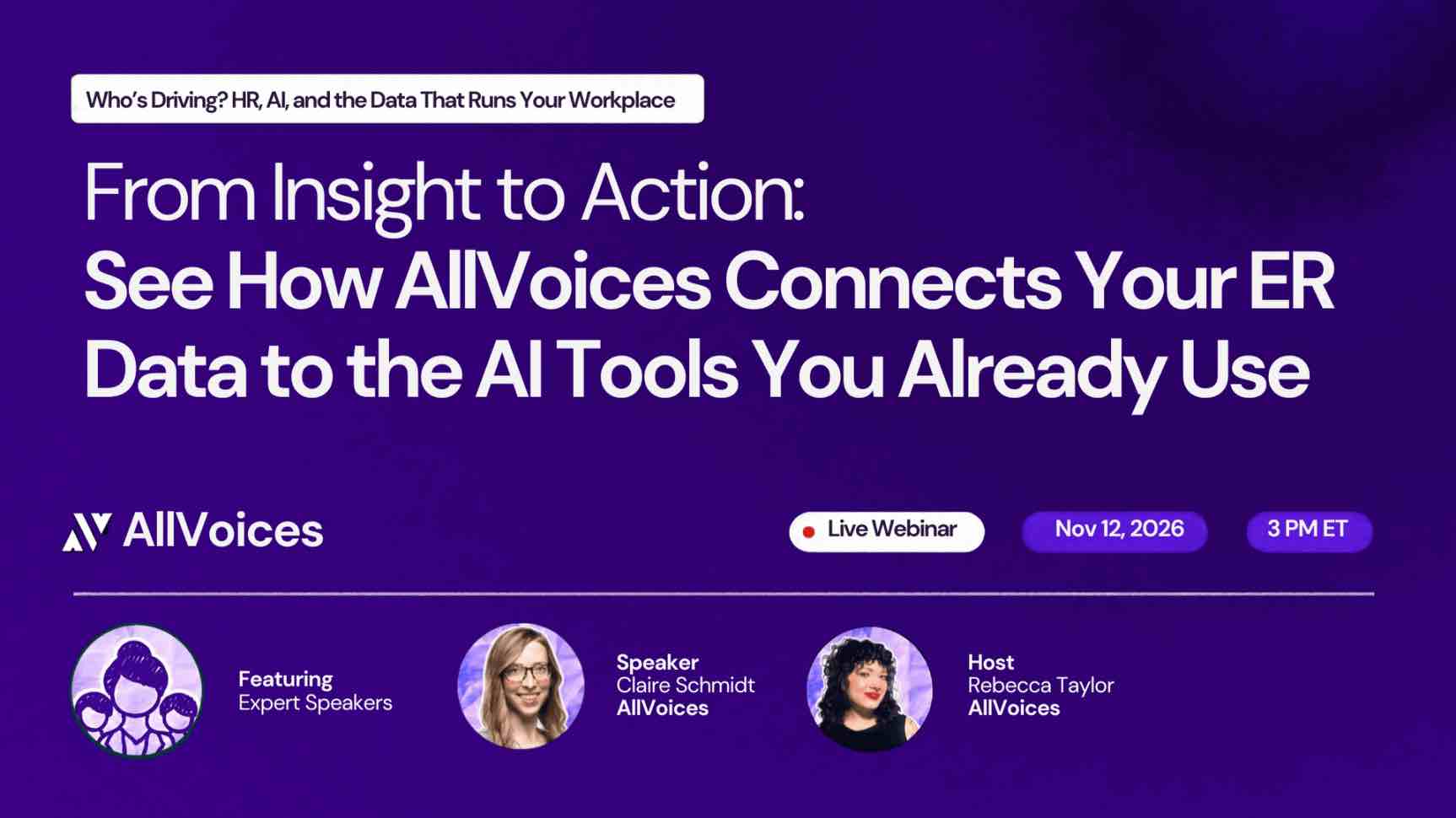
See how AllVoices helps mission-driven companies surface the gaps between stated values and lived experience.

Our next webinar
Frequently asked questions

Got more questions? Email us at support@allvoices.co and we'll respond ASAP.

No items found.
Frequently asked questions

Got more questions? Email us at support@allvoices.co and we'll respond ASAP.

No items found.
BARK VP, Talent & DEI, Kristi Robinson - The Necessity of Shared Vision and Mission
Episode 115
About This Episode
In this episode of Reimagining Company Culture, we’re chatting with Kristi Robinson, VP, Talent & DEI at BARK. Over the years, Kristi has had the opportunity to build strong teams that share the same goal of hiring the best in a timely manner while focusing on quality, customer service, and the candidate experience.
About The Guest
Kristi has had the pleasure of working in the Human Resources field for 15+ years and has found a passion for Talent Acquisition. Over the years, she has had the opportunity to build strong teams that share the same goal of hiring the best in a timely manner while focusing on quality, customer service, and the candidate experience. Her specialties include executive recruitment, large-scale and niche recruiting programs, creative sourcing strategies for newly developed offices, functions, strategic partnerships, leadership, management, and development.
Episode Transcription

Kristi Robinson is the VP of Talent and DEI at BARK, with 15-plus years building strong teams that share a common direction. On Reimagining Company Culture, she joins us to argue that vision and mission are not marketing artifacts. They are the operating glue that holds growing companies together when individual managers, products, or markets diverge. Kristi has seen what happens when companies skip the work and what happens when they take it seriously.

Her message: hiring for fit dies with the wrong vision; hiring for shared vision creates teams that adapt.

Why Vision and Mission Are Not Soft

Companies that align hiring, onboarding, performance, and promotion to a clear vision statement and mission statement consistently outperform peers on retention. Deloitte's 2024 Global Human Capital Trends report confirms that belonging, anchored in shared purpose, is among the strongest predictors of intent to stay.

This is also where company culture programs earn their keep. They translate the vision into observable behavior.

Operationalizing Shared Vision

Translate vision into observable behaviors

Vague visions stay on the wall. Visions translated into 'how we make decisions, how we treat each other, and what we recognize publicly' show up in performance.

Hire and promote against the vision

Use vision-aligned criteria in interviews and calibration. The signal carries through every people decision.

Retire the vision when it stops fitting

Visions have lifecycles. Companies that update theirs after major pivots avoid the cynicism of marching to a slogan that no longer matches reality.

Where Vision Breaks Down

Vision usually fails for one of three reasons: it is not specific, leaders do not model it, or the rewards and recognition system contradicts it. Most companies hit at least two of those.

Pairing vision with employee engagement programs and clear feedback channels helps surface the contradictions early.

Where Employee Relations Fits

A clear vision creates a higher standard, which means concerns also have to flow more freely. Anonymous reporting and HR case management support vision-driven cultures by giving employees a way to flag when reality drifts from the stated values.

Kristi treats this loop as part of the vision system, not separate from it.

Why This Conversation Matters Right Now

The HR field has been through three waves in the last few years: an emergency pivot to distributed work, a wave of public commitments around inclusion, and a slow correction as leaders started measuring which of those commitments actually moved retention and engagement. Conversations like this one matter because they sit on the other side of that correction.

That shift puts pressure on people leaders to be specific. Generic advice about belonging or psychological safety does not survive a budget review. The HR teams that are pulling ahead are the ones that connect cultural commitments to operating systems, instrument the resulting work, and report on outcomes in the same business-critical language the CFO uses for revenue. According to SHRM's reporting on retention strategies, the cost of underinvesting in culture shows up directly in voluntary attrition, and the math gets harder every year.

This is also where employee relations operations becomes a more visible part of the modern People organization. Employee relations is no longer a quiet compliance function; it is the data layer that tells leaders whether their stated values are being lived inside the organization, and it is increasingly the place where cultural drift first becomes visible.

A Practical Playbook for HR Leaders

Translating a great podcast conversation into actual change inside your organization takes a stepwise plan, not a rallying cry. The most consistent leaders we work with run a 90-day discovery loop, a 90-day pilot, and a 90-day expansion that together compress what would otherwise be a multi-year cultural shift into a single calendar year.

Discovery is mostly listening. That means structured conversations with managers, frontline employees, and recent leavers, paired with quantitative pulls from your HRIS, ATS, and case-management system. Most HR teams find that the data they already have, surfaced honestly, points to two or three high-impact interventions they had not previously prioritized.

Pilots are deliberately small. Pick one team, one geography, or one stage of the employee journey and instrument it well. Set a clear hypothesis, a measurable target, and a review cadence shorter than a quarter. The teams that pilot this way produce stories the rest of the organization actually wants to copy.

Expansion is the patient work. The organizations that scale change well treat the pilot lessons as the operating manual and resist the urge to rebrand the work. Manager training, listening infrastructure, and case-management discipline travel with the program; without those layers, even successful pilots fail to take root in the rest of the company.

The throughline across every successful version of this playbook is the same: change is treated as a system, not a moment. Hiring, performance, recognition, manager development, and reporting infrastructure all have to move together for the new culture to take root. The companies that move the whole stack at once, even imperfectly, usually compound their gains for the next several years.

One last note for HR leaders worried about whether the moment is right to invest. The cost of waiting always looks smaller than the cost of acting until the data comes in, and by then the talent has already left. The discipline is to move at the cadence of the workforce, not the cadence of the budget cycle, and the People leaders who hold that line tend to outlast the ones who do not.

Frequently Asked Questions About Vision and Mission

Are vision and mission the same?

No. Vision is the long-term aspiration; mission is the present-tense work. Companies need both, written separately.

How often should we update them?

Vision every five to ten years; mission whenever the business model changes meaningfully.

How do I know if our vision is working?

When new hires can repeat it, managers reference it in real decisions, and it shows up in performance reviews.

What if leadership disagrees on the vision?

Resolve it before publishing. Visions written by committee and never agreed are worse than no vision at all.

How do you keep the vision alive in a remote company?

Bring it into onboarding, all-hands meetings, and recognition. Repetition over channels matters more than a single launch event.

The Bottom Line for HR Leaders

Kristi's argument is that vision and mission are operational tools, not branding. Companies that hire, develop, and recognize against a clear shared direction build cultures that survive growth, downturns, and leadership transitions. The work is patient, but the payoff is durable.

See how AllVoices helps mission-driven companies surface the gaps between stated values and lived experience.

Want to learn more?
See the power of AllVoices today
Thank you! We look forward to meeting you soon
Oops! Something went wrong while submitting the form.
Frequently asked questions

Got more questions? Email us at support@allvoices.co and we'll respond ASAP.

No items found.
Frequently asked questions

Got more questions? Email us at support@allvoices.co and we'll respond ASAP.

No items found.