About This Episode
In this episode of Reimagining Company Culture, we’re chatting with Tia Smith, Vice President of Talent at Collaborative Solutions. She is an experienced and innovative certified Human Capital Strategist with the ability to translate business vision into HR initiatives that improve performance, sustain growth, and foster employee engagement. Tune in to learn Tia’s thoughts on resetting values, incoporating values into onboarding and sales collateral, leveraging employee feedback, and more!
About The Guest
Tia has spent her career working at the intersection of people and culture. She is an experienced and innovative certified Human Capital Strategist with the ability to translate business vision into HR initiatives that improve performance, sustain growth, and foster employee engagement. As an employee experience fanatic, she brings a uniquely integrated approach to all-things-talent; strategically interconnecting talent acquisition, employee/leadership development, career management, performance management, and learning & capability management. Tia is also an official member of the Forbes Human Resources Council and has published several articles for Forbes.com. Tia lives in Nashville, TN and has two teenage daughters who remind her daily that she’s not as hip and cool as she once was.
Episode Breakdown

On the AllVoices Reimagining Company Culture podcast, we sat down with Tia Smith, Vice President of Talent at Collaborative Solutions, to dig into translating corporate values into culture and innovation. Tia has spent her career working at the intersection of people and culture. She is an experienced and innovative certified Human Capital Strategist with the ability to translate business vision into HR initiatives that improve performance, sustain growth, and foster employee engagement.

The conversation moves past the usual talking points. Instead of treating corporate values as an HR theme, Tia Smith treats it as an operational discipline that sits in the daily decisions managers make about people, priorities, and trust. Below, the takeaways HR leaders, employee relations specialists, and executive teams will find most useful.

The discussion below pulls on several threads from the episode and connects them to current research and what AllVoices sees across hundreds of People teams.

What Corporate Values Looks Like in Practice

Corporate Values is one of those words HR teams use freely, but the on-the-ground version is much messier. In the conversation with Tia Smith, several patterns showed up that mirror what Gallup engagement findings on US workforce also highlights about effective people work. The gap between the slide-deck version and the daily practice is where most programs fall apart.

The data backs the case. SHRM's research on workplace priorities shows that organizations treating corporate values as a real discipline outperform peers on engagement, retention, and the cultural metrics that matter most over a multi-year horizon. Companies that treat it as messaging see short-term lift and long-term decline.

For HR leaders building Company Culture programs, that means starting with the everyday touchpoints where corporate values either lands or fails: hiring loops, onboarding, manager 1:1s, and performance conversations. These are the places where intention turns into experience, and where employees decide whether they trust the company enough to stay, speak up, and do their best work.

The pattern across high-functioning HR teams is consistent. They write fewer policies, run more pilots, and spend more time in conversation with managers who are actually doing the work. That discipline is harder than rolling out a campaign, but it is the difference between corporate values as a phrase and corporate values as a result.

How HR Teams Make Corporate Values Operational

The shift from concept to operation is where most teams stall. Two questions usually surface in workshops with People leaders.

Where should corporate values live in the org?

Ownership matters. Programs that sit only with HR rarely get traction. The strongest organizations pair central ownership in HR with distributed accountability across people managers, with a feedback loop into leadership. Human Resources can help build the capacity to run that distributed model without losing visibility, and gives the People team a single place to track what is actually happening.

What does success look like in 12 months?

Most teams need a one-year mark with concrete outcomes: a measurable change in employee engagement scores, a defined set of policy and process changes, and named owners for the work. Without that, the program drifts and budget questions become harder to defend. The honest version of a 12-month plan also includes two or three things you tried and decided not to repeat.

What Actually Works When You Lead Corporate Values

Three patterns repeat across People teams that get this work right. The principles cut across industry and company size.

Pressure-test values against decisions

Values are only real when they show up in tradeoffs, especially in promotions, terminations, and budget cuts.

Hire and fire to the values

If you talk about values but tolerate a senior leader who violates them, every employee sees it. Inconsistency is the fastest way to make values meaningless.

Build feedback loops between values and innovation

Values should help teams take smarter risks, not constrain them. Pair values with explicit permission to experiment.

These three principles also depend on the underlying culture. Without a baseline of values statement, most operational changes get rejected by the organization's immune system. Build the foundation first.

Where Employee Relations Fits Into Corporate Values

Whatever the topic, employee relations sits underneath. Corporate Values programs that ignore the ER reality get blindsided by a case that should have been resolved early. AllVoices builds investigations management and HR case management so HR teams can connect the surface-level work on corporate values to the deeper work of resolving issues, tracking patterns, and acting on what employees raise. The two are tightly linked: when employees see issues handled fairly, they trust the rest of the work too.

How ER data informs Corporate Values strategy

Issue patterns, response times, and resolution outcomes give HR a clearer picture than survey data alone. When the ER data is integrated into Employee Engagement workflows, leaders can see how corporate values translates into the lived experience of employees who raise concerns, and what to do about it. The teams that move fastest tend to review case themes monthly and feed those insights into the broader people strategy, instead of treating ER as a separate, reactive function.

For a real example, see Intercom's culture story. The same pattern applies: connect the strategic intent of corporate values to the operational rhythm where ER, HR, and managers actually meet employees.

Frequently Asked Questions About Corporate Values

What makes corporate values effective?

Effective values are specific, observable, and tied to behaviors. They show up in hiring rubrics, performance criteria, and how the company spends time and money.

How do you keep values from becoming wallpaper?

Bake them into rituals: hiring loops, promotion debates, all-hands stories, exit interviews. If your values only appear during onboarding week, they're decorative.

Can values support innovation?

Yes, when they explicitly endorse experimentation, dissent, and learning from failure. Values that punish missteps suppress innovation, even when companies say they want it.

How often should values be revisited?

Every two to three years, or after a major change like a merger, leadership transition, or strategic pivot. Otherwise they get stale and people stop trusting them.

Who should write the company's values?

Leadership writes the first draft, but employees pressure-test it. Values written behind closed doors land flat. Values built through structured input from across the company actually stick.

The Bottom Line for HR Leaders

Corporate Values is not a posture. It's a set of decisions, repeated over time, by people who control budgets, promotions, calendars, and the daily experience of work. The HR leaders who get traction stop treating this as a campaign and start treating it as ongoing operational practice. That reframing matters because it changes how you measure success and where you put your energy week to week.

That shift requires data, follow-through, and a clear point of view. Gallup engagement findings on US workforce and the broader research community make the business case clearer every year. The companies that act on it consistently win on retention, culture, and outcomes that show up on the financial statement. The ones that keep treating the work as branding tend to lose ground quietly, then noisily.

The conversation with Tia Smith is a useful reminder that the work is doable. None of it requires a huge HR team or a massive budget. It requires clear thinking, consistent execution, and the willingness to adjust when the data tells you to. Pair that mindset with the right tooling and the right partners, and corporate values stops being aspirational and becomes a measurable part of how the business runs.

Want to see how AllVoices supports HR teams running this work? Book a demo.
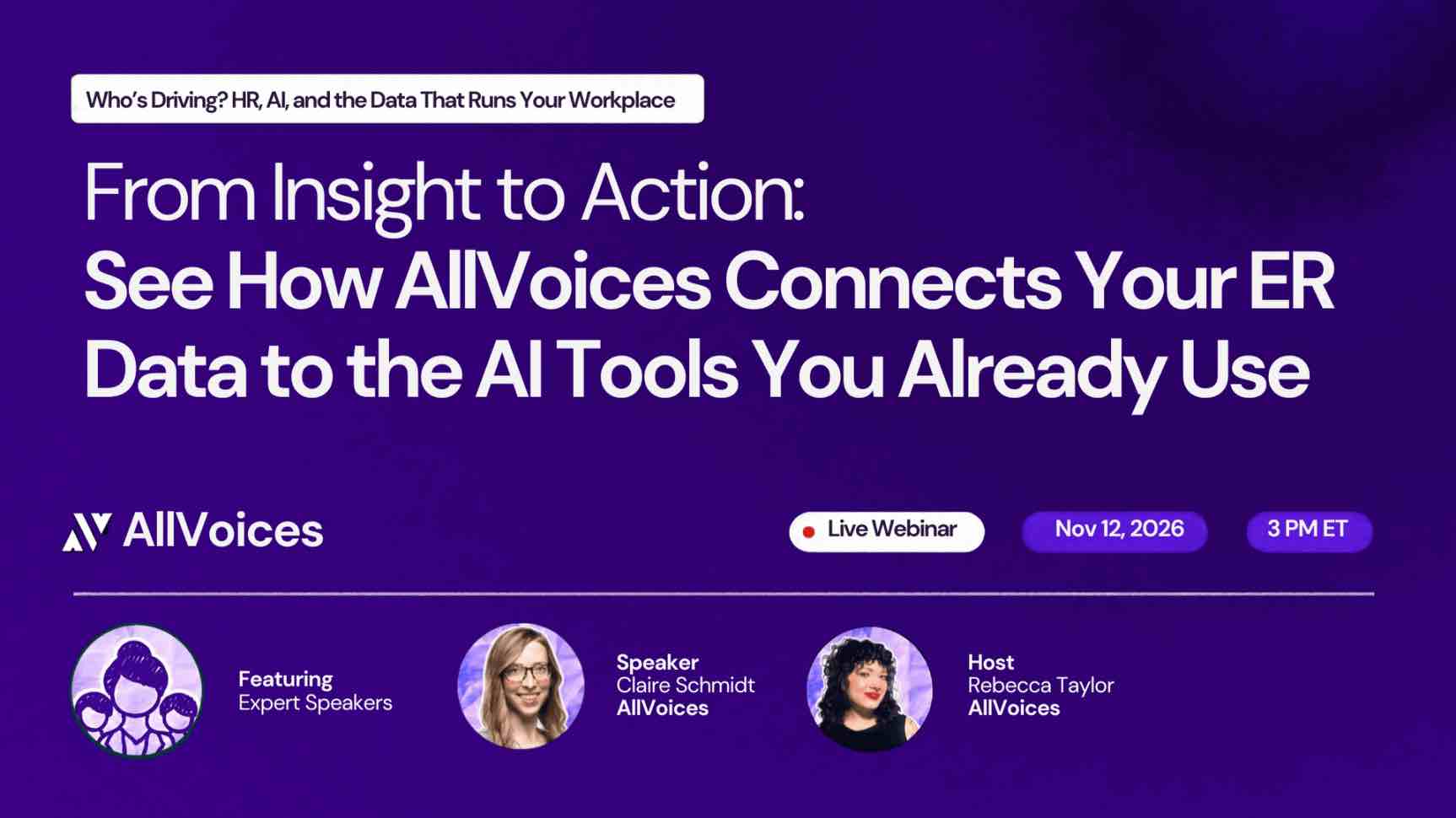
Our next webinar
Frequently asked questions

Got more questions? Email us at support@allvoices.co and we'll respond ASAP.

No items found.
Frequently asked questions

Got more questions? Email us at support@allvoices.co and we'll respond ASAP.

No items found.
Tia Smith, Vice President of Talent at Collaborative Solutions - Corporate Values & Innovation
Episode 295
About This Episode
In this episode of Reimagining Company Culture, we’re chatting with Tia Smith, Vice President of Talent at Collaborative Solutions. She is an experienced and innovative certified Human Capital Strategist with the ability to translate business vision into HR initiatives that improve performance, sustain growth, and foster employee engagement. Tune in to learn Tia’s thoughts on resetting values, incoporating values into onboarding and sales collateral, leveraging employee feedback, and more!
About The Guest
Tia has spent her career working at the intersection of people and culture. She is an experienced and innovative certified Human Capital Strategist with the ability to translate business vision into HR initiatives that improve performance, sustain growth, and foster employee engagement. As an employee experience fanatic, she brings a uniquely integrated approach to all-things-talent; strategically interconnecting talent acquisition, employee/leadership development, career management, performance management, and learning & capability management. Tia is also an official member of the Forbes Human Resources Council and has published several articles for Forbes.com. Tia lives in Nashville, TN and has two teenage daughters who remind her daily that she’s not as hip and cool as she once was.
Episode Transcription

On the AllVoices Reimagining Company Culture podcast, we sat down with Tia Smith, Vice President of Talent at Collaborative Solutions, to dig into translating corporate values into culture and innovation. Tia has spent her career working at the intersection of people and culture. She is an experienced and innovative certified Human Capital Strategist with the ability to translate business vision into HR initiatives that improve performance, sustain growth, and foster employee engagement.

The conversation moves past the usual talking points. Instead of treating corporate values as an HR theme, Tia Smith treats it as an operational discipline that sits in the daily decisions managers make about people, priorities, and trust. Below, the takeaways HR leaders, employee relations specialists, and executive teams will find most useful.

The discussion below pulls on several threads from the episode and connects them to current research and what AllVoices sees across hundreds of People teams.

What Corporate Values Looks Like in Practice

Corporate Values is one of those words HR teams use freely, but the on-the-ground version is much messier. In the conversation with Tia Smith, several patterns showed up that mirror what Gallup engagement findings on US workforce also highlights about effective people work. The gap between the slide-deck version and the daily practice is where most programs fall apart.

The data backs the case. SHRM's research on workplace priorities shows that organizations treating corporate values as a real discipline outperform peers on engagement, retention, and the cultural metrics that matter most over a multi-year horizon. Companies that treat it as messaging see short-term lift and long-term decline.

For HR leaders building Company Culture programs, that means starting with the everyday touchpoints where corporate values either lands or fails: hiring loops, onboarding, manager 1:1s, and performance conversations. These are the places where intention turns into experience, and where employees decide whether they trust the company enough to stay, speak up, and do their best work.

The pattern across high-functioning HR teams is consistent. They write fewer policies, run more pilots, and spend more time in conversation with managers who are actually doing the work. That discipline is harder than rolling out a campaign, but it is the difference between corporate values as a phrase and corporate values as a result.

How HR Teams Make Corporate Values Operational

The shift from concept to operation is where most teams stall. Two questions usually surface in workshops with People leaders.

Where should corporate values live in the org?

Ownership matters. Programs that sit only with HR rarely get traction. The strongest organizations pair central ownership in HR with distributed accountability across people managers, with a feedback loop into leadership. Human Resources can help build the capacity to run that distributed model without losing visibility, and gives the People team a single place to track what is actually happening.

What does success look like in 12 months?

Most teams need a one-year mark with concrete outcomes: a measurable change in employee engagement scores, a defined set of policy and process changes, and named owners for the work. Without that, the program drifts and budget questions become harder to defend. The honest version of a 12-month plan also includes two or three things you tried and decided not to repeat.

What Actually Works When You Lead Corporate Values

Three patterns repeat across People teams that get this work right. The principles cut across industry and company size.

Pressure-test values against decisions

Values are only real when they show up in tradeoffs, especially in promotions, terminations, and budget cuts.

Hire and fire to the values

If you talk about values but tolerate a senior leader who violates them, every employee sees it. Inconsistency is the fastest way to make values meaningless.

Build feedback loops between values and innovation

Values should help teams take smarter risks, not constrain them. Pair values with explicit permission to experiment.

These three principles also depend on the underlying culture. Without a baseline of values statement, most operational changes get rejected by the organization's immune system. Build the foundation first.

Where Employee Relations Fits Into Corporate Values

Whatever the topic, employee relations sits underneath. Corporate Values programs that ignore the ER reality get blindsided by a case that should have been resolved early. AllVoices builds investigations management and HR case management so HR teams can connect the surface-level work on corporate values to the deeper work of resolving issues, tracking patterns, and acting on what employees raise. The two are tightly linked: when employees see issues handled fairly, they trust the rest of the work too.

How ER data informs Corporate Values strategy

Issue patterns, response times, and resolution outcomes give HR a clearer picture than survey data alone. When the ER data is integrated into Employee Engagement workflows, leaders can see how corporate values translates into the lived experience of employees who raise concerns, and what to do about it. The teams that move fastest tend to review case themes monthly and feed those insights into the broader people strategy, instead of treating ER as a separate, reactive function.

For a real example, see Intercom's culture story. The same pattern applies: connect the strategic intent of corporate values to the operational rhythm where ER, HR, and managers actually meet employees.

Frequently Asked Questions About Corporate Values

What makes corporate values effective?

Effective values are specific, observable, and tied to behaviors. They show up in hiring rubrics, performance criteria, and how the company spends time and money.

How do you keep values from becoming wallpaper?

Bake them into rituals: hiring loops, promotion debates, all-hands stories, exit interviews. If your values only appear during onboarding week, they're decorative.

Can values support innovation?

Yes, when they explicitly endorse experimentation, dissent, and learning from failure. Values that punish missteps suppress innovation, even when companies say they want it.

How often should values be revisited?

Every two to three years, or after a major change like a merger, leadership transition, or strategic pivot. Otherwise they get stale and people stop trusting them.

Who should write the company's values?

Leadership writes the first draft, but employees pressure-test it. Values written behind closed doors land flat. Values built through structured input from across the company actually stick.

The Bottom Line for HR Leaders

Corporate Values is not a posture. It's a set of decisions, repeated over time, by people who control budgets, promotions, calendars, and the daily experience of work. The HR leaders who get traction stop treating this as a campaign and start treating it as ongoing operational practice. That reframing matters because it changes how you measure success and where you put your energy week to week.

That shift requires data, follow-through, and a clear point of view. Gallup engagement findings on US workforce and the broader research community make the business case clearer every year. The companies that act on it consistently win on retention, culture, and outcomes that show up on the financial statement. The ones that keep treating the work as branding tend to lose ground quietly, then noisily.

The conversation with Tia Smith is a useful reminder that the work is doable. None of it requires a huge HR team or a massive budget. It requires clear thinking, consistent execution, and the willingness to adjust when the data tells you to. Pair that mindset with the right tooling and the right partners, and corporate values stops being aspirational and becomes a measurable part of how the business runs.

Want to see how AllVoices supports HR teams running this work? Book a demo.

Want to learn more?
See the power of AllVoices today
Thank you! We look forward to meeting you soon
Oops! Something went wrong while submitting the form.
Frequently asked questions

Got more questions? Email us at support@allvoices.co and we'll respond ASAP.

No items found.
Frequently asked questions

Got more questions? Email us at support@allvoices.co and we'll respond ASAP.

No items found.