About This Episode
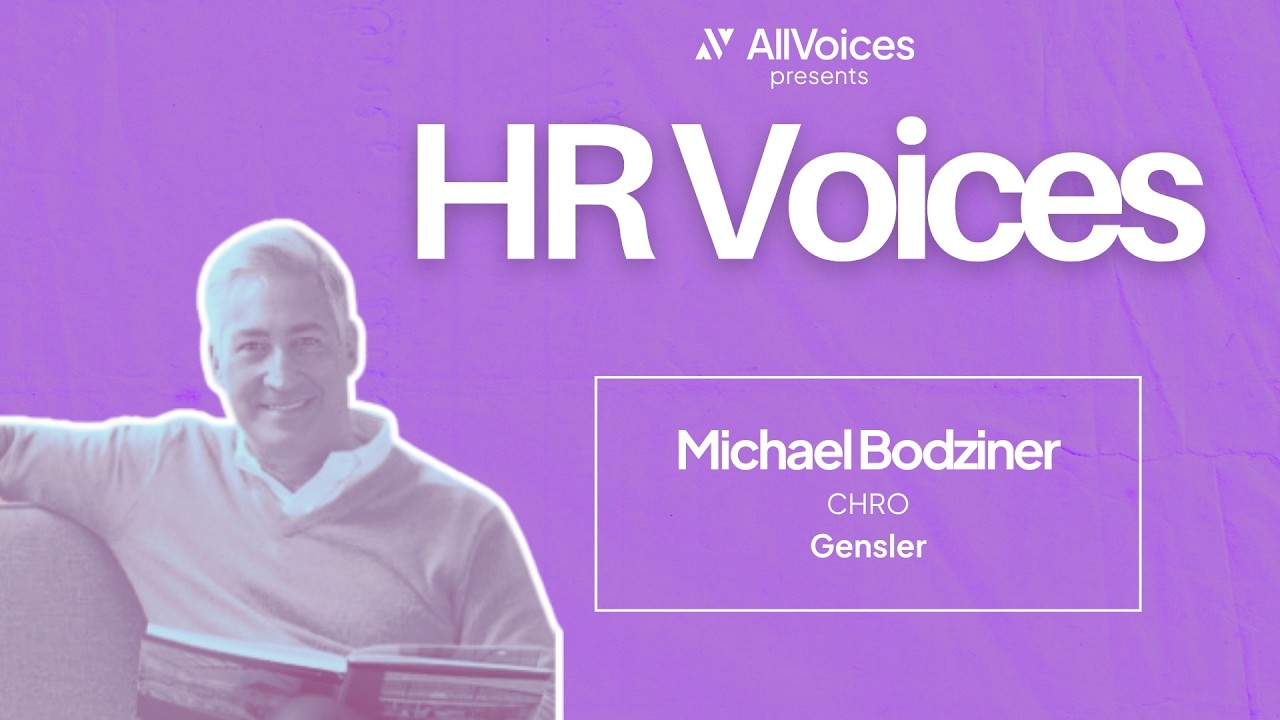
What happens when a designer leads HR? Michael Bodziner, Co-Chief Human Resources Officer at Gensler — the global architecture and design firm with 56 offices and 6,400 people — describes how a 40-year career from intern to studio director to CHRO shaped a people-first approach that measurably improves retention and performance. He explains how he translated retail customer-experience thinking into an employee-experience playbook, and why not letting fear be the deciding factor has guided the moves that mattered.
About The Guest
Michael Bodziner is Co-Chief Human Resources Officer at Gensler, the global architecture and design firm, having spent forty years there moving from intern to studio director to the top of the people function. That path gives him an unusual vantage: he ran the business the HR function serves. He builds employee experience the way the firm builds customer experience — as a designed sequence of moments rather than a set of policies — and shares the CHRO role in a co-leadership model.
Episode Breakdown

Michael Bodziner, Co-Chief Human Resources Officer at Gensler, had no professional HR training when his boss invited him on a walk to Starbucks about twelve years ago. He had spent 28 years as a designer at the global architecture and design firm. He assumed a client had complained. Instead, his boss asked him to become HR director for the Northwest region. Michael called it a total 180.

Michael told HR Voices host Rebecca Taylor how a designer’s instincts became his way of running HR. He treats the team member experience the way a retail designer treats a shopper’s experience. He asked for a co-CHRO because the role outgrew one person. And he wants AI to absorb the transactional work so HR people can grow and become more strategic.

Why Gensler Asked a Designer to Run HR

Michael joined Gensler as a summer intern in 1985 and knew within a week that he loved the firm. He did not yet realize it was the culture of the organization that resonated so strongly. Fittingly, the call offering him a permanent job came from the HR director.

For 28 years he was a design practitioner, much of it building the firm’s retail design practice. As a studio director, he made the job about the more than 40 people who reported to him. He stepped back from project deliverables to make time for their aspirations and struggles. Turnover in his studio stayed low.

That record explains the Starbucks walk. His boss chose him for his years leading people and his love of the firm’s culture. Michael admitted he knew nothing about immigration or visas and little about compensation and benefits, and the reply was that he had “experts to rely on for that.” Gensler chose for the part of HR that is hardest to teach, not for technical depth.

The move still unsettled him. Three weeks earlier, he says, a medium had predicted the offer and told him not to “let fear be the deciding factor.” He took the job and now gives new hires the same advice.

How a Retail Designer’s Lens Changed the Team Member Experience

As a retail designer, Michael had focused on the customer experience inside a prototype store. In HR, he turned that focus inward, toward what Gensler calls the team member experience. The firm avoids the word employee as too corporate. The need was urgent. With Silicon Valley in its backyard, tech companies were taking a lot of the firm’s talent, and voluntary turnover was high.

His answer was a people-first philosophy, articulated over a year with an outside consultant. Michael then piloted small changes that helped people feel seen, heard, and cared for. HR had previously leaned toward operations, compliance, and policy, in his view. Gensler is not an assembly line making widgets, he argues, and its creativity comes from its people. That makes the philosophy a strategy for keeping talent as much as a statement of values.

The pilots spread across the firm, and in 2020 the CEOs asked him to become CHRO. Eight to twelve weeks later, the pandemic put him on the front line of the firm’s people strategy.

What Actually Works

Pair Leaders Whose Aces Cover Each Other’s Spaces

Co-leadership runs through Gensler, from co-CEOs to co-studio directors, and Michael puts the firm at 56 offices and about 6,400 people. Soon after taking the role, Michael concluded that the CHRO job at a firm that size was bigger than one person, so he asked for a co. His co-CHRO, Larissa Gray, is also the firm’s global compliance director and has the legal background he lacks.

The pairing follows a phrase Michael uses at Gensler: “we all have aces and spaces.” Aces are strengths and spaces are soft spots, and strong teams pair people so one person’s aces cover a teammate’s spaces. Gallup research on employee strengths points the same way. People who use their strengths every day are six times more likely to be engaged on the job.

Map Each Person’s Aces Before Assigning the Work

Michael’s standing instruction to Gensler leaders is to know their people well. That means knowing what each person loves to do, which career path they want, and which projects, clients, and colleagues they prefer. The better leaders understand what drives each person, he argues, the better they can guide that person into work they love.

Gallup’s research on managers backs the emphasis. Employees who feel their manager is invested in them as people are more likely to be engaged, and the best managers make a concerted effort to get to know their employees.

Michael recommends restaurateur Danny Meyer’s book Setting the Table to HR folks for the same reason. Meyer’s view, as Michael describes it, is that engaged people make for well-served diners, and Gensler’s clients benefit the same way. That makes engagement inside the firm a client concern as much as an HR metric.

Give AI the Transactional Work

Michael does not claim to be an AI expert. Gensler is exploring the technology through training workshops, and the goal is not to replace jobs. It is to handle much of the transactional work. “In HR, we want AI to do the transactional stuff,” he said, so that people can upskill, grow, and become more strategic.

The freed time goes back into the team member experience. It also serves his larger goal: moving HR past its transactional reputation to become a true business partner to the practice.

Where Employee Relations Fits

Michael is candid that HR deals with many different personalities, backgrounds, and family situations, and that much of its time can be consumed by employee relations issues and conflict. He knows HR people are held to a different standard. So he wants them to keep working on themselves and to welcome partners who are better at something than they are.

That is aces and spaces applied to ER teams. Conflict work also carries a heavy administrative load in intake, documentation, and follow-up. HR case management that absorbs the paperwork returns that time to the strategic work Michael wants HR doing.

Frequently Asked Questions About a Designer Running HR

Who Is Michael Bodziner?

He is Co-Chief Human Resources Officer at Gensler, the global architecture and design firm. He joined as a summer intern in 1985, spent 28 years in design, and became CHRO in 2020.

Why Does Gensler Have Two Chief Human Resources Officers?

Michael requested a co-CHRO. Soon after taking the role, he concluded that the job at a firm of Gensler’s size was bigger than one person. His co-CHRO brings a legal background he does not have.

What Does “Aces and Spaces” Mean at Gensler?

It is shorthand for strengths and soft spots. Everyone has both, and Michael argues that strong teams pair people so one person’s aces complement a teammate’s spaces. No single leader has to be the expert at everything.

How Did Michael Bodziner Move From Design Into HR?

His boss offered him the Northwest region HR director role on a walk to Starbucks about twelve years ago. Michael had no HR training but had led his studio by putting people first.

How Does Gensler Plan to Use AI in HR?

To take on transactional work, not to replace jobs. Gensler is exploring AI through training workshops, and Michael wants it to free HR people to upskill, grow, and become more strategic.

The Bottom Line for HR Leaders

Michael Bodziner’s framing is generous to the profession. He closed with admiration for anyone who chooses a career in HR and a push to keep elevating the function, wherever it sits today. Transactional work will always exist. The goal is still for HR to be a strategic business partner.

Gensler chose an HR leader for how he led people, added the co-CHRO he asked for, and is pointing AI at the busywork. Companies that make those moves give HR room to travel the path from firefighting to boardroom influence; companies that skip them keep HR buried in transactions.

See how AllVoices helps People teams spend less time on transactions and more time on the people they support.

Our next webinar
Frequently asked questions

Got more questions? Email us at support@allvoices.co and we'll respond ASAP.

No items found.
Frequently asked questions

Got more questions? Email us at support@allvoices.co and we'll respond ASAP.

No items found.

From Design to HR: People-First Culture, Co-Leadership, and AI in HR

About the guest

Michael Bodziner is Co-Chief Human Resources Officer at Gensler, the global architecture and design firm, having spent forty years there moving from intern to studio director to the top of the people function. That path gives him an unusual vantage: he ran the business the HR function serves. He builds employee experience the way the firm builds customer experience — as a designed sequence of moments rather than a set of policies — and shares the CHRO role in a co-leadership model.

Episode Breakdown

Michael Bodziner, Co-Chief Human Resources Officer at Gensler, had no professional HR training when his boss invited him on a walk to Starbucks about twelve years ago. He had spent 28 years as a designer at the global architecture and design firm. He assumed a client had complained. Instead, his boss asked him to become HR director for the Northwest region. Michael called it a total 180.

Michael told HR Voices host Rebecca Taylor how a designer’s instincts became his way of running HR. He treats the team member experience the way a retail designer treats a shopper’s experience. He asked for a co-CHRO because the role outgrew one person. And he wants AI to absorb the transactional work so HR people can grow and become more strategic.

Why Gensler Asked a Designer to Run HR

Michael joined Gensler as a summer intern in 1985 and knew within a week that he loved the firm. He did not yet realize it was the culture of the organization that resonated so strongly. Fittingly, the call offering him a permanent job came from the HR director.

For 28 years he was a design practitioner, much of it building the firm’s retail design practice. As a studio director, he made the job about the more than 40 people who reported to him. He stepped back from project deliverables to make time for their aspirations and struggles. Turnover in his studio stayed low.

That record explains the Starbucks walk. His boss chose him for his years leading people and his love of the firm’s culture. Michael admitted he knew nothing about immigration or visas and little about compensation and benefits, and the reply was that he had “experts to rely on for that.” Gensler chose for the part of HR that is hardest to teach, not for technical depth.

The move still unsettled him. Three weeks earlier, he says, a medium had predicted the offer and told him not to “let fear be the deciding factor.” He took the job and now gives new hires the same advice.

How a Retail Designer’s Lens Changed the Team Member Experience

As a retail designer, Michael had focused on the customer experience inside a prototype store. In HR, he turned that focus inward, toward what Gensler calls the team member experience. The firm avoids the word employee as too corporate. The need was urgent. With Silicon Valley in its backyard, tech companies were taking a lot of the firm’s talent, and voluntary turnover was high.

His answer was a people-first philosophy, articulated over a year with an outside consultant. Michael then piloted small changes that helped people feel seen, heard, and cared for. HR had previously leaned toward operations, compliance, and policy, in his view. Gensler is not an assembly line making widgets, he argues, and its creativity comes from its people. That makes the philosophy a strategy for keeping talent as much as a statement of values.

The pilots spread across the firm, and in 2020 the CEOs asked him to become CHRO. Eight to twelve weeks later, the pandemic put him on the front line of the firm’s people strategy.

What Actually Works

Pair Leaders Whose Aces Cover Each Other’s Spaces

Co-leadership runs through Gensler, from co-CEOs to co-studio directors, and Michael puts the firm at 56 offices and about 6,400 people. Soon after taking the role, Michael concluded that the CHRO job at a firm that size was bigger than one person, so he asked for a co. His co-CHRO, Larissa Gray, is also the firm’s global compliance director and has the legal background he lacks.

The pairing follows a phrase Michael uses at Gensler: “we all have aces and spaces.” Aces are strengths and spaces are soft spots, and strong teams pair people so one person’s aces cover a teammate’s spaces. Gallup research on employee strengths points the same way. People who use their strengths every day are six times more likely to be engaged on the job.

Map Each Person’s Aces Before Assigning the Work

Michael’s standing instruction to Gensler leaders is to know their people well. That means knowing what each person loves to do, which career path they want, and which projects, clients, and colleagues they prefer. The better leaders understand what drives each person, he argues, the better they can guide that person into work they love.

Gallup’s research on managers backs the emphasis. Employees who feel their manager is invested in them as people are more likely to be engaged, and the best managers make a concerted effort to get to know their employees.

Michael recommends restaurateur Danny Meyer’s book Setting the Table to HR folks for the same reason. Meyer’s view, as Michael describes it, is that engaged people make for well-served diners, and Gensler’s clients benefit the same way. That makes engagement inside the firm a client concern as much as an HR metric.

Give AI the Transactional Work

Michael does not claim to be an AI expert. Gensler is exploring the technology through training workshops, and the goal is not to replace jobs. It is to handle much of the transactional work. “In HR, we want AI to do the transactional stuff,” he said, so that people can upskill, grow, and become more strategic.

The freed time goes back into the team member experience. It also serves his larger goal: moving HR past its transactional reputation to become a true business partner to the practice.

Where Employee Relations Fits

Michael is candid that HR deals with many different personalities, backgrounds, and family situations, and that much of its time can be consumed by employee relations issues and conflict. He knows HR people are held to a different standard. So he wants them to keep working on themselves and to welcome partners who are better at something than they are.

That is aces and spaces applied to ER teams. Conflict work also carries a heavy administrative load in intake, documentation, and follow-up. HR case management that absorbs the paperwork returns that time to the strategic work Michael wants HR doing.

Frequently Asked Questions About a Designer Running HR

Who Is Michael Bodziner?

He is Co-Chief Human Resources Officer at Gensler, the global architecture and design firm. He joined as a summer intern in 1985, spent 28 years in design, and became CHRO in 2020.

Why Does Gensler Have Two Chief Human Resources Officers?

Michael requested a co-CHRO. Soon after taking the role, he concluded that the job at a firm of Gensler’s size was bigger than one person. His co-CHRO brings a legal background he does not have.

What Does “Aces and Spaces” Mean at Gensler?

It is shorthand for strengths and soft spots. Everyone has both, and Michael argues that strong teams pair people so one person’s aces complement a teammate’s spaces. No single leader has to be the expert at everything.

How Did Michael Bodziner Move From Design Into HR?

His boss offered him the Northwest region HR director role on a walk to Starbucks about twelve years ago. Michael had no HR training but had led his studio by putting people first.

How Does Gensler Plan to Use AI in HR?

To take on transactional work, not to replace jobs. Gensler is exploring AI through training workshops, and Michael wants it to free HR people to upskill, grow, and become more strategic.

The Bottom Line for HR Leaders

Michael Bodziner’s framing is generous to the profession. He closed with admiration for anyone who chooses a career in HR and a push to keep elevating the function, wherever it sits today. Transactional work will always exist. The goal is still for HR to be a strategic business partner.

Gensler chose an HR leader for how he led people, added the co-CHRO he asked for, and is pointing AI at the busywork. Companies that make those moves give HR room to travel the path from firefighting to boardroom influence; companies that skip them keep HR buried in transactions.

See how AllVoices helps People teams spend less time on transactions and more time on the people they support.