About This Episode
In this episode of Reimagining Company Culture, we’re chatting with Winston Clements, Culture Specialist, Award Winning Business & Motivational Speaker (he/him). Winston’s ultimate mission is to help 1 BILLION people to unleash their full human potential.
About The Guest
Winston Ben Clements is a culture specialist with expertise in the areas of Resilience and Diversity & Inclusion. His ultimate mission is to help 1 BILLION people to unleash their full human potential. Winston was predicted to live a life of isolation and pain due to a rare bone disorder known as Osteogenesis Imperfecta (OI). This condition caused his bones to be extremely fragile, suffering over 200 fractures in his lifetime. The early years were particularly difficult. Winston not only had to deal with the typical challenges of school and adolescence, but he also struggled with loneliness and frustration because his body would continuously let him down. Watching his siblings and the other kids from the sidelines was a constant reminder of how different he was, and he often found himself wondering “what is the point of it all?” Despite this, Winston considers himself to be one of the lucky ones. A significant number of people with OI never make it beyond childhood. He was also born into a family who were destined to cope with a son who refused to allow his physical condition to limit his lifestyle. Winston also credits his positive attitude to his faith in God, as well as all the inspiration he has received from friends and all the people he has encountered along his journey. Winston graduated from University with a degree in Computer Science and then spent over 10 years working as a Consultant for global tech corporations. Nowadays as an award-winning speaker, Winston’s inspiring and practical sessions continue to have transformational effects on audiences worldwide. He is passionate about supporting the world’s leading organisations to create cultures that are truly inclusive. Winston has shared his story on stages, conferences and media platforms all around the world. He has become extremely popular for his keynote speaking appearances due to his ability to deliver inspirational and practical content, in a humorous and relaxed style. Known for his infamous quote “Your Limitations Are An Illusion,” Winston is also a two-time TED Speaker, entrepreneur and mentor. He currently resides in London, England with his wife Mayfair.
Episode Breakdown

Winston Clements is a culture specialist with deep expertise in resilience and Diversity & Inclusion. On Reimagining Company Culture, he joins us to talk about what authentic inclusion looks like across the entire employee journey. His perspective is built on lived experience and global keynote work. Winston challenges HR teams to stop treating inclusion as a destination and start treating it as a discipline that shows up in every touchpoint between an employee and their employer.

His message: inclusion fails when it is reserved for ceremony. It works when it is built into every step of how the company hires, manages, develops, and retains people.

Why Step-by-Step Inclusion Matters

Most inclusion programs concentrate on hiring and a few high-visibility events. Winston argues that approach inverts the math. The biggest use is in the daily operating moments such as how managers run meetings, who gets feedback, and how concerns are handled. Gallup research on employee voice found that employees who feel heard are 4.6 times more likely to feel supported to do their best work, yet only one in four strongly agree their opinions count.

That gap is where inclusion lives or dies. A real DEI program is the sum of those moments, not the marquee event.

Building Inclusion Into Each Stage

Sourcing and screening

Use diverse sourcing partners and structured screens. ATS configuration matters here, small filter defaults can quietly remove qualified candidates.

Onboarding

Onboarding is where new hires decide whether the company's stated values match its real ones. Make the first 30 days reflect the company you want to be.

Performance and promotion

Review implicit bias in calibration sessions and make criteria explicit before scoring.

Authentic vs. Performative

Winston is candid about the difference. Performative inclusion is for the audience; authentic inclusion is for the employee. Deloitte's 2024 Global Human Capital Trends report confirms that belonging is now a top-tier predictor of intent to stay, and employees can tell the difference between language and lived practice within the first few weeks.

Cultures rated authentically inclusive consistently win on retention, innovation, and employee engagement.

Where Employee Relations Fits

Authentic inclusion depends on a credible way to raise issues. A DEI hotline paired with investigations management closes the trust loop. Without that infrastructure, inclusion is performance, not practice.

Winston treats reporting systems as part of the inclusion architecture, not a compliance afterthought.

Why This Conversation Matters Right Now

The HR field has been through three waves in the last few years: an emergency pivot to distributed work, a wave of public commitments around inclusion, and a slow correction as leaders started measuring which of those commitments actually moved retention and engagement. Conversations like this one matter because they sit on the other side of that correction.

That shift puts pressure on people leaders to be specific. Generic advice about belonging or psychological safety does not survive a budget review. The HR teams that are pulling ahead are the ones that connect cultural commitments to operating systems, instrument the resulting work, and report on outcomes in the same business-critical language the CFO uses for revenue. According to SHRM's reporting on retention strategies, the cost of underinvesting in culture shows up directly in voluntary attrition, and the math gets harder every year.

This is also where employee relations operations becomes a more visible part of the modern People organization. Employee relations is no longer a quiet compliance function; it is the data layer that tells leaders whether their stated values are being lived inside the organization, and it is increasingly the place where cultural drift first becomes visible.

A Practical Playbook for HR Leaders

Translating a great podcast conversation into actual change inside your organization takes a stepwise plan, not a rallying cry. The most consistent leaders we work with run a 90-day discovery loop, a 90-day pilot, and a 90-day expansion that together compress what would otherwise be a multi-year cultural shift into a single calendar year.

Discovery is mostly listening. That means structured conversations with managers, frontline employees, and recent leavers, paired with quantitative pulls from your HRIS, ATS, and case-management system. Most HR teams find that the data they already have, surfaced honestly, points to two or three high-impact interventions they had not previously prioritized.

Pilots are deliberately small. Pick one team, one geography, or one stage of the employee journey and instrument it well. Set a clear hypothesis, a measurable target, and a review cadence shorter than a quarter. The teams that pilot this way produce stories the rest of the organization actually wants to copy.

Expansion is the patient work. The organizations that scale change well treat the pilot lessons as the operating manual and resist the urge to rebrand the work. Manager training, listening infrastructure, and case-management discipline travel with the program; without those layers, even successful pilots fail to take root in the rest of the company.

The throughline across every successful version of this playbook is the same: change is treated as a system, not a moment. Hiring, performance, recognition, manager development, and reporting infrastructure all have to move together for the new culture to take root. The companies that move the whole stack at once, even imperfectly, usually compound their gains for the next several years.

One last note for HR leaders worried about whether the moment is right to invest. The cost of waiting always looks smaller than the cost of acting until the data comes in, and by then the talent has already left. The discipline is to move at the cadence of the workforce, not the cadence of the budget cycle, and the People leaders who hold that line tend to outlast the ones who do not.

Frequently Asked Questions About Authentic Inclusion

How is authentic inclusion different from DEI?

Authentic inclusion is the everyday practice of DEI, what it looks like in 1:1s, meetings, and decisions. DEI is the strategy; inclusion is the daily craft.

How do you measure inclusion authentically?

Use a combination of belonging surveys, retention data segmented by identity, and qualitative feedback. Triangulation prevents over-trusting any one measure.

What is the biggest sign of performative inclusion?

A gap between public statements and what underrepresented employees say privately. Closing that gap is the work.

How do you keep this work going during cuts?

Embed it in the operating model, hiring, performance, promotion, so it survives budget changes.

Who should own inclusion?

Every leader. DEI roles set strategy and standards, but execution is line-leadership work.

The Bottom Line for HR Leaders

Winston's argument is that inclusion is the cumulative result of many small choices, made consistently, by leaders who believe in it. The companies that win on culture instrument those choices, measure outcomes openly, and pair inclusion with credible reporting systems. The result is a workplace where employees do not have to perform belonging to receive it.

See how AllVoices helps HR teams turn authentic inclusion into operating reality.
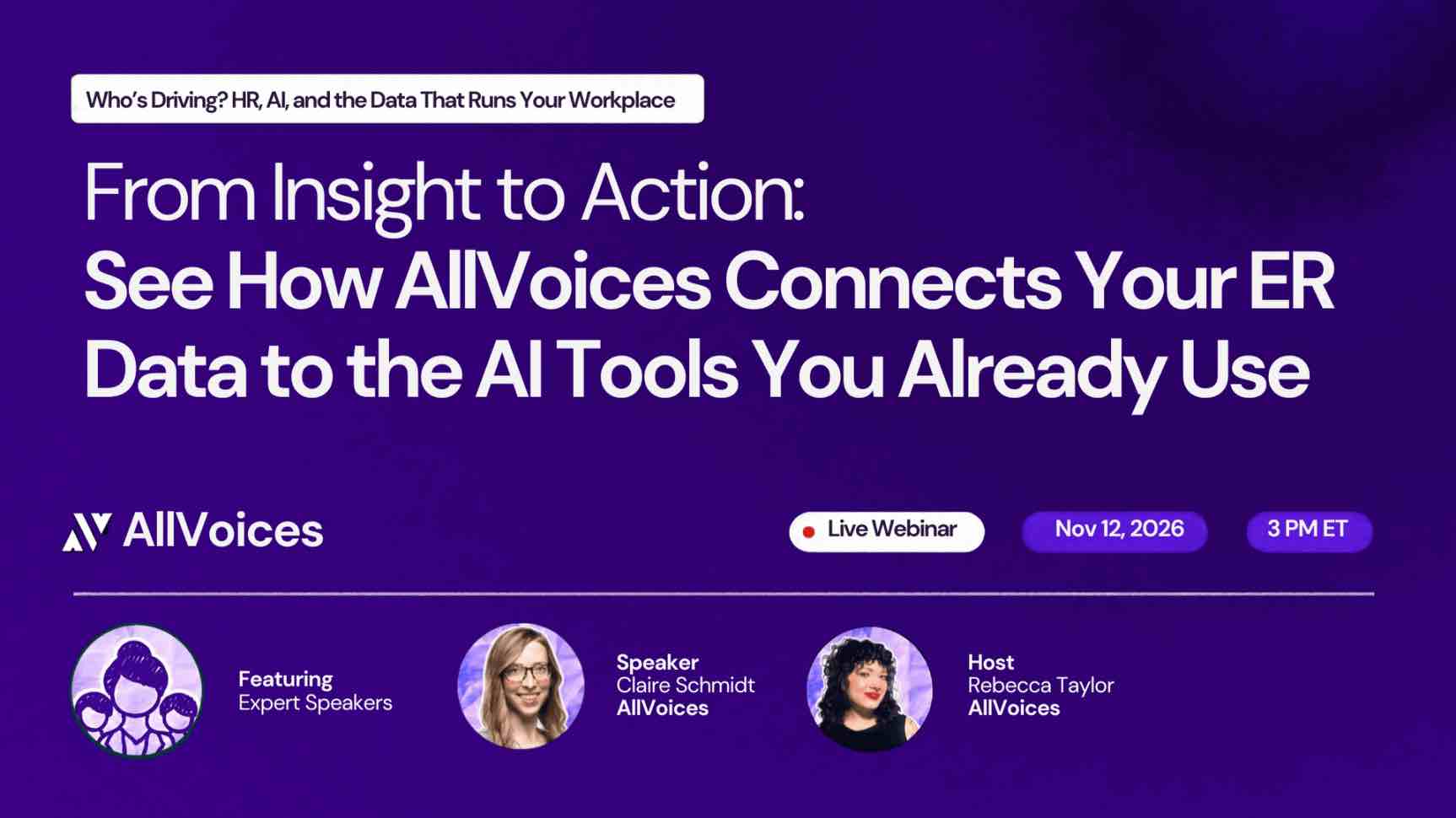
Our next webinar
Frequently asked questions

Got more questions? Email us at support@allvoices.co and we'll respond ASAP.

No items found.
Frequently asked questions

Got more questions? Email us at support@allvoices.co and we'll respond ASAP.

No items found.
Culture Specialist, Award-Winning Speaker, Winston Clements - Authentic Inclusion and Support at Every Step of the Way
Episode 113
About This Episode
In this episode of Reimagining Company Culture, we’re chatting with Winston Clements, Culture Specialist, Award Winning Business & Motivational Speaker (he/him). Winston’s ultimate mission is to help 1 BILLION people to unleash their full human potential.
About The Guest
Winston Ben Clements is a culture specialist with expertise in the areas of Resilience and Diversity & Inclusion. His ultimate mission is to help 1 BILLION people to unleash their full human potential. Winston was predicted to live a life of isolation and pain due to a rare bone disorder known as Osteogenesis Imperfecta (OI). This condition caused his bones to be extremely fragile, suffering over 200 fractures in his lifetime. The early years were particularly difficult. Winston not only had to deal with the typical challenges of school and adolescence, but he also struggled with loneliness and frustration because his body would continuously let him down. Watching his siblings and the other kids from the sidelines was a constant reminder of how different he was, and he often found himself wondering “what is the point of it all?” Despite this, Winston considers himself to be one of the lucky ones. A significant number of people with OI never make it beyond childhood. He was also born into a family who were destined to cope with a son who refused to allow his physical condition to limit his lifestyle. Winston also credits his positive attitude to his faith in God, as well as all the inspiration he has received from friends and all the people he has encountered along his journey. Winston graduated from University with a degree in Computer Science and then spent over 10 years working as a Consultant for global tech corporations. Nowadays as an award-winning speaker, Winston’s inspiring and practical sessions continue to have transformational effects on audiences worldwide. He is passionate about supporting the world’s leading organisations to create cultures that are truly inclusive. Winston has shared his story on stages, conferences and media platforms all around the world. He has become extremely popular for his keynote speaking appearances due to his ability to deliver inspirational and practical content, in a humorous and relaxed style. Known for his infamous quote “Your Limitations Are An Illusion,” Winston is also a two-time TED Speaker, entrepreneur and mentor. He currently resides in London, England with his wife Mayfair.
Episode Transcription

Winston Clements is a culture specialist with deep expertise in resilience and Diversity & Inclusion. On Reimagining Company Culture, he joins us to talk about what authentic inclusion looks like across the entire employee journey. His perspective is built on lived experience and global keynote work. Winston challenges HR teams to stop treating inclusion as a destination and start treating it as a discipline that shows up in every touchpoint between an employee and their employer.

His message: inclusion fails when it is reserved for ceremony. It works when it is built into every step of how the company hires, manages, develops, and retains people.

Why Step-by-Step Inclusion Matters

Most inclusion programs concentrate on hiring and a few high-visibility events. Winston argues that approach inverts the math. The biggest use is in the daily operating moments such as how managers run meetings, who gets feedback, and how concerns are handled. Gallup research on employee voice found that employees who feel heard are 4.6 times more likely to feel supported to do their best work, yet only one in four strongly agree their opinions count.

That gap is where inclusion lives or dies. A real DEI program is the sum of those moments, not the marquee event.

Building Inclusion Into Each Stage

Sourcing and screening

Use diverse sourcing partners and structured screens. ATS configuration matters here, small filter defaults can quietly remove qualified candidates.

Onboarding

Onboarding is where new hires decide whether the company's stated values match its real ones. Make the first 30 days reflect the company you want to be.

Performance and promotion

Review implicit bias in calibration sessions and make criteria explicit before scoring.

Authentic vs. Performative

Winston is candid about the difference. Performative inclusion is for the audience; authentic inclusion is for the employee. Deloitte's 2024 Global Human Capital Trends report confirms that belonging is now a top-tier predictor of intent to stay, and employees can tell the difference between language and lived practice within the first few weeks.

Cultures rated authentically inclusive consistently win on retention, innovation, and employee engagement.

Where Employee Relations Fits

Authentic inclusion depends on a credible way to raise issues. A DEI hotline paired with investigations management closes the trust loop. Without that infrastructure, inclusion is performance, not practice.

Winston treats reporting systems as part of the inclusion architecture, not a compliance afterthought.

Why This Conversation Matters Right Now

The HR field has been through three waves in the last few years: an emergency pivot to distributed work, a wave of public commitments around inclusion, and a slow correction as leaders started measuring which of those commitments actually moved retention and engagement. Conversations like this one matter because they sit on the other side of that correction.

That shift puts pressure on people leaders to be specific. Generic advice about belonging or psychological safety does not survive a budget review. The HR teams that are pulling ahead are the ones that connect cultural commitments to operating systems, instrument the resulting work, and report on outcomes in the same business-critical language the CFO uses for revenue. According to SHRM's reporting on retention strategies, the cost of underinvesting in culture shows up directly in voluntary attrition, and the math gets harder every year.

This is also where employee relations operations becomes a more visible part of the modern People organization. Employee relations is no longer a quiet compliance function; it is the data layer that tells leaders whether their stated values are being lived inside the organization, and it is increasingly the place where cultural drift first becomes visible.

A Practical Playbook for HR Leaders

Translating a great podcast conversation into actual change inside your organization takes a stepwise plan, not a rallying cry. The most consistent leaders we work with run a 90-day discovery loop, a 90-day pilot, and a 90-day expansion that together compress what would otherwise be a multi-year cultural shift into a single calendar year.

Discovery is mostly listening. That means structured conversations with managers, frontline employees, and recent leavers, paired with quantitative pulls from your HRIS, ATS, and case-management system. Most HR teams find that the data they already have, surfaced honestly, points to two or three high-impact interventions they had not previously prioritized.

Pilots are deliberately small. Pick one team, one geography, or one stage of the employee journey and instrument it well. Set a clear hypothesis, a measurable target, and a review cadence shorter than a quarter. The teams that pilot this way produce stories the rest of the organization actually wants to copy.

Expansion is the patient work. The organizations that scale change well treat the pilot lessons as the operating manual and resist the urge to rebrand the work. Manager training, listening infrastructure, and case-management discipline travel with the program; without those layers, even successful pilots fail to take root in the rest of the company.

The throughline across every successful version of this playbook is the same: change is treated as a system, not a moment. Hiring, performance, recognition, manager development, and reporting infrastructure all have to move together for the new culture to take root. The companies that move the whole stack at once, even imperfectly, usually compound their gains for the next several years.

One last note for HR leaders worried about whether the moment is right to invest. The cost of waiting always looks smaller than the cost of acting until the data comes in, and by then the talent has already left. The discipline is to move at the cadence of the workforce, not the cadence of the budget cycle, and the People leaders who hold that line tend to outlast the ones who do not.

Frequently Asked Questions About Authentic Inclusion

How is authentic inclusion different from DEI?

Authentic inclusion is the everyday practice of DEI, what it looks like in 1:1s, meetings, and decisions. DEI is the strategy; inclusion is the daily craft.

How do you measure inclusion authentically?

Use a combination of belonging surveys, retention data segmented by identity, and qualitative feedback. Triangulation prevents over-trusting any one measure.

What is the biggest sign of performative inclusion?

A gap between public statements and what underrepresented employees say privately. Closing that gap is the work.

How do you keep this work going during cuts?

Embed it in the operating model, hiring, performance, promotion, so it survives budget changes.

Who should own inclusion?

Every leader. DEI roles set strategy and standards, but execution is line-leadership work.

The Bottom Line for HR Leaders

Winston's argument is that inclusion is the cumulative result of many small choices, made consistently, by leaders who believe in it. The companies that win on culture instrument those choices, measure outcomes openly, and pair inclusion with credible reporting systems. The result is a workplace where employees do not have to perform belonging to receive it.

See how AllVoices helps HR teams turn authentic inclusion into operating reality.

Want to learn more?
See the power of AllVoices today
Thank you! We look forward to meeting you soon
Oops! Something went wrong while submitting the form.
Frequently asked questions

Got more questions? Email us at support@allvoices.co and we'll respond ASAP.

No items found.
Frequently asked questions

Got more questions? Email us at support@allvoices.co and we'll respond ASAP.

No items found.