About This Episode
In this episode of Reimagining Company Culture, we’re chatting with Michelle Yu, Founder of Aspire Talent. Michelle is passionate about People and Business, and in making work and workplaces more impactful and enjoyable all around; she talks about these topics on her podcast, The Find Your Path Podcast.
About The Guest
Michelle is a former Silicon Valley HR professional, turned entrepreneur, coach, and start-up HR consultant. She is the founder of Aspire Talent, a boutique HR consultancy focused on supporting early stage venture backed start-ups advising across all things people operations. As an ICF certified professional coach, Michelle also runs a private coaching practice, dedicated to up-skilling underrepresented professionals in corporate America, in particular coaching women and people of color. Michelle is passionate about People and Business, and in making work and workplaces more impactful and enjoyable all around; she talks about these topics on her podcast, The Find Your Path Podcast. Michelle has worked at companies like LivingSocial, Google and SoftBank; received her MBA from Duke University, and Bachelors from UC Irvine.
Episode Breakdown

Michelle Yu is the founder of Aspire Talent, a boutique HR consultancy supporting early-stage venture-backed startups across people operations. She is also an ICF certified professional coach who runs a private coaching practice focused on underrepresented professionals in corporate America. Before Aspire Talent, Michelle worked at LivingSocial, Google, and SoftBank, and she earned her MBA from Duke University. Her conversation on Reimagining Company Culture focused on what early-stage founders need to do to anchor culture before growth scrambles the implicit norms that made the early team work.

The conversation centered on the practical mechanics of using mission, vision, and values as a true north star rather than wall art. Most early-stage companies write down their values and then never reference them again. Michelle walked through what changes when leadership treats those documents as living tools.

The synthesis below pulls in research and field practice from People teams supporting similar early-stage companies.

Why Mission, Vision, and Values Need to Be Operational

Most companies have all three documents. Most also struggle to point to specific decisions that were shaped by the documents. The disconnect is the source of much of the cultural drift that hits companies between 50 and 200 employees.

McKinsey research on high-performing cultures reports that companies in the top quartile of culture deliver 60 percent higher returns to shareholders than the median. The pattern across the top quartile is not the elegance of the values statement; it is the consistency with which the values shape decisions. Companies with bland values that are operationalized outperform companies with beautiful values that get ignored.

Michelle’s framing for early-stage companies is to keep the documents short and use them often. The shortness is a feature: if leadership cannot articulate the mission in one sentence, employees will not be able to either. Use is the discipline: in hiring conversations, in performance reviews, in strategic decisions, the mission should be referenced explicitly.

What an Operational North Star Looks Like

How do you write a mission statement that actually gets used?

Keep it under 20 words, make it specific to the work the company does, and refuse to make it generic. Mission statement documents that survive contact with the team usually share these traits and get referenced in real decisions within 90 days.

What is the difference between mission, vision, and values?

The vision statement describes the future the company is trying to create. The mission statement describes what the company does today to move toward that future. The values statement describes how the company behaves while doing the work. Each one operates differently and answers a different question.

What Actually Works in Early-Stage Culture Building

Hire deliberately against the values

Every hire either reinforces or dilutes the early culture. Companies that screen for behavioral fit (not personality fit) build cultures that scale past the founding team. The distinction matters: behavioral fit is about how someone works against the values; personality fit is a fast path to homogeneity.

Reference the mission in real decisions

Decisions made with explicit reference to the mission build credibility for the document. When leadership says no to something because it does not fit the mission, employees learn that the document means something. When leadership ignores the mission to chase a short-term opportunity, the document loses authority quickly.

Use surveys to test alignment, not just sentiment

Employee surveys can measure whether employees actually understand the mission and connect their work to it. The early-stage companies that test alignment quarterly catch drift earlier and correct it before it becomes a hiring problem.

Where Employee Relations Fits in Early-Stage Culture

ER cases at early-stage companies are rare but high signal. The way the founding team handles the first few cases shapes the cultural expectation around fairness for the next decade. Companies running thoughtful company culture programs treat early ER moments as foundational culture work, not as compliance.

How early ER decisions shape long-term culture

Consistency is the test. Deloitte’s 2025 Gen Z and Millennial Survey shows that 86 percent of Gen Z and 89 percent of millennial employees consider purpose key to workplace satisfaction. Founders who handle the first few ER cases with consistency and transparency build the cultural foundation that supports purpose-driven retention as the company grows.

Frequently Asked Questions About Mission, Vision, and Values

What is a values statement?

A values statement describes the behaviors a company commits to, the standards it holds itself to, and the qualities it wants employees to embody. The strongest values statements are specific enough to guide decisions and short enough to remember.

How often should mission and vision get updated?

Mission rarely (every 3 to 5 years). Vision more often, especially at early-stage companies where the trajectory may shift. Values almost never; the values should be foundational enough to survive multiple business model changes.

Do values matter for early-stage companies?

Yes, especially in the first 100 hires. Each early hire shapes the culture more than later hires do, which makes early values discipline disproportionately important.

How do you handle a values mismatch with a senior leader?

Coach first; act second. If coaching does not produce behavioral change, the senior leader has to leave. Tolerating values mismatches at the senior level signals to the rest of the company that the values are negotiable.

How do you keep values from sounding generic?

Add specificity. Generic values (integrity, excellence, teamwork) describe almost any company. Specific values (we ship the smallest version that delivers real value, we tell each other the truth in real time) describe how a particular company operates.

One additional discipline worth calling out is the practice of writing down what the founders actually do versus what they say they value. The gap is where culture drift starts. Closing that gap requires uncomfortable conversations, but it produces a values document that matches the lived reality and earns credibility with new hires.

How do you write values that survive a CEO transition?

Values that survive transitions are anchored in operating practice rather than personality. The hiring rubric, the performance review criteria, and the recognition program all reinforce the values regardless of who is in the CEO seat. Founders who build values purely on their own personality leave a fragile cultural inheritance.

What is the role of board governance in protecting culture?

Board governance protects culture during the moments when leadership is tempted to compromise it. A board that asks about culture metrics during quarterly reviews, signs off on cultural commitments at major transitions, and treats CEO behavior as a culture indicator produces meaningful protection for the work. Gallup’s 2026 State of the Global Workplace report continues to track engagement decline globally, which makes board attention to cultural metrics more important rather than less.

The Bottom Line for HR Leaders

Michelle’s argument is operational: the north star only works when leadership uses it. Companies that reference mission and values in real decisions build cultures that scale; companies that publish the documents and ignore them produce drift that becomes obvious somewhere between 50 and 200 employees.

For People teams supporting early-stage companies, the practical move is to keep the documents short, use them often, and audit alignment quarterly through organizational culture frameworks that connect stated values to observed behavior. The discipline is small per quarter and produces durable cultural alignment over multiple years.

See how AllVoices helps People teams turn workplace signals into action.
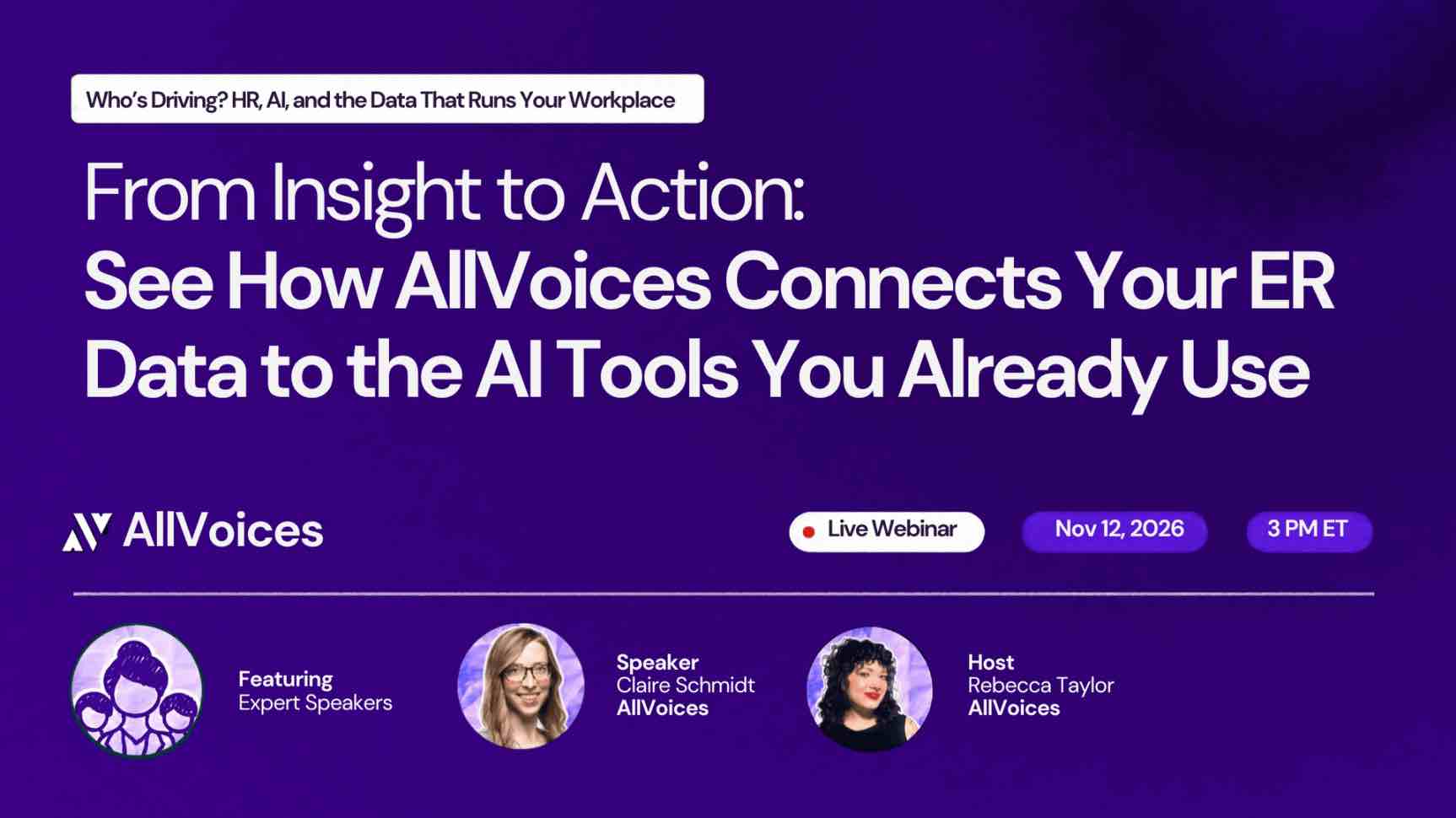
Our next webinar
Frequently asked questions

Got more questions? Email us at support@allvoices.co and we'll respond ASAP.

No items found.
Frequently asked questions

Got more questions? Email us at support@allvoices.co and we'll respond ASAP.

No items found.
Founder of Aspire Talent, Michelle Yu- The North Star of Company Culture
Episode 104
About This Episode
In this episode of Reimagining Company Culture, we’re chatting with Michelle Yu, Founder of Aspire Talent. Michelle is passionate about People and Business, and in making work and workplaces more impactful and enjoyable all around; she talks about these topics on her podcast, The Find Your Path Podcast.
About The Guest
Michelle is a former Silicon Valley HR professional, turned entrepreneur, coach, and start-up HR consultant. She is the founder of Aspire Talent, a boutique HR consultancy focused on supporting early stage venture backed start-ups advising across all things people operations. As an ICF certified professional coach, Michelle also runs a private coaching practice, dedicated to up-skilling underrepresented professionals in corporate America, in particular coaching women and people of color. Michelle is passionate about People and Business, and in making work and workplaces more impactful and enjoyable all around; she talks about these topics on her podcast, The Find Your Path Podcast. Michelle has worked at companies like LivingSocial, Google and SoftBank; received her MBA from Duke University, and Bachelors from UC Irvine.
Episode Transcription

Michelle Yu is the founder of Aspire Talent, a boutique HR consultancy supporting early-stage venture-backed startups across people operations. She is also an ICF certified professional coach who runs a private coaching practice focused on underrepresented professionals in corporate America. Before Aspire Talent, Michelle worked at LivingSocial, Google, and SoftBank, and she earned her MBA from Duke University. Her conversation on Reimagining Company Culture focused on what early-stage founders need to do to anchor culture before growth scrambles the implicit norms that made the early team work.

The conversation centered on the practical mechanics of using mission, vision, and values as a true north star rather than wall art. Most early-stage companies write down their values and then never reference them again. Michelle walked through what changes when leadership treats those documents as living tools.

The synthesis below pulls in research and field practice from People teams supporting similar early-stage companies.

Why Mission, Vision, and Values Need to Be Operational

Most companies have all three documents. Most also struggle to point to specific decisions that were shaped by the documents. The disconnect is the source of much of the cultural drift that hits companies between 50 and 200 employees.

McKinsey research on high-performing cultures reports that companies in the top quartile of culture deliver 60 percent higher returns to shareholders than the median. The pattern across the top quartile is not the elegance of the values statement; it is the consistency with which the values shape decisions. Companies with bland values that are operationalized outperform companies with beautiful values that get ignored.

Michelle’s framing for early-stage companies is to keep the documents short and use them often. The shortness is a feature: if leadership cannot articulate the mission in one sentence, employees will not be able to either. Use is the discipline: in hiring conversations, in performance reviews, in strategic decisions, the mission should be referenced explicitly.

What an Operational North Star Looks Like

How do you write a mission statement that actually gets used?

Keep it under 20 words, make it specific to the work the company does, and refuse to make it generic. Mission statement documents that survive contact with the team usually share these traits and get referenced in real decisions within 90 days.

What is the difference between mission, vision, and values?

The vision statement describes the future the company is trying to create. The mission statement describes what the company does today to move toward that future. The values statement describes how the company behaves while doing the work. Each one operates differently and answers a different question.

What Actually Works in Early-Stage Culture Building

Hire deliberately against the values

Every hire either reinforces or dilutes the early culture. Companies that screen for behavioral fit (not personality fit) build cultures that scale past the founding team. The distinction matters: behavioral fit is about how someone works against the values; personality fit is a fast path to homogeneity.

Reference the mission in real decisions

Decisions made with explicit reference to the mission build credibility for the document. When leadership says no to something because it does not fit the mission, employees learn that the document means something. When leadership ignores the mission to chase a short-term opportunity, the document loses authority quickly.

Use surveys to test alignment, not just sentiment

Employee surveys can measure whether employees actually understand the mission and connect their work to it. The early-stage companies that test alignment quarterly catch drift earlier and correct it before it becomes a hiring problem.

Where Employee Relations Fits in Early-Stage Culture

ER cases at early-stage companies are rare but high signal. The way the founding team handles the first few cases shapes the cultural expectation around fairness for the next decade. Companies running thoughtful company culture programs treat early ER moments as foundational culture work, not as compliance.

How early ER decisions shape long-term culture

Consistency is the test. Deloitte’s 2025 Gen Z and Millennial Survey shows that 86 percent of Gen Z and 89 percent of millennial employees consider purpose key to workplace satisfaction. Founders who handle the first few ER cases with consistency and transparency build the cultural foundation that supports purpose-driven retention as the company grows.

Frequently Asked Questions About Mission, Vision, and Values

What is a values statement?

A values statement describes the behaviors a company commits to, the standards it holds itself to, and the qualities it wants employees to embody. The strongest values statements are specific enough to guide decisions and short enough to remember.

How often should mission and vision get updated?

Mission rarely (every 3 to 5 years). Vision more often, especially at early-stage companies where the trajectory may shift. Values almost never; the values should be foundational enough to survive multiple business model changes.

Do values matter for early-stage companies?

Yes, especially in the first 100 hires. Each early hire shapes the culture more than later hires do, which makes early values discipline disproportionately important.

How do you handle a values mismatch with a senior leader?

Coach first; act second. If coaching does not produce behavioral change, the senior leader has to leave. Tolerating values mismatches at the senior level signals to the rest of the company that the values are negotiable.

How do you keep values from sounding generic?

Add specificity. Generic values (integrity, excellence, teamwork) describe almost any company. Specific values (we ship the smallest version that delivers real value, we tell each other the truth in real time) describe how a particular company operates.

One additional discipline worth calling out is the practice of writing down what the founders actually do versus what they say they value. The gap is where culture drift starts. Closing that gap requires uncomfortable conversations, but it produces a values document that matches the lived reality and earns credibility with new hires.

How do you write values that survive a CEO transition?

Values that survive transitions are anchored in operating practice rather than personality. The hiring rubric, the performance review criteria, and the recognition program all reinforce the values regardless of who is in the CEO seat. Founders who build values purely on their own personality leave a fragile cultural inheritance.

What is the role of board governance in protecting culture?

Board governance protects culture during the moments when leadership is tempted to compromise it. A board that asks about culture metrics during quarterly reviews, signs off on cultural commitments at major transitions, and treats CEO behavior as a culture indicator produces meaningful protection for the work. Gallup’s 2026 State of the Global Workplace report continues to track engagement decline globally, which makes board attention to cultural metrics more important rather than less.

The Bottom Line for HR Leaders

Michelle’s argument is operational: the north star only works when leadership uses it. Companies that reference mission and values in real decisions build cultures that scale; companies that publish the documents and ignore them produce drift that becomes obvious somewhere between 50 and 200 employees.

For People teams supporting early-stage companies, the practical move is to keep the documents short, use them often, and audit alignment quarterly through organizational culture frameworks that connect stated values to observed behavior. The discipline is small per quarter and produces durable cultural alignment over multiple years.

See how AllVoices helps People teams turn workplace signals into action.

Want to learn more?
See the power of AllVoices today
Thank you! We look forward to meeting you soon
Oops! Something went wrong while submitting the form.
Frequently asked questions

Got more questions? Email us at support@allvoices.co and we'll respond ASAP.

No items found.
Frequently asked questions

Got more questions? Email us at support@allvoices.co and we'll respond ASAP.

No items found.