About This Episode
How do you build trust and clarity for a largely frontline, onsite workforce amid inflation pressure and AI-fuelled change? Stephanie Roseman, Chief People Officer at Fortis Fire & Safety — a national provider of fire suppression, alarms and integrated security — shares what her latest employee survey surfaced and how the company converts it into branch-level insight, manager enablement and company-wide town halls. Her transparency mantra is simple: I'll tell you everything I can as soon as I can.
About The Guest
Stephanie Lovinger Roseman is Chief People Officer at Fortis Fire & Safety, a national fire suppression, alarm and integrated security provider with a largely onsite workforce. She works on transparency as an operating practice rather than a value statement — handling benefits changes with in-person roadshows and red/green clarity on individual impact, shrinking a sprawling handbook to a 40-page core, and building incentive programmes whose maths employees can actually follow.
Episode Breakdown

Stephanie Lovinger Roseman, Chief People Officer at Fortis Fire & Safety, came to HR Voices with fresh employee survey results and a workforce with no hybrid debate to manage. Fortis installs, inspects, and repairs sprinklers, fire suppression systems, alarms, and campus lockdown systems, the equipment people rarely think about until they need it. Its technicians do that work on site.

The survey named three pressures: a financial squeeze, job security, and career growth, plus a general need for communication. Stephanie meets all of them with one habit, telling employees everything she can as soon as she can. With host Rebecca Taylor, she explained how Fortis takes survey data to branch managers, presents benefits changes, and uses AI to add capacity instead of replacing roles.

What a Survey of an Onsite Workforce Told Fortis

Rebecca recognized the job security worry. She sees it across the board, fed by talk of layoffs and of AI taking jobs. In a Pew Research Center survey of U.S. workers, 52 percent were worried about the future impact of AI in the workplace, and 32 percent expected fewer job opportunities for themselves.

Stephanie took the results to the executive leadership team first. Frontline employees count on branch management for reassurance, so Fortis broke the data down many ways and met with branch leaders about what each branch needed. That fits Gallup’s finding that the manager or team leader alone accounts for 70 percent of team-level variance in engagement.

Employees want to know where the money is going and how they can stay secure and keep growing. The town hall planned for the following week uses a pattern Stephanie does not claim to have invented: we heard you, here is the action we are taking, and later, here is the action we took. That last step is what other People leaders call closing the loop with employees.

How Transparency Works When Some Answers Have to Wait

Rebecca raised the hard part of transparency. Some information is not ready for mass consumption. Stephanie’s rule is one she has always given her teams. “I will tell them everything I can tell them as soon as I can tell them.” Distrust starts, in her view, when something feels scripted or not genuine. When she cannot share, she says so and names when she expects to know more.

Open enrollment tested the rule. Fortis had a fair number of benefits changes, so Stephanie told her CEO she would hit the road and walk employees through them in person. “I want them to tell me if they hate the benefit changes,” she said. Data gives the larger picture, but “there are individual stories and the individual stories are important.”

She also hands out her business card. At Fortis, a transparent workplace looks like a business card, a meeting, and a straight answer about timing.

What Actually Works

Show Employees What Each Benefits Change Costs Them

On the open enrollment slides, every change carried a color. Green meant the change helped the employee; red meant it hurt. Stephanie wanted people to see the financial impact and “make an educated decision about which plan you want to be on.” The approach drew a lot of good feedback.

Rebecca tied the wave of benefits changes to rising costs. KFF’s 2025 Employer Health Benefits Survey put family premiums at $26,993, 6 percent higher than in 2024.

Make the Rules and the Rewards Easy to Read

Simplification is Stephanie’s theme for the year. Fortis was about to launch a core employee handbook of forty pages, cut from hundreds. “These are adults. We want to treat them like adults.”

Incentives follow the same logic. Because of the compensation concern in the survey, Stephanie wants a transparent incentive pay plan that rewards productivity and extra effort. Employees will see when a peer is recognized for, say, one extra inspection in a day, and anyone who wants to earn more will see the route.

Good work already happens in pockets, she said, and Fortis was evaluating vendors to celebrate driver safety across its fleet. “I want to centralize it. I want to celebrate it.”

Give Recruiters Capacity With AI

Fortis is not automating any role entirely. Its recruiting team enters a few details, and AI drafts a standardized job description built on the organization, which the team then reviews. The tool can also find candidates with a specific certification, email them, and send a calendar link.

Recruiting volume swings, and Stephanie does not want to hire and lay off with each swing. Her recruiter builds strong relationships with candidates, which AI cannot do, so the aim is to free up his time.

The more ambitious idea is analysis. Fortis was looking at a tool that would cross-reference HR and operations systems, flag inefficient driver routes, and use salary data to show what the inefficiency costs. Stephanie is not sure Fortis will adopt it, but she sees the appeal of people analytics across the business. She called it a “much less expensive analyst.”

Where Employee Relations Fits

Frontline employees bring worries to branch managers first, which puts managers at the start of most employee relations work. Stephanie works in her spare time with an AI coaching tool that does not fit Fortis at its current size. It assesses each employee’s interests, so a manager can describe a performance problem, ask how to approach that person given their motivators, and say “Help me practice.”

Rehearsal helps managers prepare for a tough conversation, and, as she noted, a mistake made with AI is one nobody judges. The conversation still has to happen and be documented.

Concerns from a survey, a benefits meeting, or a branch visit need one home, so ER teams can see patterns by branch. When HR cannot hear the frontline, trust breaks down, the problem a session on employee relations for frontline workers takes on. A system for survey feedback that connects to action keeps the town hall promise honest.

Frequently Asked Questions About HR at Fortis Fire & Safety

Who Is Stephanie Lovinger Roseman?

She is Chief People Officer at Fortis Fire & Safety, which installs, inspects, and repairs fire safety and integrated security systems. On HR Voices she discussed survey follow-through, benefits, a shorter handbook, incentives, and AI.

What Did the Fortis Employee Survey Find?

Three big concerns: a financial squeeze, job security, and career growth, plus a general need for communication. Fortis broke the results down by branch, met with branch managers, and planned a town hall to report back.

How Did Fortis Explain Its Benefits Changes?

In person and in color. Stephanie traveled to walk employees through open enrollment, and the slides marked each change green if it helped the employee and red if it hurt.

What Is Stephanie’s Rule for Transparency?

Tell employees everything she can, as soon as she can. When something cannot be shared yet, she says so and gives a time, because information that feels scripted or not genuine is where distrust starts.

How Does Fortis Use AI in Recruiting?

To add capacity, not to replace roles. AI drafts standardized job descriptions, finds candidates with specific certifications, and emails them a calendar link, leaving the recruiter more time for candidates.

The Bottom Line for HR Leaders

Stephanie Lovinger Roseman’s framing is the rule she gives her own teams: share everything possible, as soon as possible. The survey follow-up, the color-coded slides, the shorter handbook, and the visible incentives come from the same instinct for clarity.

Her closing advice for HR was to “stay curious,” ask questions, and seek context. For a People team serving an onsite workforce, context is what turns a survey result into a plan employees can see.

See how AllVoices helps People teams carry frontline survey feedback through to visible, documented follow-up.

Our next webinar
Frequently asked questions

Got more questions? Email us at support@allvoices.co and we'll respond ASAP.

No items found.
Frequently asked questions

Got more questions? Email us at support@allvoices.co and we'll respond ASAP.

No items found.

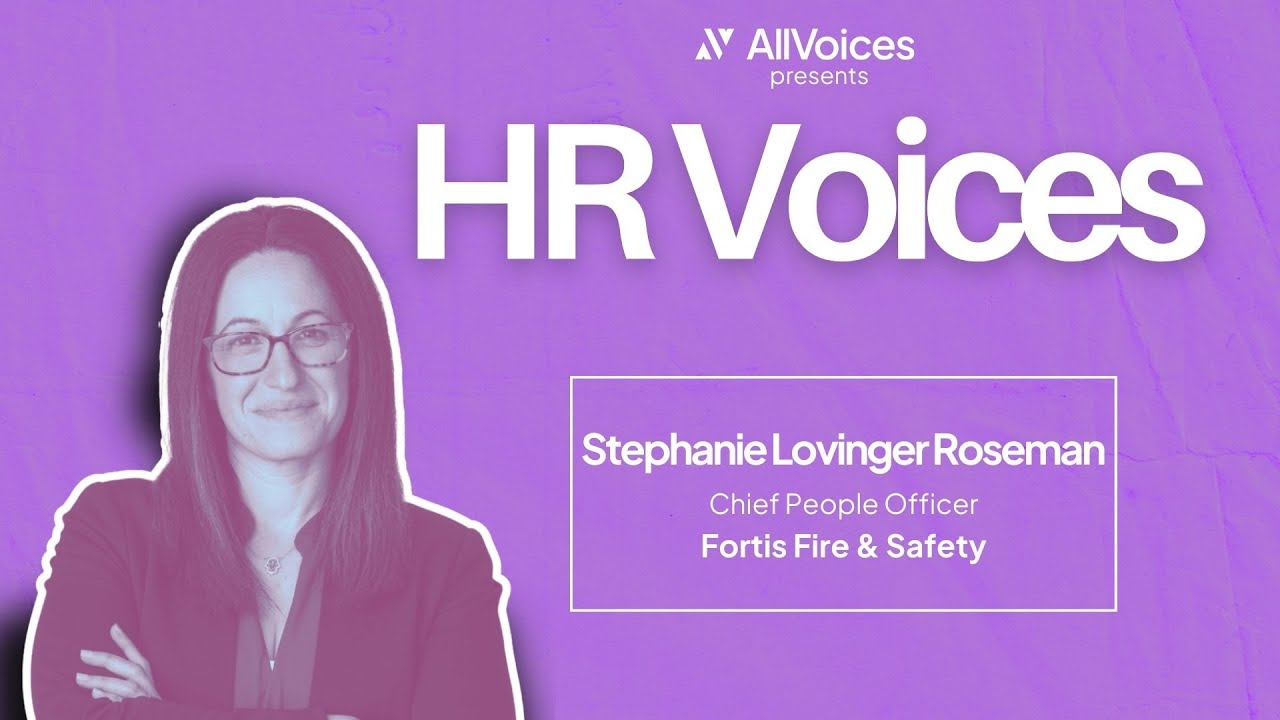
Stephanie Lovinger Roseman, Chief People Officer at Fortis Fire & Safety

About the guest

Stephanie Lovinger Roseman is Chief People Officer at Fortis Fire & Safety, a national fire suppression, alarm and integrated security provider with a largely onsite workforce. She works on transparency as an operating practice rather than a value statement — handling benefits changes with in-person roadshows and red/green clarity on individual impact, shrinking a sprawling handbook to a 40-page core, and building incentive programmes whose maths employees can actually follow.

Episode Breakdown

Stephanie Lovinger Roseman, Chief People Officer at Fortis Fire & Safety, came to HR Voices with fresh employee survey results and a workforce with no hybrid debate to manage. Fortis installs, inspects, and repairs sprinklers, fire suppression systems, alarms, and campus lockdown systems, the equipment people rarely think about until they need it. Its technicians do that work on site.

The survey named three pressures: a financial squeeze, job security, and career growth, plus a general need for communication. Stephanie meets all of them with one habit, telling employees everything she can as soon as she can. With host Rebecca Taylor, she explained how Fortis takes survey data to branch managers, presents benefits changes, and uses AI to add capacity instead of replacing roles.

What a Survey of an Onsite Workforce Told Fortis

Rebecca recognized the job security worry. She sees it across the board, fed by talk of layoffs and of AI taking jobs. In a Pew Research Center survey of U.S. workers, 52 percent were worried about the future impact of AI in the workplace, and 32 percent expected fewer job opportunities for themselves.

Stephanie took the results to the executive leadership team first. Frontline employees count on branch management for reassurance, so Fortis broke the data down many ways and met with branch leaders about what each branch needed. That fits Gallup’s finding that the manager or team leader alone accounts for 70 percent of team-level variance in engagement.

Employees want to know where the money is going and how they can stay secure and keep growing. The town hall planned for the following week uses a pattern Stephanie does not claim to have invented: we heard you, here is the action we are taking, and later, here is the action we took. That last step is what other People leaders call closing the loop with employees.

How Transparency Works When Some Answers Have to Wait

Rebecca raised the hard part of transparency. Some information is not ready for mass consumption. Stephanie’s rule is one she has always given her teams. “I will tell them everything I can tell them as soon as I can tell them.” Distrust starts, in her view, when something feels scripted or not genuine. When she cannot share, she says so and names when she expects to know more.

Open enrollment tested the rule. Fortis had a fair number of benefits changes, so Stephanie told her CEO she would hit the road and walk employees through them in person. “I want them to tell me if they hate the benefit changes,” she said. Data gives the larger picture, but “there are individual stories and the individual stories are important.”

She also hands out her business card. At Fortis, a transparent workplace looks like a business card, a meeting, and a straight answer about timing.

What Actually Works

Show Employees What Each Benefits Change Costs Them

On the open enrollment slides, every change carried a color. Green meant the change helped the employee; red meant it hurt. Stephanie wanted people to see the financial impact and “make an educated decision about which plan you want to be on.” The approach drew a lot of good feedback.

Rebecca tied the wave of benefits changes to rising costs. KFF’s 2025 Employer Health Benefits Survey put family premiums at $26,993, 6 percent higher than in 2024.

Make the Rules and the Rewards Easy to Read

Simplification is Stephanie’s theme for the year. Fortis was about to launch a core employee handbook of forty pages, cut from hundreds. “These are adults. We want to treat them like adults.”

Incentives follow the same logic. Because of the compensation concern in the survey, Stephanie wants a transparent incentive pay plan that rewards productivity and extra effort. Employees will see when a peer is recognized for, say, one extra inspection in a day, and anyone who wants to earn more will see the route.

Good work already happens in pockets, she said, and Fortis was evaluating vendors to celebrate driver safety across its fleet. “I want to centralize it. I want to celebrate it.”

Give Recruiters Capacity With AI

Fortis is not automating any role entirely. Its recruiting team enters a few details, and AI drafts a standardized job description built on the organization, which the team then reviews. The tool can also find candidates with a specific certification, email them, and send a calendar link.

Recruiting volume swings, and Stephanie does not want to hire and lay off with each swing. Her recruiter builds strong relationships with candidates, which AI cannot do, so the aim is to free up his time.

The more ambitious idea is analysis. Fortis was looking at a tool that would cross-reference HR and operations systems, flag inefficient driver routes, and use salary data to show what the inefficiency costs. Stephanie is not sure Fortis will adopt it, but she sees the appeal of people analytics across the business. She called it a “much less expensive analyst.”

Where Employee Relations Fits

Frontline employees bring worries to branch managers first, which puts managers at the start of most employee relations work. Stephanie works in her spare time with an AI coaching tool that does not fit Fortis at its current size. It assesses each employee’s interests, so a manager can describe a performance problem, ask how to approach that person given their motivators, and say “Help me practice.”

Rehearsal helps managers prepare for a tough conversation, and, as she noted, a mistake made with AI is one nobody judges. The conversation still has to happen and be documented.

Concerns from a survey, a benefits meeting, or a branch visit need one home, so ER teams can see patterns by branch. When HR cannot hear the frontline, trust breaks down, the problem a session on employee relations for frontline workers takes on. A system for survey feedback that connects to action keeps the town hall promise honest.

Frequently Asked Questions About HR at Fortis Fire & Safety

Who Is Stephanie Lovinger Roseman?

She is Chief People Officer at Fortis Fire & Safety, which installs, inspects, and repairs fire safety and integrated security systems. On HR Voices she discussed survey follow-through, benefits, a shorter handbook, incentives, and AI.

What Did the Fortis Employee Survey Find?

Three big concerns: a financial squeeze, job security, and career growth, plus a general need for communication. Fortis broke the results down by branch, met with branch managers, and planned a town hall to report back.

How Did Fortis Explain Its Benefits Changes?

In person and in color. Stephanie traveled to walk employees through open enrollment, and the slides marked each change green if it helped the employee and red if it hurt.

What Is Stephanie’s Rule for Transparency?

Tell employees everything she can, as soon as she can. When something cannot be shared yet, she says so and gives a time, because information that feels scripted or not genuine is where distrust starts.

How Does Fortis Use AI in Recruiting?

To add capacity, not to replace roles. AI drafts standardized job descriptions, finds candidates with specific certifications, and emails them a calendar link, leaving the recruiter more time for candidates.

The Bottom Line for HR Leaders

Stephanie Lovinger Roseman’s framing is the rule she gives her own teams: share everything possible, as soon as possible. The survey follow-up, the color-coded slides, the shorter handbook, and the visible incentives come from the same instinct for clarity.

Her closing advice for HR was to “stay curious,” ask questions, and seek context. For a People team serving an onsite workforce, context is what turns a survey result into a plan employees can see.

See how AllVoices helps People teams carry frontline survey feedback through to visible, documented follow-up.