About This Episode
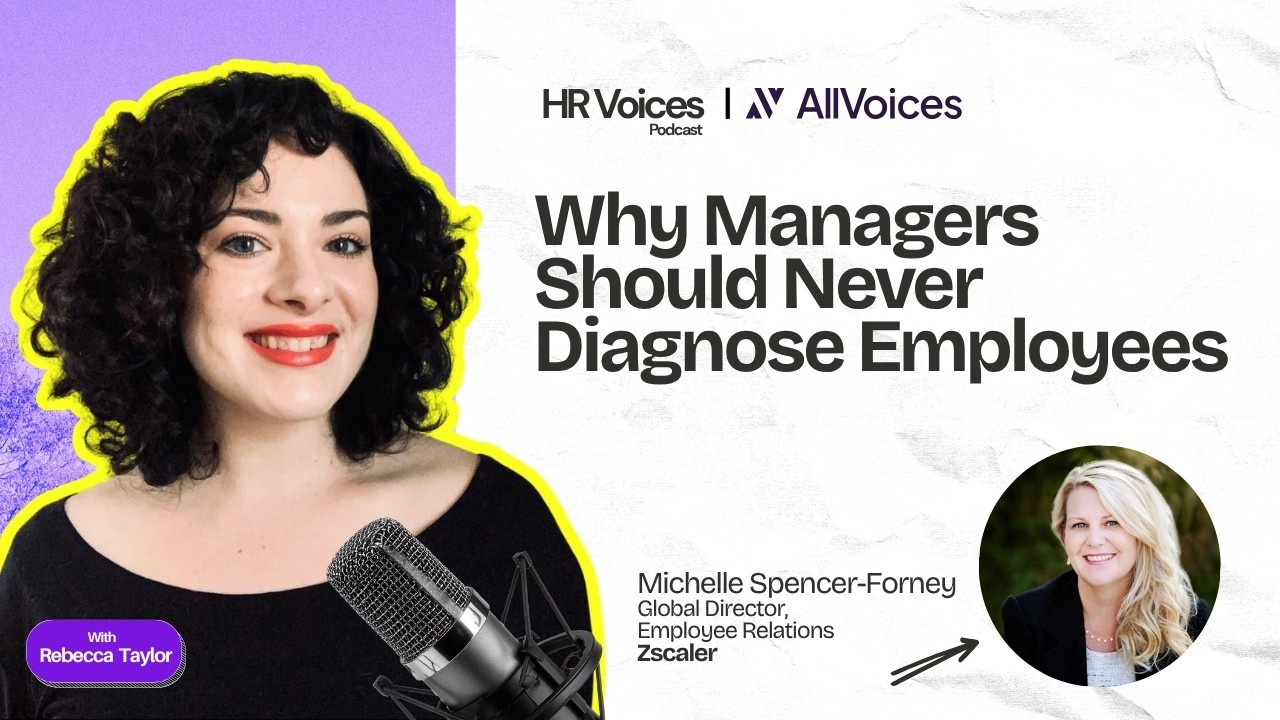
A manager tells HR she's "pretty sure" an employee has undiagnosed ADHD, based only on his disorganization, and asks if she can require a psych evaluation before granting more deadline extensions. He has never disclosed a condition or asked for an accommodation. Michelle Spencer-Forney, Global Director of Employee Relations at Zscaler, and Rebecca Taylor cover why a well-meaning guess adds legal exposure, how to separate witnessed behavior from a diagnosis, and why the conversation starts with performance.
About The Guest
Michelle Spencer-Forney, PHR, is Global Director of Employee Relations at Zscaler, where she navigates the highest-stakes, most ambiguous conversations HR has with managers: the ones involving disability, performance and everything tangled up in between. Her approach is to start where it's easy, protect the employee's privacy, and never lose the manager in the process of coaching them through it, so that a hard case becomes a training story other managers can learn from.
Episode Breakdown

A manager tells HR she is pretty sure one of her employees has undiagnosed ADHD, on the evidence of his disorganization. She wants to know whether she can require a psychological evaluation before granting another extension. He has never disclosed a condition, never requested an accommodation, and has no idea the conversation is happening. Michelle Spencer-Forney, Global Director of Employee Relations at Zscaler, worked through that scenario with host Rebecca Taylor on HR Voices.

The riskiest thing here is not the missed deadlines. It is the diagnosis. Michelle’s read was that the manager, in becoming an instant doctor on the web, had handed the company a claim that did not exist an hour earlier. Her remedy was a sequence rather than a legal argument: start where it is easy, and save the disability conversation for last.

Why Pretty Sure Is Not a Basis for Anything

Michelle named the exposure before she named the fix. A manager who assumes an employee has a disability has made an assumption the employer now owns, whether or not the employee has one. Her phrase for it was a blank check.

The standard is narrower than most managers assume. Under the Americans with Disabilities Act, an employer may require a medical examination of a current employee only when the request is job-related and consistent with business necessity. EEOC guidance sets that threshold at a reasonable belief, based on objective evidence, that a medical condition is impairing the work.

The manager had a documented pattern of missed deadlines and an undocumented theory about the cause. Only one is hers to raise. The other belongs to a doctor the employee has not chosen to see.

The volume argues for restraint. Disability was named in 36,256 of the 88,201 charges filed with the EEOC in fiscal year 2025, or 41.1 percent of the total, against 22.4 percent in 1997. A workplace discrimination claim built on a manager’s guess is one no employer budgets for.

How an Informal Favor Becomes a Formal Accommodation

Michelle raised a second pattern that surfaces even more often. An employee tells her manager she needs to leave at three every day because her anxiety spikes in the afternoon. The manager says yes, tells nobody, and lets it run for three or four months.

Then performance slips and the manager wants her at her desk until five. That decision is no longer the manager’s alone. The schedule she granted has become a reasonable accommodation in everything but name, and unwinding it is now the employer’s problem to defend.

Rebecca drew the distinction managers miss. Accommodating someone informally and granting an accommodation are different acts, in the way that feeling harassed and meeting the legal definition of harassment are different. EEOC guidance on psychiatric disabilities is explicit that the employee has to ask before the process starts.

What follows is an interactive dialogue HR runs, not a favor a manager grants. Michelle described getting creative, since an employer never has to waive the essential functions of the job to find one that works. The range of workplace accommodations runs wider than a schedule change.

What Actually Works

Start With Performance and Save the Diagnosis for Last

Michelle’s order of operations is deliberate. She opens with the manager on ground the manager can defend, the performance record, and holds the disability question until the end. HR teams that lead with the accusation lose the manager in the first five minutes.

The questions she asks are ordinary. What the expectations were, what conversations have already happened, what changed recently, whether the workload or the tooling shifted underneath the employee. When performance is the documented problem, a performance improvement plan is the instrument that fits it.

Name What Was Witnessed and Stop There

Rebecca modeled the language that keeps a manager safe. Deadlines have moved, the work is late, answers are unclear when she asks. Every item on that list is something the manager saw. None of it requires a theory about why.

Organization is a skill, and a gap in it is coachable. Assuming otherwise costs the employee a development conversation and hands the employer a guess about a condition. Managers briefed on what neurodiversity means at work handle this better, though understanding never licenses the guess.

Train Managers in the Moment They Ask

Michelle treats every manager call as a teaching slot. A core management curriculum delivered as a scheduled webinar competes with the manager’s inbox and loses. A manager on the phone with a live problem is paying attention.

She also recycles the wins. When a manager handles one of these well, Michelle brings that manager back into training to tell the story, and credits the manager rather than HR. Peers believe a peer who did it.

Where Employee Relations Fits

Michelle does not talk to the employee in this scenario, and the restraint is the point. Bringing HR to his door announces a problem he does not know exists and invites a disclosure nobody asked for. The work happens with the manager.

Rebecca named the cost of doing it well. If the coaching lands, the employee never learns that a conversation about him took place, which makes the best outcome the invisible one. ER teams carry a lot of that.

Michelle has seen the sequence run the other way, where an employee asks for an accommodation only after a plan is delivered and lifts their performance from there. Those cases argue for treating manager consults as records rather than favors. A platform for employee relations teams holds the question asked, the advice given, and the date it was given, which is what an employer relies on when a March decision is questioned in September.

Frequently Asked Questions About Manager Diagnoses and Accommodations

Can a Manager Require an Employee to Take a Psychological Evaluation?

Only on narrow grounds. The EEOC standard requires a reasonable belief, based on objective evidence, that a medical condition is impairing essential functions or creating a direct threat. Disorganization a manager finds frustrating does not meet it.

What Should HR Say When a Manager Says an Employee Probably Has ADHD?

Redirect to what the manager witnessed. Ask about deadlines, deliverables, and the conversations already had, and leave the diagnosis alone until the performance facts are on the table.

Does Informally Granting Extra Time Count as an Accommodation?

In practice, often yes. A schedule change a manager has honored for months establishes a pattern the employer is treated as having granted, which makes withdrawing it a decision HR has to defend.

Should HR Contact the Employee When a Manager Suspects a Disability?

Not at that stage. The employee has disclosed nothing and requested nothing, so an approach from HR creates the disability conversation the manager was told not to start. HR coaches the manager and waits.

What If a Manager Believes an Accommodation Is Covering for Poor Performance?

Acknowledge the concern, then separate the two threads. Michelle hears this often and answers by taking the disability conversation off the manager’s plate while the manager keeps working the performance record. Both things can be true at once.

The Bottom Line for HR Leaders

Michelle’s framing holds up because it is a sequence rather than a slogan. Start where it is easy. Michelle Spencer-Forney takes the performance facts from the manager first, in the manager’s own account of what was witnessed, and only then takes up the diagnosis.

Pretty sure is not a basis for anything. The manager who says it is not an adversary, and the employee at the center may never need to know it happened. What HR owes both of them is the discipline to keep the two questions apart.

See how AllVoices helps HR teams route every request through structured accommodation intake instead of a manager’s inbox.
Our next webinar
Frequently asked questions

Got more questions? Email us at support@allvoices.co and we'll respond ASAP.

No items found.
Frequently asked questions

Got more questions? Email us at support@allvoices.co and we'll respond ASAP.

No items found.

When a Manager Suspects ADHD: Performance First, Never a Diagnosis

About the guest

Michelle Spencer-Forney, PHR, is Global Director of Employee Relations at Zscaler, where she navigates the highest-stakes, most ambiguous conversations HR has with managers: the ones involving disability, performance and everything tangled up in between. Her approach is to start where it's easy, protect the employee's privacy, and never lose the manager in the process of coaching them through it, so that a hard case becomes a training story other managers can learn from.

Episode Breakdown

A manager tells HR she is pretty sure one of her employees has undiagnosed ADHD, on the evidence of his disorganization. She wants to know whether she can require a psychological evaluation before granting another extension. He has never disclosed a condition, never requested an accommodation, and has no idea the conversation is happening. Michelle Spencer-Forney, Global Director of Employee Relations at Zscaler, worked through that scenario with host Rebecca Taylor on HR Voices.

The riskiest thing here is not the missed deadlines. It is the diagnosis. Michelle’s read was that the manager, in becoming an instant doctor on the web, had handed the company a claim that did not exist an hour earlier. Her remedy was a sequence rather than a legal argument: start where it is easy, and save the disability conversation for last.

Why Pretty Sure Is Not a Basis for Anything

Michelle named the exposure before she named the fix. A manager who assumes an employee has a disability has made an assumption the employer now owns, whether or not the employee has one. Her phrase for it was a blank check.

The standard is narrower than most managers assume. Under the Americans with Disabilities Act, an employer may require a medical examination of a current employee only when the request is job-related and consistent with business necessity. EEOC guidance sets that threshold at a reasonable belief, based on objective evidence, that a medical condition is impairing the work.

The manager had a documented pattern of missed deadlines and an undocumented theory about the cause. Only one is hers to raise. The other belongs to a doctor the employee has not chosen to see.

The volume argues for restraint. Disability was named in 36,256 of the 88,201 charges filed with the EEOC in fiscal year 2025, or 41.1 percent of the total, against 22.4 percent in 1997. A workplace discrimination claim built on a manager’s guess is one no employer budgets for.

How an Informal Favor Becomes a Formal Accommodation

Michelle raised a second pattern that surfaces even more often. An employee tells her manager she needs to leave at three every day because her anxiety spikes in the afternoon. The manager says yes, tells nobody, and lets it run for three or four months.

Then performance slips and the manager wants her at her desk until five. That decision is no longer the manager’s alone. The schedule she granted has become a reasonable accommodation in everything but name, and unwinding it is now the employer’s problem to defend.

Rebecca drew the distinction managers miss. Accommodating someone informally and granting an accommodation are different acts, in the way that feeling harassed and meeting the legal definition of harassment are different. EEOC guidance on psychiatric disabilities is explicit that the employee has to ask before the process starts.

What follows is an interactive dialogue HR runs, not a favor a manager grants. Michelle described getting creative, since an employer never has to waive the essential functions of the job to find one that works. The range of workplace accommodations runs wider than a schedule change.

What Actually Works

Start With Performance and Save the Diagnosis for Last

Michelle’s order of operations is deliberate. She opens with the manager on ground the manager can defend, the performance record, and holds the disability question until the end. HR teams that lead with the accusation lose the manager in the first five minutes.

The questions she asks are ordinary. What the expectations were, what conversations have already happened, what changed recently, whether the workload or the tooling shifted underneath the employee. When performance is the documented problem, a performance improvement plan is the instrument that fits it.

Name What Was Witnessed and Stop There

Rebecca modeled the language that keeps a manager safe. Deadlines have moved, the work is late, answers are unclear when she asks. Every item on that list is something the manager saw. None of it requires a theory about why.

Organization is a skill, and a gap in it is coachable. Assuming otherwise costs the employee a development conversation and hands the employer a guess about a condition. Managers briefed on what neurodiversity means at work handle this better, though understanding never licenses the guess.

Train Managers in the Moment They Ask

Michelle treats every manager call as a teaching slot. A core management curriculum delivered as a scheduled webinar competes with the manager’s inbox and loses. A manager on the phone with a live problem is paying attention.

She also recycles the wins. When a manager handles one of these well, Michelle brings that manager back into training to tell the story, and credits the manager rather than HR. Peers believe a peer who did it.

Where Employee Relations Fits

Michelle does not talk to the employee in this scenario, and the restraint is the point. Bringing HR to his door announces a problem he does not know exists and invites a disclosure nobody asked for. The work happens with the manager.

Rebecca named the cost of doing it well. If the coaching lands, the employee never learns that a conversation about him took place, which makes the best outcome the invisible one. ER teams carry a lot of that.

Michelle has seen the sequence run the other way, where an employee asks for an accommodation only after a plan is delivered and lifts their performance from there. Those cases argue for treating manager consults as records rather than favors. A platform for employee relations teams holds the question asked, the advice given, and the date it was given, which is what an employer relies on when a March decision is questioned in September.

Frequently Asked Questions About Manager Diagnoses and Accommodations

Can a Manager Require an Employee to Take a Psychological Evaluation?

Only on narrow grounds. The EEOC standard requires a reasonable belief, based on objective evidence, that a medical condition is impairing essential functions or creating a direct threat. Disorganization a manager finds frustrating does not meet it.

What Should HR Say When a Manager Says an Employee Probably Has ADHD?

Redirect to what the manager witnessed. Ask about deadlines, deliverables, and the conversations already had, and leave the diagnosis alone until the performance facts are on the table.

Does Informally Granting Extra Time Count as an Accommodation?

In practice, often yes. A schedule change a manager has honored for months establishes a pattern the employer is treated as having granted, which makes withdrawing it a decision HR has to defend.

Should HR Contact the Employee When a Manager Suspects a Disability?

Not at that stage. The employee has disclosed nothing and requested nothing, so an approach from HR creates the disability conversation the manager was told not to start. HR coaches the manager and waits.

What If a Manager Believes an Accommodation Is Covering for Poor Performance?

Acknowledge the concern, then separate the two threads. Michelle hears this often and answers by taking the disability conversation off the manager’s plate while the manager keeps working the performance record. Both things can be true at once.

The Bottom Line for HR Leaders

Michelle’s framing holds up because it is a sequence rather than a slogan. Start where it is easy. Michelle Spencer-Forney takes the performance facts from the manager first, in the manager’s own account of what was witnessed, and only then takes up the diagnosis.

Pretty sure is not a basis for anything. The manager who says it is not an adversary, and the employee at the center may never need to know it happened. What HR owes both of them is the discipline to keep the two questions apart.

See how AllVoices helps HR teams route every request through structured accommodation intake instead of a manager’s inbox.