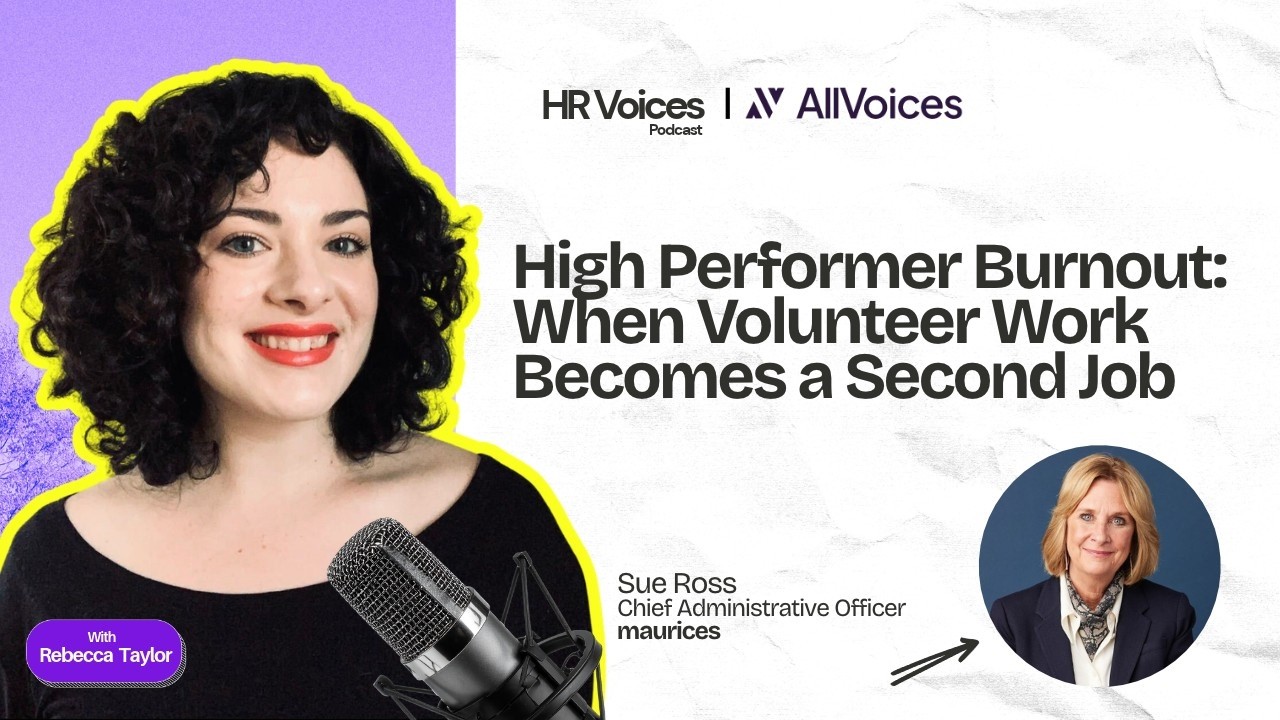
About This Episode
How do you keep a largely frontline workforce engaged across 135 dealerships in 12 states while side hustles become the norm? Jules Gianneschi, Chief Human Resources Officer at America's Car-Mart, describes building a purpose-led culture around a clear mission: keeping customers on the road. She explains why normalizing second jobs can actually improve retention rather than signalling disengagement, how boomerang employees fit a frontline talent strategy, and what whole-health wellness looks like in practice.
About The Guest
Jules Gianneschi is Chief Human Resources Officer at America's Car-Mart, a publicly traded integrated auto sales and finance company based in Rogers, Arkansas, with 135 dealerships across 12 states. She takes an unusually pragmatic line on side hustles: a frontline employer competing on flexibility can either treat a second job as a loyalty problem or accept it as the condition of the labour market and keep the person. She works on boomerang culture and whole-health wellness in the same spirit.
Episode Breakdown

Most employers read a second job as a warning sign about loyalty. Jules Gianneschi, Chief Human Resources Officer at America’s Car-Mart, reads it as a retention opportunity. Car-Mart is a publicly traded, integrated auto sales and finance company based in Rogers, Arkansas, with 135 dealerships across 12 states. Most of its people work on the frontline, and its mission fits in a phrase: keep customers on the road.

When Rebecca Taylor, host of HR Voices, asked Jules what makes a workforce like that hard to keep, Jules started with the economy and a study she had just read on how many people rely on more than one job. Her answer was not to fight the trend. It was to offer the kind of stability that leaves room for it.

Why Car-Mart Treats Second Jobs as a Retention Strategy

Jules knows the pattern firsthand. Through college and after it, she always held two or sometimes three jobs. Some covered bills and student loans. Later ones were choices, driven by personal passions and professional work that did not fit in one place.

She sees the same mix in the workforce now. For some people a second income is purely economic. More and more, Jules argues, people want a job that brings stability, benefits, and good colleagues, plus something of their own: a weekend photography studio, or driving for Uber or Lyft to widen a social circle. Others hold rental property to reach retirement sooner. The scale is not small. Federal labor data on multiple jobholders counted 9.0 million of them in October 2026, 5.5 percent of everyone employed.

Car-Mart’s schedule makes that workable. Stable hours give people room to pursue a passion on the side. Jules calls that a strong talent retention strategy: stability and good colleagues, with a personal pursuit welcome too.

Rebecca drew the contrast with HR teams she hears from who are dealing with people working two full-time jobs at once. That is a sharper version of moonlighting as HR defines it, and it usually comes with secrecy. Where side work is normal, nobody has to hide it.

What Associates Said When Car-Mart Asked Why They Stay

When Jules joined about four years ago, she sat down with associates and looked at the data. One pattern stood out, which she calls the boomerang effect. People start at Car-Mart, often in a first job, and leave for something different. One to three years later they return, and many then stay another ten or twenty years. The share of returners, she said, is high.

Rehiring boomerang employees is common well beyond Car-Mart. ADP Research found that boomerang employees made up 35 percent of new hires in March 2025, up from 31 percent a year earlier.

Car-Mart then interviewed associates to build its employer value proposition. Associates said the company values motivated them: integrity, respect, compassion, and excellence. Asked why, they gave two reasons. They get to be who they are, and they get asked to help make decisions and solve problems.

Jules ties that to energy. She talks with her teams and leaders about “managing your energy.” Presenting an inauthentic version of yourself takes effort, and that effort is not going into the work. Rebecca’s argument is that authenticity at work depends on a high level of psychological safety across a team.

Mission clarity carries the rest. Most Car-Mart communities are small, rural or suburban, with weak public transport. In places like that, a car can be the difference between having a job and having a good job. General managers have their name on the door and act as the local face of the business. Rebecca called a mission that simple rare, because it gives every role a line of sight to the work.

What Actually Works

Jules describes HR as the cobbler’s children: busy taking care of everyone else, slow to take care of itself. Feedback from her own team produced two rituals for HR, alongside a wellness program for everyone.

Build Wellness Around Physical, Mental, and Financial Health

Car-Mart’s whole-health approach covers three areas. Physical wellness means access to good health care benefits. Mental wellness means understanding what a healthy work-life balance looks like. Financial wellness means helping associates manage money, set a plan, and work toward it.

Jules’s goal is to meet people where they are. For a workforce where many people carry a second income, benefits built around employee wellness that include money management fit the lives people lead.

Make Learning a Weekly Hour

The first ritual is the Hour of Power. Every week, each HR team member dedicates an hour to a learning pursuit. One person reads up on AI. Another, hoping to move into communications, learns Canva. New graduates and interns sit with the compensation analyst to learn how market pay studies work.

It is upskilling for current employees at the smallest workable scale. Because the hour is scheduled, it happens.

Hold a Monthly Hallway Huddle

The second ritual is the Hallway Huddle. Once a month, the HR team meets in the corner where most of them sit for a stand-up. They talk about the business and their business partners, and they trade high fives, a simple form of recognition among peers.

The reasoning is candid. Leaders can assume that what they discuss reaches the whole team. Often it does, but people hear it only in the context of their own job. Standing in a circle, eyeball to eyeball, someone can admit they heard a business term and did not understand it. The next project moves faster because of that one question.

Where Employee Relations Fits

Side jobs turn into employee relations problems mostly when people feel they have to hide them. Car-Mart keeps them in the open, so outside work comes up in ordinary conversation, not through suspicion.

The Hallway Huddle shows the same principle inside HR: people ask more when the setting feels safe. Rebecca described how AllVoices handles that need at company all-hands meetings, where anyone can submit an unasked question through an anonymous channel that answers back. For a workforce spread across rural dealerships, showing up for frontline employees decides whether those questions ever reach the People team.

Frequently Asked Questions About Side Hustles and Frontline Retention

Can Side Hustles Improve Employee Retention?

They can, in Jules Gianneschi’s experience. When people get stability and the freedom to pursue a personal passion, Jules sees a talent retention strategy, because the job no longer forces a choice between the two.

How Does America’s Car-Mart Support Employees With Second Jobs?

Through a stable workforce and a stable schedule. Predictable hours leave room for a passion on the side, and whole-health wellness, including financial wellness, helps associates plan around more than one income.

What Is a Boomerang Culture?

It is a workforce people leave and come back to. At Car-Mart, Jules describes associates who leave after a first job, return one to three years later, and then stay another ten or twenty years.

What Are the Hour of Power and the Hallway Huddle?

They are two HR team rituals at Car-Mart. The Hour of Power is a weekly hour each person spends learning. The Hallway Huddle is a monthly stand-up where the team shares business updates and recognizes peers.

What Interview Advice Does Jules Gianneschi Give Candidates?

Keep it simple. Be yourself, have a firm handshake, and if you are nervous, say so, and explain that you are nervous because you are excited to be there.

The Bottom Line for HR Leaders

Jules Gianneschi’s framing turns a common worry around. A second job is not proof that someone is halfway out the door. At Car-Mart, stability plus room for a personal pursuit is part of why people stay, and part of why so many come back.

Her closing thoughts came from advice she had just texted one of her three children before an interview: be yourself, shake hands firmly, and admit the nerves. The conversation ended on the other side of the table. When a candidate admits nerves, reassurance earns the trust that shows who that person is. As Jules put it, “everyone has been somewhere and everyone is going somewhere.”

See how AllVoices supports HR leaders whose frontline associates rarely sit near a corporate office.

Our next webinar
Frequently asked questions

Got more questions? Email us at support@allvoices.co and we'll respond ASAP.

No items found.
Frequently asked questions

Got more questions? Email us at support@allvoices.co and we'll respond ASAP.

No items found.

Retaining Frontline Talent: Side Hustles, Boomerang Culture, and Whole‑Health Wellness

About the guest

Jules Gianneschi is Chief Human Resources Officer at America's Car-Mart, a publicly traded integrated auto sales and finance company based in Rogers, Arkansas, with 135 dealerships across 12 states. She takes an unusually pragmatic line on side hustles: a frontline employer competing on flexibility can either treat a second job as a loyalty problem or accept it as the condition of the labour market and keep the person. She works on boomerang culture and whole-health wellness in the same spirit.

Episode Breakdown

Most employers read a second job as a warning sign about loyalty. Jules Gianneschi, Chief Human Resources Officer at America’s Car-Mart, reads it as a retention opportunity. Car-Mart is a publicly traded, integrated auto sales and finance company based in Rogers, Arkansas, with 135 dealerships across 12 states. Most of its people work on the frontline, and its mission fits in a phrase: keep customers on the road.

When Rebecca Taylor, host of HR Voices, asked Jules what makes a workforce like that hard to keep, Jules started with the economy and a study she had just read on how many people rely on more than one job. Her answer was not to fight the trend. It was to offer the kind of stability that leaves room for it.

Why Car-Mart Treats Second Jobs as a Retention Strategy

Jules knows the pattern firsthand. Through college and after it, she always held two or sometimes three jobs. Some covered bills and student loans. Later ones were choices, driven by personal passions and professional work that did not fit in one place.

She sees the same mix in the workforce now. For some people a second income is purely economic. More and more, Jules argues, people want a job that brings stability, benefits, and good colleagues, plus something of their own: a weekend photography studio, or driving for Uber or Lyft to widen a social circle. Others hold rental property to reach retirement sooner. The scale is not small. Federal labor data on multiple jobholders counted 9.0 million of them in October 2026, 5.5 percent of everyone employed.

Car-Mart’s schedule makes that workable. Stable hours give people room to pursue a passion on the side. Jules calls that a strong talent retention strategy: stability and good colleagues, with a personal pursuit welcome too.

Rebecca drew the contrast with HR teams she hears from who are dealing with people working two full-time jobs at once. That is a sharper version of moonlighting as HR defines it, and it usually comes with secrecy. Where side work is normal, nobody has to hide it.

What Associates Said When Car-Mart Asked Why They Stay

When Jules joined about four years ago, she sat down with associates and looked at the data. One pattern stood out, which she calls the boomerang effect. People start at Car-Mart, often in a first job, and leave for something different. One to three years later they return, and many then stay another ten or twenty years. The share of returners, she said, is high.

Rehiring boomerang employees is common well beyond Car-Mart. ADP Research found that boomerang employees made up 35 percent of new hires in March 2025, up from 31 percent a year earlier.

Car-Mart then interviewed associates to build its employer value proposition. Associates said the company values motivated them: integrity, respect, compassion, and excellence. Asked why, they gave two reasons. They get to be who they are, and they get asked to help make decisions and solve problems.

Jules ties that to energy. She talks with her teams and leaders about “managing your energy.” Presenting an inauthentic version of yourself takes effort, and that effort is not going into the work. Rebecca’s argument is that authenticity at work depends on a high level of psychological safety across a team.

Mission clarity carries the rest. Most Car-Mart communities are small, rural or suburban, with weak public transport. In places like that, a car can be the difference between having a job and having a good job. General managers have their name on the door and act as the local face of the business. Rebecca called a mission that simple rare, because it gives every role a line of sight to the work.

What Actually Works

Jules describes HR as the cobbler’s children: busy taking care of everyone else, slow to take care of itself. Feedback from her own team produced two rituals for HR, alongside a wellness program for everyone.

Build Wellness Around Physical, Mental, and Financial Health

Car-Mart’s whole-health approach covers three areas. Physical wellness means access to good health care benefits. Mental wellness means understanding what a healthy work-life balance looks like. Financial wellness means helping associates manage money, set a plan, and work toward it.

Jules’s goal is to meet people where they are. For a workforce where many people carry a second income, benefits built around employee wellness that include money management fit the lives people lead.

Make Learning a Weekly Hour

The first ritual is the Hour of Power. Every week, each HR team member dedicates an hour to a learning pursuit. One person reads up on AI. Another, hoping to move into communications, learns Canva. New graduates and interns sit with the compensation analyst to learn how market pay studies work.

It is upskilling for current employees at the smallest workable scale. Because the hour is scheduled, it happens.

Hold a Monthly Hallway Huddle

The second ritual is the Hallway Huddle. Once a month, the HR team meets in the corner where most of them sit for a stand-up. They talk about the business and their business partners, and they trade high fives, a simple form of recognition among peers.

The reasoning is candid. Leaders can assume that what they discuss reaches the whole team. Often it does, but people hear it only in the context of their own job. Standing in a circle, eyeball to eyeball, someone can admit they heard a business term and did not understand it. The next project moves faster because of that one question.

Where Employee Relations Fits

Side jobs turn into employee relations problems mostly when people feel they have to hide them. Car-Mart keeps them in the open, so outside work comes up in ordinary conversation, not through suspicion.

The Hallway Huddle shows the same principle inside HR: people ask more when the setting feels safe. Rebecca described how AllVoices handles that need at company all-hands meetings, where anyone can submit an unasked question through an anonymous channel that answers back. For a workforce spread across rural dealerships, showing up for frontline employees decides whether those questions ever reach the People team.

Frequently Asked Questions About Side Hustles and Frontline Retention

Can Side Hustles Improve Employee Retention?

They can, in Jules Gianneschi’s experience. When people get stability and the freedom to pursue a personal passion, Jules sees a talent retention strategy, because the job no longer forces a choice between the two.

How Does America’s Car-Mart Support Employees With Second Jobs?

Through a stable workforce and a stable schedule. Predictable hours leave room for a passion on the side, and whole-health wellness, including financial wellness, helps associates plan around more than one income.

What Is a Boomerang Culture?

It is a workforce people leave and come back to. At Car-Mart, Jules describes associates who leave after a first job, return one to three years later, and then stay another ten or twenty years.

What Are the Hour of Power and the Hallway Huddle?

They are two HR team rituals at Car-Mart. The Hour of Power is a weekly hour each person spends learning. The Hallway Huddle is a monthly stand-up where the team shares business updates and recognizes peers.

What Interview Advice Does Jules Gianneschi Give Candidates?

Keep it simple. Be yourself, have a firm handshake, and if you are nervous, say so, and explain that you are nervous because you are excited to be there.

The Bottom Line for HR Leaders

Jules Gianneschi’s framing turns a common worry around. A second job is not proof that someone is halfway out the door. At Car-Mart, stability plus room for a personal pursuit is part of why people stay, and part of why so many come back.

Her closing thoughts came from advice she had just texted one of her three children before an interview: be yourself, shake hands firmly, and admit the nerves. The conversation ended on the other side of the table. When a candidate admits nerves, reassurance earns the trust that shows who that person is. As Jules put it, “everyone has been somewhere and everyone is going somewhere.”

See how AllVoices supports HR leaders whose frontline associates rarely sit near a corporate office.