About This Episode
How do you keep a fast-growing, always-in-motion workforce informed and aligned while adding a new aircraft every month? Jeff Weber, Chief People Officer at Breeze Airways, describes scaling a people-first culture across a distributed frontline operation targeting underserved airports. He details weekly CEO-led calls organized by role, an AI-enabled HR assistant handling tier-one and tier-two questions inside Teams and email, and short-form training that becomes an instant job aid on phones and iPads.
About The Guest
Jeff Weber is Chief People Officer at Breeze Airways and came to aviation from software, which shapes how he thinks about frontline enablement: the answer has to reach someone standing at a gate, on a phone, in the flow of work. He runs a people function onboarding more than a thousand new hires a year across a point-to-point network, and treats listening loops and role-specific communication cadence as operational infrastructure rather than engagement programming.
Episode Breakdown

Breeze Airways is adding one new aircraft every month. Each plane needs crews, and each new route can mean a new airport. Jeff Weber, Chief People Officer at Breeze Airways, came to the airline about a year before this conversation after a career in software and technology businesses. He now leads the people function for roughly 2,700 team members, a number he expects to grow by about a thousand this year.

When host Rebecca Taylor sat down with Jeff on HR Voices, the conversation stayed on one problem: how a People team keeps a moving, distributed workforce connected without adding headcount at the same pace. His answers were practical. Weekly calls by role, an AI assistant that answers the routine questions, training that fits on a phone, and a culture that local teams run themselves.

Why Hypergrowth Hits an Airline People Team Harder

Most airlines hire heavily in a few hub cities. Breeze flies point to point, so it hires staff at every location it serves. Jeff describes that as a harder problem for both hiring and team building, because there is no central base where new people learn the culture by osmosis.

The growth rate compounds it. Jeff put the airline’s growth at more than 30 percent a year on top of an already large base, in a company that has only been around about four years. Every new hire needs an onboarding process that gets them excited about Breeze, explains how it is different, and gives them what they need to succeed quickly. Breeze talks about this as the “path to productivity.”

Leadership adds a second layer. Fast growth puts people into roles they have never held before. Jeff named that as one of the biggest challenges ahead: preparing people for new leadership roles while the roles themselves are still being created.

What a Software Culture Looks Like at 30,000 Feet

Jeff told Rebecca he warned the CEO he knew nothing about running an airline. The answer was that this was the point. The goal was a culture closer to a software company, built on the view that a strong team member experience “carries over to our guest experience.”

Jeff points to the guest Net Promoter Score as evidence. Breeze’s score sits in the 70s. The measure is the share of customers who score a company 9 or 10 minus the share who score it 0 to 6, according to the Net Promoter System site run by Bain & Company. A score in the 70s means promoters outnumber detractors by a wide margin.

What Actually Works

Run Weekly Calls by Role, Not by Org Chart

Breeze holds weekly calls with the CEO for pilots, for flight attendants, for technicians, and for every other team member. Each call covers business updates, new routes, process changes, safety, and values, then opens for questions. The chat during the calls and on the recordings afterward is active, and the questions are often blunt: why this route, why that decision. Jeff sees that as the value. It shows leadership what people are wondering, and it gives leaders a chance to explain a decision or admit one is not working.

This matters because clarity is scarce. As of August 2026, only 46 percent of U.S. employees say they know what is expected of them at work, according to Gallup.

Give Frontline Teams an Answer in the Flow of Work

Jeff argues employees should get the kind of instant answers they already get as consumers. Breeze rolled out an AI assistant called Harper that team members reach through Teams or email. Jeff described it as “like having an HR business partner.” It summarizes policies, procedures, and training guides, links to the source, points people to the right owner, and helps pre-populate forms. It now handles tier-one and tier-two questions.

The same tool changed training. Jeff’s observation is blunt: “no one wants to sit through a day of training anymore.” Breeze has moved toward short-form content, and Harper pulls from the training library to give a quick job aid on a phone or iPad at the gate. That approach makes employee training usable at the moment of need, not three months later. The usage data shows what people search for and which questions go unanswered, so the team knows which resources to fix.

Design Listening Loops That Make Friction Safe

The calls are only the first loop. Breeze runs engagement and pulse surveys, which suit distributed teams that rarely share a room, and holds focus groups when something is not scaling. Jeff wants a learning culture where people can say a process that worked last year has stopped working. That kind of psychological safety to flag a problem is what keeps feedback from frontline teams coming.

Culture is also decentralized. Flight attendants, pilots, and airport staff run local ambassador committees that plan events and service projects, including flights with the Make-A-Wish Foundation. Jeff’s rule for leaders is to set the tone and then let people self-manage. Companies that try to control how culture shows up at every base tend to get less of it.

Where Employee Relations Fits

Harper took the routine questions off the HR team, and Jeff was direct about what that means. Breeze may need fewer HR business partners in the future, but the current team now spends its time on bigger problems instead of an inbox. There is “plenty of work to go around” in a company growing this fast.

That shift is where the employee relations side of HR gets its time back. A workforce spread across many airports, shifts, and time zones produces concerns that need a person, not a policy summary, and the pattern is easy to miss when every location is its own island. Showing up for frontline staff works best when routine answers are automated and real issues land in one place for every HR case, where trends across bases become visible.

Frequently Asked Questions About Scaling HR at Breeze Airways

How does Breeze Airways keep a distributed workforce connected?

It runs weekly calls with the CEO for each group: pilots, flight attendants, technicians, and all other team members. Each call shares business updates and opens for questions, and the chat stays active during and after.

What does Breeze use AI for in HR?

Breeze uses an AI assistant called Harper, available in Teams and email. It summarizes policies and training, links to the source, routes people to the right owner, and handles tier-one and tier-two questions.

Did AI replace HR business partners at Breeze?

No. Jeff told his team the tool would take over routine questions so they could act as true business partners. He said Breeze may hire fewer HR business partners in the future, but current staff move to higher-level work.

How does Breeze deliver training to frontline staff?

It moved to short-form content. Team members can ask Harper a question at the airport and get a quick job aid on a phone or iPad, then revisit the full course later if they want more detail.

How fast is Breeze Airways growing?

Fast. Jeff said Breeze adds one new aircraft every month, has roughly 2,700 team members, expects to add about a thousand this year, and is growing more than 30 percent a year.

The Bottom Line for HR Leaders

Jeff’s framing is simple: “I look at our role as more of an internal consultant.” For Jeff Weber, that means understanding the business strategy and helping leaders hit their metrics, not just telling people what they can and cannot do. Breeze built the tools and the listening loops first, so the People team has time to do that work.

See how AllVoices helps People teams at fast-growing companies turn frontline concerns into visible, well-managed cases.

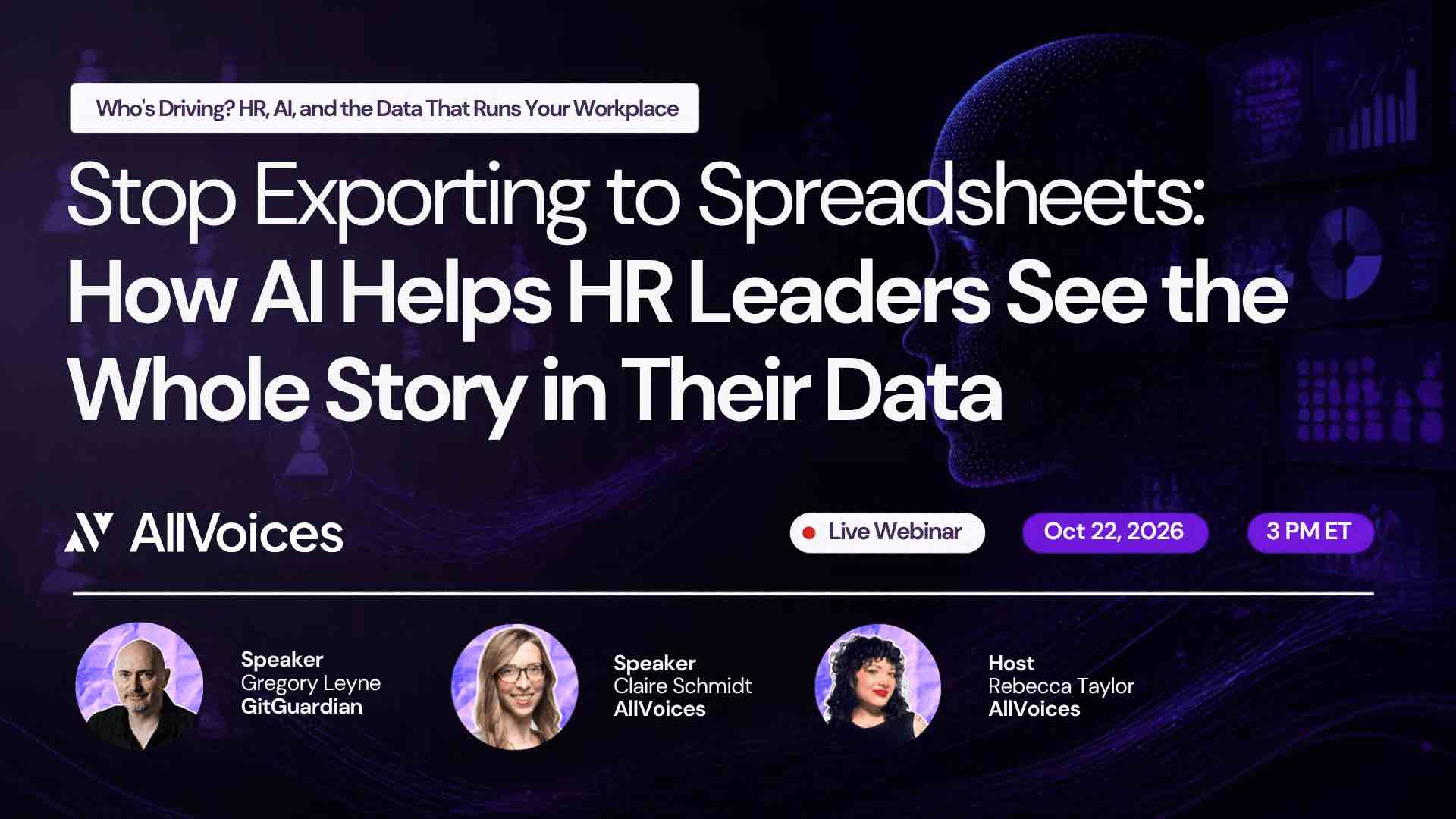
Our next webinar
Frequently asked questions

Got more questions? Email us at support@allvoices.co and we'll respond ASAP.

No items found.
Frequently asked questions

Got more questions? Email us at support@allvoices.co and we'll respond ASAP.

No items found.

Building a People-First Airline: Breeze Airways’ CPO on AI, Frontline Comms, and Hypergrowth

About the guest

Jeff Weber is Chief People Officer at Breeze Airways and came to aviation from software, which shapes how he thinks about frontline enablement: the answer has to reach someone standing at a gate, on a phone, in the flow of work. He runs a people function onboarding more than a thousand new hires a year across a point-to-point network, and treats listening loops and role-specific communication cadence as operational infrastructure rather than engagement programming.

Episode Breakdown

Breeze Airways is adding one new aircraft every month. Each plane needs crews, and each new route can mean a new airport. Jeff Weber, Chief People Officer at Breeze Airways, came to the airline about a year before this conversation after a career in software and technology businesses. He now leads the people function for roughly 2,700 team members, a number he expects to grow by about a thousand this year.

When host Rebecca Taylor sat down with Jeff on HR Voices, the conversation stayed on one problem: how a People team keeps a moving, distributed workforce connected without adding headcount at the same pace. His answers were practical. Weekly calls by role, an AI assistant that answers the routine questions, training that fits on a phone, and a culture that local teams run themselves.

Why Hypergrowth Hits an Airline People Team Harder

Most airlines hire heavily in a few hub cities. Breeze flies point to point, so it hires staff at every location it serves. Jeff describes that as a harder problem for both hiring and team building, because there is no central base where new people learn the culture by osmosis.

The growth rate compounds it. Jeff put the airline’s growth at more than 30 percent a year on top of an already large base, in a company that has only been around about four years. Every new hire needs an onboarding process that gets them excited about Breeze, explains how it is different, and gives them what they need to succeed quickly. Breeze talks about this as the “path to productivity.”

Leadership adds a second layer. Fast growth puts people into roles they have never held before. Jeff named that as one of the biggest challenges ahead: preparing people for new leadership roles while the roles themselves are still being created.

What a Software Culture Looks Like at 30,000 Feet

Jeff told Rebecca he warned the CEO he knew nothing about running an airline. The answer was that this was the point. The goal was a culture closer to a software company, built on the view that a strong team member experience “carries over to our guest experience.”

Jeff points to the guest Net Promoter Score as evidence. Breeze’s score sits in the 70s. The measure is the share of customers who score a company 9 or 10 minus the share who score it 0 to 6, according to the Net Promoter System site run by Bain & Company. A score in the 70s means promoters outnumber detractors by a wide margin.

What Actually Works

Run Weekly Calls by Role, Not by Org Chart

Breeze holds weekly calls with the CEO for pilots, for flight attendants, for technicians, and for every other team member. Each call covers business updates, new routes, process changes, safety, and values, then opens for questions. The chat during the calls and on the recordings afterward is active, and the questions are often blunt: why this route, why that decision. Jeff sees that as the value. It shows leadership what people are wondering, and it gives leaders a chance to explain a decision or admit one is not working.

This matters because clarity is scarce. As of August 2026, only 46 percent of U.S. employees say they know what is expected of them at work, according to Gallup.

Give Frontline Teams an Answer in the Flow of Work

Jeff argues employees should get the kind of instant answers they already get as consumers. Breeze rolled out an AI assistant called Harper that team members reach through Teams or email. Jeff described it as “like having an HR business partner.” It summarizes policies, procedures, and training guides, links to the source, points people to the right owner, and helps pre-populate forms. It now handles tier-one and tier-two questions.

The same tool changed training. Jeff’s observation is blunt: “no one wants to sit through a day of training anymore.” Breeze has moved toward short-form content, and Harper pulls from the training library to give a quick job aid on a phone or iPad at the gate. That approach makes employee training usable at the moment of need, not three months later. The usage data shows what people search for and which questions go unanswered, so the team knows which resources to fix.

Design Listening Loops That Make Friction Safe

The calls are only the first loop. Breeze runs engagement and pulse surveys, which suit distributed teams that rarely share a room, and holds focus groups when something is not scaling. Jeff wants a learning culture where people can say a process that worked last year has stopped working. That kind of psychological safety to flag a problem is what keeps feedback from frontline teams coming.

Culture is also decentralized. Flight attendants, pilots, and airport staff run local ambassador committees that plan events and service projects, including flights with the Make-A-Wish Foundation. Jeff’s rule for leaders is to set the tone and then let people self-manage. Companies that try to control how culture shows up at every base tend to get less of it.

Where Employee Relations Fits

Harper took the routine questions off the HR team, and Jeff was direct about what that means. Breeze may need fewer HR business partners in the future, but the current team now spends its time on bigger problems instead of an inbox. There is “plenty of work to go around” in a company growing this fast.

That shift is where the employee relations side of HR gets its time back. A workforce spread across many airports, shifts, and time zones produces concerns that need a person, not a policy summary, and the pattern is easy to miss when every location is its own island. Showing up for frontline staff works best when routine answers are automated and real issues land in one place for every HR case, where trends across bases become visible.

Frequently Asked Questions About Scaling HR at Breeze Airways

How does Breeze Airways keep a distributed workforce connected?

It runs weekly calls with the CEO for each group: pilots, flight attendants, technicians, and all other team members. Each call shares business updates and opens for questions, and the chat stays active during and after.

What does Breeze use AI for in HR?

Breeze uses an AI assistant called Harper, available in Teams and email. It summarizes policies and training, links to the source, routes people to the right owner, and handles tier-one and tier-two questions.

Did AI replace HR business partners at Breeze?

No. Jeff told his team the tool would take over routine questions so they could act as true business partners. He said Breeze may hire fewer HR business partners in the future, but current staff move to higher-level work.

How does Breeze deliver training to frontline staff?

It moved to short-form content. Team members can ask Harper a question at the airport and get a quick job aid on a phone or iPad, then revisit the full course later if they want more detail.

How fast is Breeze Airways growing?

Fast. Jeff said Breeze adds one new aircraft every month, has roughly 2,700 team members, expects to add about a thousand this year, and is growing more than 30 percent a year.

The Bottom Line for HR Leaders

Jeff’s framing is simple: “I look at our role as more of an internal consultant.” For Jeff Weber, that means understanding the business strategy and helping leaders hit their metrics, not just telling people what they can and cannot do. Breeze built the tools and the listening loops first, so the People team has time to do that work.

See how AllVoices helps People teams at fast-growing companies turn frontline concerns into visible, well-managed cases.