
About This Episode
In this episode of Reimagining Company Culture, we’re chatting with James Kinney, Global Chief Diversity, Equity and Inclusion Officer and North American Chief People Officer at Ogilvy. James is a people, culture, and, diversity executive with 20 years of experience building high-performance cultures for innovative companies.
About The Guest
James is a people, culture, and, diversity executive with 20 years of experience building high-performance cultures for innovative companies. He is a judicious leader with a consultative, pragmatic, and dynamic style. James also serves as member of the c-suite with cross-functional abilities across finance, legal, and operations. And, is a business behaviorist, change, and growth expert. A track record of creating inclusive workplaces and experiences.
Episode Breakdown

James Kinney is the Global Chief Diversity, Equity and Inclusion Officer and North American Chief People Officer at Ogilvy. He has spent 20 years building high-performance cultures inside innovative companies, and his career bridges people leadership, finance, legal, and operations. His conversation on Reimagining Company Culture focused on something most employers still treat as optional: making employee mental health a non-negotiable structural commitment instead of a benefits-page footnote.

The conversation drew a sharp line between mental health benefits (an EAP, a wellness app subsidy) and mental health practices (how managers actually talk about pressure, how time off gets honored, how performance gets measured during hard quarters). Benefits without practices fall flat. James walked through what changes when leadership treats this as a culture commitment with operating teeth.

The synthesis below pairs his framing with the latest research from People teams treating mental health as core infrastructure rather than a perk.

Why Employee Mental Health Belongs in the Operating Model

Most companies have a mental health benefit. Far fewer have a mental health practice. The difference shows up in the data: utilization of EAPs is famously low, even as prevalence of stress and burnout climbs. The breakdown is rarely about the program design and almost always about the workplace signals around using it.

SHRM’s 2025 Workplace Mental Health insights found that 30 percent of U.S. workers would take a pay cut to get better mental health support, and 49 percent of managers feel pressured to prioritize the organization’s wellbeing over the people they manage. That gap is the operating problem. Programs alone do not close it; manager behavior, schedule design, and workload calibration do.

James’s framing is to write down the non-negotiables (the small set of practices that, if violated by any leader, signal a culture failure) and treat them with the same seriousness as financial controls. The practices vary by company; the discipline of writing them down does not.

What Mental Health Non-Negotiables Look Like in Practice

What kinds of policies actually move utilization?

Three things consistently work: visible executive use of mental health resources, manager scripts for pressure-test conversations, and protected time off that is enforced, not aspirational. Wellness programs only become real when leaders model the behavior they ask employees to practice.

How does manager behavior reinforce or undermine mental health?

Managers set the tone for whether asking for help is safe. Manager guides for burnout conversations train the muscle. Without explicit training, even well-meaning managers default to old patterns that signal weakness when employees raise mental health concerns.

What Actually Works in Mental Health Culture

Ship workload calibration with every reorg or launch

Stress spikes around predictable moments: launches, quarter ends, reorgs. Companies that calibrate workload deliberately during these moments protect their people. Companies that do not absorb the consequence in elevated burnout six weeks later. The discipline is small; the payoff is durable.

Treat mental health as a DEI issue, not a separate workstream

Mental health stigma falls disproportionately on the same populations DEI work supports. Treating mental health as part of DEI strategy produces better outcomes for the people most often left out of standard wellness programs.

Use pulse data to catch deterioration early

Mental health rarely fails in dramatic moments. It fails in long, slow drift. Pulse surveys catch sentiment changes weeks before they show up in attrition or in formal complaints, which gives leadership a window to intervene before issues escalate.

Where Employee Relations Fits in Mental Health Strategy

ER cases are often the first place mental health pressure surfaces. An employee filing a complaint about a manager’s communication style, an investigation revealing chronic overwork on a specific team, or repeat absences from one team are all signals that should feed mental health strategy. ER teams running modern employee engagement programs read those signals as part of the workload conversation.

How ER signal informs mental health intervention

Patterns matter more than individual cases. A team showing five different ER themes in six months is rarely five separate problems; it is usually one underlying systemic stress that has fractured into different surface complaints. Reading the patterns gives leadership the lever to address the actual cause.

Frequently Asked Questions About Workplace Mental Health

What does the Mental Health Parity Act require employers to do?

The Mental Health Parity Act requires group health plans to cover mental health benefits at parity with medical and surgical benefits. The law sets the floor; the practice goes well beyond it.

How do you measure the impact of mental health programs?

Utilization rates, employee sentiment, regrettable attrition, and ER trend data all matter. The most useful single metric is the gap between stated comfort with using mental health resources and actual use. A wide gap means stigma is still operating.

What role do executives play in mental health stigma?

Outsized. When executives openly use mental health resources, take real PTO, and talk about pressure honestly, employees follow. When executives signal that the rules apply to others, programs underperform regardless of design quality.

How should HR support managers handling mental health conversations?

Provide scripts, role-play scenarios, and explicit boundaries on what managers should and should not do. Most managers want to help and are afraid of saying the wrong thing. Training closes that gap and protects both manager and employee.

How does workload connect to mental health outcomes?

Workload is the most reliable lever. Mental health programs cannot offset chronic overwork. Companies serious about mental health calibrate workload deliberately and treat sustained overwork as a leadership problem to fix, not a heroic norm to celebrate.

How do hybrid and remote work change mental health practice?

Hybrid and remote environments make signal harder to read. Managers cannot see exhaustion across a screen the way they can in person. The fix is to instrument the team with explicit check-ins, pulse data, and direct manager training in remote conversation patterns. managers account for 70 percent of the variance in employee engagement across business units, and that variance widens in remote settings where managerial intentionality matters even more.

How does benefits design connect to actual mental health outcomes?

Benefits set the floor; manager behavior sets the ceiling. The strongest mental health benefit packages still underperform when manager culture penalizes their use. Companies that audit utilization by team and address utilization gaps as a leadership issue produce dramatically better outcomes than companies that focus on benefit catalog expansion alone.

One operational pattern worth highlighting: companies that report strong mental health outcomes typically share a quarterly executive review where People leaders walk the leadership team through utilization data, ER trends, and pulse signal. The cadence keeps mental health on the leadership agenda even when business pressure is high. Without that recurring forum, mental health work tends to drift into the benefits team and lose its connection to operating decisions.

The other piece is what happens when an employee actually surfaces a mental health concern through ER intake. Companies that get this right have a clear, documented response protocol that protects the employee, supports the manager, and produces consistent outcomes regardless of which leader is involved. Treating that protocol as a tested operational practice (not an ad hoc judgment call) is what makes mental health commitments credible across thousands of employees.

The Bottom Line for HR Leaders

James’s argument is structural: mental health belongs in the operating model, not in the benefits binder. The companies that internalize this build manager training, workload discipline, and ER intelligence into a single connected practice. The result is utilization rates that actually reflect the size of the need.

For People teams, the structural move is to write down the non-negotiables, get executive sponsorship, and build the operating cadence around them. Employee feedback systems are the connective tissue that keeps the practice honest, because they expose drift before it becomes attrition. Companies that take this discipline seriously show up better for their people and produce more durable performance over time.

See how AllVoices helps People teams turn workplace signals into action.
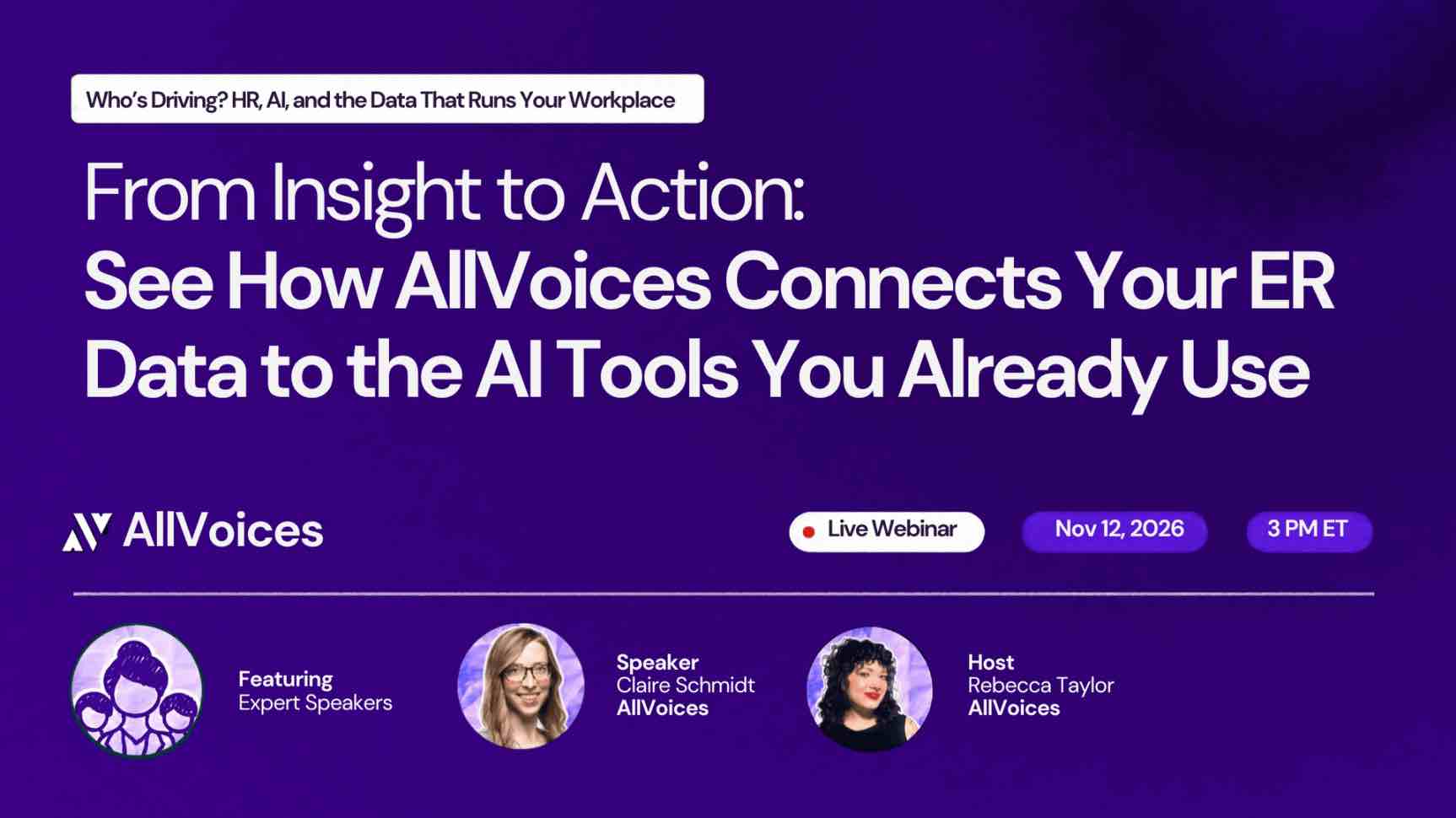
Our next webinar
Frequently asked questions

Got more questions? Email us at support@allvoices.co and we'll respond ASAP.

No items found.
Frequently asked questions

Got more questions? Email us at support@allvoices.co and we'll respond ASAP.

No items found.
Non-Negotiables for Employee Mental Health with James Kinney
Episode 90
About This Episode
In this episode of Reimagining Company Culture, we’re chatting with James Kinney, Global Chief Diversity, Equity and Inclusion Officer and North American Chief People Officer at Ogilvy. James is a people, culture, and, diversity executive with 20 years of experience building high-performance cultures for innovative companies.
About The Guest
James is a people, culture, and, diversity executive with 20 years of experience building high-performance cultures for innovative companies. He is a judicious leader with a consultative, pragmatic, and dynamic style. James also serves as member of the c-suite with cross-functional abilities across finance, legal, and operations. And, is a business behaviorist, change, and growth expert. A track record of creating inclusive workplaces and experiences.
Episode Transcription

James Kinney is the Global Chief Diversity, Equity and Inclusion Officer and North American Chief People Officer at Ogilvy. He has spent 20 years building high-performance cultures inside innovative companies, and his career bridges people leadership, finance, legal, and operations. His conversation on Reimagining Company Culture focused on something most employers still treat as optional: making employee mental health a non-negotiable structural commitment instead of a benefits-page footnote.

The conversation drew a sharp line between mental health benefits (an EAP, a wellness app subsidy) and mental health practices (how managers actually talk about pressure, how time off gets honored, how performance gets measured during hard quarters). Benefits without practices fall flat. James walked through what changes when leadership treats this as a culture commitment with operating teeth.

The synthesis below pairs his framing with the latest research from People teams treating mental health as core infrastructure rather than a perk.

Why Employee Mental Health Belongs in the Operating Model

Most companies have a mental health benefit. Far fewer have a mental health practice. The difference shows up in the data: utilization of EAPs is famously low, even as prevalence of stress and burnout climbs. The breakdown is rarely about the program design and almost always about the workplace signals around using it.

SHRM’s 2025 Workplace Mental Health insights found that 30 percent of U.S. workers would take a pay cut to get better mental health support, and 49 percent of managers feel pressured to prioritize the organization’s wellbeing over the people they manage. That gap is the operating problem. Programs alone do not close it; manager behavior, schedule design, and workload calibration do.

James’s framing is to write down the non-negotiables (the small set of practices that, if violated by any leader, signal a culture failure) and treat them with the same seriousness as financial controls. The practices vary by company; the discipline of writing them down does not.

What Mental Health Non-Negotiables Look Like in Practice

What kinds of policies actually move utilization?

Three things consistently work: visible executive use of mental health resources, manager scripts for pressure-test conversations, and protected time off that is enforced, not aspirational. Wellness programs only become real when leaders model the behavior they ask employees to practice.

How does manager behavior reinforce or undermine mental health?

Managers set the tone for whether asking for help is safe. Manager guides for burnout conversations train the muscle. Without explicit training, even well-meaning managers default to old patterns that signal weakness when employees raise mental health concerns.

What Actually Works in Mental Health Culture

Ship workload calibration with every reorg or launch

Stress spikes around predictable moments: launches, quarter ends, reorgs. Companies that calibrate workload deliberately during these moments protect their people. Companies that do not absorb the consequence in elevated burnout six weeks later. The discipline is small; the payoff is durable.

Treat mental health as a DEI issue, not a separate workstream

Mental health stigma falls disproportionately on the same populations DEI work supports. Treating mental health as part of DEI strategy produces better outcomes for the people most often left out of standard wellness programs.

Use pulse data to catch deterioration early

Mental health rarely fails in dramatic moments. It fails in long, slow drift. Pulse surveys catch sentiment changes weeks before they show up in attrition or in formal complaints, which gives leadership a window to intervene before issues escalate.

Where Employee Relations Fits in Mental Health Strategy

ER cases are often the first place mental health pressure surfaces. An employee filing a complaint about a manager’s communication style, an investigation revealing chronic overwork on a specific team, or repeat absences from one team are all signals that should feed mental health strategy. ER teams running modern employee engagement programs read those signals as part of the workload conversation.

How ER signal informs mental health intervention

Patterns matter more than individual cases. A team showing five different ER themes in six months is rarely five separate problems; it is usually one underlying systemic stress that has fractured into different surface complaints. Reading the patterns gives leadership the lever to address the actual cause.

Frequently Asked Questions About Workplace Mental Health

What does the Mental Health Parity Act require employers to do?

The Mental Health Parity Act requires group health plans to cover mental health benefits at parity with medical and surgical benefits. The law sets the floor; the practice goes well beyond it.

How do you measure the impact of mental health programs?

Utilization rates, employee sentiment, regrettable attrition, and ER trend data all matter. The most useful single metric is the gap between stated comfort with using mental health resources and actual use. A wide gap means stigma is still operating.

What role do executives play in mental health stigma?

Outsized. When executives openly use mental health resources, take real PTO, and talk about pressure honestly, employees follow. When executives signal that the rules apply to others, programs underperform regardless of design quality.

How should HR support managers handling mental health conversations?

Provide scripts, role-play scenarios, and explicit boundaries on what managers should and should not do. Most managers want to help and are afraid of saying the wrong thing. Training closes that gap and protects both manager and employee.

How does workload connect to mental health outcomes?

Workload is the most reliable lever. Mental health programs cannot offset chronic overwork. Companies serious about mental health calibrate workload deliberately and treat sustained overwork as a leadership problem to fix, not a heroic norm to celebrate.

How do hybrid and remote work change mental health practice?

Hybrid and remote environments make signal harder to read. Managers cannot see exhaustion across a screen the way they can in person. The fix is to instrument the team with explicit check-ins, pulse data, and direct manager training in remote conversation patterns. managers account for 70 percent of the variance in employee engagement across business units, and that variance widens in remote settings where managerial intentionality matters even more.

How does benefits design connect to actual mental health outcomes?

Benefits set the floor; manager behavior sets the ceiling. The strongest mental health benefit packages still underperform when manager culture penalizes their use. Companies that audit utilization by team and address utilization gaps as a leadership issue produce dramatically better outcomes than companies that focus on benefit catalog expansion alone.

One operational pattern worth highlighting: companies that report strong mental health outcomes typically share a quarterly executive review where People leaders walk the leadership team through utilization data, ER trends, and pulse signal. The cadence keeps mental health on the leadership agenda even when business pressure is high. Without that recurring forum, mental health work tends to drift into the benefits team and lose its connection to operating decisions.

The other piece is what happens when an employee actually surfaces a mental health concern through ER intake. Companies that get this right have a clear, documented response protocol that protects the employee, supports the manager, and produces consistent outcomes regardless of which leader is involved. Treating that protocol as a tested operational practice (not an ad hoc judgment call) is what makes mental health commitments credible across thousands of employees.

The Bottom Line for HR Leaders

James’s argument is structural: mental health belongs in the operating model, not in the benefits binder. The companies that internalize this build manager training, workload discipline, and ER intelligence into a single connected practice. The result is utilization rates that actually reflect the size of the need.

For People teams, the structural move is to write down the non-negotiables, get executive sponsorship, and build the operating cadence around them. Employee feedback systems are the connective tissue that keeps the practice honest, because they expose drift before it becomes attrition. Companies that take this discipline seriously show up better for their people and produce more durable performance over time.

See how AllVoices helps People teams turn workplace signals into action.

Want to learn more?
See the power of AllVoices today
Thank you! We look forward to meeting you soon
Oops! Something went wrong while submitting the form.
Frequently asked questions

Got more questions? Email us at support@allvoices.co and we'll respond ASAP.

No items found.
Frequently asked questions

Got more questions? Email us at support@allvoices.co and we'll respond ASAP.

No items found.


