About This Episode
What does it take to steer a 25-year-old tech company through going private while raising the performance bar? David Hanrahan, SVP of People Success at SolarWinds, describes navigating culture integration with a data-driven parent company, reorganizing HR for impact, and using AI to modernize performance across 2,100-plus employees. He explains why he shifted HR business partners from site-based support to functional teams covering go-to-market, R&D and G&A, and why HR must own revenue problems starting with sales talent.
About The Guest
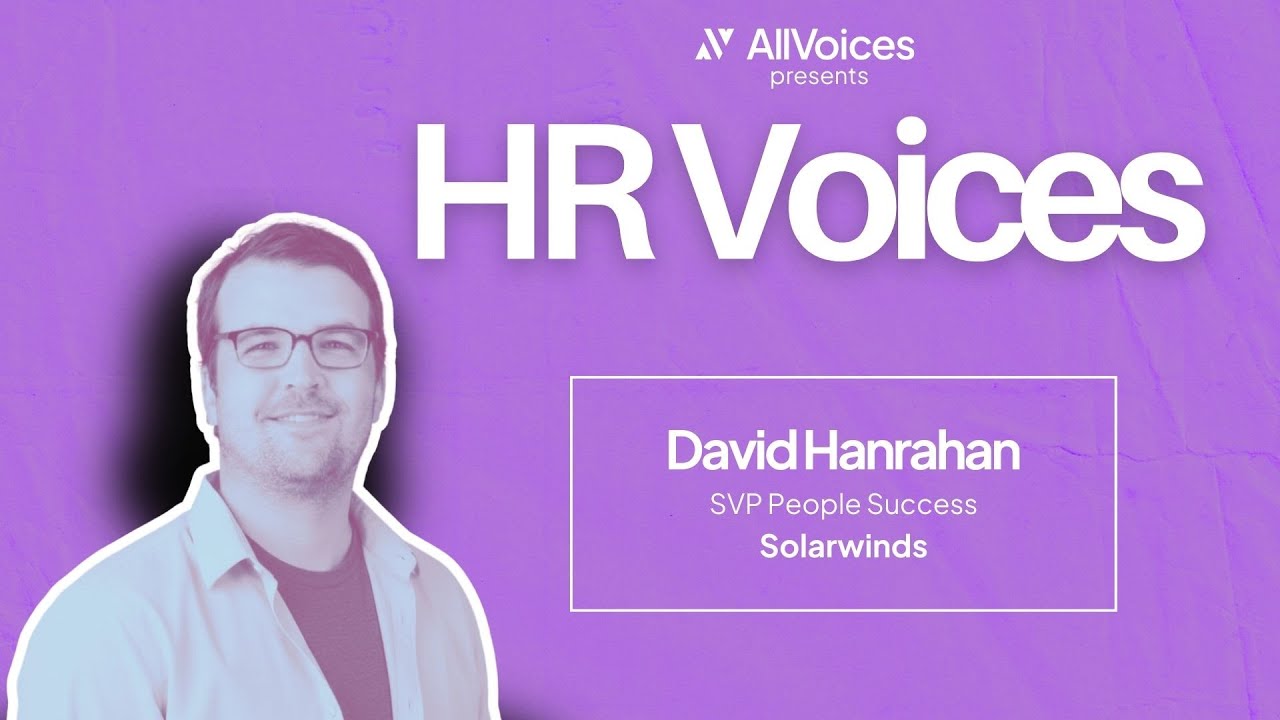
David Hanrahan is SVP of People Success at SolarWinds, guiding a 25-year-old software company through a take-private transition and a sharper go-to-market focus. He restructured HR business partnering away from site-based coverage toward functional alignment, on the argument that a partner embedded in go-to-market can affect revenue while a partner assigned to a building mostly affects logistics. He is direct that HR's credibility depends on solving problems the P&L recognizes.
Episode Breakdown

David Hanrahan, SVP of People Success at SolarWinds, had been with the company a couple of weeks when it was being acquired. He described SolarWinds as a B2B software company of about 2,100 employees that builds hybrid IT operations and observability software. The deal made it a private company again and handed David a change agenda before he had a full picture of the organization’s history.

SolarWinds has gone public and private twice, and some employees have been there for fifteen or twenty years. Its new owner is a younger firm that moves fast and runs on data. On HR Voices, David told host Rebecca Taylor how he has bridged the two. His answer is to aim HR at the problems the business is trying to solve, not at the perfection of its own processes.

How David Built Trust While SolarWinds Changed Owners

Turn/River Capital completed its acquisition of SolarWinds in April 2025, and the company became privately held. David described the parent as eager, fast, and data oriented, and SolarWinds is its biggest acquisition.

Long tenure brings long memories, and some employees tell David they have seen this story before. Much of the change management work has been weaving SolarWinds values into the parent’s ways of working while raising the bar on data. “We know who we are when we do our best work,” he said.

A new leader also has to choose a speed. David saw a short window in which being new let him make changes and ask forgiveness later, though he had not yet built the trust to back them. In HR roles, he said, “trust is our currency.”

So he went to the sites, including Cork, India, and Manila, sometimes with the CEO. On one trip, a business partner admitted that David seemed less scary in person than on calls. The lesson was simple: face-to-face time is hard to beat. His weekly update now includes family photos, because “you got to be a human first and foremost.”

Why a Perfect HR Process Can Still Miss the Business

Early in his career, David treated HR as a set of staples to get right, from compensation to onboarding. He has since concluded that a team can run a flawless performance cycle and have no impact on the business.

A private equity contact told him that in her experience with HR teams, “a lot of what you do is performative.” Employees are not convinced either. In Gallup’s research, just 14 percent of employees strongly agree that reviews inspire them to improve.

So David starts with what matters most to the business over the next three years. This acquisition is a bet on bookings growth rather than cost containment. That points to native sales, the account executives and account managers who each own a quota and whom David called the “tip of the spear.” Hiring and keeping the best native sales talent is now a shared goal for recruiting, talent development, and his go-to-market business partner lead.

What Actually Works

Build Business Partner Teams Around Functions, Not Sites

SolarWinds has about ten HR business partners worldwide, organized by function under a go-to-market lead and an R&D and G&A lead. When David arrived, partners in Cork, Charlotte, and Manila saw their scope as their site, then their region.

Local knowledge mattered, but a go-to-market leader in Cork may report to someone elsewhere. David asked partners to think about their true team, which the site alone does not define. The shift has been tricky, because partners want to be known where they work.

He wants the HR business partner function thinking two steps ahead with leaders. That means asking how the org design should evolve, how deep the succession bench is, and where pressure will land six months out.

Tie Retention Work to the Revenue Plan

With native sales as the target, the People team partnered with IT on a model to predict attrition among native sales talent. One of SolarWinds’ IT data analysts built it. The first version missed. In the first quarter it analyzed, it did not predict a single departure.

David called the result “not a failure from my perspective.” The plan is to revisit how the model weighs signals such as no compensation increase in the past year or a change of manager, then reanalyze the people SolarWinds lost and try again. A people analytics partnership with IT earns its keep when each miss becomes data.

Turn Review Writing Into Coaching Time

SolarWinds added an AI writing assistant to its performance cycle, and employees went further. One leader said a different AI tool had written his self-review perfectly. Someone else had a tool produce an eighteen-page self-review.

David’s response was to meet people where they are. Microsoft’s 2024 Work Trend Index found that 78 percent of AI users bring their own AI tools to work. His larger aim is a new manager role, with AI handling the synthesis and the manager sitting down as a coach. “The tool has the information,” he said. Another HR Voices episode explores the risks in a case about AI-written performance reviews.

Where Employee Relations Fits

David was candid about why feedback cultures stall. Managers are not in every meeting, they set aside one odd interaction when the week is busy, and they resist a weekly continuous feedback form. He hopes AI can brief manager and employee before their next one-on-one, while admitting “there is a big brother aspect to this.”

Rebecca added the ER view. Many employee relations cases start with performance feedback an employee did not know how to act on. From the other side, HR hears from managers who want to fire someone and have no documentation. Keeping performance improvement on a clear record gives People teams the context David wants managers to have.

Frequently Asked Questions About HR at SolarWinds

What Is a Functional HR Business Partner Model?

It aligns business partners to the functions they support rather than the sites where they work. At SolarWinds, about ten partners report through two leads, one for go-to-market and one for R&D and G&A.

How Did David Hanrahan Build Trust After Joining SolarWinds?

He went to the sites in person. David visited most SolarWinds locations early in his tenure, sometimes with the CEO, and spent time with each local People team. He also shares family photos in a weekly update.

What Does Native Sales Mean at SolarWinds?

It refers to sales professionals who each own an individual quota, such as account executives and account managers. David treats hiring and keeping the best of them as a clear people goal, because the acquisition is about bookings growth.

What Happened When SolarWinds Tested an Attrition Prediction Model?

It missed at first. In the first quarter it analyzed, the model did not predict a single departure. David treated that as a lesson, and the plan is to revisit how the model weighs signals and what departed employees had in common.

How Does David Hanrahan Want AI to Change Performance Reviews?

He wants AI to handle the synthesis so managers can coach. David also wants HR to meet employees where they are with the AI tools they already use, while staying candid about the big brother concerns this raises.

The Bottom Line for HR Leaders

David Hanrahan’s framing comes back to managers. He closed on the idea that employees whose managers understand their work tend to perform better, stay longer, and engage more. Understanding is not about being nice. It means knowing what someone is working on, why it matters, and which tradeoffs they face.

Each practice he described applies that test, from functional partners to the attrition model to AI briefings. For a People team living through a change of owner, understanding the work is what earns HR a role in the plan.

See how AllVoices helps People teams equip managers to coach and keep every performance conversation on record.

Our next webinar
Frequently asked questions

Got more questions? Email us at support@allvoices.co and we'll respond ASAP.

No items found.
Frequently asked questions

Got more questions? Email us at support@allvoices.co and we'll respond ASAP.

No items found.

David Hanrahan, SVP People Success at Solarwinds

About the guest

David Hanrahan is SVP of People Success at SolarWinds, guiding a 25-year-old software company through a take-private transition and a sharper go-to-market focus. He restructured HR business partnering away from site-based coverage toward functional alignment, on the argument that a partner embedded in go-to-market can affect revenue while a partner assigned to a building mostly affects logistics. He is direct that HR's credibility depends on solving problems the P&L recognizes.

Episode Breakdown

David Hanrahan, SVP of People Success at SolarWinds, had been with the company a couple of weeks when it was being acquired. He described SolarWinds as a B2B software company of about 2,100 employees that builds hybrid IT operations and observability software. The deal made it a private company again and handed David a change agenda before he had a full picture of the organization’s history.

SolarWinds has gone public and private twice, and some employees have been there for fifteen or twenty years. Its new owner is a younger firm that moves fast and runs on data. On HR Voices, David told host Rebecca Taylor how he has bridged the two. His answer is to aim HR at the problems the business is trying to solve, not at the perfection of its own processes.

How David Built Trust While SolarWinds Changed Owners

Turn/River Capital completed its acquisition of SolarWinds in April 2025, and the company became privately held. David described the parent as eager, fast, and data oriented, and SolarWinds is its biggest acquisition.

Long tenure brings long memories, and some employees tell David they have seen this story before. Much of the change management work has been weaving SolarWinds values into the parent’s ways of working while raising the bar on data. “We know who we are when we do our best work,” he said.

A new leader also has to choose a speed. David saw a short window in which being new let him make changes and ask forgiveness later, though he had not yet built the trust to back them. In HR roles, he said, “trust is our currency.”

So he went to the sites, including Cork, India, and Manila, sometimes with the CEO. On one trip, a business partner admitted that David seemed less scary in person than on calls. The lesson was simple: face-to-face time is hard to beat. His weekly update now includes family photos, because “you got to be a human first and foremost.”

Why a Perfect HR Process Can Still Miss the Business

Early in his career, David treated HR as a set of staples to get right, from compensation to onboarding. He has since concluded that a team can run a flawless performance cycle and have no impact on the business.

A private equity contact told him that in her experience with HR teams, “a lot of what you do is performative.” Employees are not convinced either. In Gallup’s research, just 14 percent of employees strongly agree that reviews inspire them to improve.

So David starts with what matters most to the business over the next three years. This acquisition is a bet on bookings growth rather than cost containment. That points to native sales, the account executives and account managers who each own a quota and whom David called the “tip of the spear.” Hiring and keeping the best native sales talent is now a shared goal for recruiting, talent development, and his go-to-market business partner lead.

What Actually Works

Build Business Partner Teams Around Functions, Not Sites

SolarWinds has about ten HR business partners worldwide, organized by function under a go-to-market lead and an R&D and G&A lead. When David arrived, partners in Cork, Charlotte, and Manila saw their scope as their site, then their region.

Local knowledge mattered, but a go-to-market leader in Cork may report to someone elsewhere. David asked partners to think about their true team, which the site alone does not define. The shift has been tricky, because partners want to be known where they work.

He wants the HR business partner function thinking two steps ahead with leaders. That means asking how the org design should evolve, how deep the succession bench is, and where pressure will land six months out.

Tie Retention Work to the Revenue Plan

With native sales as the target, the People team partnered with IT on a model to predict attrition among native sales talent. One of SolarWinds’ IT data analysts built it. The first version missed. In the first quarter it analyzed, it did not predict a single departure.

David called the result “not a failure from my perspective.” The plan is to revisit how the model weighs signals such as no compensation increase in the past year or a change of manager, then reanalyze the people SolarWinds lost and try again. A people analytics partnership with IT earns its keep when each miss becomes data.

Turn Review Writing Into Coaching Time

SolarWinds added an AI writing assistant to its performance cycle, and employees went further. One leader said a different AI tool had written his self-review perfectly. Someone else had a tool produce an eighteen-page self-review.

David’s response was to meet people where they are. Microsoft’s 2024 Work Trend Index found that 78 percent of AI users bring their own AI tools to work. His larger aim is a new manager role, with AI handling the synthesis and the manager sitting down as a coach. “The tool has the information,” he said. Another HR Voices episode explores the risks in a case about AI-written performance reviews.

Where Employee Relations Fits

David was candid about why feedback cultures stall. Managers are not in every meeting, they set aside one odd interaction when the week is busy, and they resist a weekly continuous feedback form. He hopes AI can brief manager and employee before their next one-on-one, while admitting “there is a big brother aspect to this.”

Rebecca added the ER view. Many employee relations cases start with performance feedback an employee did not know how to act on. From the other side, HR hears from managers who want to fire someone and have no documentation. Keeping performance improvement on a clear record gives People teams the context David wants managers to have.

Frequently Asked Questions About HR at SolarWinds

What Is a Functional HR Business Partner Model?

It aligns business partners to the functions they support rather than the sites where they work. At SolarWinds, about ten partners report through two leads, one for go-to-market and one for R&D and G&A.

How Did David Hanrahan Build Trust After Joining SolarWinds?

He went to the sites in person. David visited most SolarWinds locations early in his tenure, sometimes with the CEO, and spent time with each local People team. He also shares family photos in a weekly update.

What Does Native Sales Mean at SolarWinds?

It refers to sales professionals who each own an individual quota, such as account executives and account managers. David treats hiring and keeping the best of them as a clear people goal, because the acquisition is about bookings growth.

What Happened When SolarWinds Tested an Attrition Prediction Model?

It missed at first. In the first quarter it analyzed, the model did not predict a single departure. David treated that as a lesson, and the plan is to revisit how the model weighs signals and what departed employees had in common.

How Does David Hanrahan Want AI to Change Performance Reviews?

He wants AI to handle the synthesis so managers can coach. David also wants HR to meet employees where they are with the AI tools they already use, while staying candid about the big brother concerns this raises.

The Bottom Line for HR Leaders

David Hanrahan’s framing comes back to managers. He closed on the idea that employees whose managers understand their work tend to perform better, stay longer, and engage more. Understanding is not about being nice. It means knowing what someone is working on, why it matters, and which tradeoffs they face.

Each practice he described applies that test, from functional partners to the attrition model to AI briefings. For a People team living through a change of owner, understanding the work is what earns HR a role in the plan.

See how AllVoices helps People teams equip managers to coach and keep every performance conversation on record.