About This Episode
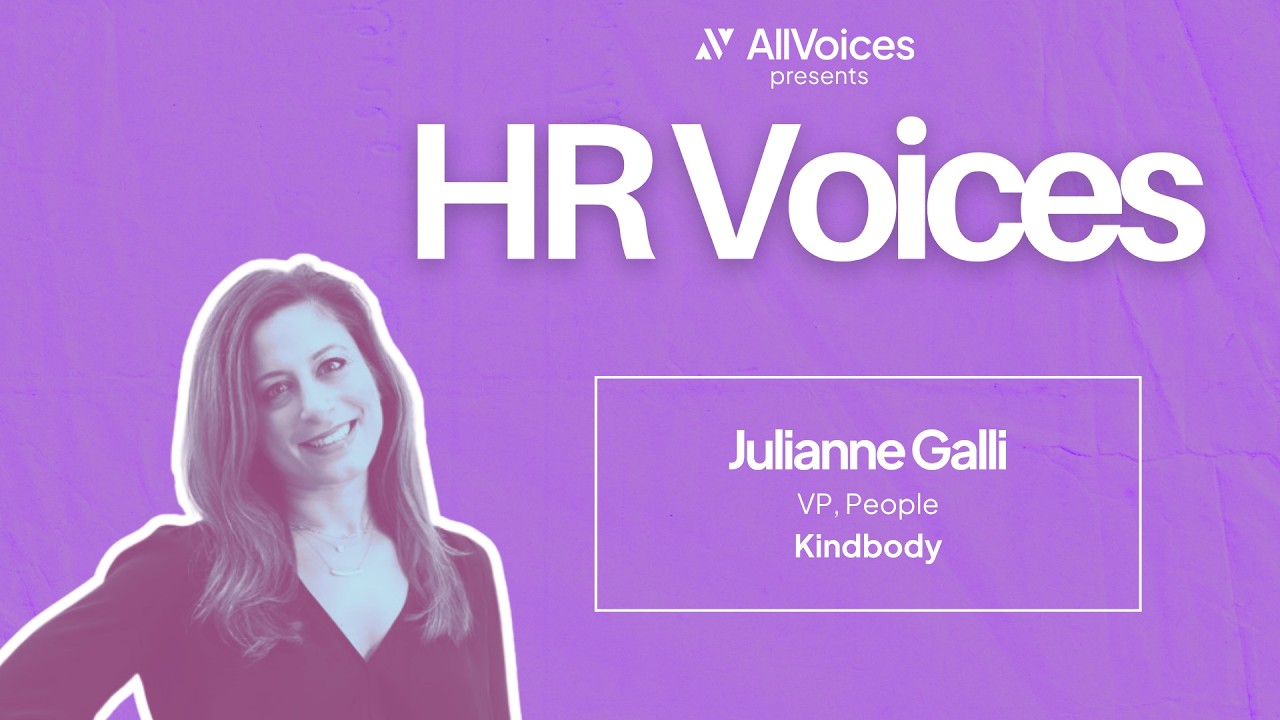
A 61-year-old senior director is retitled “Director of Special Projects,” stripped of his reports, and files an age discrimination complaint eight months before his pension vests. Rebecca Taylor and Julianne Galli, VP of People at Kindbody, argue the real risk is not the age claim itself but that the decision was made with no HR in the room. Julianne shares the four-word tactic she uses to insert friction into a decision without becoming the obstacle.
About The Guest
Julianne Galli is VP of People at Kindbody, the fertility and family-building benefits company. She works on the problem of HR's positioning inside decision-making — how the function gets consulted after a restructure is decided rather than while it is being shaped, and what language actually buys a seat at that earlier table. Her approach is to add friction without becoming the department that says no, which she treats as the difference between being consulted and being routed around.
Episode Breakdown

A senior director is handed a new title, Director of Special Projects. His pay stays the same, his direct reports move to a peer, and he is told the change is “a realignment, not a demotion.” He is 61, and his pension fully vests in eight months. HR’s records show no performance concerns, and nobody from HR was in the conversation where the move was decided. He files an age discrimination complaint. Host Rebecca Taylor put the fabricated scenario to Julianne Galli, VP of People at Kindbody, on HR Voices.

The birthday and the pension date draw the eye first. Julianne looked past them. Her opening question was why HR was not seen as a partner in the decision. The bigger exposure is not the birthday. It is a major change to a person’s job made with nobody from HR in the room.

Why the Decision Without HR Is the Bigger Risk

Julianne did not wave the complaint away. “He has an age discrimination complaint for sure there,” she said. At 61 he sits well inside the group the Age Discrimination in Employment Act protects, which begins at 40. The statute bars an employer from classifying employees in any way that would adversely affect a worker’s status as an employee because of age.

The pension date points at a second statute. Section 510 of the Employee Retirement Income Security Act makes it unlawful to discriminate against a plan participant for the purpose of interfering with a right that participant may become entitled to under the plan.

Rebecca framed two possibilities for HR’s absence. Nobody thought to include it, or somebody chose not to. Julianne allowed for both, since leaders are sometimes “moving so rapidly” that they are “not fully thinking about consequences of their decisions.” Either way, nothing on file explains the move, and an investigator has to go where the evidence is.

How Four Words Keep HR in the Decision

Some leaders keep HR out because they expect friction. Rebecca’s view is that friction is sometimes the job. Her favorite tagline for it is four words long: “Have you considered X.” The phrasing lets her “insert friction where friction might need to be” and probe a leader’s thinking “without sounding confrontational.”

Julianne called it a difficult role to play. HR has to be an adviser, she said, and it is frustrating when advice gets read as “purposely trying to create obstacles.” An old leader of hers warned her against becoming “the HR police.”

Her answer is not to back away. When she described how a partner enters a decision, she borrowed Rebecca’s line. First comes “I understand this is a business need,” then “have you considered this,” and “then we go from there.”

The payoff is position. When HR understands the business side and the change management side of a decision, Julianne argued, it does not have to be cleanup or the police. HR brings one perspective and finance brings another, and sometimes the group has to go “slow to go fast.”

What Actually Works

Start With Counsel, Then Listen to the Employee

Julianne’s first call goes to her legal partner, in house or external, to size the risk to the organization. She and Rebecca agreed the employee is heard next, since he filed the complaint with HR. She treats that meeting as “a fact-finding mission,” with no biased angle and no attempt to talk him out of what he believes.

If he confirms that he sees the move as age-based, she opens a formal workplace investigation. “I want to talk to as many people that were involved in this as possible,” she said.

Ask for the Record Behind the Reassignment

With the leader, her questions follow the explanation offered. If the reason is performance, she asks for the documentation and for what had been “tried to coach and counsel this individual.” An undocumented performance story is the gap that sank the employer in another HR Voices case, a firing propped up by backdated notes.

If the reason is business need, she asks about budget and whether any workforce planning for the role took place. Rebecca noted the same facts could describe “poorly communicated and poorly strategized succession planning,” and Julianne asked whether HR has a clear succession planning process. Her warning is against moving people around like “chess players on a board.”

Hold Standing Meetings With Every Leader

Prevention, in Julianne’s telling, “does start with that partnership.” She recommends consistent meetings between each leader and HR, held directly or through an HR business partner. The agenda is the leader’s plans, the shape of the team, and what is happening in the business.

Where a leader is hard to partner with, her advice is to “figure out what motivates them.” Of the relationship itself, she said, “If you build that first and foremost, you can help mitigate a lot of these things.”

Where Employee Relations Fits

A complaint like this lands on a team that is already full. Julianne’s approach is to free one person to focus on it, spending “the next day or two just interviewing and meeting with people” while colleagues pick up other priorities. That only works with “the right operational processes” already in place.

“AI cannot do an investigation like this,” Julianne said, though it can assist. Rebecca described the AllVoices platform the same way. It organizes documentation and surfaces related past cases, and the decision stays with people. We covered that split in a session on where human judgment still matters as AI changes employee relations.

With the administrative burden handled, an investigator can put “mental energy” into the parts only a person can do. That is the case for workplace investigations software that carries the record so the investigator can carry the judgment.

Frequently Asked Questions About Reassignments and Age Discrimination Claims

Can a Title Change With No Pay Cut Lead to an Age Discrimination Claim?

Yes. The director here kept his pay but lost his title and his team, with no performance concerns on file and his pension eight months from vesting. Julianne treated the complaint as credible.

What Should HR Do First When an Age Discrimination Complaint Arrives?

Call counsel first. Julianne starts with her legal partner, then hears the employee out without bias, and opens an investigation that reaches the leader who made the decision.

What Are the Four Words That Keep HR in the Room?

The words are “Have you considered X.” Rebecca Taylor uses the line to question a decision without sounding confrontational, and Julianne Galli pairs it with an acknowledgment of the business need.

How Can HR Tell a Realignment From a Demotion?

Look at the record behind it. Julianne asks for performance documentation, coaching history, budget, and workforce planning. A real business need tends to leave those traces, and a move with none is hard to defend.

Can AI Run a Workplace Investigation?

No. Julianne’s view is that AI can assist but cannot conduct an investigation like this one. The interviews, the weighing of evidence, and the conclusion stay with a person.

The Bottom Line for HR Leaders

In Julianne Galli’s framing, the partnership comes before the decision. She reminded listeners that there is not always a right answer once the legal and ethical lines are respected. What HR can control is whether it was in the room while the decision took shape.

Even when the intent behind a role change is sound, her test is whether it can “look like that to that individual.” A leader who hears that from a trusted partner has time to explain, document, or rethink; a leader who hears it after a complaint is already inside an investigation.

See how AllVoices helps People teams document role changes and investigate complaints on a record that explains every decision.
Our next webinar
Frequently asked questions

Got more questions? Email us at support@allvoices.co and we'll respond ASAP.

No items found.
Frequently asked questions

Got more questions? Email us at support@allvoices.co and we'll respond ASAP.

No items found.

The Four Words That Keep HR in the Room

About the guest

Julianne Galli is VP of People at Kindbody, the fertility and family-building benefits company. She works on the problem of HR's positioning inside decision-making — how the function gets consulted after a restructure is decided rather than while it is being shaped, and what language actually buys a seat at that earlier table. Her approach is to add friction without becoming the department that says no, which she treats as the difference between being consulted and being routed around.

Episode Breakdown

A senior director is handed a new title, Director of Special Projects. His pay stays the same, his direct reports move to a peer, and he is told the change is “a realignment, not a demotion.” He is 61, and his pension fully vests in eight months. HR’s records show no performance concerns, and nobody from HR was in the conversation where the move was decided. He files an age discrimination complaint. Host Rebecca Taylor put the fabricated scenario to Julianne Galli, VP of People at Kindbody, on HR Voices.

The birthday and the pension date draw the eye first. Julianne looked past them. Her opening question was why HR was not seen as a partner in the decision. The bigger exposure is not the birthday. It is a major change to a person’s job made with nobody from HR in the room.

Why the Decision Without HR Is the Bigger Risk

Julianne did not wave the complaint away. “He has an age discrimination complaint for sure there,” she said. At 61 he sits well inside the group the Age Discrimination in Employment Act protects, which begins at 40. The statute bars an employer from classifying employees in any way that would adversely affect a worker’s status as an employee because of age.

The pension date points at a second statute. Section 510 of the Employee Retirement Income Security Act makes it unlawful to discriminate against a plan participant for the purpose of interfering with a right that participant may become entitled to under the plan.

Rebecca framed two possibilities for HR’s absence. Nobody thought to include it, or somebody chose not to. Julianne allowed for both, since leaders are sometimes “moving so rapidly” that they are “not fully thinking about consequences of their decisions.” Either way, nothing on file explains the move, and an investigator has to go where the evidence is.

How Four Words Keep HR in the Decision

Some leaders keep HR out because they expect friction. Rebecca’s view is that friction is sometimes the job. Her favorite tagline for it is four words long: “Have you considered X.” The phrasing lets her “insert friction where friction might need to be” and probe a leader’s thinking “without sounding confrontational.”

Julianne called it a difficult role to play. HR has to be an adviser, she said, and it is frustrating when advice gets read as “purposely trying to create obstacles.” An old leader of hers warned her against becoming “the HR police.”

Her answer is not to back away. When she described how a partner enters a decision, she borrowed Rebecca’s line. First comes “I understand this is a business need,” then “have you considered this,” and “then we go from there.”

The payoff is position. When HR understands the business side and the change management side of a decision, Julianne argued, it does not have to be cleanup or the police. HR brings one perspective and finance brings another, and sometimes the group has to go “slow to go fast.”

What Actually Works

Start With Counsel, Then Listen to the Employee

Julianne’s first call goes to her legal partner, in house or external, to size the risk to the organization. She and Rebecca agreed the employee is heard next, since he filed the complaint with HR. She treats that meeting as “a fact-finding mission,” with no biased angle and no attempt to talk him out of what he believes.

If he confirms that he sees the move as age-based, she opens a formal workplace investigation. “I want to talk to as many people that were involved in this as possible,” she said.

Ask for the Record Behind the Reassignment

With the leader, her questions follow the explanation offered. If the reason is performance, she asks for the documentation and for what had been “tried to coach and counsel this individual.” An undocumented performance story is the gap that sank the employer in another HR Voices case, a firing propped up by backdated notes.

If the reason is business need, she asks about budget and whether any workforce planning for the role took place. Rebecca noted the same facts could describe “poorly communicated and poorly strategized succession planning,” and Julianne asked whether HR has a clear succession planning process. Her warning is against moving people around like “chess players on a board.”

Hold Standing Meetings With Every Leader

Prevention, in Julianne’s telling, “does start with that partnership.” She recommends consistent meetings between each leader and HR, held directly or through an HR business partner. The agenda is the leader’s plans, the shape of the team, and what is happening in the business.

Where a leader is hard to partner with, her advice is to “figure out what motivates them.” Of the relationship itself, she said, “If you build that first and foremost, you can help mitigate a lot of these things.”

Where Employee Relations Fits

A complaint like this lands on a team that is already full. Julianne’s approach is to free one person to focus on it, spending “the next day or two just interviewing and meeting with people” while colleagues pick up other priorities. That only works with “the right operational processes” already in place.

“AI cannot do an investigation like this,” Julianne said, though it can assist. Rebecca described the AllVoices platform the same way. It organizes documentation and surfaces related past cases, and the decision stays with people. We covered that split in a session on where human judgment still matters as AI changes employee relations.

With the administrative burden handled, an investigator can put “mental energy” into the parts only a person can do. That is the case for workplace investigations software that carries the record so the investigator can carry the judgment.

Frequently Asked Questions About Reassignments and Age Discrimination Claims

Can a Title Change With No Pay Cut Lead to an Age Discrimination Claim?

Yes. The director here kept his pay but lost his title and his team, with no performance concerns on file and his pension eight months from vesting. Julianne treated the complaint as credible.

What Should HR Do First When an Age Discrimination Complaint Arrives?

Call counsel first. Julianne starts with her legal partner, then hears the employee out without bias, and opens an investigation that reaches the leader who made the decision.

What Are the Four Words That Keep HR in the Room?

The words are “Have you considered X.” Rebecca Taylor uses the line to question a decision without sounding confrontational, and Julianne Galli pairs it with an acknowledgment of the business need.

How Can HR Tell a Realignment From a Demotion?

Look at the record behind it. Julianne asks for performance documentation, coaching history, budget, and workforce planning. A real business need tends to leave those traces, and a move with none is hard to defend.

Can AI Run a Workplace Investigation?

No. Julianne’s view is that AI can assist but cannot conduct an investigation like this one. The interviews, the weighing of evidence, and the conclusion stay with a person.

The Bottom Line for HR Leaders

In Julianne Galli’s framing, the partnership comes before the decision. She reminded listeners that there is not always a right answer once the legal and ethical lines are respected. What HR can control is whether it was in the room while the decision took shape.

Even when the intent behind a role change is sound, her test is whether it can “look like that to that individual.” A leader who hears that from a trusted partner has time to explain, document, or rethink; a leader who hears it after a complaint is already inside an investigation.

See how AllVoices helps People teams document role changes and investigate complaints on a record that explains every decision.