About This Episode
A CFO hands HR a layoff list. HR runs the numbers and finds it skews disproportionately toward employees over 55 and women in senior roles. The CFO says it is based on performance ratings; HR pulls the data and finds significant rating inconsistencies. The CFO wants to proceed. Rebecca Taylor and Lizzie Garner, Chief People Officer at ClearChoice Dental Implant Centers, work through the moment HR decides whether to push back, proceed, or put itself on the list.
About The Guest
Lizzie Garner is Chief People Officer at ClearChoice Dental Implant Centers, and has led more reductions in force than most HR leaders ever will. Her counterintuitive position is that layoffs are the moment HR can build the most trust and value inside an organization rather than the least. She reframes “going over the CFO's head” as “let's bring in another brain,” and has never used performance ratings as the sole selection criterion for a reduction in force.
Episode Breakdown

A CFO hands HR a layoff list. HR runs the numbers and finds the list leans heavily toward employees over 55 and women in senior roles. The CFO says the selections came from performance ratings, but the underlying ratings turn out to be inconsistent, and the CFO still wants to proceed. Host Rebecca Taylor put this fabricated scenario to Lizzie Garner, Chief People Officer at ClearChoice Dental Implant Centers, on HR Voices.

The scenario offered HR four exits: escalate over the CFO’s head, document an objection and proceed, halt the process, or resign. Lizzie took a different route. She has run more reductions than most HR leaders will in a career, and her view is that a layoff is the moment HR can earn the most trust inside a company. The work is to get in early, test the criteria, and offer the business a better way to reach the same number.

Why a Layoff Is Where HR Earns Its Seat

Lizzie opened by calling layoffs some of the least enjoyable work HR does. She also called them an opening. In a layoff, she said, “you have an opportunity to build tremendous trust and your own value within the organization,” because few colleagues are good at running one.

That opening closes fast once a list exists. Lizzie wants HR in the room roughly two weeks earlier, when leaders first agree they have to save money. At that point the reduction in force is still a conversation about selection criteria, not a set of names. Her advice for that meeting is to speak up, not stay quiet.

Getting that invitation depends on knowing the business. Lizzie’s habit is to sit in financial and business reviews at least monthly and to ask one more question than feels comfortable.

Why Performance Ratings Make a Weak Selection Criterion

A list built on ratings looks data-driven. Rebecca was suspicious of exactly that. Performance, in her view, always carries human error and bias, and an annual review tilts toward whatever happened last month. Recency bias in performance reviews can turn ten good months into a low score.

Lizzie made the point with machines. If HR could pull the tape and see what each machine produced, she said, the company would not need HR at all. People are rated by human leaders all the way down, and their definitions of stellar performance vary.

She has never used performance as the only selection criterion. “Reductions in force are a business problem,” she said. An employee rated low in January was still fit to keep working, so the cause of the cut is a business condition, not a change in that person’s work. Employees already on a performance improvement plan or a written warning have a clearer documented position, but she would apply that to a small handful, never as a broad brush.

The list will not stay private, either. Rebecca pointed out that laid-off employees over 40 see who else was cut. EEOC guidance confirms it: when a group is asked to waive Age Discrimination in Employment Act claims, the employer must disclose the job titles and ages of everyone selected and not selected in the decisional unit.

What Actually Works

Run the Impact Analysis With a Second Set of Eyes

Lizzie’s first step with a finished list is a full census and an impact analysis. She often brings in outside counsel for it, because a separate set of eyes catches what an internal one misses. For the sex skew, the EEOC’s Uniform Guidelines set out the four-fifths rule, which treats a lower selection rate as evidence of adverse impact on a protected group.

Then she widens the circle. Neither she nor the CFO manages all of these people, so a few leaders who know the work help define what performance means. With the CFO, she puts the cost of employment litigation on the table and asks for the defensible position behind each selection.

Build Two Other Paths to the Same Savings

Pressure is real at that table. The CFO may have promised the board or the CEO a saving by month end. Lizzie keeps the goal and changes the method, telling the CFO she would like to try the list two other ways.

The first is last in, first out. Even if it still affects some groups more than others, the defense is that it was applied fairly. The second is to eliminate whole roles. If three people hold a role the business no longer needs, cutting the role removes individual selection entirely. Solutions, she found, go further than objections.

When disagreement holds, Lizzie reframes going over someone’s head as bringing in another brain: an employment attorney, outside counsel, or another executive. “It can be accomplished this afternoon,” she said.

Design the Meeting Around the Follow-Up Email

Lizzie keeps a reduction-in-force toolkit she has refined over years. It runs from an executive kickoff to final selection criteria to a communication plan. Leaders get time to practice sample language with their HR partner so they can hold space for emotion.

Her script starts with one line: “everything we discuss today will be emailed to you directly following this call and conversation.” Once someone hears the decision, she explained, nothing else registers. Most people want little discussion in that moment. For managers delivering that news for the first time, a primer on ethical terminations is a useful companion.

Where Employee Relations Fits

The resignation option struck Lizzie as dramatic. She sees more value in staying, because the employees left behind still need an advocate. She has also watched a contested layoff end with no lawsuit, and HR will sometimes execute a decision it did not choose.

Rebecca added the safeguard: document the objection and the alternatives offered. That is employee relations work, and it holds up best in one structured system for HR cases. A related HR Voices episode traced how a quiet retitle became an age complaint when nobody wrote down the reasoning.

Frequently Asked Questions About Layoff Selection Criteria

Can a Company Use Performance Ratings to Choose Who Gets Laid Off?

It can, but ratings alone are a weak defense. Lizzie Garner has never used performance as the only criterion, because a layoff solves a business problem, and ratings vary by manager.

What Should HR Do When a Layoff List Skews Toward Older Workers or Women?

Run an impact analysis before anything moves. Lizzie often uses outside counsel for a second view, widens the input on performance, and asks how the company would defend each selection.

What Are the Alternatives to Performance-Based Layoff Selection?

The two Lizzie offers are last in, first out and eliminating entire roles. Both remove individual judgment from the selection, which makes the outcome easier to defend even when the impact is uneven.

What Should HR Say First in a Layoff Meeting?

Start by saying that everything discussed will follow by email. Lizzie leads with that line because people stop absorbing details once they hear the decision. A RIF compliance guide covers the notices that follow.

Should HR Resign If Leadership Ignores a Layoff Concern?

Rarely. Lizzie found the resignation option dramatic and argued that HR does more good staying for the employees who remain. Her alternative to escalating is to bring another person into the decision.

The Bottom Line for HR Leaders

Lizzie’s framing turns the hardest moment in HR into its strongest position. A layoff list built on uneven ratings is not a finished decision; it is an invitation to ask better questions. Lizzie Garner gets in before the list, tests the criteria with a second set of eyes, and brings the CFO other ways to reach the same savings. The companies that run reductions this way protect the people leaving and the trust of the people staying.

See how AllVoices helps People teams document every high-stakes decision and defend it later.
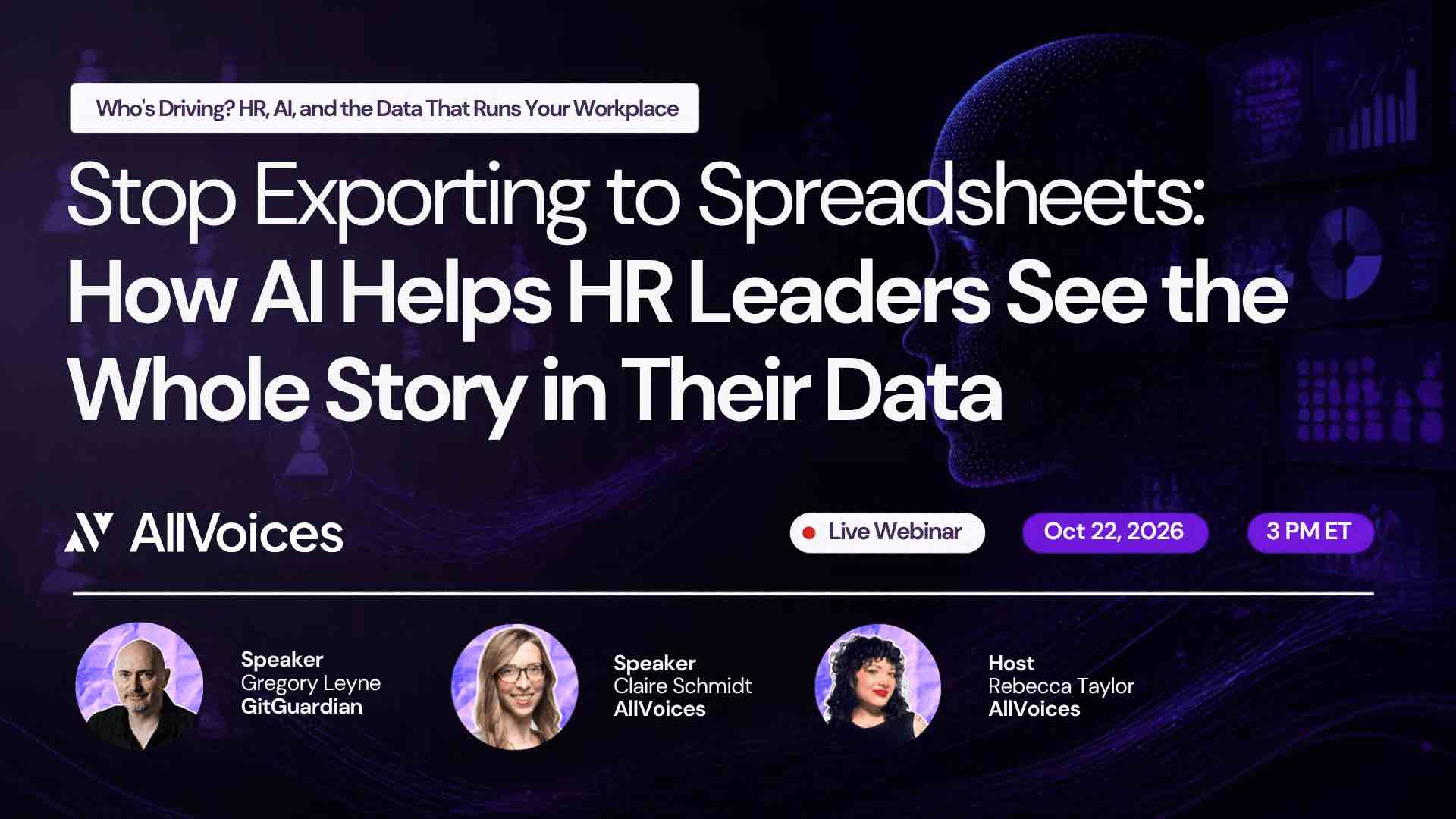
Our next webinar
Frequently asked questions

Got more questions? Email us at support@allvoices.co and we'll respond ASAP.

No items found.
Frequently asked questions

Got more questions? Email us at support@allvoices.co and we'll respond ASAP.

No items found.

Where HR Can Build the Most Trust from Layoffs

About the guest

Lizzie Garner is Chief People Officer at ClearChoice Dental Implant Centers, and has led more reductions in force than most HR leaders ever will. Her counterintuitive position is that layoffs are the moment HR can build the most trust and value inside an organization rather than the least. She reframes “going over the CFO's head” as “let's bring in another brain,” and has never used performance ratings as the sole selection criterion for a reduction in force.

Episode Breakdown

A CFO hands HR a layoff list. HR runs the numbers and finds the list leans heavily toward employees over 55 and women in senior roles. The CFO says the selections came from performance ratings, but the underlying ratings turn out to be inconsistent, and the CFO still wants to proceed. Host Rebecca Taylor put this fabricated scenario to Lizzie Garner, Chief People Officer at ClearChoice Dental Implant Centers, on HR Voices.

The scenario offered HR four exits: escalate over the CFO’s head, document an objection and proceed, halt the process, or resign. Lizzie took a different route. She has run more reductions than most HR leaders will in a career, and her view is that a layoff is the moment HR can earn the most trust inside a company. The work is to get in early, test the criteria, and offer the business a better way to reach the same number.

Why a Layoff Is Where HR Earns Its Seat

Lizzie opened by calling layoffs some of the least enjoyable work HR does. She also called them an opening. In a layoff, she said, “you have an opportunity to build tremendous trust and your own value within the organization,” because few colleagues are good at running one.

That opening closes fast once a list exists. Lizzie wants HR in the room roughly two weeks earlier, when leaders first agree they have to save money. At that point the reduction in force is still a conversation about selection criteria, not a set of names. Her advice for that meeting is to speak up, not stay quiet.

Getting that invitation depends on knowing the business. Lizzie’s habit is to sit in financial and business reviews at least monthly and to ask one more question than feels comfortable.

Why Performance Ratings Make a Weak Selection Criterion

A list built on ratings looks data-driven. Rebecca was suspicious of exactly that. Performance, in her view, always carries human error and bias, and an annual review tilts toward whatever happened last month. Recency bias in performance reviews can turn ten good months into a low score.

Lizzie made the point with machines. If HR could pull the tape and see what each machine produced, she said, the company would not need HR at all. People are rated by human leaders all the way down, and their definitions of stellar performance vary.

She has never used performance as the only selection criterion. “Reductions in force are a business problem,” she said. An employee rated low in January was still fit to keep working, so the cause of the cut is a business condition, not a change in that person’s work. Employees already on a performance improvement plan or a written warning have a clearer documented position, but she would apply that to a small handful, never as a broad brush.

The list will not stay private, either. Rebecca pointed out that laid-off employees over 40 see who else was cut. EEOC guidance confirms it: when a group is asked to waive Age Discrimination in Employment Act claims, the employer must disclose the job titles and ages of everyone selected and not selected in the decisional unit.

What Actually Works

Run the Impact Analysis With a Second Set of Eyes

Lizzie’s first step with a finished list is a full census and an impact analysis. She often brings in outside counsel for it, because a separate set of eyes catches what an internal one misses. For the sex skew, the EEOC’s Uniform Guidelines set out the four-fifths rule, which treats a lower selection rate as evidence of adverse impact on a protected group.

Then she widens the circle. Neither she nor the CFO manages all of these people, so a few leaders who know the work help define what performance means. With the CFO, she puts the cost of employment litigation on the table and asks for the defensible position behind each selection.

Build Two Other Paths to the Same Savings

Pressure is real at that table. The CFO may have promised the board or the CEO a saving by month end. Lizzie keeps the goal and changes the method, telling the CFO she would like to try the list two other ways.

The first is last in, first out. Even if it still affects some groups more than others, the defense is that it was applied fairly. The second is to eliminate whole roles. If three people hold a role the business no longer needs, cutting the role removes individual selection entirely. Solutions, she found, go further than objections.

When disagreement holds, Lizzie reframes going over someone’s head as bringing in another brain: an employment attorney, outside counsel, or another executive. “It can be accomplished this afternoon,” she said.

Design the Meeting Around the Follow-Up Email

Lizzie keeps a reduction-in-force toolkit she has refined over years. It runs from an executive kickoff to final selection criteria to a communication plan. Leaders get time to practice sample language with their HR partner so they can hold space for emotion.

Her script starts with one line: “everything we discuss today will be emailed to you directly following this call and conversation.” Once someone hears the decision, she explained, nothing else registers. Most people want little discussion in that moment. For managers delivering that news for the first time, a primer on ethical terminations is a useful companion.

Where Employee Relations Fits

The resignation option struck Lizzie as dramatic. She sees more value in staying, because the employees left behind still need an advocate. She has also watched a contested layoff end with no lawsuit, and HR will sometimes execute a decision it did not choose.

Rebecca added the safeguard: document the objection and the alternatives offered. That is employee relations work, and it holds up best in one structured system for HR cases. A related HR Voices episode traced how a quiet retitle became an age complaint when nobody wrote down the reasoning.

Frequently Asked Questions About Layoff Selection Criteria

Can a Company Use Performance Ratings to Choose Who Gets Laid Off?

It can, but ratings alone are a weak defense. Lizzie Garner has never used performance as the only criterion, because a layoff solves a business problem, and ratings vary by manager.

What Should HR Do When a Layoff List Skews Toward Older Workers or Women?

Run an impact analysis before anything moves. Lizzie often uses outside counsel for a second view, widens the input on performance, and asks how the company would defend each selection.

What Are the Alternatives to Performance-Based Layoff Selection?

The two Lizzie offers are last in, first out and eliminating entire roles. Both remove individual judgment from the selection, which makes the outcome easier to defend even when the impact is uneven.

What Should HR Say First in a Layoff Meeting?

Start by saying that everything discussed will follow by email. Lizzie leads with that line because people stop absorbing details once they hear the decision. A RIF compliance guide covers the notices that follow.

Should HR Resign If Leadership Ignores a Layoff Concern?

Rarely. Lizzie found the resignation option dramatic and argued that HR does more good staying for the employees who remain. Her alternative to escalating is to bring another person into the decision.

The Bottom Line for HR Leaders

Lizzie’s framing turns the hardest moment in HR into its strongest position. A layoff list built on uneven ratings is not a finished decision; it is an invitation to ask better questions. Lizzie Garner gets in before the list, tests the criteria with a second set of eyes, and brings the CFO other ways to reach the same savings. The companies that run reductions this way protect the people leaving and the trust of the people staying.

See how AllVoices helps People teams document every high-stakes decision and defend it later.