About This Episode
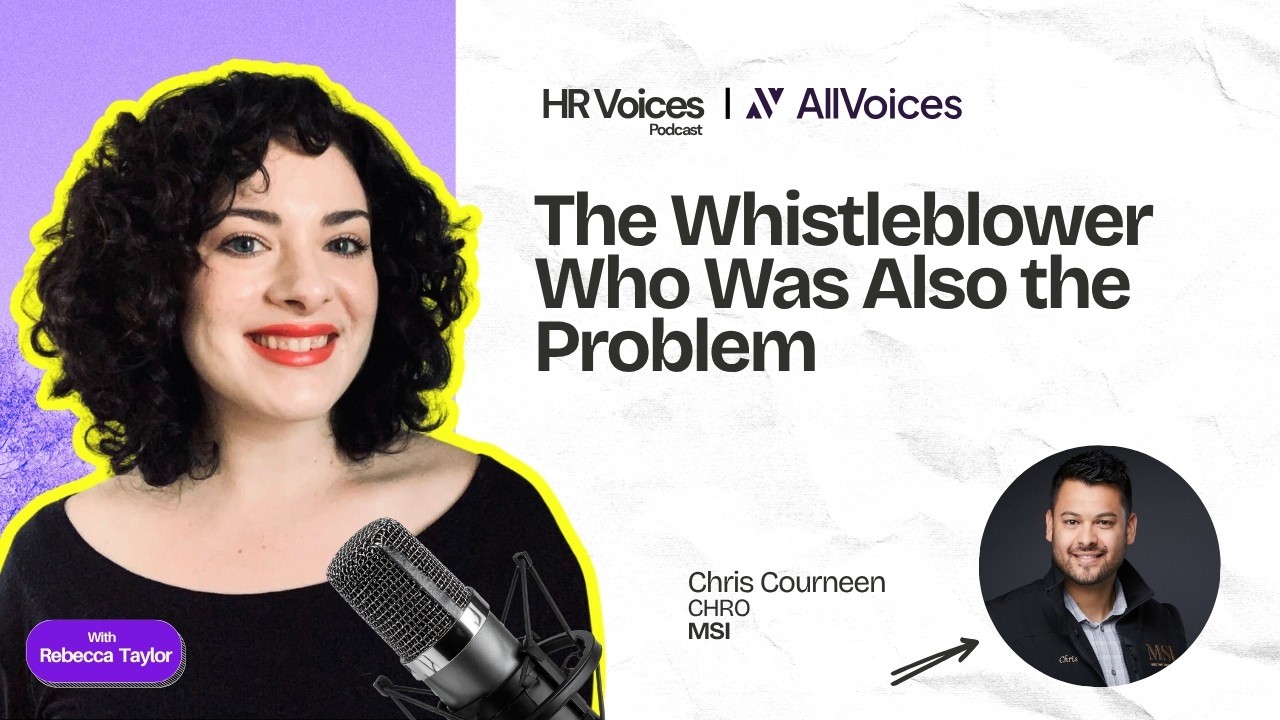
An employee reports financial irregularities in her department. The investigation confirms she was right, and also finds she went along with some of them before speaking up. Now HR has to protect her from retaliation and hold her accountable at the same time, while everyone who might report something someday watches. Chris Courneen, CHRO at MSI, and Rebecca Taylor cover why process draws more scrutiny than outcome, the "funnel" interview, and putting in writing that she did the right thing.
About The Guest
Chris Courneen is Senior Vice President of Human Resources and CHRO at MSI (M S International, Inc.), the Orange, California-based supplier of flooring, countertops and hard surfaces. Investigations are part of the job there, from coaching business partners through their own cases to reviewing work before it goes out the door, and he has defended them before the EEOC and other federal agencies. He came to HR from sales, distribution and supply chain leadership, and sits on the SHRM Executive Council.
Episode Breakdown

An employee reports financial irregularities in her department. The investigation confirms she was right and shows she went along with some of them before speaking up. HR now has to shield her from retaliation for reporting and hold her accountable for her own part, while everyone who might report something someday watches how it ends. Chris Courneen, CHRO at MSI, has defended investigations in front of the EEOC and other federal agencies.

Chris joined host Rebecca Taylor on HR Voices in a Hawaiian shirt, with a reason: nobody looks scary in a shirt like that. His answers kept returning to one idea. A case like this is judged on its process, whatever anyone feels about the person at the center of it.

Why Chris Assumes the Case Has Already Leaked

Chris starts every case assuming the information has already spread. Financial irregularities rarely look like an HR matter at first, so the reporter has usually told a manager or a peer. A well-meaning leader who starts digging can tip off the people involved or give witnesses time to line up their stories.

That leader could also be part of the problem. Chris calls an untrained investigator running an employment investigation ”a big no-no.” His own first interview is with the reporter. He covers the no-retaliation policy, honesty expectations that have ”gone through the roof,” and confidentiality, worded to stay within the National Labor Relations Act.

Then he asks who else knows, and why now. If the conduct started six months ago, something more recent likely pushed the reporter through the door. Every answer also feeds a credibility analysis, the assessment an interview credibility checklist structures.

Why the Process Draws More Scrutiny Than the Outcome

Chris put it plainly: ”The process is going to be under more scrutiny than the outcome.” If a whistleblower files a charge with the Equal Employment Opportunity Commission, the first questions concern how the investigation ran. Chris has fielded them more than once: who investigated, why that person, and whether they were trained.

The standard is reasonable, not right. A judge does not ask whether the investigator reached the judge’s own conclusion, only whether the conclusion was reasonable given a sound process. Chris compares it to sixth-grade math: ”show your work.” Investigators who play human lie detector, trusting demeanor over every other factor, are the ones who get picked apart.

Chris sees a role for AI in workplace investigations in testing that work, as a plaintiff’s attorney who ”hates you and is poking holes in your process.” Letting it make the call would have him falling out of his chair. At AllVoices, we hold the same line: a person owns the decision.

What Actually Works

Put the Protection in Writing Before the Hard Questions

Chris assumes the person reported sits several levels above the reporter. If that person retaliates, the company is retaliating. Retaliation is the most common allegation in EEOC charges: the agency’s charge data for fiscal year 2025 shows it in 54,350 of 88,201 charges, about 62 percent. Public companies add a layer, since the Sarbanes-Oxley whistleblower provision covers suspected securities fraud reported to a supervisor.

Chris treats protection as recognition. ”I want to reward you for doing the right thing,” he said. He tells the reporter, in writing, that she did the right thing. That is honest, and it protects the company, because the file shows anyone who retaliates later was not acting for it.

When the questions turn to her own role, he says it plainly: ”I am not asking you these questions because you reported something.” He warned her at the first meeting that uncomfortable questions might come.

Run Every Interview as a Funnel

Chris prefers not to ask questions he cannot already answer, so the homework comes first. In a finance case, that means tracing each irregularity to its first transaction and checking whether a formula was changed by hand. ”You learn a lot from where it started,” he said, before turning to emails, Slack messages, and other evidence in a workplace investigation.

The interviews run like a funnel. Chris starts broad, plays ”a little dumb,” and lets a witness talk while he watches for where the story breaks down. Confrontation comes late, because how an account holds up is what the credibility analysis needs.

Set Scope Before Anyone Watches the Clock

Business leaders want investigations finished. Chris holds that an investigation takes the time it requires, and that half the time or more it goes somewhere nobody expected. His control is scope.

Before the first interview, he settles the investigative questions the case must answer. Each later choice, from adding a witness to chasing a lead, is tested against them, and anything outside waits for its own investigation.

Sometimes the pressure is not about time. It is about a reporter whose boss knows she went to HR, and who feels every day the case stays open. Chris solves that directly, with remote work, a reassignment, or having the boss work from home instead.

Where Employee Relations Fits

Chris separates the fact-finding that belongs to the employee relations function from the business decision about consequences. The investigator should not make that call, legal is one data point, and the business owns the outcome.

That decision is where the whistleblower risk sits. If the emails show the reporter had five earlier chances to come forward, the company may still let her go. Chris wants the deciding principle stated plainly and the findings sorted into clear written buckets, the backbone of an effective investigation report.

His bar for that outcome is blunt: a company that disciplines a whistleblower had better have run the best investigation it has ever run. The bar is easier to clear when every intake, interview, and decision sits in one record, which is what workplace investigations software is for.

Frequently Asked Questions About Investigating a Complicit Whistleblower

Can You Discipline a Whistleblower Who Took Part in the Misconduct?

Yes, if the evidence and the process can withstand scrutiny. Reporting misconduct does not erase an employee’s own part in it, but Chris sets a high bar: documented facts and a clear principle behind the decision.

Does a Delay in Reporting Hurt a Whistleblower’s Credibility?

It can, but the reason matters more. Chris treats a delay as one data point. Someone who looked away because the misconduct ran through their boss still sounds like a victim to him.

How Can HR Protect a Whistleblower From Retaliation During an Investigation?

Start at the first meeting. Address the no-retaliation policy, tell the reporter in writing that coming forward was right, and ease any pressure from their boss with remote work or a reassignment.

What Is a Funnel Interview in a Workplace Investigation?

It is an interview that starts broad and narrows slowly. You ask open questions, keep your own findings in reserve, and save confrontation for the end, watching for where a witness’s story breaks down.

What Does the EEOC Look at When It Reviews an Investigation?

Mostly the process. Reviewers tend to start with who investigated and whether that person was trained, then test whether the conclusion was reasonable given the facts, even if they would have decided differently.

The Bottom Line for HR Leaders

Chris Courneen’s framing is the one Rebecca carried out of the episode: the process will get more scrutiny than the outcome. HR can protect a whistleblower and hold her accountable at once, as long as every step would make sense to someone reading the file later.

His advice for a first case like this is to go get help, and to know whether the organization expects that help from a peer or a manager. Two brains beat one on cases this complicated.

See how AllVoices helps ER teams keep every intake, interview, and decision in one record that holds up to scrutiny.
Our next webinar
Frequently asked questions

Got more questions? Email us at support@allvoices.co and we'll respond ASAP.

No items found.
Frequently asked questions

Got more questions? Email us at support@allvoices.co and we'll respond ASAP.

No items found.

When the Whistleblower Was Complicit: Protection and Accountability

About the guest

Chris Courneen is Senior Vice President of Human Resources and CHRO at MSI (M S International, Inc.), the Orange, California-based supplier of flooring, countertops and hard surfaces. Investigations are part of the job there, from coaching business partners through their own cases to reviewing work before it goes out the door, and he has defended them before the EEOC and other federal agencies. He came to HR from sales, distribution and supply chain leadership, and sits on the SHRM Executive Council.

Episode Breakdown

An employee reports financial irregularities in her department. The investigation confirms she was right and shows she went along with some of them before speaking up. HR now has to shield her from retaliation for reporting and hold her accountable for her own part, while everyone who might report something someday watches how it ends. Chris Courneen, CHRO at MSI, has defended investigations in front of the EEOC and other federal agencies.

Chris joined host Rebecca Taylor on HR Voices in a Hawaiian shirt, with a reason: nobody looks scary in a shirt like that. His answers kept returning to one idea. A case like this is judged on its process, whatever anyone feels about the person at the center of it.

Why Chris Assumes the Case Has Already Leaked

Chris starts every case assuming the information has already spread. Financial irregularities rarely look like an HR matter at first, so the reporter has usually told a manager or a peer. A well-meaning leader who starts digging can tip off the people involved or give witnesses time to line up their stories.

That leader could also be part of the problem. Chris calls an untrained investigator running an employment investigation ”a big no-no.” His own first interview is with the reporter. He covers the no-retaliation policy, honesty expectations that have ”gone through the roof,” and confidentiality, worded to stay within the National Labor Relations Act.

Then he asks who else knows, and why now. If the conduct started six months ago, something more recent likely pushed the reporter through the door. Every answer also feeds a credibility analysis, the assessment an interview credibility checklist structures.

Why the Process Draws More Scrutiny Than the Outcome

Chris put it plainly: ”The process is going to be under more scrutiny than the outcome.” If a whistleblower files a charge with the Equal Employment Opportunity Commission, the first questions concern how the investigation ran. Chris has fielded them more than once: who investigated, why that person, and whether they were trained.

The standard is reasonable, not right. A judge does not ask whether the investigator reached the judge’s own conclusion, only whether the conclusion was reasonable given a sound process. Chris compares it to sixth-grade math: ”show your work.” Investigators who play human lie detector, trusting demeanor over every other factor, are the ones who get picked apart.

Chris sees a role for AI in workplace investigations in testing that work, as a plaintiff’s attorney who ”hates you and is poking holes in your process.” Letting it make the call would have him falling out of his chair. At AllVoices, we hold the same line: a person owns the decision.

What Actually Works

Put the Protection in Writing Before the Hard Questions

Chris assumes the person reported sits several levels above the reporter. If that person retaliates, the company is retaliating. Retaliation is the most common allegation in EEOC charges: the agency’s charge data for fiscal year 2025 shows it in 54,350 of 88,201 charges, about 62 percent. Public companies add a layer, since the Sarbanes-Oxley whistleblower provision covers suspected securities fraud reported to a supervisor.

Chris treats protection as recognition. ”I want to reward you for doing the right thing,” he said. He tells the reporter, in writing, that she did the right thing. That is honest, and it protects the company, because the file shows anyone who retaliates later was not acting for it.

When the questions turn to her own role, he says it plainly: ”I am not asking you these questions because you reported something.” He warned her at the first meeting that uncomfortable questions might come.

Run Every Interview as a Funnel

Chris prefers not to ask questions he cannot already answer, so the homework comes first. In a finance case, that means tracing each irregularity to its first transaction and checking whether a formula was changed by hand. ”You learn a lot from where it started,” he said, before turning to emails, Slack messages, and other evidence in a workplace investigation.

The interviews run like a funnel. Chris starts broad, plays ”a little dumb,” and lets a witness talk while he watches for where the story breaks down. Confrontation comes late, because how an account holds up is what the credibility analysis needs.

Set Scope Before Anyone Watches the Clock

Business leaders want investigations finished. Chris holds that an investigation takes the time it requires, and that half the time or more it goes somewhere nobody expected. His control is scope.

Before the first interview, he settles the investigative questions the case must answer. Each later choice, from adding a witness to chasing a lead, is tested against them, and anything outside waits for its own investigation.

Sometimes the pressure is not about time. It is about a reporter whose boss knows she went to HR, and who feels every day the case stays open. Chris solves that directly, with remote work, a reassignment, or having the boss work from home instead.

Where Employee Relations Fits

Chris separates the fact-finding that belongs to the employee relations function from the business decision about consequences. The investigator should not make that call, legal is one data point, and the business owns the outcome.

That decision is where the whistleblower risk sits. If the emails show the reporter had five earlier chances to come forward, the company may still let her go. Chris wants the deciding principle stated plainly and the findings sorted into clear written buckets, the backbone of an effective investigation report.

His bar for that outcome is blunt: a company that disciplines a whistleblower had better have run the best investigation it has ever run. The bar is easier to clear when every intake, interview, and decision sits in one record, which is what workplace investigations software is for.

Frequently Asked Questions About Investigating a Complicit Whistleblower

Can You Discipline a Whistleblower Who Took Part in the Misconduct?

Yes, if the evidence and the process can withstand scrutiny. Reporting misconduct does not erase an employee’s own part in it, but Chris sets a high bar: documented facts and a clear principle behind the decision.

Does a Delay in Reporting Hurt a Whistleblower’s Credibility?

It can, but the reason matters more. Chris treats a delay as one data point. Someone who looked away because the misconduct ran through their boss still sounds like a victim to him.

How Can HR Protect a Whistleblower From Retaliation During an Investigation?

Start at the first meeting. Address the no-retaliation policy, tell the reporter in writing that coming forward was right, and ease any pressure from their boss with remote work or a reassignment.

What Is a Funnel Interview in a Workplace Investigation?

It is an interview that starts broad and narrows slowly. You ask open questions, keep your own findings in reserve, and save confrontation for the end, watching for where a witness’s story breaks down.

What Does the EEOC Look at When It Reviews an Investigation?

Mostly the process. Reviewers tend to start with who investigated and whether that person was trained, then test whether the conclusion was reasonable given the facts, even if they would have decided differently.

The Bottom Line for HR Leaders

Chris Courneen’s framing is the one Rebecca carried out of the episode: the process will get more scrutiny than the outcome. HR can protect a whistleblower and hold her accountable at once, as long as every step would make sense to someone reading the file later.

His advice for a first case like this is to go get help, and to know whether the organization expects that help from a peer or a manager. Two brains beat one on cases this complicated.

See how AllVoices helps ER teams keep every intake, interview, and decision in one record that holds up to scrutiny.